
Home / Invertebrates / Spiders / Singapore blue tarantula
No federal permit to keepSingapore blue tarantula
Lampropelma violaceopes
Invertebrates › Spiders (Araneae) › Theraphosidae (Tarantulas)
The Singapore Blue (also known as the Malaysia Blue) (Omothymus violaceopes) is a large, arboreal species of tarantula from Malaysia and Singapore.
From Wikipedia: Singapore blue, CC BY-SA 4.0 (excerpt)

Care at a glance
Species-specific values
Values researched for this exact species. Air, surface and water temperatures are listed separately, and each source is kept as published rather than averaged.
| Substrate | Spiderlings should have 2–4 inches of substrate to allow burrowing. Source: thetarantulacollective.com | |
| Substrate | Juveniles should have 2–4 inches of substrate, as much as fits while leaving vertical space. Source: thetarantulacollective.com | |
| Substrate | Adults should have 4–5 inches of substrate because they burrow during the day. Source: thetarantulacollective.com | |
| Diet | Spiderlings can be offered small flightless fruit flies, confused flour beetles, or tiny pre-killed crickets or roach nymphs. Source: thetarantulacollective.com | |
| Feeding frequency | Spiderlings: feed twice a week. Source: thetarantulacollective.com | |
| Diet | Juveniles can be fed 2–3 small to medium crickets or one medium Dubia roach. Source: thetarantulacollective.com | |
| Feeding frequency | Juveniles: feed every 7–10 days. Source: thetarantulacollective.com | |
| Diet | Feed adults one large Dubia roach or 4–5 large crickets. Source: thetarantulacollective.com | |
| Feeding frequency | For adults: offer food every 2–3 weeks or whenever required. Source: thetarantulacollective.com | |
| Enclosure temperature | 72–82 °F (22–28 °C) Source: tarantulahub.co.uk | |
| Humidity | 75–85 % Source: tarantulahub.co.uk | |
| Substrate | Keep one corner lightly damp; do not let the substrate stay wet throughout. Source: tarantulahub.co.uk | |
| Uvb lighting | Use ambient room light only and avoid basking lamps. Source: tarantulahub.co.uk | |
| Diet | Slings eat tiny roach nymphs, pre-killed crickets, or fruit flies; juveniles eat roach nymphs or small crickets; adults eat dubia, large crickets, or locusts. Source: tarantulahub.co.uk | |
| Feeding frequency | Slings every 3–5 days, juveniles every 5–7 days, adults every 7–14 days. Source: tarantulahub.co.uk |
Understanding the animal
About this animal
About this animal
These spiders have been known to grow in excess of 9 inches (23 cm) across. The legs are an intense blue with a brown or gold carapace.
From Wikipedia: Singapore blue, CC BY-SA 4.0 (excerpt)
In the wild
In the wild
| Overview | The Singapore Blue (also known as the Malaysia Blue) (Omothymus violaceopes) is a large, arboreal species of tarantula from Malaysia and Singapore. These spiders have been known to grow in excess of 9 inches (23 cm) across. The legs are an intense blue with a brown or gold carapace. The male is usually not as vibrant; the species exhibits sexual dimorphism. — From Wikipedia: Singapore blue, CC BY-SA 4.0 (excerpt) |
| History and naming | Omothymus violaceopes was first described by H. C. Abraham in 1924, under the name Lampropelma violaceopedes. However, specific names under the International Code of Zoological Nomenclature cannot be plural, so violaceopedes was corrected to violaceopes. In August 2019, the species was transferred to the genus Omothymus. — From Wikipedia: Singapore blue, CC BY-SA 4.0 (excerpt) |
Profile
Profile
Researched for this exact species. Sources are listed under In the wild above.
History
Omothymus violaceopes was first described by H. C. Abraham in 1924, under the name Lampropelma violaceopedes. However, specific names under the International Code of Zoological Nomenclature cannot be plural, so violaceopedes was corrected to violaceopes. In August 2019, the species was transferred to the genus Omothymus.
From Wikipedia: Singapore blue, CC BY-SA 4.0 (excerpt)
Sources for this sheet
- GBIF Backbone Taxonomy (Global Biodiversity Information Facility) (CC BY 4.0) Peer-reviewed researchInternational scientific taxonomy used here for classification. GBIF Secretariat (2023). GBIF Backbone Taxonomy. Checklist dataset https://doi.org/10.15468/39omei, accessed via GBIF.org.
- Wikipedia (species article) (CC BY-SA 4.0) Community referenceFree encyclopedia; useful overviews with their own citations. Short excerpts are quoted under CC BY-SA 4.0, each credited with a link to its article.
More tarantulas
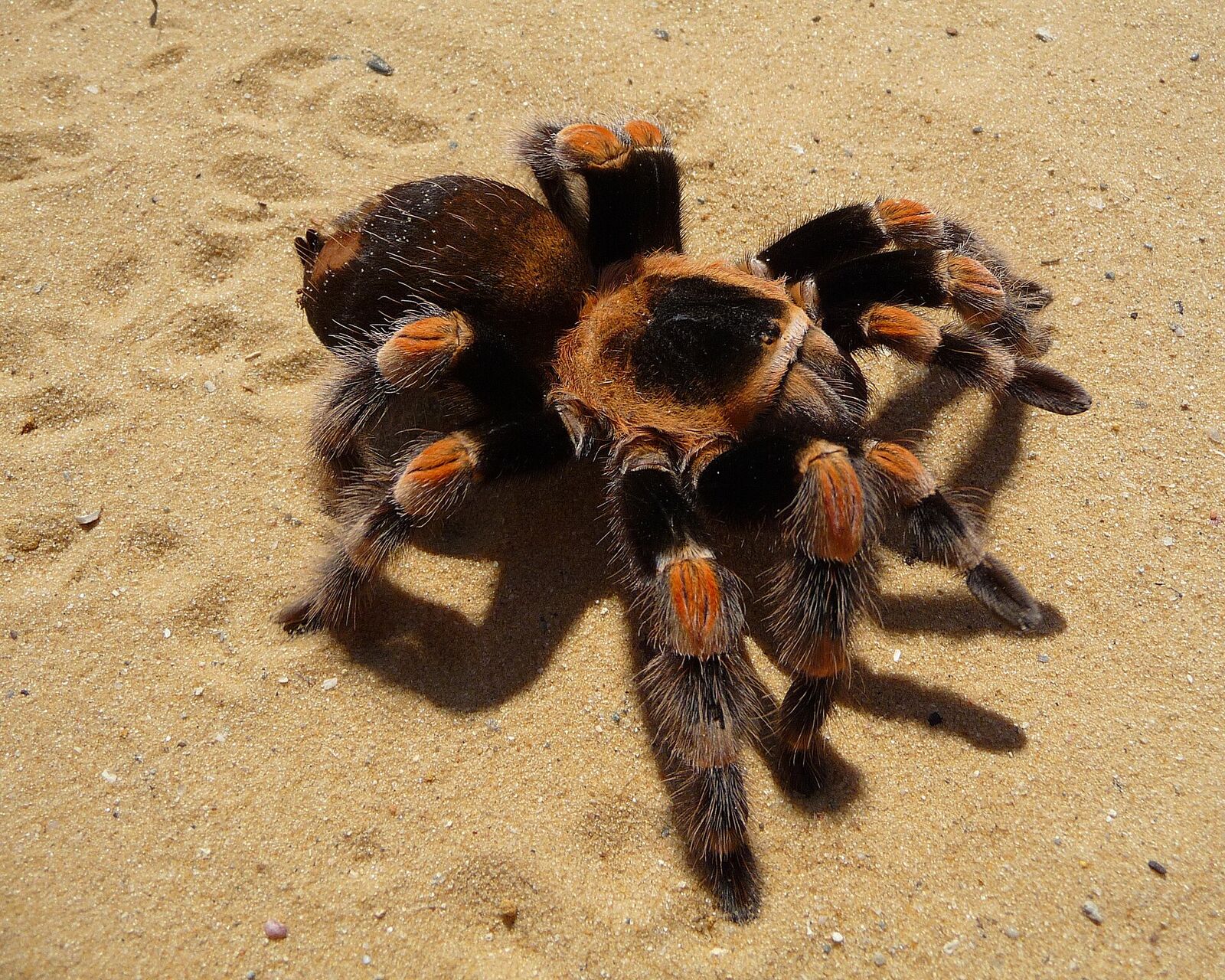
Mexican redknee tarantula
Brachypelma hamorii
A docile spider where females live 25–30 years.
Pet trade

African Horned Baboon Tarantula
Ceratogyrus darlingi
Pet trade
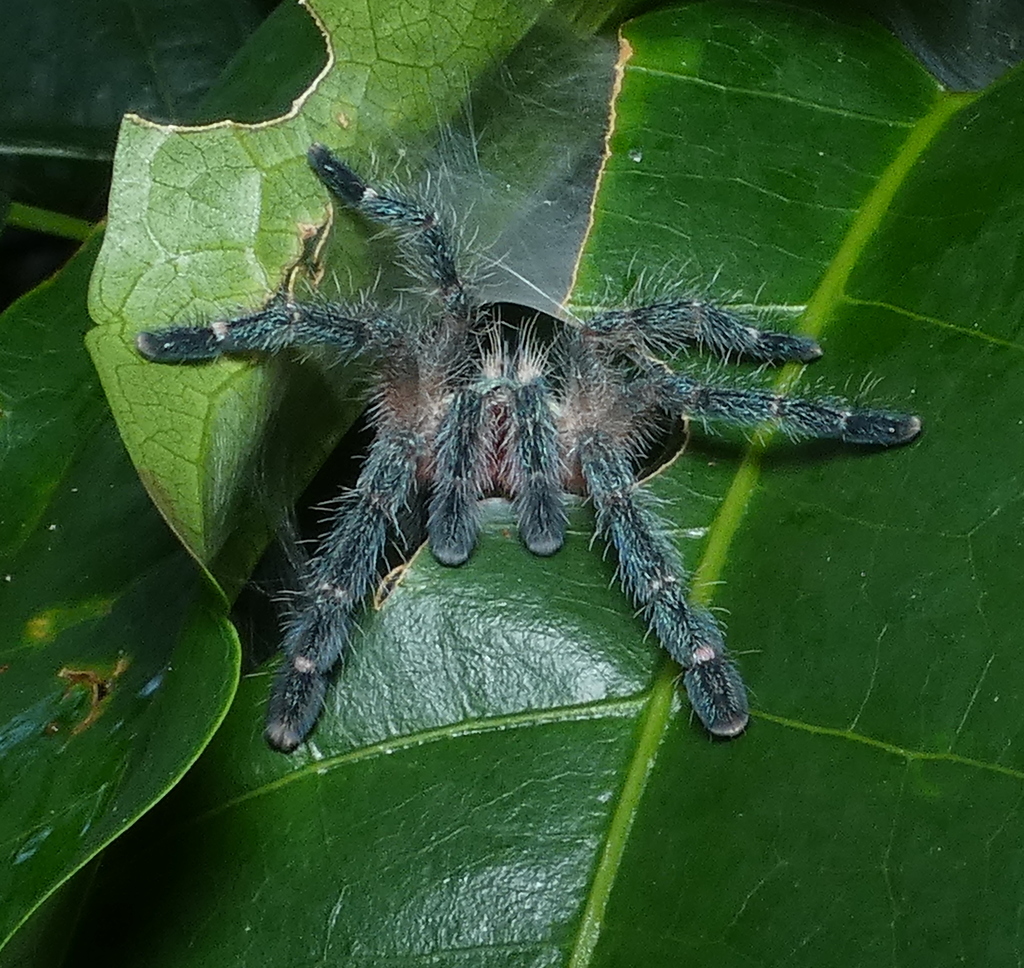
Amazon Ribbed Tarantula
Iridopelma hirsutum
Pet trade

Amula Redrump Tarantula
Brachypelma albiceps
Pet trade

Anantagiri’s Parachute Spider
Poecilotheria tigrinawesseli
Pet trade

Antilles pinktoe tarantula
Caribena versicolor
Pet trade