
Home / Reptiles / Snakes / Boidae / Smooth-scaled (red) sand boa
Some federal rules applySmooth-scaled (red) sand boa
Eryx johnii
Reptiles › Snakes (Serpentes) › Boidae (Boas)
Eryx johnii is a species of nonvenomous snake in the subfamily Erycinae of the family Boidae.
From Wikipedia: Eryx johnii, CC BY-SA 4.0 (excerpt)

Care at a glance
Species-specific values
Values researched for this exact species. Air, surface and water temperatures are listed separately, and each source is kept as published rather than averaged.
| Minimum enclosure | A mature adult needs at least a 10-gallon aquarium or enough room to stretch out. Source: reptiletalk.net | |
| Substrate | The species seems to prefer heavier substrate such as small chunk bark. Source: reptiletalk.net | |
| Basking surface temperature | 90–95 °F (32–35 °C) Source: reptiletalk.net | |
| Cool side air temperature | 75–84 °F (24–29 °C) Source: reptiletalk.net | |
| Humidity | 40–50 % Source: reptiletalk.net | |
| Drinking water | Keep clean distilled water available at all times in a shallow bowl at the cool end. Source: reptiletalk.net | |
| Feeding frequency | Young snakes need weekly feedings during their first year; adults are fed 4 to 8 times monthly for females and 1 or 2 times monthly for males. Source: reptiletalk.net |
Understanding the animal
About this animal
About this animal
The species is native to Iran, Pakistan, and India. There are no subspecies which are recognized as being valid.
From Wikipedia: Eryx johnii, CC BY-SA 4.0 (excerpt)
In the wild
In the wild
| Overview | Eryx johnii is a species of nonvenomous snake in the subfamily Erycinae of the family Boidae. The species is native to Iran, Pakistan, and India. There are no subspecies which are recognized as being valid. Common names include: Indian sand boa, John's sand boa, iruthalai nagam, mannuli pambu, red sand boa, and brown sand boa. — From Wikipedia: Eryx johnii, CC BY-SA 4.0 (excerpt) |
| Where it lives | E. johnii is found in dry, semi-desert scrub plains and rocky dry foothills up to 200 m elevation. It prefers loose sand, or sandy soil that crumbles easily, into which it burrows, living underground. — From Wikipedia: Eryx johnii, CC BY-SA 4.0 (excerpt) |
| Wild diet | The diet of E. johnii consists mainly of mammals such as rats, mice, and other small rodents that are killed by constriction. Some specimens have apparently fed exclusively on other snakes. — From Wikipedia: Eryx johnii, CC BY-SA 4.0 (excerpt) |
| Behavior | E. johnii is a very calm snake species. — From Wikipedia: Eryx johnii, CC BY-SA 4.0 (excerpt) |
| Reproduction | E. johnii is ovoviviparous, with females giving birth to up to 14 young at a time in late summer to monsoon. — From Wikipedia: Eryx johnii, CC BY-SA 4.0 (excerpt) |
| Appearance and size | Adults of E. johnii rarely exceed 2 ft in total length (including tail), although they sometimes reach 3 feet (91 cm). Adapted to burrowing, the head is wedge-shaped with narrow nostrils and very small eyes. The body is cylindrical in shape with small polished dorsal scales. — From Wikipedia: Eryx johnii, CC BY-SA 4.0 (excerpt) |
Read about this species in the wild at The Reptile Database.
Profile
Profile
Researched for this exact species. Sources are listed under In the wild above.
Data and studies
The numbers
The numbers
Each bar is what one source reports. Where several sources weigh in, the dashed gold band marks their average.
Maximum recorded lifespan
Longest recorded lifespan reported by each database; typical lifespans are usually shorter. The AnAge record comes from an animal in human care.
Sources for this sheet
- AnAge: The Animal Ageing and Longevity Database (Human Ageing Genomic Resources) (CC BY 3.0) Peer-reviewed researchCurated, referenced longevity and life-history records for thousands of species; maximum lifespans are often from zoo animals.
- Myhrvold et al. (2015). An amniote life-history database. Ecology 96: 3109 Peer-reviewed researchPeer-reviewed compilation of life-history data for over 21,000 birds, mammals and reptiles.
- Species+ (UNEP-WCMC and the CITES Secretariat) Zoo, university or veterinaryThe official database of species listed under CITES. UNEP (2026). The Species+ Website. Nairobi, Kenya. Compiled by UNEP-WCMC, Cambridge, UK. Available at: www.speciesplus.net. [Accessed 04/10/2026].
- USFWS International Affairs: CITES Zoo, university or veterinaryFederal agency that issues CITES permits.
- The Reptile Database Peer-reviewed researchScientist-curated catalog of every reptile species, with taxonomy and literature.
- GBIF Backbone Taxonomy (Global Biodiversity Information Facility) (CC BY 4.0) Peer-reviewed researchInternational scientific taxonomy used here for classification. GBIF Secretariat (2023). GBIF Backbone Taxonomy. Checklist dataset https://doi.org/10.15468/39omei, accessed via GBIF.org.
- Wikipedia (species article) (CC BY-SA 4.0) Community referenceFree encyclopedia; useful overviews with their own citations. Short excerpts are quoted under CC BY-SA 4.0, each credited with a link to its article.
- iNaturalist (captive observations) Community referenceCommunity observation platform run by the California Academy of Sciences and National Geographic; observations marked captive show animals living in homes, zoos and aquariums.
More boas
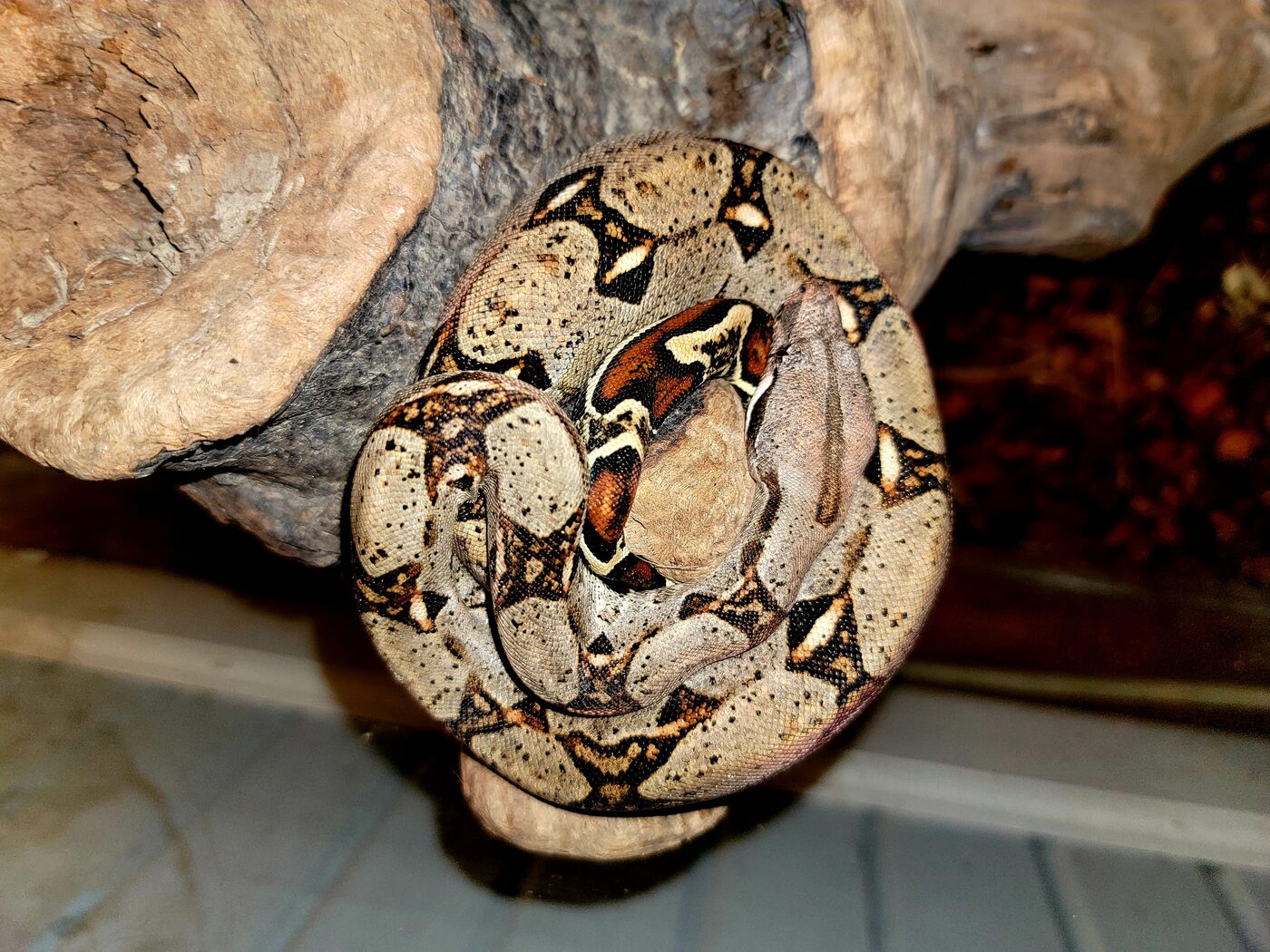
Common boa constrictor (red-tailed boa)
Boa constrictor
A powerful but famously steady big snake.
Pet trade
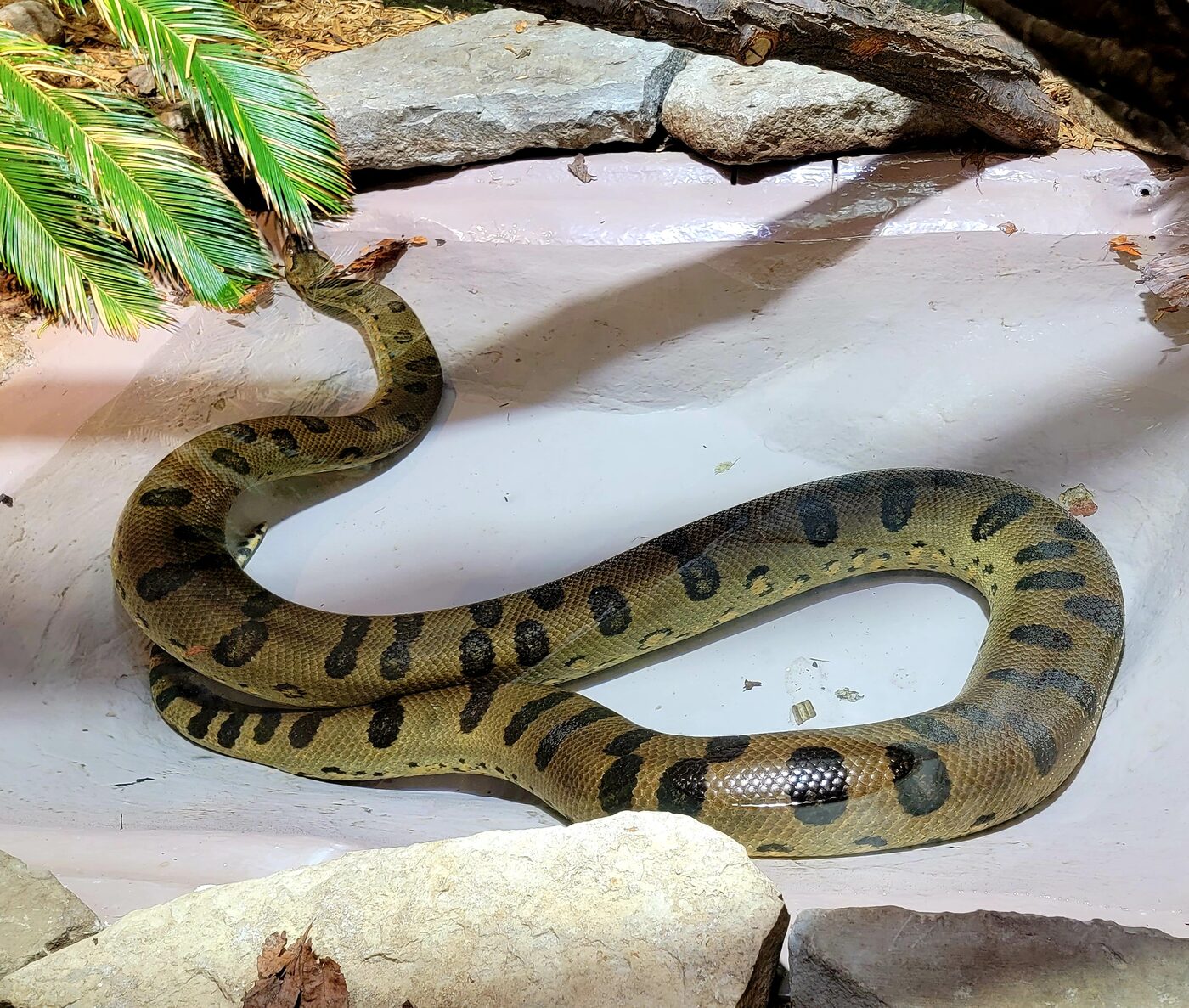
Green anaconda
Eunectes murinus
The heaviest snake on Earth, at home in the water.
Pet trade

Amazon basin emerald tree boa
Corallus batesii
Pet trade
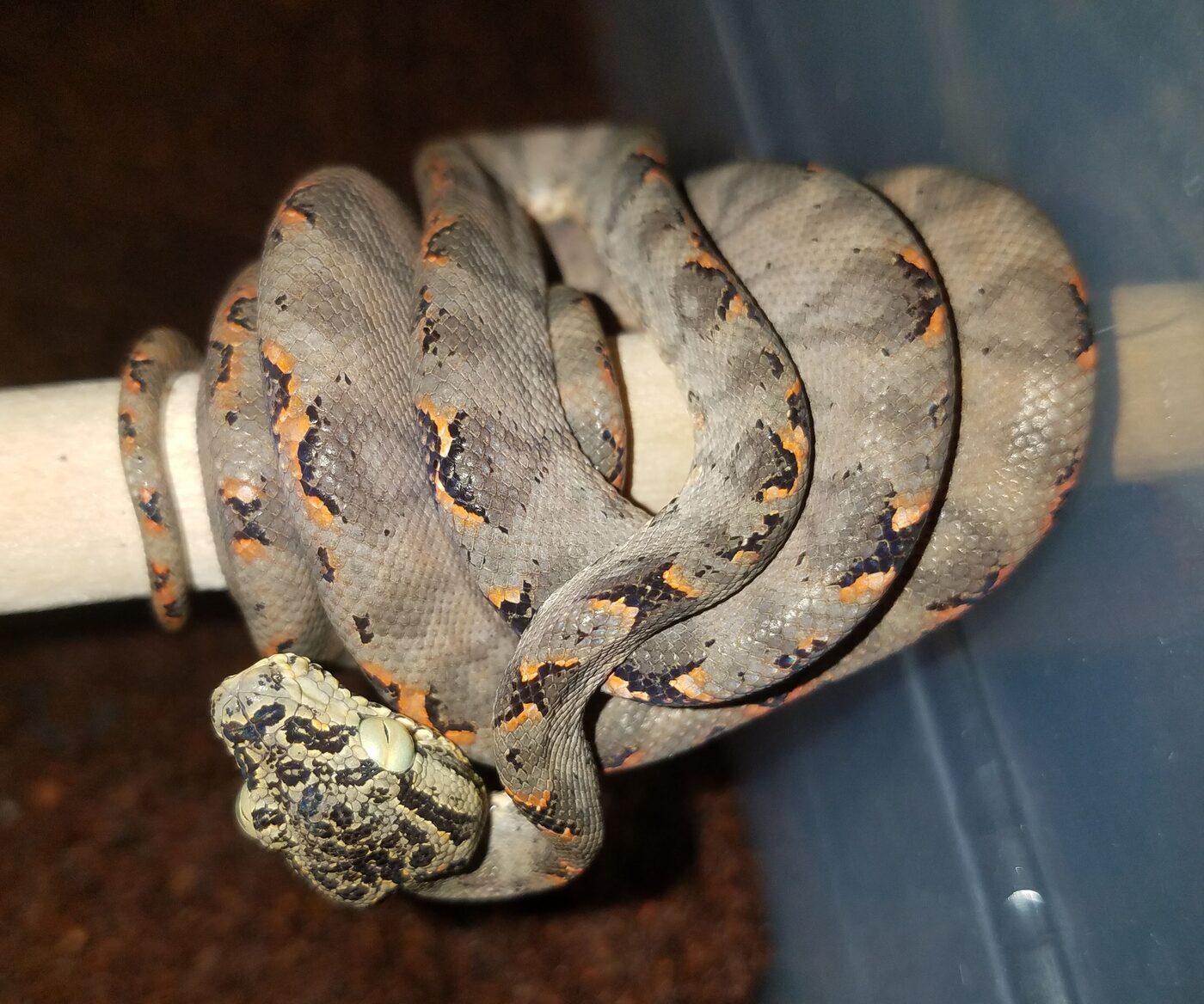
Amazon tree boa
Corallus hortulana
Pet trade

Annulated tree boa
Corallus annulatus
Pet trade

Arabian sand boa
Eryx jayakari
Pet trade