
Home / Fishes / Gouramis, bettas, snakeheads / Northern snakehead
Federal restrictions applyNorthern snakehead
Channa argus
Fishes › Gouramis, bettas, snakeheads (Anabantiformes) › Channidae (Snakeheads)
The northern snakehead also known as Chesapeake Channa (Channa argus) in Maryland U.S is a species of snakehead fish native to temperate East Asia, in China, Russia, North Korea, and South Korea.
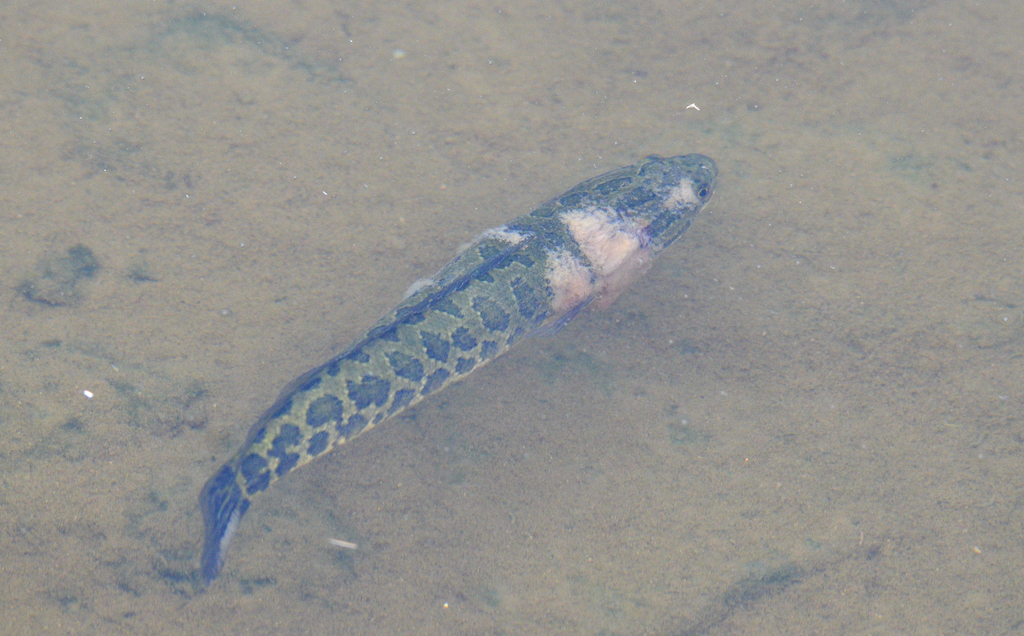
Care at a glance
Species care notes
Read the full care sheet at Seriously Fish: habitat, aquarium size, water conditions, diet, behaviour and breeding.
Warnings
Understanding the animal
About this animal
About this animal
Their natural range goes from the Amur River watershed in Siberia and Manchuria down to Hainan. It is an important food fish and one of the most cultivated in its native region, with 510,000 tonnes annual production worldwide.
From Wikipedia: Northern snakehead, CC BY-SA 4.0 (excerpt)
In the wild
In the wild
From this species’ own FishBase record (habitat, bottom type, water and breeding data), not its family. Wild conditions are context, not enclosure settings.1
| Where it lives | Lives in freshwater, in rivers and streams, lakes. Uses both the bottom and open water. |
| Climate | Subtropical climate. |
| Wild diet | Hunting macrofauna (predator). |
| Behavior to plan for | Breeding: clutch tenders. |
Data and studies
The numbers
The numbers
Each bar is what one source reports. Where several sources weigh in, the dashed gold band marks their average.
Typical adult weight
Average adult body mass in each database (FishBase gives the maximum recorded weight).
Adult length
Maximum recorded length. Measured as total length. Fish in home aquariums often stay smaller than wild records.
Veterinary & husbandry research
Veterinary & husbandry research
- Bioflocs attenuates lipopolysaccharide-induced inflammation, immunosuppression and oxidative stress in Channa argus Yu Z et al., Fish & shellfish immunology 2021
- Splenic hemangioendothelial neoplasm in a captive Northern Snakehead from the Potomac River Walsh HL et al., Journal of aquatic animal health 2024
- Genome-Wide Association Studies (GWAS) and Transcriptome Analysis Reveal Male Heterogametic Sex-Determining Regions and Candidate Genes in Northern Snakeheads (Channa argus) Liu H et al., International journal of molecular sciences 2024
Peer-reviewed papers that mention this species alongside captivity, zoos, veterinary care or aquaculture. Some cover several species or mention it only in passing, so check the abstract. See all 49 on PubMed → PubMed
Sources for this sheet
- FishBase (Froese & Pauly, eds.), version 24.07 (CC BY-NC 4.0) Peer-reviewed researchThe global scientific database on fishes, maintained by a consortium of research institutions; every value is referenced.
- Seriously Fish species profiles Experienced keeper or breederLong-running aquarium reference written and peer-checked by experienced fishkeepers and ichthyologists; each profile covers habitat, tank size, water, diet, behaviour and breeding.
- 50 CFR Part 16: Injurious wildlife (Lacey Act) Zoo, university or veterinaryCurrent federal regulation, read from eCFR.
- U.S. Association of Reptile Keepers v. Zinke (D.C. Cir. 2017) Zoo, university or veterinaryAppeals ruling that the Lacey Act's shipping ban does not cover moves between the continental states.
- Wikipedia (species article) (CC BY-SA 4.0) Community referenceFree encyclopedia; useful overviews with their own citations. Short excerpts are quoted under CC BY-SA 4.0, each credited with a link to its article.
- PubMed (U.S. National Library of Medicine) Peer-reviewed researchIndex of peer-reviewed veterinary, zoo and husbandry research.
- iNaturalist (captive observations) Community referenceCommunity observation platform run by the California Academy of Sciences and National Geographic; observations marked captive show animals living in homes, zoos and aquariums.
More snakeheads
Assamese snakehead
Channa stewartii
Aquarium hobby

Bangka snakehead
Channa bankanensis
Aquarium hobby
Baram snakehead
Channa baramensis
Aquarium hobby

Barca snakehead
Channa barca
Aquarium hobby

Blotched snakehead
Channa maculata
Aquarium hobby

Bluefinned snakehead
Channa bleheri
Aquarium hobby