
Home / Fishes / Gouramis, bettas, snakeheads / Spotted snakehead
Federal restrictions applySpotted snakehead
Channa punctata
Fishes › Gouramis, bettas, snakeheads (Anabantiformes) › Channidae (Snakeheads)
Channa punctata, the spotted snakehead, is a species of snakehead.
Care at a glance
Species-specific values
Values researched for this exact species. Air, surface and water temperatures are listed separately, and each source is kept as published rather than averaged.
| Minimum enclosure | Use a tightly closed aquarium with planted areas, open swimming space, hiding places, and subdued lighting. Source: aquainfo.nl | |
| Water temperature | Lower the aquarium temperature to 19–20 degrees during one season. Source: aquainfo.nl | |
| Seasonal cooling | 66–68 °F (19–20 °C) Source: aquainfo.nl | |
| Diet | Carnivore; eats common fish food, including frozen and dry food. Source: aquainfo.nl | |
| Social housing | Best kept alone or as a couple. Source: aquainfo.nl | |
| Seasonal cooling | 72–75 °F (22–24 °C) Source: aquainfo.nl |
Species-specific aquarium care
- Tank: At least 30 in long and 12 in front to back for one adult (adults commonly reach about 5.9 in / 15 cm; the largest recorded was 12.2 in).
- Water: Freshwater (tolerates brackish).
- Temperature: 72–82°F (range recorded for this species).
- Layout: Uses both the bottom and open water: give open swimming space plus cover near the substrate.
- Diet: A predator: feed meaty foods sized to its mouth (frozen fish, shrimp, worms); it will eat tankmates that fit in its mouth. FishBase classes it as a carnivore.
Calculated from this species' own FishBase record: tank size from its typical adult length and swimming zone, water values from its recorded ranges. The group guide below fills in general care.
Warnings
Understanding the animal
About this animal
About this animal
It is found in the Indian Subcontinent and nearby areas, ranging across Afghanistan, Pakistan, India, Sri Lanka, Nepal, Bangladesh, Myanmar and Tibet. Its natural habitats are swamps, ponds and brackish water systems.
From Wikipedia: Channa punctata, CC BY-SA 4.0 (excerpt)
In the wild
In the wild
From this species’ own FishBase record (habitat, bottom type, water and breeding data), not its family. Wild conditions are context, not enclosure settings.1
| Where it lives | Lives in freshwater and brackish water, in rice paddies, mangroves. Uses both the bottom and open water. |
| Climate | Tropical climate. |
| Wild diet | Hunting macrofauna (predator). |
| Behavior to plan for | Breeding: nesters. |
Data and studies
The numbers
The numbers
Each bar is what one source reports. Where several sources weigh in, the dashed gold band marks their average.
Adult length
Common length to maximum recorded length. Measured as total length. Fish in home aquariums often stay smaller than wild records.
Veterinary & husbandry research
Veterinary & husbandry research
- Quercetin-induced amelioration of deltamethrin stress in freshwater teleost, Channa punctata: Multiple biomarker analysis Bhattacharjee P et al., Comparative biochemistry and physiology. Toxicology & pharmacology: CBP 2020
- Morphological Identification and Protein Estimation of Clinostomum complanatum and its Impact on Fish Channa punctata of Lucknow Wetlands, Uttar Pradesh, India Kumar P et al., Acta parasitologica 2025
- Severe Outbreak of Saprolegnia Spp. Infection in Spotted Snakehead (Channa punctata, Bloch 1793): Clinical Assessment, Histopathology, Haemato-Biochemical Indices and Insights Into Therapeutic Effects Rahman MS et al., Veterinary medicine and science 2025
- Mechanistic Insights Into Aflatoxin B(1)-Induced Histopathology in the Gill, Liver, and Kidney Tissues and Immune Dysregulation by Altering the Expression of Cytokine Genes in Channa punctata Yousuf GO et al., Journal of applied toxicology: JAT 2026
Peer-reviewed papers that mention this species alongside captivity, zoos, veterinary care or aquaculture. Some cover several species or mention it only in passing, so check the abstract. PubMed
Sources for this sheet
- FishBase (Froese & Pauly, eds.), version 24.07 (CC BY-NC 4.0) Peer-reviewed researchThe global scientific database on fishes, maintained by a consortium of research institutions; every value is referenced.
- 50 CFR Part 16: Injurious wildlife (Lacey Act) Zoo, university or veterinaryCurrent federal regulation, read from eCFR.
- U.S. Association of Reptile Keepers v. Zinke (D.C. Cir. 2017) Zoo, university or veterinaryAppeals ruling that the Lacey Act's shipping ban does not cover moves between the continental states.
- Wikipedia (species article) (CC BY-SA 4.0) Community referenceFree encyclopedia; useful overviews with their own citations. Short excerpts are quoted under CC BY-SA 4.0, each credited with a link to its article.
- PubMed (U.S. National Library of Medicine) Peer-reviewed researchIndex of peer-reviewed veterinary, zoo and husbandry research.
- iNaturalist (captive observations) Community referenceCommunity observation platform run by the California Academy of Sciences and National Geographic; observations marked captive show animals living in homes, zoos and aquariums.
More snakeheads
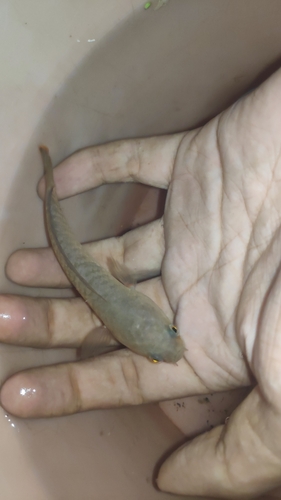
Assamese snakehead
Channa stewartii
Aquarium hobby

Bangka snakehead
Channa bankanensis
Aquarium hobby
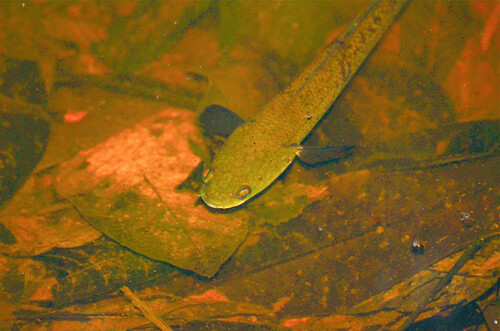
Baram snakehead
Channa baramensis
Aquarium hobby

Barca snakehead
Channa barca
Aquarium hobby

Blotched snakehead
Channa maculata
Aquarium hobby

Bluefinned snakehead
Channa bleheri
Aquarium hobby