
Home / Mammals / Rodents / Steppe lemming
No federal permit to keepSteppe lemming
Lagurus lagurus
Mammals › Rodents (Rodentia) › Cricetidae (Hamsters, voles, American mice)
The steppe lemming or steppe vole (Lagurus lagurus) is a small rodent.
From Wikipedia: Steppe lemming, CC BY-SA 4.0 (excerpt)

Care at a glance
Species-specific values
Values researched for this exact species. Air, surface and water temperatures are listed separately, and each source is kept as published rather than averaged.
| Social housing | Keep small same-sex groups together from a young age; avoid mixing sexes unless breeding. Source: reptilecymru.co.uk | |
| Substrate | Provide wood shavings or aspen substrate, with straw bedding. Source: reptilecymru.co.uk | |
| Diet | Feed fresh greens, dried grass, and hamster food or bird seed mix; recommend equal hamster food and parakeet seed. Source: reptilecymru.co.uk | |
| Feeding frequency | At least 25–50% of diet should be fresh vegetation; do not feed sugar, including fruit. Source: reptilecymru.co.uk |
Warnings
Understanding the animal
About this animal
About this animal
It is described as somewhat similar in appearance to the Norway lemming (Lemmus lemmus). It is more active at night, however, it is not entirely nocturnal.
From Wikipedia: Steppe lemming, CC BY-SA 4.0 (excerpt)
In the wild
In the wild
| Overview | The steppe lemming or steppe vole (Lagurus lagurus) is a small rodent. It is described as somewhat similar in appearance to the Norway lemming (Lemmus lemmus). It is more active at night, however, it is not entirely nocturnal. The steppe lemming's diet consists of shoots and leaves. — From Wikipedia: Steppe lemming, CC BY-SA 4.0 (excerpt) |
Read about this species in the wild at Animal Diversity Web.
Native climate (measured)
Native climate (measured)
| Warm-season highs | about 78°F (up to 84°F in the hottest sampled areas) |
| Cool-season lows | about 6°F (down to -7°F in the coldest sampled areas) |
| Average temperature | 37–45°F across sampled records |
| Relative humidity | 68–73% on average (driest month about 56%) |
| Rainfall | about 516 mm a year, spread fairly evenly |
| Winters | Cool to cold winters (lows around 6°F) in much of its native range. Seasonal slowdown may be relevant, but species-specific biology determines whether brumation or hibernation occurs. |
Measured at 23 wild occurrence records sampled against WorldClim 2.1 climate data (1970–2000 averages). Air conditions in the range are ecological context, not enclosure settings: microhabitats such as burrows, leaf litter or basking rocks can be cooler, warmer or more humid.
Data and studies
The numbers
The numbers
Each bar is what one source reports. Where several sources weigh in, the dashed gold band marks their average.
Maximum recorded lifespan
Longest recorded lifespan reported by each database; typical lifespans are usually shorter. The AnAge record comes from an animal in human care.
Typical adult weight
Average adult body mass in each database (FishBase gives the maximum recorded weight).
Litter size
Average per litter or clutch.
Gestation
Female maturity
Veterinary & husbandry research
Veterinary & husbandry research
- Lethal Encephalitozoon cuniculi genotype III infection in Steppe lemmings (Lagurus lagurus) Hofmannová L et al., Veterinary parasitology 2014
- Subcutaneous cysticercosis due to Taenia crassiceps (Cestoda: Taeniidae) in an imported steppe lemming in Japan Chou S et al., Parasitology international 2022
Peer-reviewed papers that mention this species alongside captivity, zoos, veterinary care or aquaculture. Some cover several species or mention it only in passing, so check the abstract. PubMed
Sources for this sheet
- AnAge: The Animal Ageing and Longevity Database (Human Ageing Genomic Resources) (CC BY 3.0) Peer-reviewed researchCurated, referenced longevity and life-history records for thousands of species; maximum lifespans are often from zoo animals.
- Myhrvold et al. (2015). An amniote life-history database. Ecology 96: 3109 Peer-reviewed researchPeer-reviewed compilation of life-history data for over 21,000 birds, mammals and reptiles.
- 9 CFR 2.1: Animal Welfare Act licensing (USDA) Zoo, university or veterinaryWho needs a USDA license to breed, sell or exhibit animals.
- Wikipedia (species article) (CC BY-SA 4.0) Community referenceFree encyclopedia; useful overviews with their own citations. Short excerpts are quoted under CC BY-SA 4.0, each credited with a link to its article.
- PubMed (U.S. National Library of Medicine) Peer-reviewed researchIndex of peer-reviewed veterinary, zoo and husbandry research.
- iNaturalist (captive observations) Community referenceCommunity observation platform run by the California Academy of Sciences and National Geographic; observations marked captive show animals living in homes, zoos and aquariums.
More hamsters, voles, american mice
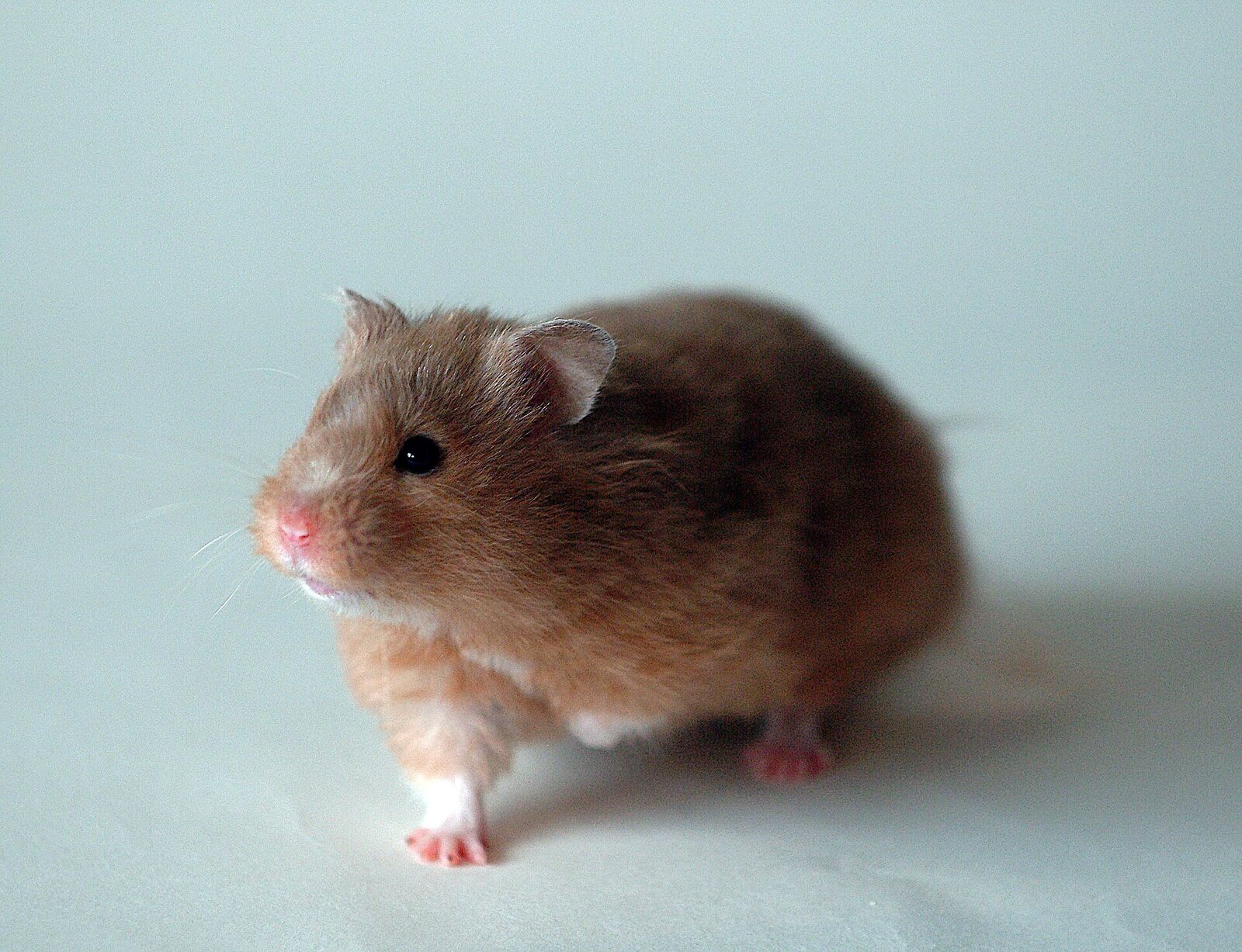
Golden (Syrian) hamster
Mesocricetus auratus
Small, nocturnal and fiercely independent.
Pet trade

California deermouse
Peromyscus californicus
Zoos & aquariums

Campbell's dwarf hamster
Phodopus campbelli
Pet trade

Chinese hamster
Cricetulus griseus
Pet trade

Deer mouse
Peromyscus maniculatus
Zoos & aquariums

European hamster
Cricetus cricetus
Zoos & aquariums