
Home / Fishes / Catfish / Doradidae / Tenellus trimaculatus
No federal permit to keepTenellus trimaculatus
Tenellus trimaculatus
Fishes › Catfish (Siluriformes) › Doradidae (Thorny catfish)
Tenellus trimaculatus is a species of thorny catfish native to Brazil, Colombia, Ecuador, Guyana, Peru and Venezuela.
From Wikipedia: Tenellus trimaculatus, CC BY-SA 4.0 (excerpt)
Care at a glance
Species-specific values
Values researched for this exact species. Air, surface and water temperatures are listed separately, and each source is kept as published rather than averaged.
| Minimum enclosure | Keep in a mature aquarium with soft sand, plenty of shady hiding places, and plants for shade and cover. Source: fishkeeper.co.uk | |
| Water temperature | 75–82 °F (24–28 °C) Source: fishkeeper.co.uk | |
| Diet | Feed catfish pellets, granules, flake, frozen and live foods, including small meaty frozen foods and slow-sinking pellets or tablets. Source: fishkeeper.co.uk | |
| Feeding frequency | Make sure slow feeders do not lose out to more active feeders. Source: fishkeeper.co.uk | |
| Social housing | Keep in groups of 5 or more. Source: fishkeeper.co.uk | |
| Minimum enclosure | Minimum aquarium length is 100 centimetres. Source: aquainfo.nl | |
| Water temperature | 73–81 °F (23–27 °C) Source: aquainfo.nl | |
| Substrate | Use soft sand and avoid sharp or coarse gravel. Source: aquainfo.nl | |
| Diet | Staple food can be sinking tablets, wafers, and granules, varied with live or frozen foods. Source: aquainfo.nl | |
| Feeding frequency | Add sinking food just before or after the aquarium light goes out. Source: aquainfo.nl | |
| Social housing | House them in numbers of at least five to six individuals. Source: aquainfo.nl |
Species-specific aquarium care
- Tank: At least 24 in long and 12 in front to back for one adult (adults commonly reach about 4.5 in / 11.4 cm).
- Water: Freshwater.
- Layout: Lives on or near the bottom: floor space and hiding places matter more than height.
- Availability: Rarely or never seen in the aquarium trade; expect to source it from specialists or not at all.
Calculated from this species' own FishBase record: tank size from its typical adult length and swimming zone, water values from its recorded ranges. The group guide below fills in general care.
Understanding the animal
In the wild
In the wild
From this species’ own FishBase record (habitat, bottom type, water and breeding data), not its family. Wild conditions are context, not enclosure settings.1
| Where it lives | Lives in freshwater. Stays near the bottom. |
| Climate | Tropical climate. |
Data and studies
The numbers
The numbers
Each bar is what one source reports. Where several sources weigh in, the dashed gold band marks their average.
Adult length
Maximum recorded length. Measured as standard length (snout to the base of the tail, not counting the tail fin). Fish in home aquariums often stay smaller than wild records.
Sources for this sheet
- FishBase (Froese & Pauly, eds.), version 24.07 (CC BY-NC 4.0) Peer-reviewed researchThe global scientific database on fishes, maintained by a consortium of research institutions; every value is referenced.
- Wikipedia (species article) (CC BY-SA 4.0) Community referenceFree encyclopedia; useful overviews with their own citations. Short excerpts are quoted under CC BY-SA 4.0, each credited with a link to its article.
More thorny catfish
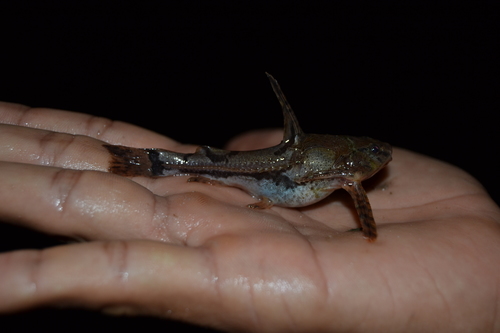
Marbled Talking Catfish
Amblydoras nauticus
Aquarium hobby
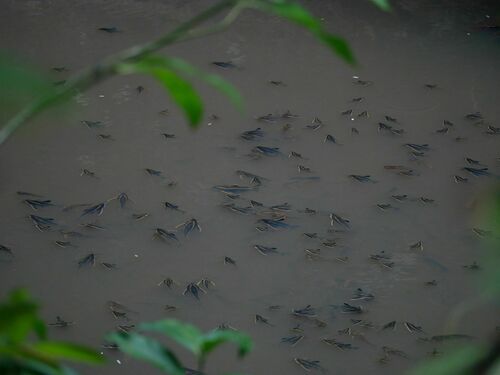
Raphael catfish
Platydoras costatus
Aquarium hobby

Ripsaw catfish
Oxydoras niger
Aquarium hobby
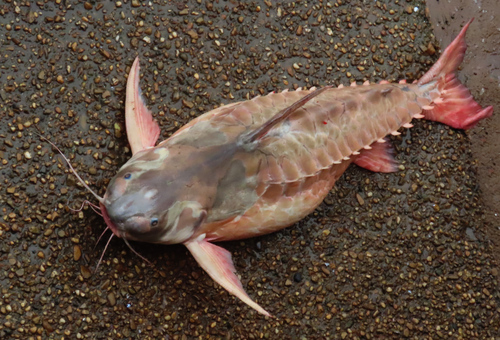
Rock-bacu
Lithodoras dorsalis
Aquarium hobby
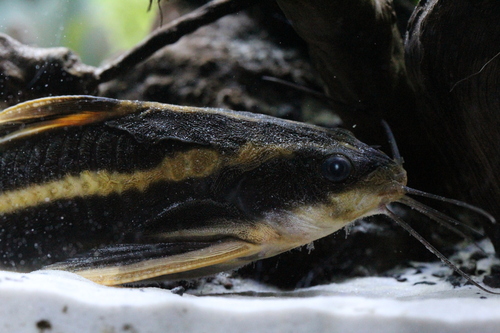
Striped Raphael catfish
Platydoras armatulus
Aquarium hobby

Whitebarred catfish
Agamyxis pectinifrons
Aquarium hobby