Home / Fishes / Catfish / Trachydoras steindachneri
No federal permit to keepTrachydoras steindachneri
Trachydoras steindachneri
Fishes › Catfish (Siluriformes) › Doradidae (Thorny catfish)
Trachydoras steindachneri is a species of thorny catfish native to the Amazon basin of Bolivia, Brazil, Colombia, Ecuador and Peru.
Intro from Wikipedia (CC BY-SA 4.0)
Care at a glance
Species-specific aquarium care
- Tank: At least 24 in long and 12 in front to back for one adult (adults commonly reach about 6.3 in / 16 cm).
- Water: Freshwater.
- Layout: Lives on or near the bottom: floor space and hiding places matter more than height.
- Availability: Rarely or never seen in the aquarium trade; expect to source it from specialists or not at all.
Calculated from this species' own FishBase record: tank size from its typical adult length and swimming zone, water values from its recorded ranges. The group guide below fills in general care.
Care guide
Species care notes
- Tank: a base of at least 35 × 15 in (roughly 27 US gallons); space needed is rated “large tank”.
- Water: a fairly wide range, from slightly acidic to slightly alkaline, 75–79 °F, pH 6–7, 0–20 dGH.
- Difficulty: Moderate (Seriously Fish rating).
Short excerpts from the species profile:
- Setup: “This species will appreciate a densely planted tank with an abundance of hiding places in the form of caves, bogwood and flowerpots.”
- Diet: “Bottom feeder so sinking foods are advised.”
- Tankmates: “Community fish suitable for a variety of setups including smaller fish such as tetras and barbs and can also be kept with peaceful dwarf cichlids and gouramis.”
From the Seriously Fish profile for this species, which has the full habitat, maintenance, diet, behaviour and breeding write-up 167
Thorny catfish
Applies to most species in this group. Habitat: South American doradids include nocturnal Raphael catfish sheltering among roots and vegetation in sluggish tributaries, creeks and swamps. [fg181-raph]. Individual species can differ, so compare with the species numbers above and the linked sources.
Housing & setup
- For Platydoras armatulus, provide at least 120 × 30 × 30 cm; this minimum does not house giant doradids.
- Use subdued lighting and numerous roomy wood, pot or pipe refuges.
- Deliver sinking food after lights-out to reach hidden fish.
- Oxydoras niger needs very large accommodation and adult-sized drainpipe or wood shelters.
- Guard heaters against resting fish, particularly large Oxydoras.
Climate & lighting
| Water | 75.2–86°F |
Diet
- Sinking catfish pellets or tablets.
- Frozen bloodworms.
- Earthworms.
- Chopped mussel for larger Oxydoras.
Social life
- Platydoras armatulus tolerates its own kind and may share shelters; Oxydoras is also generally peaceful. Choose companions too large to swallow.
Handling
- Avoid mesh entanglement when transferring spiny doradids; protect yourself from sharp pectoral spines and lateral scutes.
Health watch
- Heater-contact burns in large sheltering catfish.
- Ammonia-related gill injury in poorly maintained systems.
- Skin parasites and secondary bacterial infections; general aquarium-fish risks.
Understanding the animal
In the wild
In the wild
From this species’ own FishBase record (habitat, bottom type, water and breeding data), not its family. Good care copies these conditions.1
| Where it lives | Lives in freshwater. Stays near the bottom. |
| Water it lives in | Freshwater. |
| Climate | Tropical climate. |
Native climate (measured)
Native climate (measured)
| Warm-season highs | about 90°F (up to 92°F in the hottest sampled areas) |
| Cool-season lows | about 70°F (down to 63°F in the coldest sampled areas) |
| Average temperature | 78–81°F across sampled records |
| Relative humidity | 81–85% on average (driest month about 79%) |
| Rainfall | about 2342 mm a year |
Measured at 98 wild occurrence records sampled against WorldClim 2.1 climate data (1970–2000 averages). Air conditions in the range are ecological context, not enclosure settings: microhabitats such as burrows, leaf litter or basking rocks can be cooler, warmer or more humid.
From the sources
From the sources
Quoted from the matching sections of reputable sources for this exact species. Specialist databases are used first; Wikipedia (community-edited, CC BY-SA 4.0) only fills gaps. Other sources are short credited quotes.
| Where it lives | Home ranges Population dynamics Growth parameters Max. ages / sizes Length-weight rel. Length-frequencies Mass conversion Recruitment Abundance Life cycle Reproduction Maturity Maturity/Gills rel. — FishBase |
Data and studies
The numbers
The numbers
Each bar is what one source reports. Where several sources weigh in, the dashed gold band marks their average.
Typical adult weight
Average adult body mass in each database (FishBase gives the maximum recorded weight).
Adult length
Maximum recorded length. Measured as standard length (snout to the base of the tail, not counting the tail fin). Fish in home aquariums often stay smaller than wild records.
Water temperature
Range the species tolerates; aim for the middle.
pH
Water hardness
Minimum tank footprint
Seriously Fish recommends a tank base of at least 35 × 15 in (about 27 US gallons).
Sources for this sheet
- FishBase (Froese & Pauly, eds.), version 24.07 Peer-reviewed researchThe global scientific database on fishes, maintained by a consortium of research institutions; every value is referenced.
- Seriously Fish species profiles Experienced keeper or breederLong-running aquarium reference written and peer-checked by experienced fishkeepers and ichthyologists; each profile covers habitat, tank size, water, diet, behaviour and breeding.
- Seriously Fish: Platydoras armatulus Experienced keeper or breederAdded in the 2026 source-checked care-guide review.
- ScotCat: Oxydoras niger factsheet Experienced keeper or breederAdded in the 2026 source-checked care-guide review.
- Merck Veterinary Manual: Disorders and Diseases of Fish Zoo, university or veterinaryAdded in the 2026 source-checked care-guide review.
- Wikipedia (species article) Community referenceFree encyclopedia; useful overviews with their own citations. Intro text is quoted under CC BY-SA 4.0.
More thorny catfish

Giant Talking Catfish
Megalodoras uranoscopus
Aquarium hobby
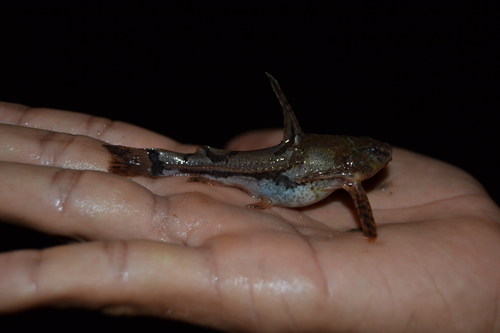
Marbled Talking Catfish
Amblydoras nauticus
Aquarium hobby

Ripsaw catfish
Oxydoras niger
Aquarium hobby
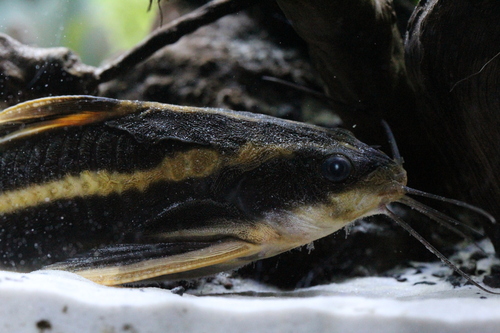
Striped Raphael catfish
Platydoras armatulus
Aquarium hobby

Whitebarred catfish
Agamyxis pectinifrons
Aquarium hobby
Black-top Mouse Catfish
Hassar orestis
Aquarium hobby