
Home / Amphibians / Salamanders and newts / Eastern tiger salamander
Federal restrictions applyEastern tiger salamander
Ambystoma tigrinum
Amphibians › Salamanders and newts (Caudata) › Ambystomatidae (Axolotls and mole salamanders)
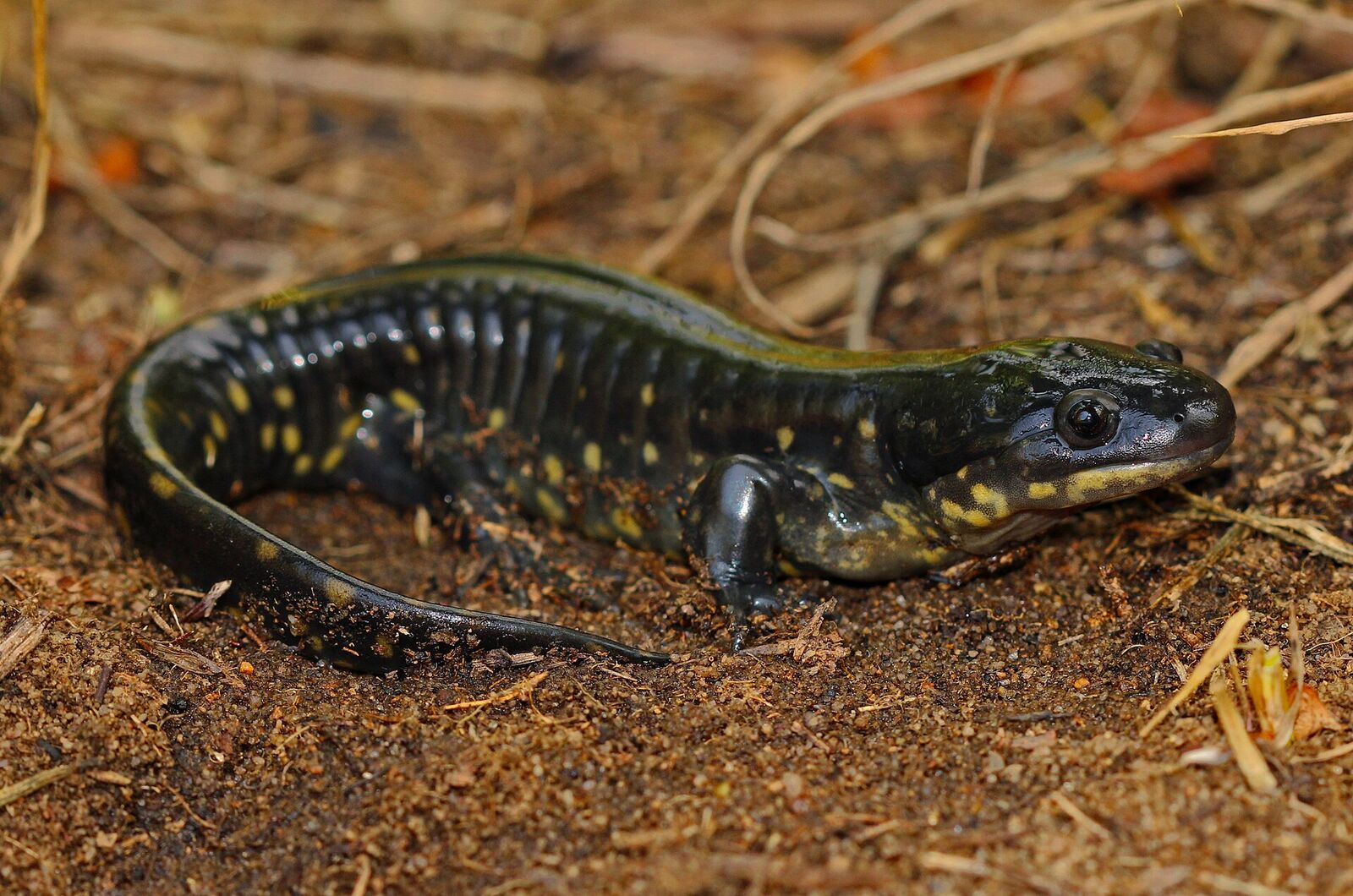
Tiger salamanders are large burrowing salamanders that can live 10–25 years in captivity and need cool, deep, moist substrate.
Warnings
Care guide
Care
- Deep, moist substrate to burrow in and cool temperatures; they hide underground to stay cool and moist.
Sources animaldiversity.org
Understanding the animal
In the wild
In the wild
Researched for this exact species, not its family. Wild conditions are context, not enclosure settings.123
| Where it lives | Eastern and central North American forests, grasslands and coastal pine barrens with burrowable uplands beside breeding ponds. New York populations use sandy pine-oak landscapes and fish-free seasonal or permanent ponds. |
| Ground it lives on | Loose sandy loam or loamy sand with underground burrows and surface litter. |
| Water it lives in | Freshwater, still fish-free ponds for breeding and aquatic larvae; chemistry and temperature ranges were not established. |
| Climate | Adults need access to suitable humidity and burrow underground to reach appropriate humidity levels. During dry periods, large numbers have been found beneath suitable cover or underground. The provided source text gives no specific temperatures in F. |
| Active | Nocturnal when above ground; spends most of the year underground. |
| Social life | Generally solitary outside breeding gatherings. |
| Wild diet | Worms, insects, slugs and snails; larvae eat small crustaceans and insect larvae, then larger aquatic prey including other larvae. |
| Behavior to plan for | Adults dig deeply to escape surface temperature extremes. Adults are terrestrial after metamorphosis, while larvae require water. |
Native climate (measured)
Native climate (measured)
| Warm-season highs | about 83°F (up to 90°F in the hottest sampled areas) |
| Cool-season lows | about 4°F (down to 0°F in the coldest sampled areas) |
| Average temperature | 43–59°F across sampled records |
| Relative humidity | 71–73% on average (driest month about 60%) |
| Rainfall | about 826 mm a year |
| Winters | Cool to cold winters (lows around 4°F) in much of its native range. Seasonal slowdown may be relevant, but species-specific biology determines whether brumation or hibernation occurs. |
Measured at 27 wild occurrence records sampled against WorldClim 2.1 climate data (1970–2000 averages). Air conditions in the range are ecological context, not enclosure settings: microhabitats such as burrows, leaf litter or basking rocks can be cooler, warmer or more humid.
Profile
Profile
Researched for this exact species. Sources are listed under In the wild above.
History
Ambystoma tigrinum is a widely distributed North American mole salamander with fully metamorphosed adults adapted to terrestrial life while still depending on nearby ponds or small waters for breeding.
Data and studies
The numbers
The numbers
Each bar is what one source reports. Where several sources weigh in, the dashed gold band marks their average.
Lifespan in care
Maximum recorded lifespan
Longest recorded lifespan reported by each database; typical lifespans are usually shorter. The AnAge record comes from an animal in human care.
Typical adult weight
Average adult body mass in each database (FishBase gives the maximum recorded weight).
Incubation
Female maturity
Veterinary & husbandry research
Veterinary & husbandry research
- Monoamines and their metabolites in the amphibian (Ambystoma tigrinum) brain: quantitative changes during metamorphosis and captivity Norris DO et al., Comparative biochemistry and physiology. Comparative physiology 1992
- Scoliosis in a tiger salamander (Ambystoma tigrinum) associated with encysted digenetic trematodes of the genus Clinostomum Perpiñán D et al., Journal of wildlife diseases 2010
Peer-reviewed papers that mention this species alongside captivity, zoos, veterinary care or aquaculture. Some cover several species or mention it only in passing, so check the abstract. See all 10 on PubMed → PubMed
Sources for this sheet
- Animal Diversity Web (University of Michigan): Ambystoma tigrinum (CC BY-NC-SA 3.0) Zoo, university or veterinaryUniversity-hosted species account, mostly wild biology.
- AnAge: The Animal Ageing and Longevity Database (Human Ageing Genomic Resources) (CC BY 3.0) Peer-reviewed researchCurated, referenced longevity and life-history records for thousands of species; maximum lifespans are often from zoo animals.
- 50 CFR Part 16: Injurious wildlife (Lacey Act) Zoo, university or veterinaryCurrent federal regulation, read from eCFR.
- U.S. Association of Reptile Keepers v. Zinke (D.C. Cir. 2017) Zoo, university or veterinaryAppeals ruling that the Lacey Act's shipping ban does not cover moves between the continental states.
- AmphibiaWeb (University of California, Berkeley) (CC BY-NC) Peer-reviewed researchUniversity-hosted database of amphibian biology and conservation.
- GBIF Backbone Taxonomy (Global Biodiversity Information Facility) (CC BY 4.0) Peer-reviewed researchInternational scientific taxonomy used here for classification. GBIF Secretariat (2023). GBIF Backbone Taxonomy. Checklist dataset https://doi.org/10.15468/39omei, accessed via GBIF.org.
- Wikipedia (species article) (CC BY-SA 4.0) Community referenceFree encyclopedia; useful overviews with their own citations. Short excerpts are quoted under CC BY-SA 4.0, each credited with a link to its article.
- PubMed (U.S. National Library of Medicine) Peer-reviewed researchIndex of peer-reviewed veterinary, zoo and husbandry research.
- iNaturalist (captive observations) Community referenceCommunity observation platform run by the California Academy of Sciences and National Geographic; observations marked captive show animals living in homes, zoos and aquariums.
More axolotls and mole salamanders
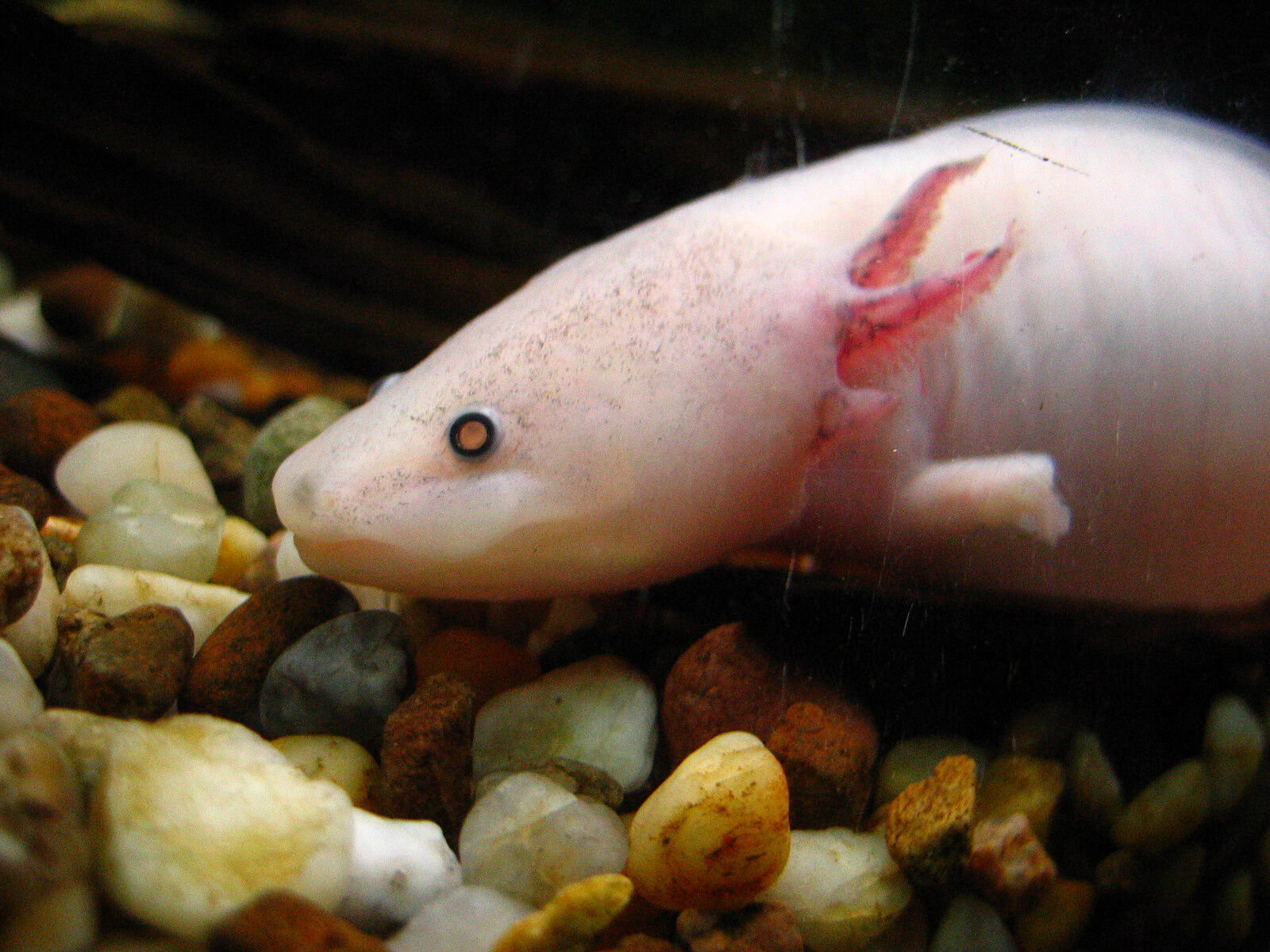
Axolotl
Ambystoma mexicanum
The forever-young salamander that regrows its limbs.
Pet trade

Barred tiger salamander
Ambystoma mavortium
Pet trade

Blue-spotted salamander
Ambystoma laterale
Pet trade

Lake Patzcuaro salamander
Ambystoma dumerilii
Pet trade

Marbled salamander
Ambystoma opacum
Pet trade

Spotted salamander
Ambystoma maculatum
Pet trade