
Home / Invertebrates / Spiders / Togo starburst baboon
No federal permit to keepTogo starburst baboon
Heteroscodra maculata
Invertebrates › Spiders (Araneae) › Theraphosidae (Tarantulas)
Heteroscodra maculata is an Old World species of tarantula which was first described in 1899 by Reginald Innes Pocock.
From Wikipedia: Heteroscodra maculata, CC BY-SA 4.0 (excerpt)

Care at a glance
Species-specific values
Values researched for this exact species. Air, surface and water temperatures are listed separately, and each source is kept as published rather than averaged.
| Minimum enclosure | At least 20 x 20 x 30 cm for an adult; larger secure enclosure preferred. Source: academy.herpeton.net | |
| Humidity | Keep humidity moderate to moderately high, with good ventilation. Source: academy.herpeton.net | |
| Diet | Suitable diet includes crickets, roaches, locusts, and other suitable insects. Source: academy.herpeton.net | |
| Social housing | House one tarantula per enclosure. Source: academy.herpeton.net | |
| Diet | Spiderlings: small prey such as fruit flies, flour beetles, or tiny crickets or roach nymphs. Source: thetarantulacollective.com | |
| Feeding frequency | Spiderlings: feed twice a week; juveniles: every 7–10 days; adults: every 2–3 weeks or as needed. Source: thetarantulacollective.com |
Understanding the animal
About this animal
About this animal
This species native to West Africa and is found primarily in Togo and Ghana. This species has many common names, of which Togo starburst and ornamental baboon are most frequently encountered.
From Wikipedia: Heteroscodra maculata, CC BY-SA 4.0 (excerpt)
In the wild
In the wild
| Overview | Heteroscodra maculata is an Old World species of tarantula which was first described in 1899 by Reginald Innes Pocock. This species native to West Africa and is found primarily in Togo and Ghana. This species has many common names, of which Togo starburst and ornamental baboon are most frequently encountered. — From Wikipedia: Heteroscodra maculata, CC BY-SA 4.0 (excerpt) |
| Behavior | Heteroscodra maculata specimens are quite fast, defensive and possess medically significant venom. As these are old-world species, they do not possess urticating hairs, which further encourages them to bite as a primary defense. They are an arboreal species, though younger specimens have been noted to burrow during their first few months of life. — From Wikipedia: Heteroscodra maculata, CC BY-SA 4.0 (excerpt) |
| Appearance and size | These tarantulas can reach their full size after about 3 years. When fully grown, these species can reach leg-spans of up to 13 cm. These spiders are characterized by their chalky white coloration with mottled black and brown markings. — From Wikipedia: Heteroscodra maculata, CC BY-SA 4.0 (excerpt) |
Sources for this sheet
- GBIF Backbone Taxonomy (Global Biodiversity Information Facility) (CC BY 4.0) Peer-reviewed researchInternational scientific taxonomy used here for classification. GBIF Secretariat (2023). GBIF Backbone Taxonomy. Checklist dataset https://doi.org/10.15468/39omei, accessed via GBIF.org.
- Wikipedia (species article) (CC BY-SA 4.0) Community referenceFree encyclopedia; useful overviews with their own citations. Short excerpts are quoted under CC BY-SA 4.0, each credited with a link to its article.
- iNaturalist (captive observations) Community referenceCommunity observation platform run by the California Academy of Sciences and National Geographic; observations marked captive show animals living in homes, zoos and aquariums.
More tarantulas
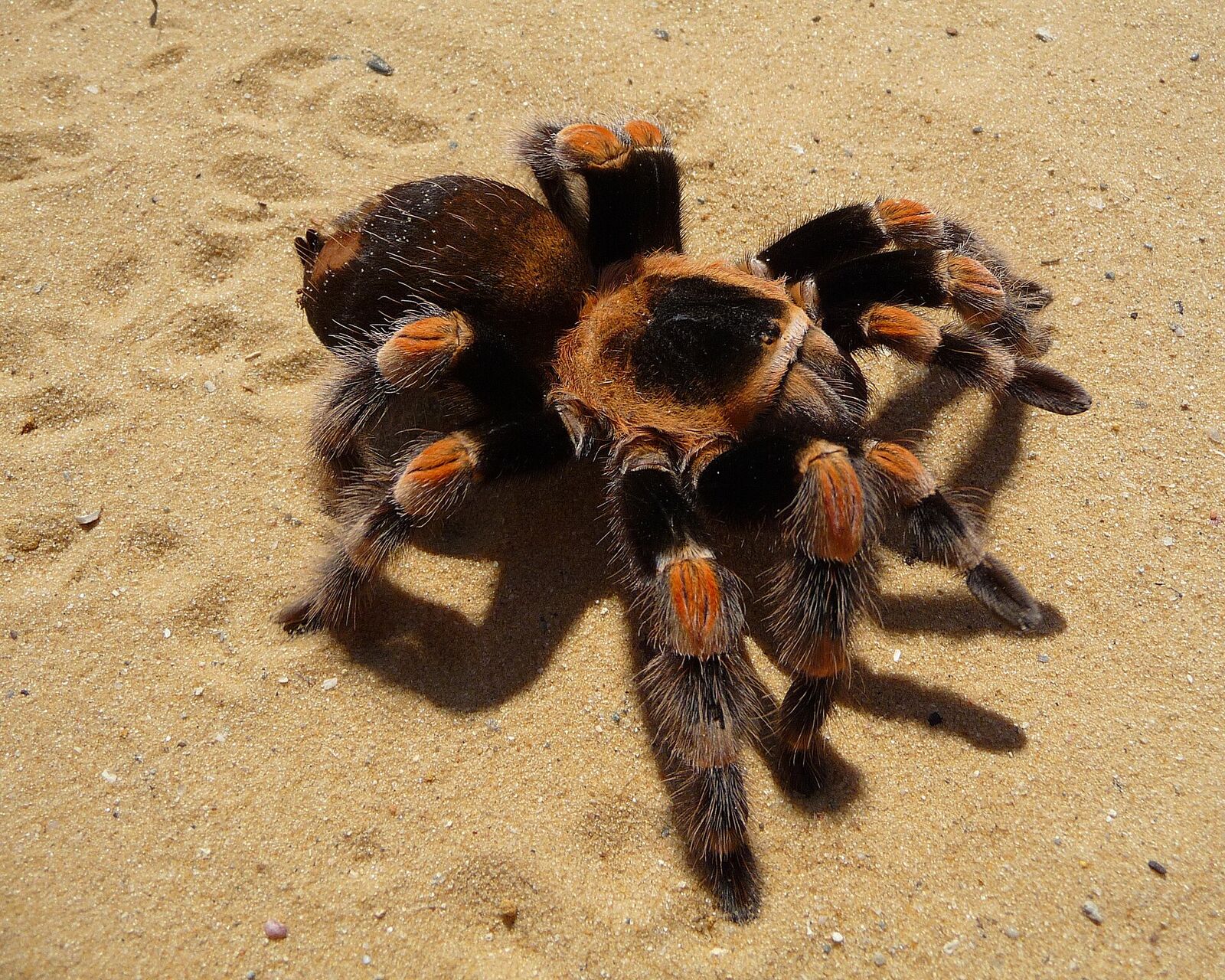
Mexican redknee tarantula
Brachypelma hamorii
A docile spider where females live 25–30 years.
Pet trade

African Horned Baboon Tarantula
Ceratogyrus darlingi
Pet trade
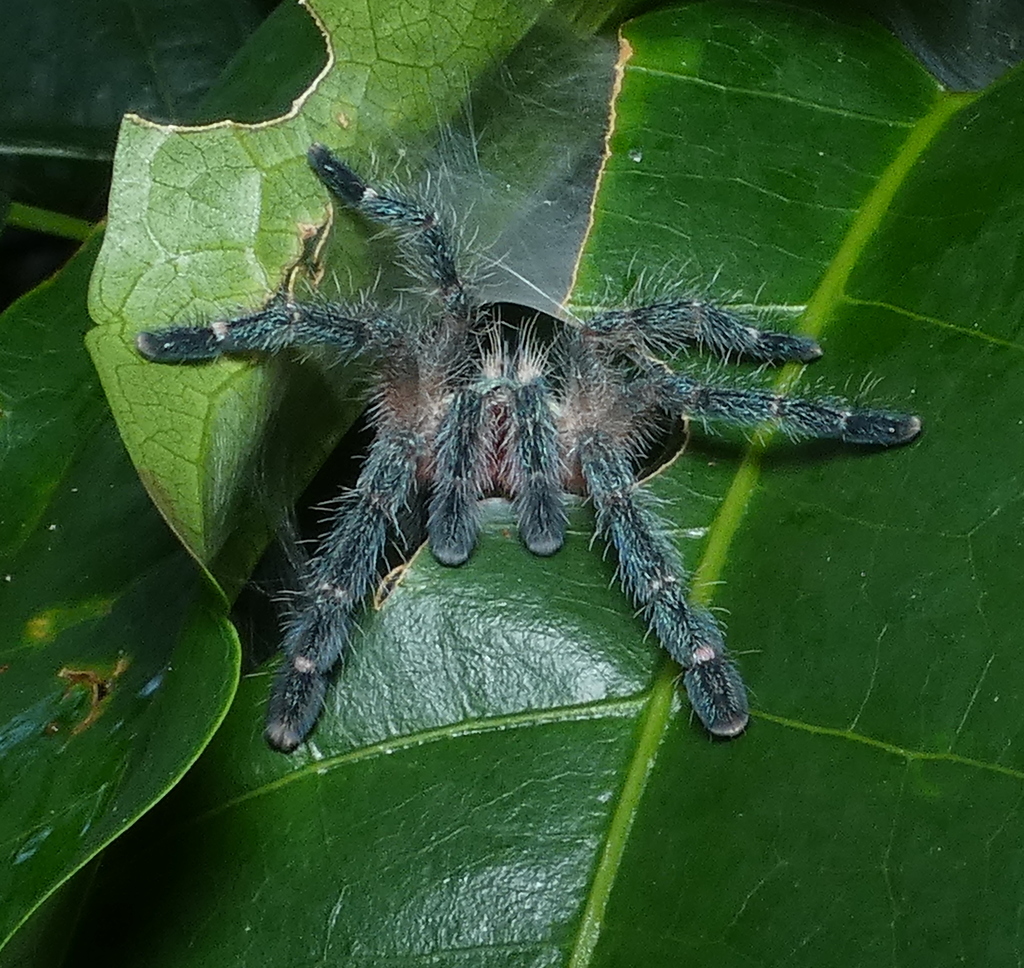
Amazon Ribbed Tarantula
Iridopelma hirsutum
Pet trade

Amula Redrump Tarantula
Brachypelma albiceps
Pet trade

Anantagiri’s Parachute Spider
Poecilotheria tigrinawesseli
Pet trade

Antilles pinktoe tarantula
Caribena versicolor
Pet trade