
Home / Reptiles / Turtles and tortoises / Jamaican slider
Federal restrictions applyJamaican slider
Trachemys terrapen
Reptiles › Turtles and tortoises (Testudines) › Emydidae (Pond turtles and box turtles)
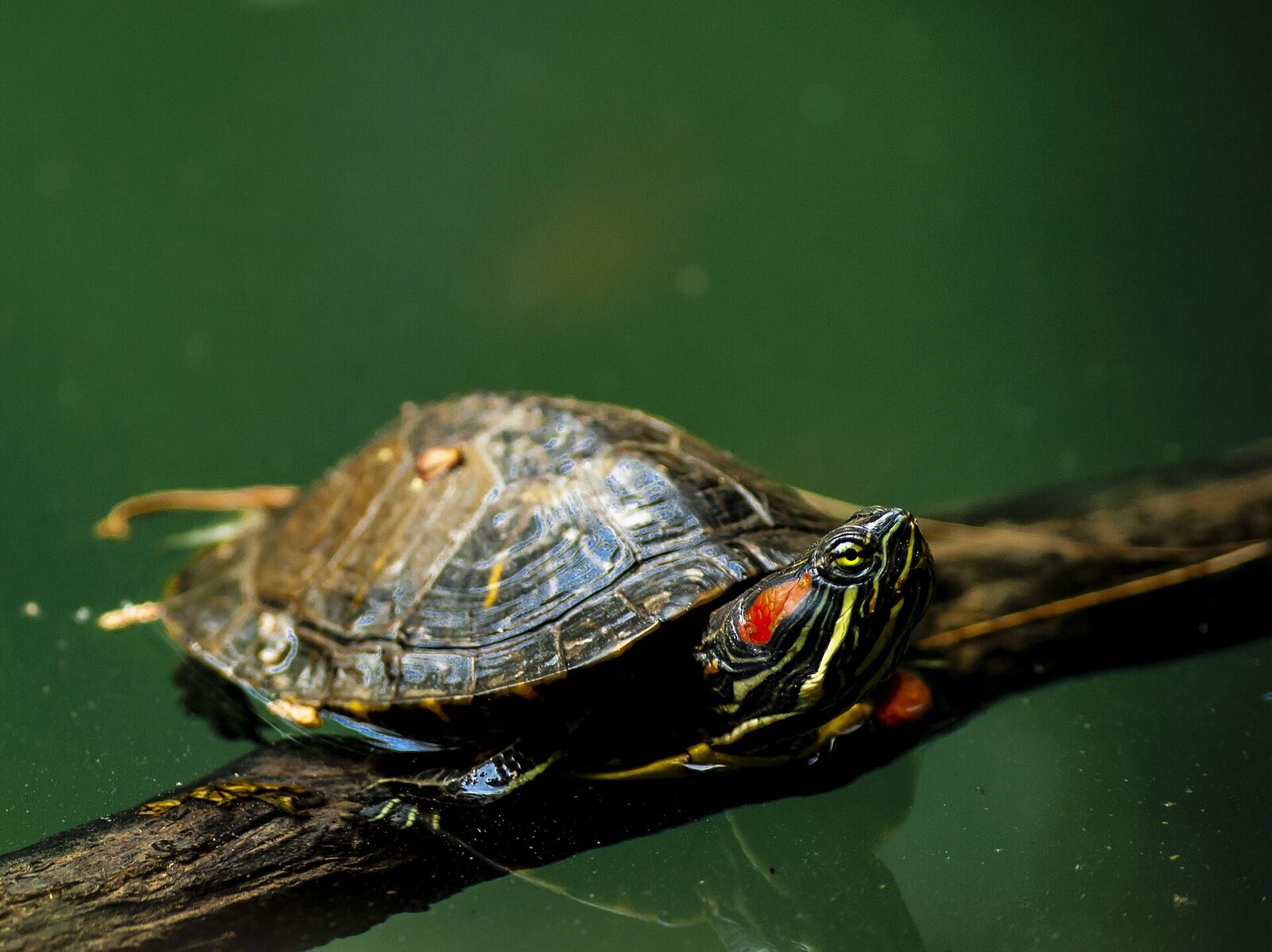
The Jamaican slider (Trachemys terrapen), also known as the Cat Island slider, is a species of fresh water turtle in the family Emydidae.
From Wikipedia: Jamaican slider, CC BY-SA 4.0 (excerpt)

Care at a glance
Species-specific values
Values researched for this exact species. Air, surface and water temperatures are listed separately, and each source is kept as published rather than averaged.
| Basking surface temperature | High 80's to low 90's °F Source: austinsturtlepage.com | |
| Warm side air temperature | Low to mid 80's °F Source: austinsturtlepage.com | |
| Water temperature | Low to mid 70's °F Source: austinsturtlepage.com | |
| Diet | Captive diet includes commercial turtle foods, feeder fish, aquatic plants, vegetables, some fruit, and invertebrates. Source: austinsturtlepage.com | |
| Social housing | Can be housed with same-region species or sliders if given adequate space; additional males may be aggressive; house only with similarly sized turtles. Source: austinsturtlepage.com | |
| Substrate | Habitat substrate may be dirt, sand, gravel, smooth or flat rocks, or driftwood. Source: austinsturtlepage.com | |
| Seasonal cooling | Tropical sliders should not be kept outdoors year-round and must be brought inside during cooler months. Source: austinsturtlepage.com |
Warnings
Understanding the animal
About this animal
About this animal
It is found in the Bahamas (where it is introduced) and Jamaica. As it is not currently found on any of the other surrounding islands in the region, it is assumed that the Jamaican slider was introduced from one of these countries to the other.
From Wikipedia: Jamaican slider, CC BY-SA 4.0 (excerpt)
In the wild
In the wild
| Overview | The Jamaican slider (Trachemys terrapen), also known as the Cat Island slider, is a species of fresh water turtle in the family Emydidae. It is found in the Bahamas (where it is introduced) and Jamaica. As it is not currently found on any of the other surrounding islands in the region, it is assumed that the Jamaican slider was introduced from one of these countries to the other. — From Wikipedia: Jamaican slider, CC BY-SA 4.0 (excerpt) |
| Where it lives | These are freshwater turtles, inhabiting most fresh to brackish wetlands throughout their range. This includes swamps, streams and ponds, even ephemeral or temporary ponds. — From Wikipedia: Jamaican slider, CC BY-SA 4.0 (excerpt) |
| Wild diet | Typical omnivores, feeding on a variety of fruits particularly Pond-apple (Annona glabra) and other vegetation, small fish, snails, frogs, aquatic invertebrates, carrion and may even attack young birds if left defenseless. However, fecal samples have shown that aquatic algae form the bulk of their diet. — From Wikipedia: Jamaican slider, CC BY-SA 4.0 (excerpt) |
| Reproduction | Breeding season in Jamaican stocks can run from February to September. The Bahamian stocks may have a more limited or reduced breeding season due to the limited availability of freshwater. Clutch size has been observed from both countries to be 3–8 eggs and the turtles can lay 3–4 clutches per year. — From Wikipedia: Jamaican slider, CC BY-SA 4.0 (excerpt) |
| Appearance and size | Jamaican sliders are freshwater turtles of moderate size. Males average at 200 mm carapace length (CL) and females are larger at 270 mm CL. The adults are a dark brown to olive colour with very faint markings. — From Wikipedia: Jamaican slider, CC BY-SA 4.0 (excerpt) |
| Conservation | The Jamaican slider is listed as Vulnerable in the 2007 IUCN Red List but is not currently listed under CITES. The populations in both Jamaica and the Bahamas are largely effected by introduced predators to those islands. These include dogs, cats, raccoons, rats, pigs and mongooses. — From Wikipedia: Jamaican slider, CC BY-SA 4.0 (excerpt) |
Native climate (measured)
Native climate (measured)
| Warm-season highs | about 89°F (up to 90°F in the hottest sampled areas) |
| Cool-season lows | about 65°F (down to 62°F in the coldest sampled areas) |
| Average temperature | 74–78°F across sampled records |
| Relative humidity | 76–80% on average (driest month about 72%) |
| Rainfall | about 1320 mm a year |
Measured at 23 wild occurrence records sampled against WorldClim 2.1 climate data (1970–2000 averages). Air conditions in the range are ecological context, not enclosure settings: microhabitats such as burrows, leaf litter or basking rocks can be cooler, warmer or more humid.
Data and studies
The numbers
The numbers
Each bar is what one source reports. Where several sources weigh in, the dashed gold band marks their average.
Incubation
Sources for this sheet
- Myhrvold et al. (2015). An amniote life-history database. Ecology 96: 3109 Peer-reviewed researchPeer-reviewed compilation of life-history data for over 21,000 birds, mammals and reptiles.
- 50 CFR 17.11: Endangered and threatened wildlife Zoo, university or veterinaryCurrent federal Endangered Species Act list.
- 21 CFR 1240.62: Turtles under 4 inches (FDA) Zoo, university or veterinaryFederal ban on selling small turtles.
- The Reptile Database Peer-reviewed researchScientist-curated catalog of every reptile species, with taxonomy and literature.
- GBIF Backbone Taxonomy (Global Biodiversity Information Facility) (CC BY 4.0) Peer-reviewed researchInternational scientific taxonomy used here for classification. GBIF Secretariat (2023). GBIF Backbone Taxonomy. Checklist dataset https://doi.org/10.15468/39omei, accessed via GBIF.org.
- Wikipedia (species article) (CC BY-SA 4.0) Community referenceFree encyclopedia; useful overviews with their own citations. Short excerpts are quoted under CC BY-SA 4.0, each credited with a link to its article.
More pond turtles and box turtles
Red-eared slider
Trachemys scripta elegans
America's classic pet turtle, built to last decades.
Pet trade

Alabama map turtle
Graptemys pulchra
Zoos & aquariums

Baja California slider
Trachemys nebulosa
Pet trade

Barbour's map turtle
Graptemys barbouri
Zoos & aquariums

Black-knobbed map turtle
Graptemys nigrinoda
Pet trade

Blanding's turtle
Emydoidea blandingii
Pet trade