
Home / Reptiles / Lizards / Varanidae / Yellow monitor
Federal restrictions applyYellow monitor
Varanus flavescens
Reptiles › Lizards (Lacertilia) › Varanidae (Monitor lizards)
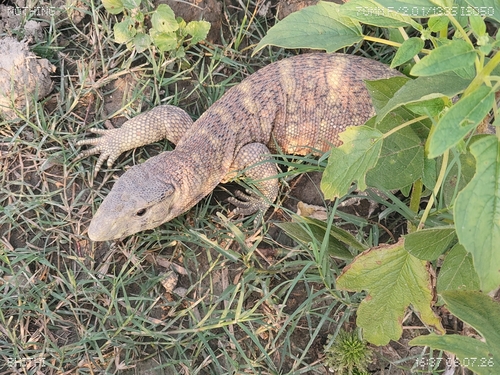
The yellow monitor (Varanus flavescens) or golden monitor is a monitor lizard native to South Asia.
From Wikipedia: Yellow monitor, CC BY-SA 4.0 (excerpt)
Care at a glance
Species-specific values
Values researched for this exact species. Air, surface and water temperatures are listed separately, and each source is kept as published rather than averaged.
| Basking surface temperature | 113 °F (45 °C) Source: biocyclopedia.com | |
| Substrate | Provide a soft substrate for digging. Source: biocyclopedia.com | |
| Water to submerge in | Provide enough water to allow submerging for at least part of the year. Source: biocyclopedia.com | |
| Diet | A mix of small mammals, amphibians, and invertebrates is likely the best diet. Source: biocyclopedia.com | |
| Feeding frequency | In captivity in India, three large frogs per week provide sufficient nutrition. Source: biocyclopedia.com |
Warnings
Understanding the animal
In the wild
In the wild
| Overview | The yellow monitor (Varanus flavescens) or golden monitor is a monitor lizard native to South Asia. — From Wikipedia: Yellow monitor, CC BY-SA 4.0 (excerpt) |
| Behavior | The yellow monitors thermoregulates by moving between sunny and shady areas, similar to other diurnal lizards. There is also one report of a yellow monitor lying on a pile of hot ash left by a human-lit fire, seemingly to gain heat from it. It may be capable of play behaviour. — From Wikipedia: Yellow monitor, CC BY-SA 4.0 (excerpt) |
| Appearance and size | The yellow monitor is a medium-sized monitor, measuring between 45 and 95 cm including the tail and weighing up to 1.45 kg. It has subcorneal teeth, scarcely compressed. Its snout is short and convex, measuring a little less than the distance from the anterior border of the orbit to the anterior border of the ear; canthus rostralis distinct. — From Wikipedia: Yellow monitor, CC BY-SA 4.0 (excerpt) |
| Conservation | International trade of the yellow monitor is regulated under CITES Appendix I; it is listed as a legally protected species in India under Schedule I of the Wild Life (Protection) Act, 1972, in Nepal under the National Parks and Wildlife Conservation Act 1973, and in Bangladesh under the Wildlife (Conservation and Security) Act 2012. — From Wikipedia: Yellow monitor, CC BY-SA 4.0 (excerpt) |
Read about this species in the wild at The Reptile Database.
Native climate (measured)
Native climate (measured)
| Warm-season highs | about 98°F (up to 105°F in the hottest sampled areas) |
| Cool-season lows | about 52°F (down to 47°F in the coldest sampled areas) |
| Average temperature | 75–80°F across sampled records |
| Relative humidity | 65–76% on average (driest month about 54%) |
| Rainfall | about 1440 mm a year, with strong wet and dry seasons |
Measured at 53 wild occurrence records sampled against WorldClim 2.1 climate data (1970–2000 averages). Air conditions in the range are ecological context, not enclosure settings: microhabitats such as burrows, leaf litter or basking rocks can be cooler, warmer or more humid.
Profile
Profile
Researched for this exact species. Sources are listed under In the wild above.
Data and studies
The numbers
The numbers
Each bar is what one source reports. Where several sources weigh in, the dashed gold band marks their average.
Maximum recorded lifespan
Longest recorded lifespan reported by each database; typical lifespans are usually shorter.
Typical adult weight
Average adult body mass in each database (FishBase gives the maximum recorded weight).
Adult snout-to-vent length
Body length without the tail.
Incubation
Female maturity
Sources for this sheet
- Myhrvold et al. (2015). An amniote life-history database. Ecology 96: 3109 Peer-reviewed researchPeer-reviewed compilation of life-history data for over 21,000 birds, mammals and reptiles.
- 50 CFR 17.11: Endangered and threatened wildlife Zoo, university or veterinaryCurrent federal Endangered Species Act list.
- Species+ (UNEP-WCMC and the CITES Secretariat) Zoo, university or veterinaryThe official database of species listed under CITES. UNEP (2026). The Species+ Website. Nairobi, Kenya. Compiled by UNEP-WCMC, Cambridge, UK. Available at: www.speciesplus.net. [Accessed 04/10/2026].
- USFWS International Affairs: CITES Zoo, university or veterinaryFederal agency that issues CITES permits.
- The Reptile Database Peer-reviewed researchScientist-curated catalog of every reptile species, with taxonomy and literature.
- GBIF Backbone Taxonomy (Global Biodiversity Information Facility) (CC BY 4.0) Peer-reviewed researchInternational scientific taxonomy used here for classification. GBIF Secretariat (2023). GBIF Backbone Taxonomy. Checklist dataset https://doi.org/10.15468/39omei, accessed via GBIF.org.
- Wikipedia (species article) (CC BY-SA 4.0) Community referenceFree encyclopedia; useful overviews with their own citations. Short excerpts are quoted under CC BY-SA 4.0, each credited with a link to its article.
More monitor lizards
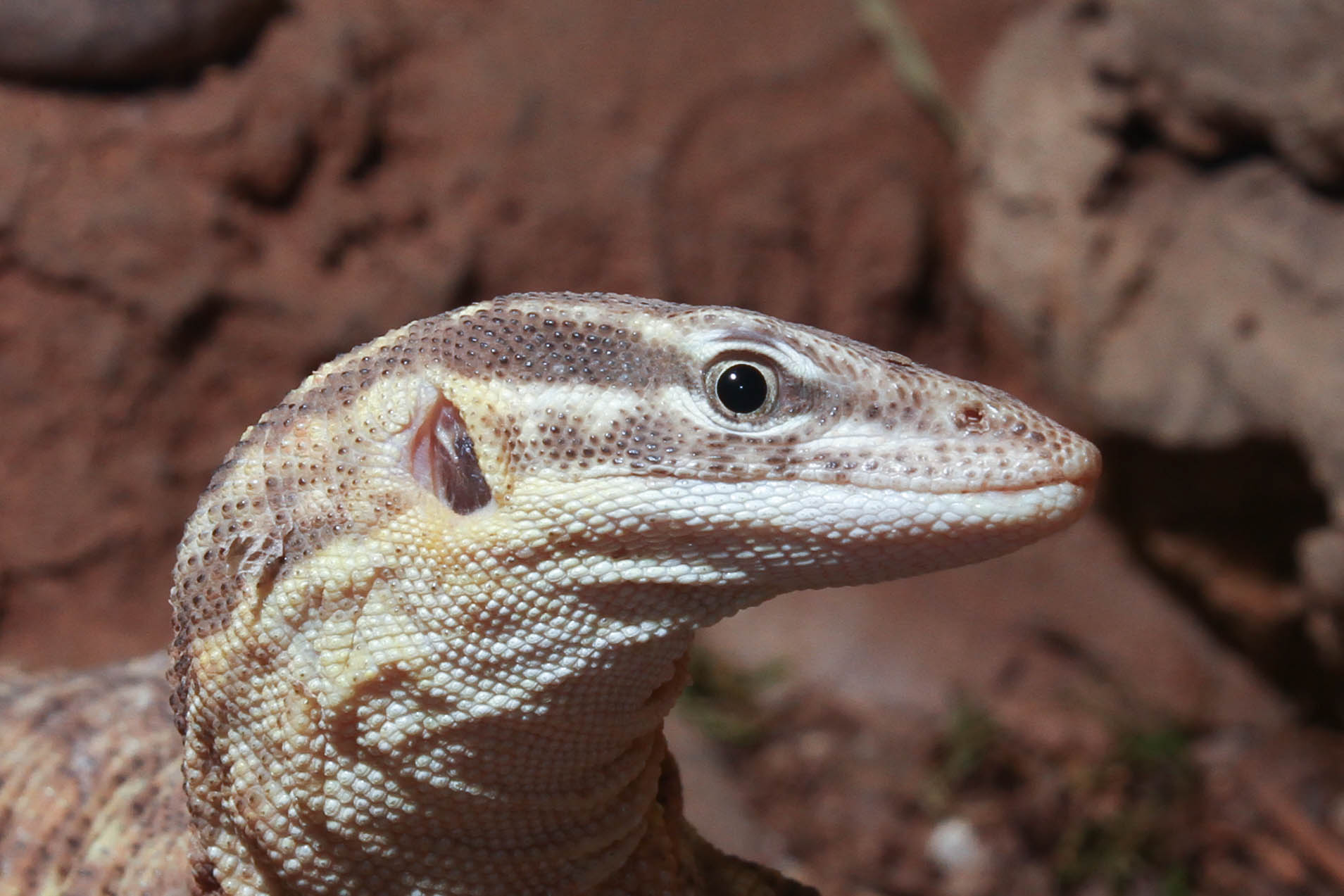
Ackie (spiny-tailed) monitor
Varanus acanthurus
A pint-sized monitor with a huge personality.
Pet trade
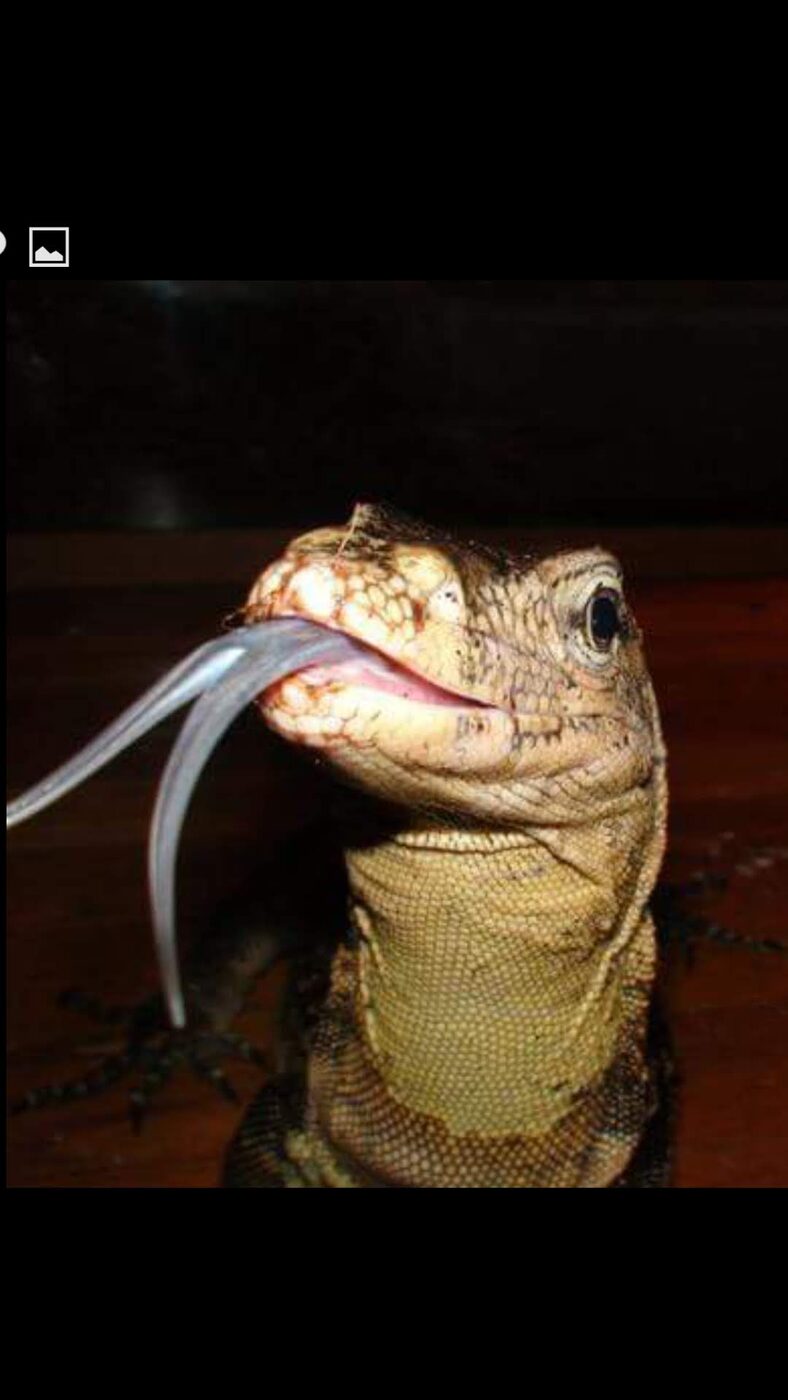
Asian water monitor
Varanus salvator
An intelligent, swimming giant: the "gentle giant" of monitors.
Pet trade
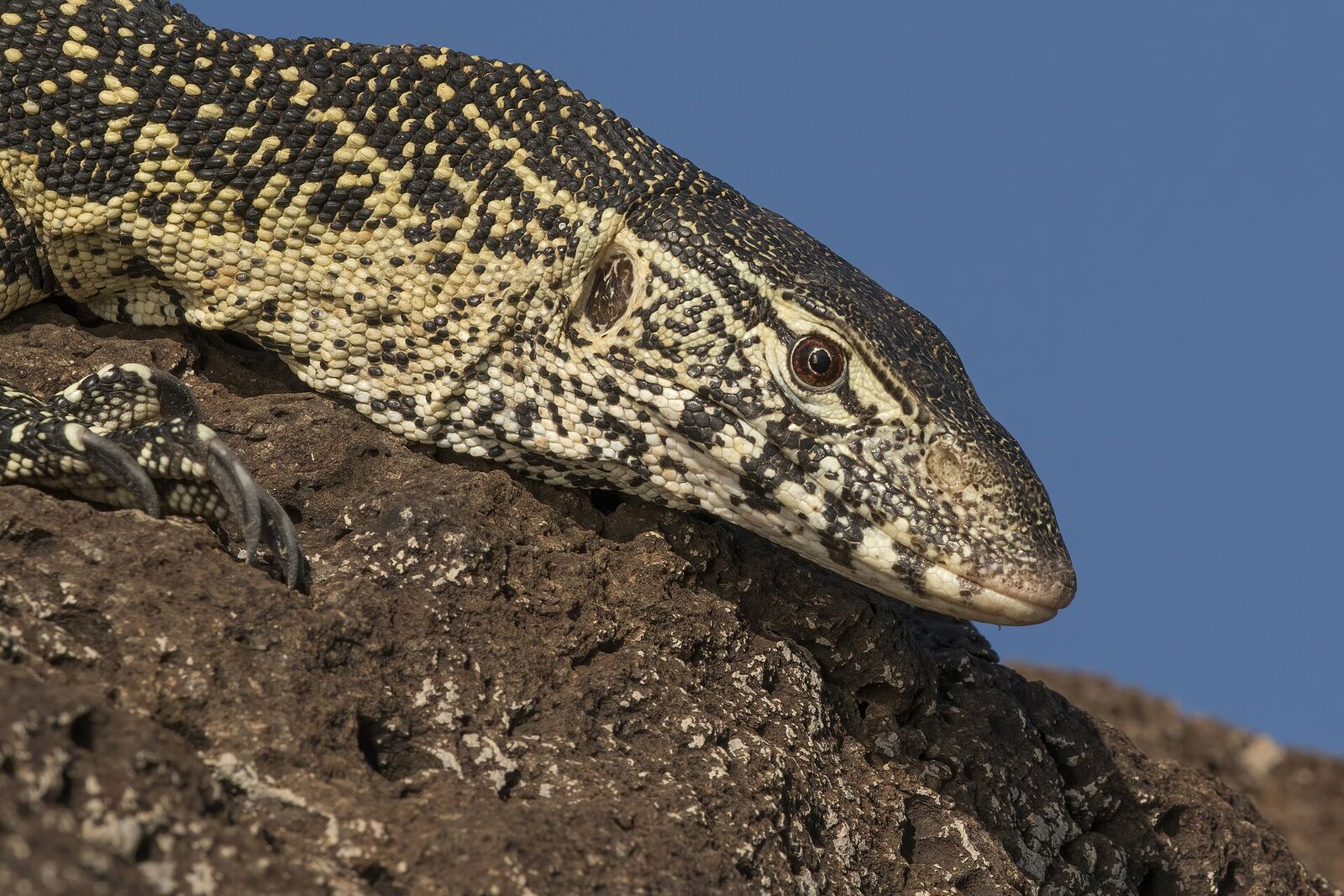
Nile monitor
Varanus niloticus
Africa's longest lizard, fast, bold and powerful.
Pet trade

Argus monitor
Varanus panoptes
Pet trade

Biak Emerald Monitor
Varanus kordensis
Pet trade

Black tree monitor
Varanus beccarii
Pet trade