
Home / Birds / Parrots / Venezuelan parakeet
Some federal rules applyVenezuelan parakeet
Pyrrhura emma
Birds › Parrots (Psittaciformes) › Psittacidae (New World and African parrots)
The Venezuelan parakeet (Pyrrhura emma) or Emma's conure is a species of bird in subfamily Arinae of the family Psittacidae, the African and New World parrots.
From Wikipedia: Venezuelan parakeet, CC BY-SA 4.0 (excerpt)

Care at a glance
Species-specific values
Values researched for this exact species. Air, surface and water temperatures are listed separately, and each source is kept as published rather than averaged.
| Minimum enclosure | Suspended aviaries measuring 600 mm x 900 mm high and 1 800 mm deep are ideal. Source: wwbirds.co.za | |
| Social housing | Keep only one pair per cage. Source: wwbirds.co.za | |
| Substrate | Use a layer of not-too-coarse wood shavings about 50 mm deep at the bottom of the nest box. Source: wwbirds.co.za | |
| Diet | Feed moistened Hi Performance Pro 18 with grated vegetables, or soaked and cooked corn and legumes; also provide fine dry seeds and limited sprouted sunflower seed. Source: wwbirds.co.za | |
| Diet | Do not add fruit; beans, especially soya, must be cooked thoroughly. Source: wwbirds.co.za | |
| Diet | Also provide fine dry seeds such as millet, manna, canary seed, and a limited amount of sprouted sunflower seed. Source: wwbirds.co.za |
Understanding the animal
About this animal
About this animal
It is endemic to Venezuela.
From Wikipedia: Venezuelan parakeet, CC BY-SA 4.0 (excerpt)
In the wild
In the wild
| Overview | The Venezuelan parakeet (Pyrrhura emma) or Emma's conure is a species of bird in subfamily Arinae of the family Psittacidae, the African and New World parrots. It is endemic to Venezuela. — From Wikipedia: Venezuelan parakeet, CC BY-SA 4.0 (excerpt) |
| Where it lives | The Venezuelan parakeet is found in two separate areas of the Venezuelan Coastal Range. One population is found between Yaracuy and Miranda and the other from Anzoátegui to Sucre and northern Monagas. It inhabits the interior and edges of humid and wet forest and also clearings with scattered trees. — From Wikipedia: Venezuelan parakeet, CC BY-SA 4.0 (excerpt) |
| Wild diet | The Venezuelan parakeet's foraging behavior and diet are not well known. It usually travels in flocks of up to about 30 individuals, and has been recorded feeding on fruits, flowers, and nectar. — From Wikipedia: Venezuelan parakeet, CC BY-SA 4.0 (excerpt) |
| Reproduction | The Venezuelan parakeet's breeding season is thought to be May to July but nothing else is known about its breeding biology. — From Wikipedia: Venezuelan parakeet, CC BY-SA 4.0 (excerpt) |
| Appearance and size | The Venezuelan parakeet is 22 to 23 cm long. Adults have a blue crown, a plum-red face, a gray-brown nape, and whitish ear coverts. Their upperparts are mostly green with a red-brown rump. — From Wikipedia: Venezuelan parakeet, CC BY-SA 4.0 (excerpt) |
| History and naming | The Venezuelan parakeet's taxonomy is unsettled. At one time it was considered a subspecies of what is now the white-eared parakeet (P. leucotis). The International Ornithological Committee (IOC) and BirdLife International's Handbook of the Birds of the World (HBW) treat it as a full species. — From Wikipedia: Venezuelan parakeet, CC BY-SA 4.0 (excerpt) |
Native climate (measured)
Native climate (measured)
| Warm-season highs | about 85°F (up to 89°F in the hottest sampled areas) |
| Cool-season lows | about 65°F (down to 57°F in the coldest sampled areas) |
| Average temperature | 71–78°F across sampled records |
| Relative humidity | 76–79% on average (driest month about 70%) |
| Rainfall | about 1179 mm a year |
Measured at 10 wild occurrence records sampled against WorldClim 2.1 climate data (1970–2000 averages). Air conditions in the range are ecological context, not enclosure settings: microhabitats such as burrows, leaf litter or basking rocks can be cooler, warmer or more humid.
Profile
Profile
Researched for this exact species. Sources are listed under In the wild above.
History
The Venezuelan parakeet's taxonomy is unsettled. At one time it was considered a subspecies of what is now the white-eared parakeet (P. leucotis). The International Ornithological Committee (IOC) and BirdLife International's Handbook of the Birds of the World (HBW) treat it as a full species.
From Wikipedia: Venezuelan parakeet, CC BY-SA 4.0 (excerpt)
Data and studies
The numbers
The numbers
Each bar is what one source reports. Where several sources weigh in, the dashed gold band marks their average.
Maximum recorded lifespan
Longest recorded lifespan reported by each database; typical lifespans are usually shorter. The AnAge record comes from an animal in human care.
Typical adult weight
Average adult body mass in each database (FishBase gives the maximum recorded weight).
Female maturity
Sources for this sheet
- AnAge: The Animal Ageing and Longevity Database (Human Ageing Genomic Resources) (CC BY 3.0) Peer-reviewed researchCurated, referenced longevity and life-history records for thousands of species; maximum lifespans are often from zoo animals.
- Myhrvold et al. (2015). An amniote life-history database. Ecology 96: 3109 Peer-reviewed researchPeer-reviewed compilation of life-history data for over 21,000 birds, mammals and reptiles.
- Species+ (UNEP-WCMC and the CITES Secretariat) Zoo, university or veterinaryThe official database of species listed under CITES. UNEP (2026). The Species+ Website. Nairobi, Kenya. Compiled by UNEP-WCMC, Cambridge, UK. Available at: www.speciesplus.net. [Accessed 04/10/2026].
- USFWS International Affairs: CITES Zoo, university or veterinaryFederal agency that issues CITES permits.
- 9 CFR 2.1: Animal Welfare Act licensing (USDA) Zoo, university or veterinaryWho needs a USDA license to breed, sell or exhibit animals.
- GBIF Backbone Taxonomy (Global Biodiversity Information Facility) (CC BY 4.0) Peer-reviewed researchInternational scientific taxonomy used here for classification. GBIF Secretariat (2023). GBIF Backbone Taxonomy. Checklist dataset https://doi.org/10.15468/39omei, accessed via GBIF.org.
- Wikipedia (species article) (CC BY-SA 4.0) Community referenceFree encyclopedia; useful overviews with their own citations. Short excerpts are quoted under CC BY-SA 4.0, each credited with a link to its article.
- The eBird/Clements Checklist of Birds of the World (Cornell Lab of Ornithology) Peer-reviewed researchThe standard global bird checklist maintained by the Cornell Lab of Ornithology; used here for complete species lists of widely kept bird families.
- iNaturalist (captive observations) Community referenceCommunity observation platform run by the California Academy of Sciences and National Geographic; observations marked captive show animals living in homes, zoos and aquariums.
More new world and african parrots
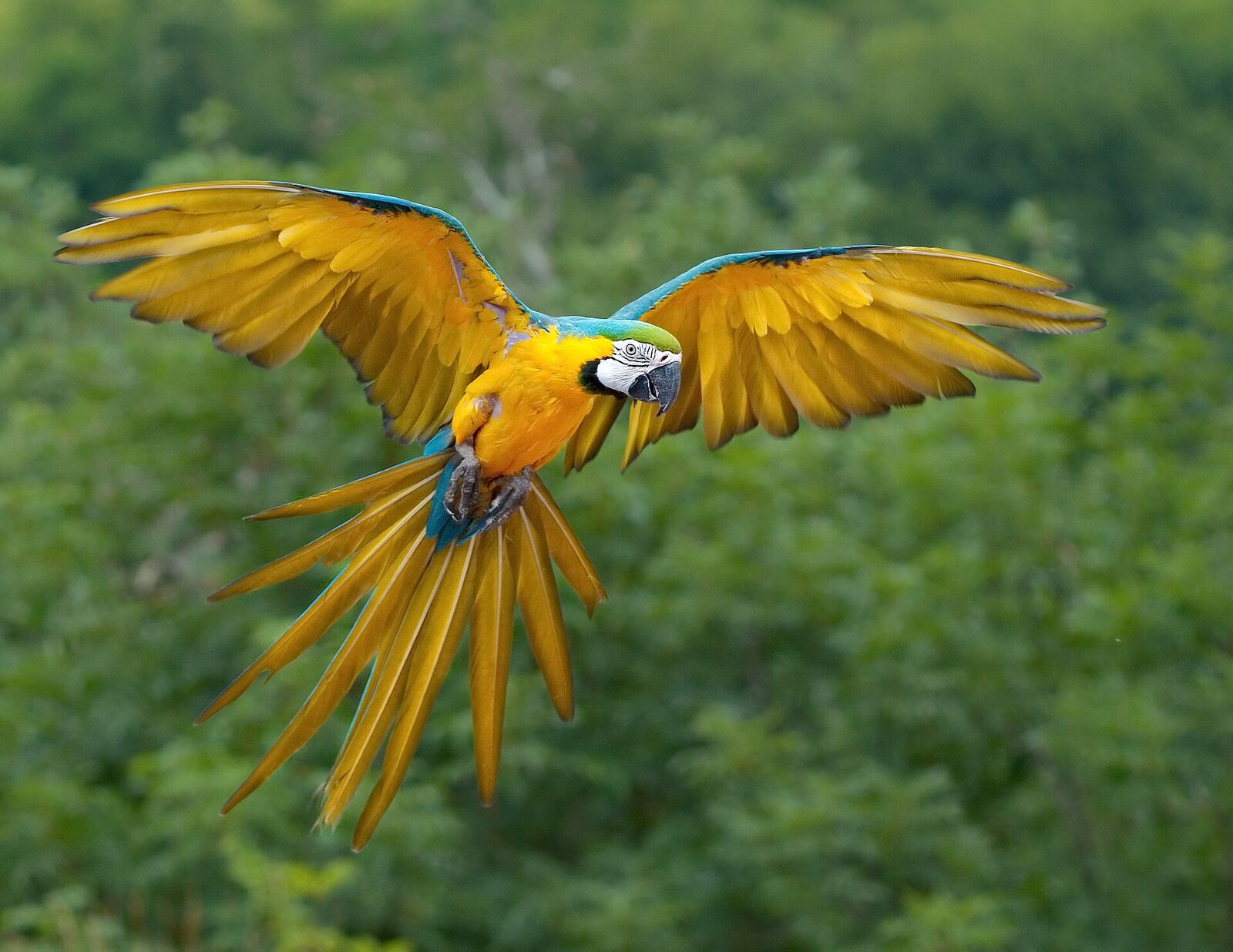
Blue-and-yellow macaw
Ara ararauna
A loud, brilliant, lifelong commitment.
Pet trade
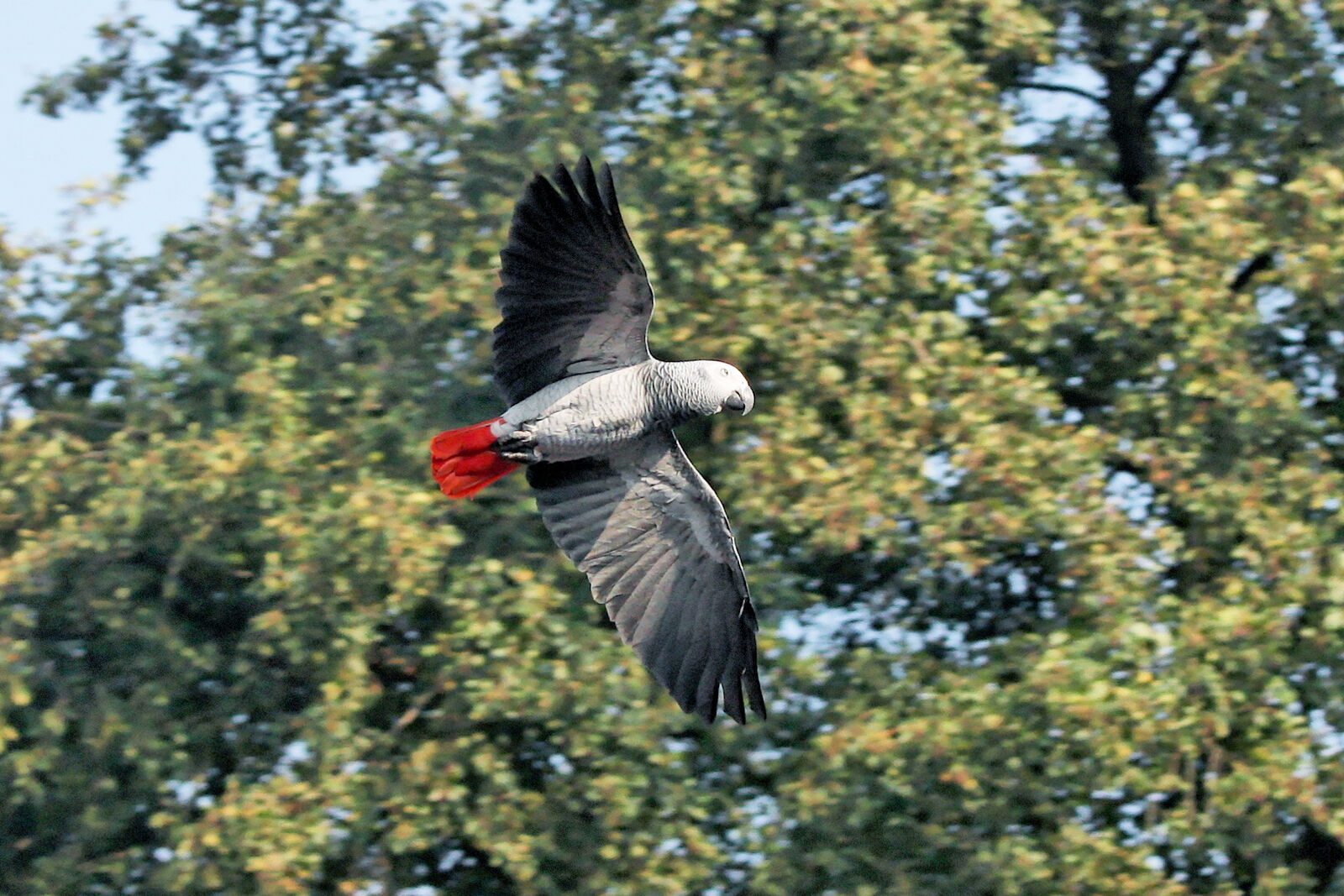
Gray parrot (Congo African grey)
Psittacus erithacus
One of the most intelligent birds on Earth.
Pet trade

Black-headed caique
Pionites melanocephalus
Pet trade

Blue-headed macaw
Primolius couloni
Aviary

Blue-throated macaw
Ara glaucogularis
Pet trade

Blue-winged (Illiger's) macaw
Primolius maracana
Pet trade