
Home / Invertebrates / Spiders / Venezuelan suntiger tarantula
No federal permit to keepVenezuelan suntiger tarantula
Psalmopoeus irminia
Invertebrates › Spiders (Araneae) › Theraphosidae (Tarantulas)
Psalmopoeus irminia, commonly known as the Venezuelan suntiger, is a species of arboreal tarantula endemic to Venezuela, Guyana and Brazil. This is a popular species in the exotic pet trade, largely due to the unique appearance of the female, and…
From Wikipedia: Psalmopoeus irminia, CC BY-SA 4.0 (excerpt)

Care at a glance
Species-specific values
Values researched for this exact species. Air, surface and water temperatures are listed separately, and each source is kept as published rather than averaged.
| Minimum enclosure | 86 °F (at least 30 °C) Source: spoodoire.uk | |
| Warm side air temperature | 72–79 °F (22–26 °C) Source: spoodoire.uk | |
| Humidity | 70–80 % Source: spoodoire.uk | |
| Diet | Slings get pinhead crickets or mealworms; juveniles and adults get progressively larger live feeders. Source: spoodoire.uk | |
| Feeding frequency | Feed slings every 4–5 days, juveniles once or twice weekly, and adults every 7–10 days. Source: spoodoire.uk | |
| Substrate | Provide 5–8 cm of moisture-retentive substrate, such as coco fibre or topsoil mix. Source: spoodoire.uk | |
| Minimum enclosure | Adult enclosure approximately 20 cm in diameter, 20 cm wide, and 30 cm high. Source: carebase.apes.org.uk | |
| Warm side air temperature | 75–82 °F (24–28 °C) Source: carebase.apes.org.uk | |
| Substrate | Use humidity-retaining substrate deep enough for burrowing; peat and coconut fibre mix works well. Source: carebase.apes.org.uk | |
| Diet | Always provide a shallow dish with fresh water; clean and refill regularly. Source: carebase.apes.org.uk |
Understanding the animal
In the wild
In the wild
| Overview | Psalmopoeus irminia, commonly known as the Venezuelan suntiger, is a species of arboreal tarantula endemic to Venezuela, Guyana and Brazil. This is a popular species in the exotic pet trade, largely due to the unique appearance of the female, and can be successfully bred in captivity. — From Wikipedia: Psalmopoeus irminia, CC BY-SA 4.0 (excerpt) |
| Behavior | P. irminia have a diet that mainly consists of invertebrates. They have been observed living in crevices and holes above ground, lined with sheetlike or tubular webbing that can have material from the environment (eg. leaf litter) incorporated into them. They construct similar structures in captivity. — From Wikipedia: Psalmopoeus irminia, CC BY-SA 4.0 (excerpt) |
| Appearance and size | Psalmopoeus irminia is a New World tarantula species, it is black with vibrant orange markings on the abdomen and legs. Males, once sexually mature, are sexually dimorphic, becoming entirely grey/grey-brown, only retaining orange markings on its tarsi, as well as appearing to have much "leggier" proportions. — From Wikipedia: Psalmopoeus irminia, CC BY-SA 4.0 (excerpt) |
| History and naming | P. irminia was first described in 1994 by F. Saager. The presence of stridulatory setae (hairs), also called lyra, on the maxillae distinguishes it as a Psalmopoeus species. This trait is absent in all other described New World species, and is thus a unique diagnostic criterion for Psalmopoeus. — From Wikipedia: Psalmopoeus irminia, CC BY-SA 4.0 (excerpt) |
Native climate (measured)
Native climate (measured)
| Warm-season highs | about 90°F (up to 92°F in the hottest sampled areas) |
| Cool-season lows | about 71°F (down to 69°F in the coldest sampled areas) |
| Average temperature | 79–81°F across sampled records |
| Relative humidity | 76–78% on average (driest month about 70%) |
| Rainfall | about 1957 mm a year |
Measured at 10 wild occurrence records sampled against WorldClim 2.1 climate data (1970–2000 averages). Air conditions in the range are ecological context, not enclosure settings: microhabitats such as burrows, leaf litter or basking rocks can be cooler, warmer or more humid.
Profile
Profile
Researched for this exact species. Sources are listed under In the wild above.
History
P. irminia was first described in 1994 by F. Saager. The presence of stridulatory setae (hairs), also called lyra, on the maxillae distinguishes it as a Psalmopoeus species. This trait is absent in all other described New World species, and is thus a unique diagnostic criterion for Psalmopoeus.
From Wikipedia: Psalmopoeus irminia, CC BY-SA 4.0 (excerpt)
Data and studies
Veterinary & husbandry research
Veterinary & husbandry research
- A Case Report of Venezuelan Suntiger Tarantula (Psalmopoeus Irminia) Envenomation and Review of Tarantula Exposures Simon M et al., The Journal of emergency medicine 2023
Peer-reviewed papers that mention this species alongside captivity, zoos, veterinary care or aquaculture. Some cover several species or mention it only in passing, so check the abstract. PubMed
Sources for this sheet
- GBIF Backbone Taxonomy (Global Biodiversity Information Facility) (CC BY 4.0) Peer-reviewed researchInternational scientific taxonomy used here for classification. GBIF Secretariat (2023). GBIF Backbone Taxonomy. Checklist dataset https://doi.org/10.15468/39omei, accessed via GBIF.org.
- Wikipedia (species article) (CC BY-SA 4.0) Community referenceFree encyclopedia; useful overviews with their own citations. Short excerpts are quoted under CC BY-SA 4.0, each credited with a link to its article.
- PubMed (U.S. National Library of Medicine) Peer-reviewed researchIndex of peer-reviewed veterinary, zoo and husbandry research.
- iNaturalist (captive observations) Community referenceCommunity observation platform run by the California Academy of Sciences and National Geographic; observations marked captive show animals living in homes, zoos and aquariums.
More tarantulas
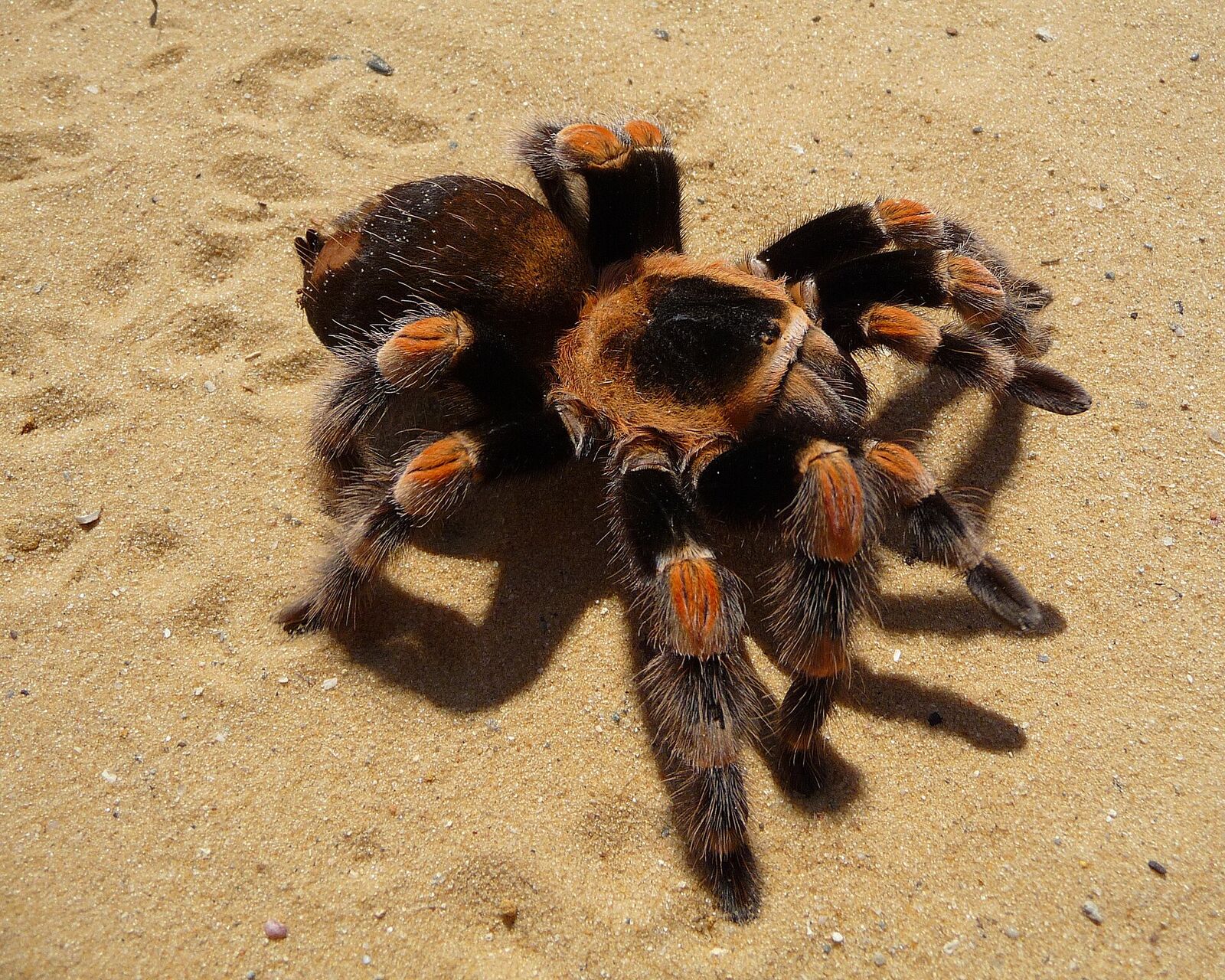
Mexican redknee tarantula
Brachypelma hamorii
A docile spider where females live 25–30 years.
Pet trade

African Horned Baboon Tarantula
Ceratogyrus darlingi
Pet trade
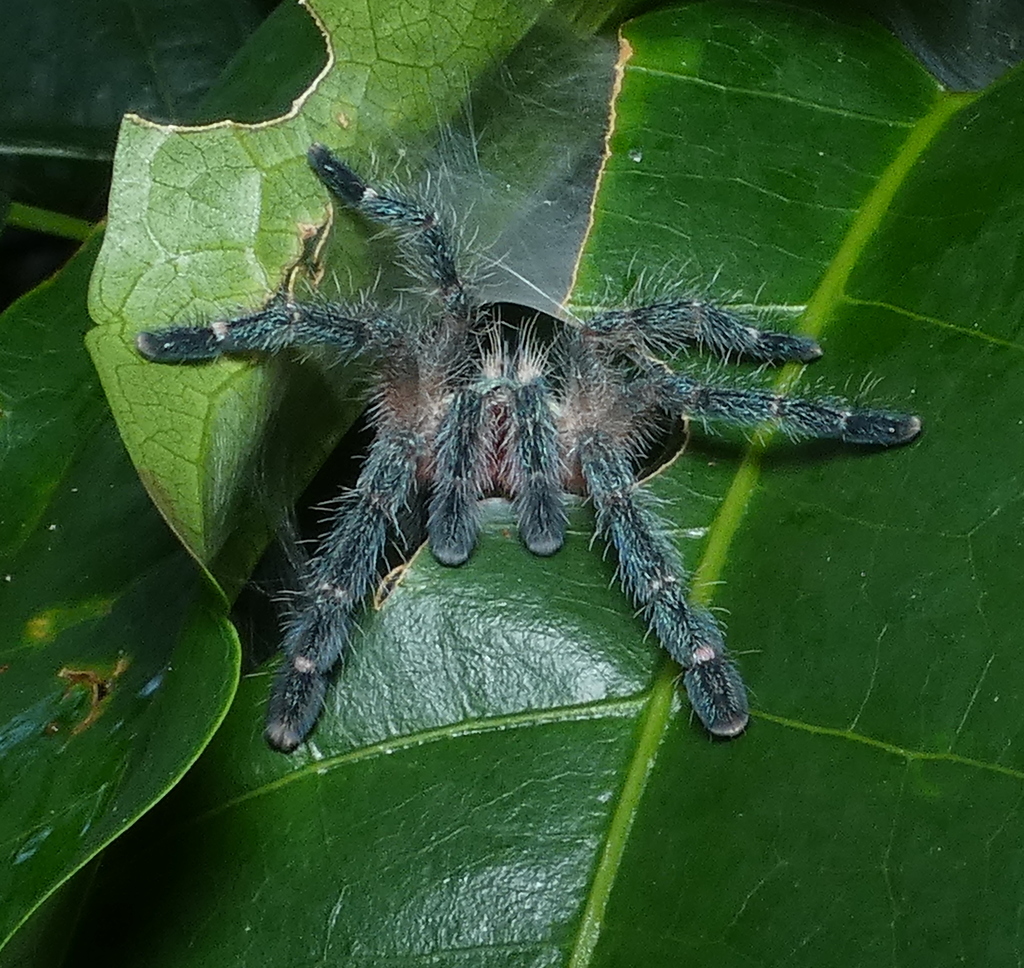
Amazon Ribbed Tarantula
Iridopelma hirsutum
Pet trade

Amula Redrump Tarantula
Brachypelma albiceps
Pet trade

Anantagiri’s Parachute Spider
Poecilotheria tigrinawesseli
Pet trade

Antilles pinktoe tarantula
Caribena versicolor
Pet trade