
Home / Birds / Ducks, geese and swans / Wandering whistling duck
No federal permit to keepWandering whistling duck
Dendrocygna arcuata
Birds › Ducks, geese and swans (Anseriformes) › Anatidae (Ducks, geese and swans)
The wandering whistling duck (Dendrocygna arcuata) is a species of whistling duck.
From Wikipedia: Wandering whistling duck, CC BY-SA 4.0 (excerpt)

Care at a glance
Species-specific values
Values researched for this exact species. Air, surface and water temperatures are listed separately, and each source is kept as published rather than averaged.
| Minimum enclosure | Prefer an enclosure with a pond, substantial vegetation, and water at least 1 m deep; aviaries are also suitable. Source: sierwatervogels.nl | |
| Diet | Commercial pellets and grain are suitable; the maintenance food listed is Lundi Premium Floating full food. Source: sierwatervogels.nl | |
| Substrate | Soft substrate such as grass is preferred. Source: sierwatervogels.nl | |
| Social housing | May be kept in groups or mixed collections; keep separate from Fulvous whistling-ducks to prevent hybridizing. Source: sierwatervogels.nl | |
| Feeding frequency | Ducklings eat voraciously and need sufficient food so lower-ranking ducklings can eat. Source: sierwatervogels.nl |
Understanding the animal
About this animal
About this animal
They inhabit tropical and subtropical Australia, the Philippines, Borneo, Indonesia, Papua New Guinea, Timor-Leste, and the Pacific Islands.
From Wikipedia: Wandering whistling duck, CC BY-SA 4.0 (excerpt)
In the wild
In the wild
| Overview | The wandering whistling duck (Dendrocygna arcuata) is a species of whistling duck. They inhabit tropical and subtropical Australia, the Philippines, Borneo, Indonesia, Papua New Guinea, Timor-Leste, and the Pacific Islands. — From Wikipedia: Wandering whistling duck, CC BY-SA 4.0 (excerpt) |
| Where it lives | The wandering whistling duck lives in deep lagoons, flooded grasslands or dams. They enjoy the water and rarely leave the shore. They can swim and dive with ease. — From Wikipedia: Wandering whistling duck, CC BY-SA 4.0 (excerpt) |
| Reproduction | Breeding occurs during the tropical wet season usually between December and May. During this time six to fifteen eggs are laid in a nest not far from water and usually in high grass or a sheltered area. — From Wikipedia: Wandering whistling duck, CC BY-SA 4.0 (excerpt) |
| Appearance and size | Formerly named tree ducks, the wandering whistling duck has its new name because of their loud whistling calls and the whistling noise their wings make during flight. They have long necks and legs and look like a cross between a goose and a duck. They have a strong head and neck with a darker crown and hindneck. — From Wikipedia: Wandering whistling duck, CC BY-SA 4.0 (excerpt) |
| History and naming | There are three subspecies associated with this bird, D. a. arcuata (Indonesian wandering whistling duck), D. a. australis (Australian wandering whistling duck), and D. a. pygmaea (New Britain wandering whistling duck). — From Wikipedia: Wandering whistling duck, CC BY-SA 4.0 (excerpt) |
Native climate (measured)
Native climate (measured)
| Warm-season highs | about 92°F (up to 101°F in the hottest sampled areas) |
| Cool-season lows | about 54°F (down to 40°F in the coldest sampled areas) |
| Average temperature | 64–81°F across sampled records |
| Relative humidity | 52–71% on average (driest month about 51%) |
| Rainfall | about 877 mm a year, with strong wet and dry seasons |
Measured at 992 wild occurrence records sampled against WorldClim 2.1 climate data (1970–2000 averages). Air conditions in the range are ecological context, not enclosure settings: microhabitats such as burrows, leaf litter or basking rocks can be cooler, warmer or more humid.
Profile
Profile
Researched for this exact species. Sources are listed under In the wild above.
History
There are three subspecies associated with this bird, D. a. arcuata (Indonesian wandering whistling duck), D. a. australis (Australian wandering whistling duck), and D. a. pygmaea (New Britain wandering whistling duck).
From Wikipedia: Wandering whistling duck, CC BY-SA 4.0 (excerpt)
Data and studies
The numbers
The numbers
Each bar is what one source reports. Where several sources weigh in, the dashed gold band marks their average.
Typical adult weight
Average adult body mass in each database (FishBase gives the maximum recorded weight).
Incubation
Sources for this sheet
- Myhrvold et al. (2015). An amniote life-history database. Ecology 96: 3109 Peer-reviewed researchPeer-reviewed compilation of life-history data for over 21,000 birds, mammals and reptiles.
- GBIF Backbone Taxonomy (Global Biodiversity Information Facility) (CC BY 4.0) Peer-reviewed researchInternational scientific taxonomy used here for classification. GBIF Secretariat (2023). GBIF Backbone Taxonomy. Checklist dataset https://doi.org/10.15468/39omei, accessed via GBIF.org.
- Wikipedia (species article) (CC BY-SA 4.0) Community referenceFree encyclopedia; useful overviews with their own citations. Short excerpts are quoted under CC BY-SA 4.0, each credited with a link to its article.
- The eBird/Clements Checklist of Birds of the World (Cornell Lab of Ornithology) Peer-reviewed researchThe standard global bird checklist maintained by the Cornell Lab of Ornithology; used here for complete species lists of widely kept bird families.
- iNaturalist (captive observations) Community referenceCommunity observation platform run by the California Academy of Sciences and National Geographic; observations marked captive show animals living in homes, zoos and aquariums.
More ducks, geese and swans
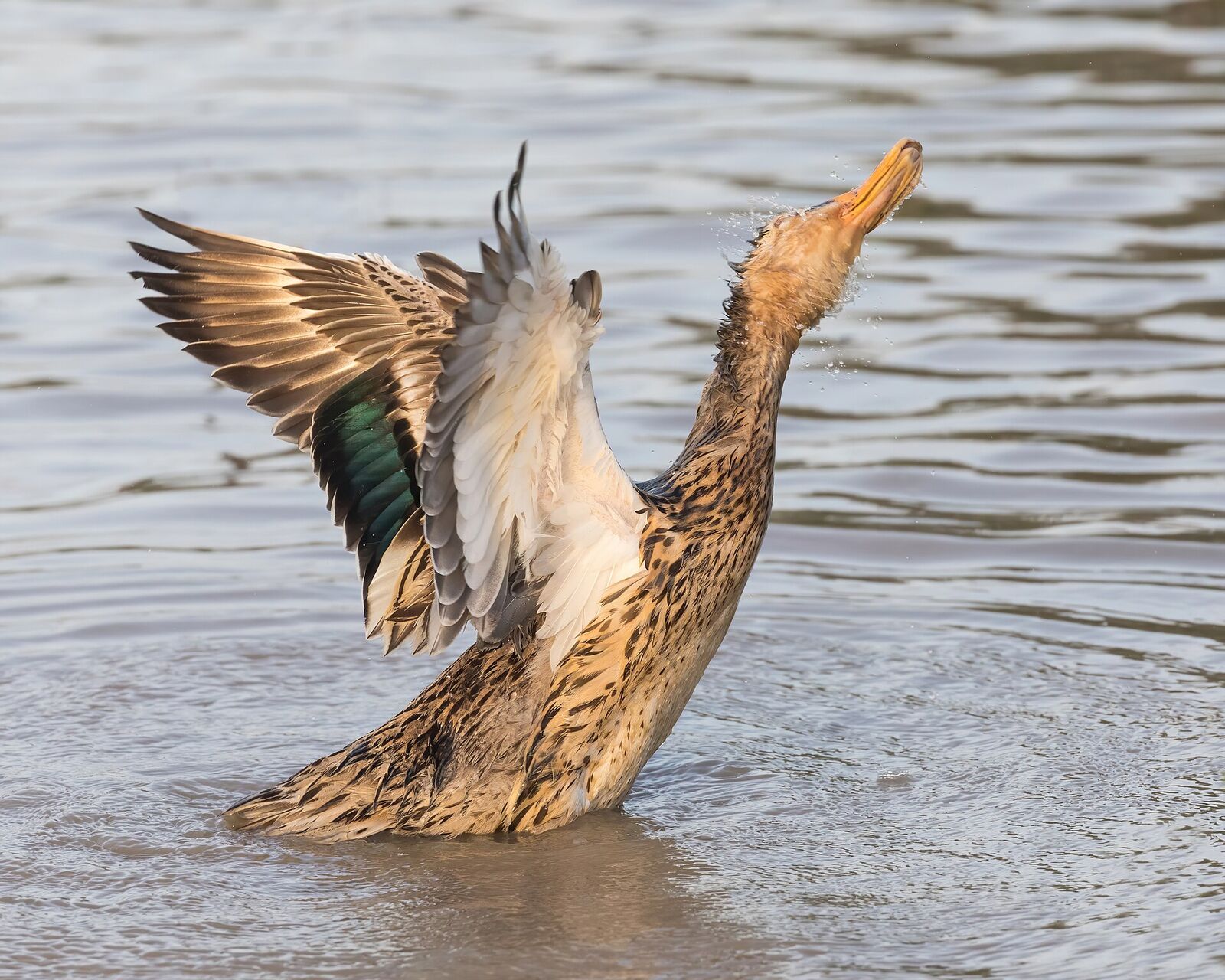
Domestic duck (mallard)
Anas platyrhynchos
Messy, hardy and happiest near water.
Farm & ranch

Baer's pochard
Aythya baeri
Aviary

Bernier's teal
Anas bernieri
Aviary

Black scoter
Melanitta americana
Aviary

Brazilian teal
Amazonetta brasiliensis
Aviary

Comb duck
Sarkidiornis sylvicola
Aviary