
Home / Reptiles / Lizards / Varanidae / White-throated monitor
Some federal rules applyWhite-throated monitor
Varanus albigularis
Reptiles › Lizards (Lacertilia) › Varanidae (Monitor lizards)
The rock monitor (Varanus albigularis) is a species of monitor lizard in the family Varanidae.

Care at a glance
Species-specific values
Values researched for this exact species. Air, surface and water temperatures are listed separately, and each source is kept as published rather than averaged.
| Seasonal cooling | 60–72 °F Source: reptilesmagazine.com | |
| Minimum enclosure | Minimum cage dimensions are based on the lizard’s length: 1.5–2+ times SVL, ⅔–1 times length wide, and 1–1.5 times length high. Source: reptilesmagazine.com | |
| Substrate | Use a deep layer of soft substrate, at least 18 inches, such as lightly moistened topsoil. Source: reptilesmagazine.com | |
| Basking surface temperature | up to 105 °F Source: reptilesmagazine.com | |
| Cool side air temperature | 75 °F Source: reptilesmagazine.com | |
| Humidity | 20–50 % Source: reptilesmagazine.com | |
| Water temperature | Keep water comfortably warm, not too hot, and prevent it from cooling quickly or significantly. Source: reptilesmagazine.com | |
| Diet | Captive foods include varied insects, larvae, shellfish, and eggs; supplement feeder insects with calcium and reptile vitamins. Source: reptilesmagazine.com |
Understanding the animal
About this animal
About this animal
The species is endemic to Sub-Saharan Africa, where, on average, it is the largest lizard found on the continent. It is called leguaan or likkewaan in some areas.
From Wikipedia: Rock monitor, CC BY-SA 4.0 (excerpt)
In the wild
In the wild
Researched for this exact species, not its family. Wild conditions are context, not enclosure settings.1234567
| Where it lives | Savanna and grassland of southern and eastern Africa, including arid southern African savanna. Forages primarily in terrestrial habitats rather than the wetland habitats used by Nile monitors. |
| Ground it lives on | savanna soil and grassland ground |
| Climate | Strong wet/dry seasonality: northern Namibian animals feed actively in the hot wet season, January–April, and undergo prolonged dry-season fasting. Numerical wild temperature and humidity ranges were not found. |
| Wild diet | Terrestrial invertebrates, especially millipedes and snails, plus beetles and other insects; also tortoises, other reptiles, birds, eggs and occasional small mammals. |
| Behavior to plan for | An opportunistic terrestrial forager; invertebrates and slow-moving prey are substantial parts of its wild diet. Wild feeding intensity changes strongly with season. |
- Dalhuijsen et al. (2014): Comparative analysis of monitor diets in South Africa
- Specific Dynamic Action of a Large Carnivorous Lizard, Varanus albigularis
- Sensory cues and foraging decisions in Varanus albigularis
- Wikipedia: Rock monitor (CC BY-SA 4.0)
- The Reptile Database: Varanus albigularis
- Expert Care For the White-Throated Monitor
- Conservation And Breeding Of White-Throated Monitors
Native climate (measured)
Native climate (measured)
| Warm-season highs | about 88°F (up to 95°F in the hottest sampled areas) |
| Cool-season lows | about 43°F (down to 35°F in the coldest sampled areas) |
| Average temperature | 61–75°F across sampled records |
| Relative humidity | 51–65% on average (driest month about 44%) |
| Rainfall | about 546 mm a year, with strong wet and dry seasons |
Measured at 119 wild occurrence records sampled against WorldClim 2.1 climate data (1970–2000 averages). Air conditions in the range are ecological context, not enclosure settings: microhabitats such as burrows, leaf litter or basking rocks can be cooler, warmer or more humid.
Profile
Profile
Researched for this exact species. Sources are listed under In the wild above.
History
François Marie Daudin described Varanus albigularis in 1802. It was once classified as a subspecies of the savannah monitor, Varanus exanthematicus, but was later separated as a distinct species on morphological grounds.
Data and studies
The numbers
The numbers
Each bar is what one source reports. Where several sources weigh in, the dashed gold band marks their average.
Maximum recorded lifespan
Longest recorded lifespan reported by each database; typical lifespans are usually shorter.
Typical adult weight
Average adult body mass in each database (FishBase gives the maximum recorded weight).
Adult snout-to-vent length
Body length without the tail.
Incubation
Care articles for this species
Care articles for this species
- Expert Care For the White-Throated Monitor (Reptiles Magazine)
- Conservation And Breeding Of White-Throated Monitors (Reptiles Magazine)
Written by keepers, breeders and vets Reptiles MagazineReptiFiles
Veterinary & husbandry research
Veterinary & husbandry research
- Yolk coelomitis in a white-throated monitor lizard (Varanus albigularis) Gardner BR et al., Journal of the South African Veterinary Association 2010
- Rapid solving of a problem apparatus by juvenile black-throated monitor lizards (Varanus albigularis albigularis) Manrod JD et al., Animal cognition 2008
Peer-reviewed papers that mention this species alongside captivity, zoos, veterinary care or aquaculture. Some cover several species or mention it only in passing, so check the abstract. PubMed
Sources for this sheet
- Myhrvold et al. (2015). An amniote life-history database. Ecology 96: 3109 Peer-reviewed researchPeer-reviewed compilation of life-history data for over 21,000 birds, mammals and reptiles.
- Species+ (UNEP-WCMC and the CITES Secretariat) Zoo, university or veterinaryThe official database of species listed under CITES. UNEP (2026). The Species+ Website. Nairobi, Kenya. Compiled by UNEP-WCMC, Cambridge, UK. Available at: www.speciesplus.net. [Accessed 04/10/2026].
- USFWS International Affairs: CITES Zoo, university or veterinaryFederal agency that issues CITES permits.
- Clint's Reptiles (YouTube): Black Throat Monitor, The Best Pet Lizard? Expert educator & keeperClint Laidlaw, PhD in Biology Education and MS in Evolutionary Ecology; owner of Clint's Reptile Room and a longtime keeper. His "Best Pet?" series reviews each species' care in depth.
- The Reptile Database Peer-reviewed researchScientist-curated catalog of every reptile species, with taxonomy and literature.
- GBIF Backbone Taxonomy (Global Biodiversity Information Facility) (CC BY 4.0) Peer-reviewed researchInternational scientific taxonomy used here for classification. GBIF Secretariat (2023). GBIF Backbone Taxonomy. Checklist dataset https://doi.org/10.15468/39omei, accessed via GBIF.org.
- Wikipedia (species article) (CC BY-SA 4.0) Community referenceFree encyclopedia; useful overviews with their own citations. Short excerpts are quoted under CC BY-SA 4.0, each credited with a link to its article.
- PubMed (U.S. National Library of Medicine) Peer-reviewed researchIndex of peer-reviewed veterinary, zoo and husbandry research.
- iNaturalist (captive observations) Community referenceCommunity observation platform run by the California Academy of Sciences and National Geographic; observations marked captive show animals living in homes, zoos and aquariums.
- Reptiles Magazine (care articles) Experienced keeper or breederEstablished reptile and amphibian hobby magazine; care articles are written by breeders, keepers and veterinarians.
More monitor lizards
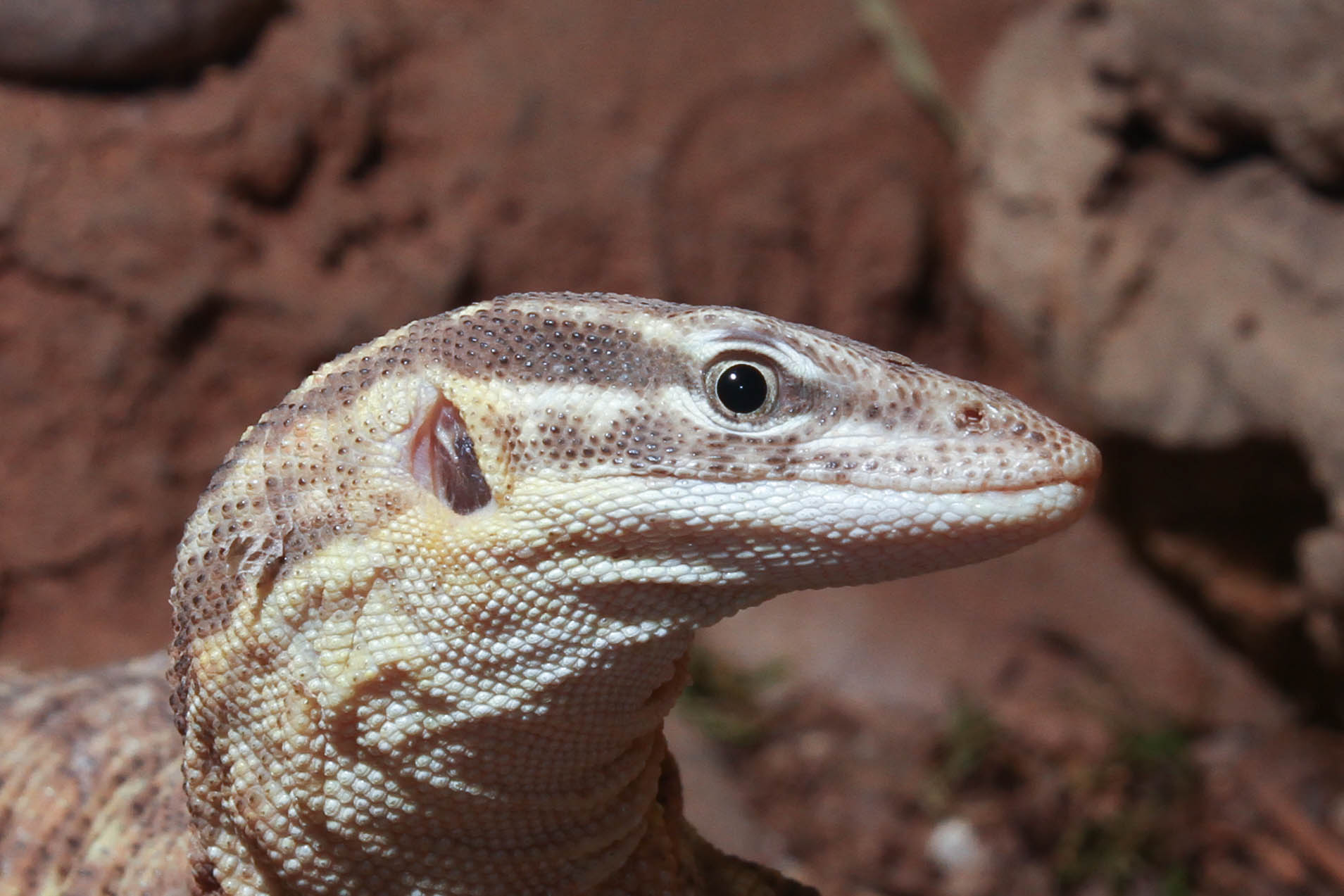
Ackie (spiny-tailed) monitor
Varanus acanthurus
A pint-sized monitor with a huge personality.
Pet trade
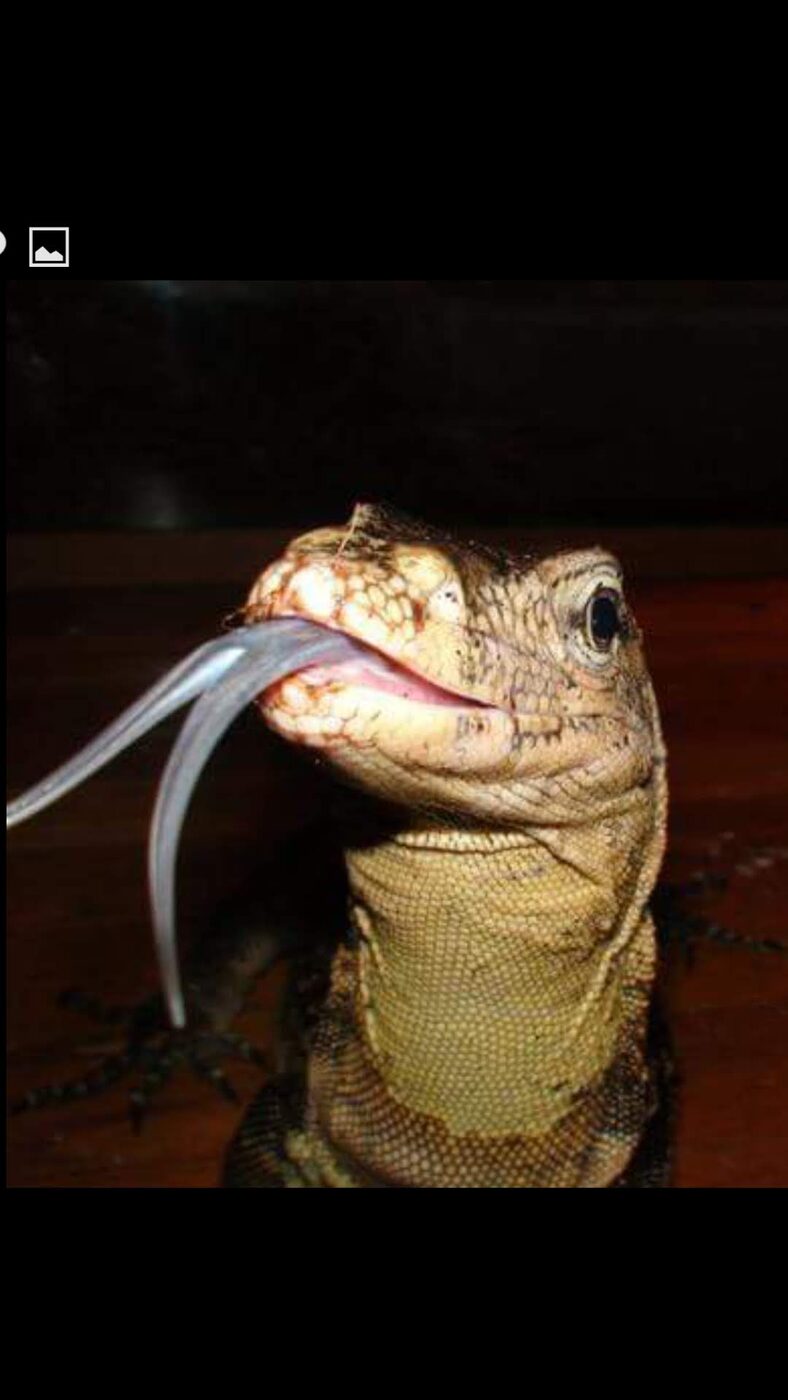
Asian water monitor
Varanus salvator
An intelligent, swimming giant: the "gentle giant" of monitors.
Pet trade
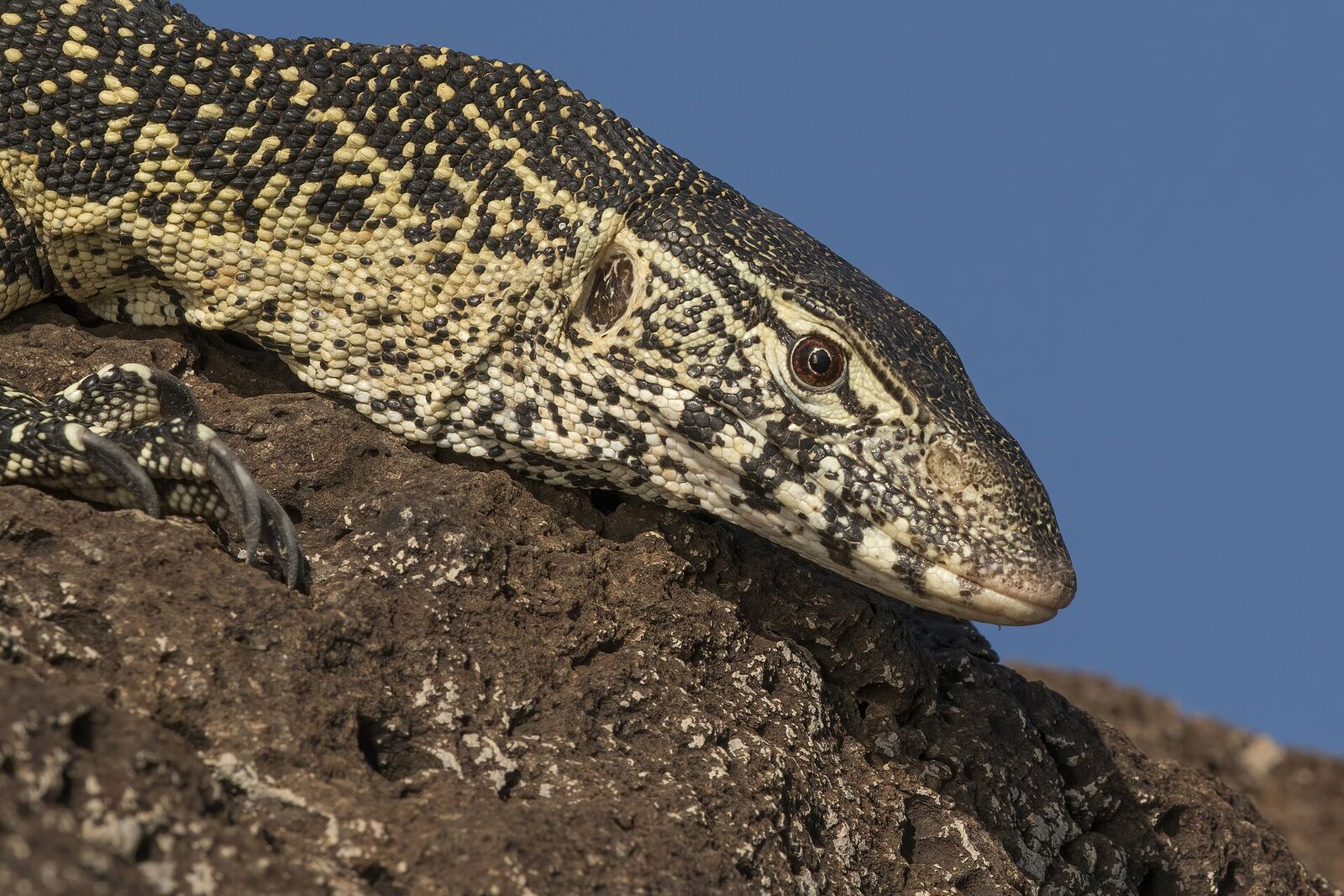
Nile monitor
Varanus niloticus
Africa's longest lizard, fast, bold and powerful.
Pet trade

Argus monitor
Varanus panoptes
Pet trade

Biak Emerald Monitor
Varanus kordensis
Pet trade

Black tree monitor
Varanus beccarii
Pet trade