
Home / Birds / Parrots / Yellow-faced parrotlet
Some federal rules applyYellow-faced parrotlet
Forpus xanthops
Birds › Parrots (Psittaciformes) › Psittacidae (New World and African parrots)
The yellow-faced parrotlet (Forpus xanthops) is a species of parrot in the family Psittacidae.
From Wikipedia: Yellow-faced parrotlet, CC BY-SA 4.0 (excerpt)

Care at a glance
Species-specific values
Values researched for this exact species. Air, surface and water temperatures are listed separately, and each source is kept as published rather than averaged.
| Diet | Use a commercial seed mix as the primary diet, with fresh vegetables and fruits; provide a cuttlebone for calcium. Source: birdscoo.com | |
| Feeding frequency | Give freshwater daily and remove leftover fruits or vegetables within 2 hours. Source: birdscoo.com | |
| Social housing | Physically isolate the bird from other birds and pets for its security. Source: birdscoo.com | |
| Minimum enclosure | A huge, vast cage is recommended in addition to free flight. Source: birdscoo.com |
Warnings
Understanding the animal
In the wild
In the wild
| Overview | The yellow-faced parrotlet (Forpus xanthops) is a species of parrot in the family Psittacidae. — From Wikipedia: Yellow-faced parrotlet, CC BY-SA 4.0 (excerpt) |
| Where it lives | Yellow-faced parrotlets are found in northwestern Peru in the upper Rio Marañón valley, from eastern La Libertad north to southeastern Cajamarca and southern Amazonas. Yellow-faced parrotlets prefer arid, low-density woodlands in upper tropical and subtropical areas including scrub, riparian zones, open balsa woodland, cactus montane desert, and open country with scattered vegetation. — From Wikipedia: Yellow-faced parrotlet, CC BY-SA 4.0 (excerpt) |
| Social life and communication | Yellow-faced parrotlets are very social; they roost communally in flocks of up to 70 pairs. Calls are quiet tweets and chirps. — From Wikipedia: Yellow-faced parrotlet, CC BY-SA 4.0 (excerpt) |
| Wild diet | Yellow-faced parrotlets mainly feed on cactus and tree fruits, seeds, flowers, and grass and wheat seeds. — From Wikipedia: Yellow-faced parrotlet, CC BY-SA 4.0 (excerpt) |
| Reproduction | Yellow-faced parrotlets typically breed between March and April; females lay clutches of 3-6 small white eggs. Yellow-faced parrotlets actually do not build nests but chew and rearrange wood shavings into shallow depressions on the ground. — From Wikipedia: Yellow-faced parrotlet, CC BY-SA 4.0 (excerpt) |
| Appearance and size | Yellow-faced parrotlets are about 14.5 cm long and weigh about 35 g. Their bodies are mostly dark or olive green with gray washes on the nape and mantle and yellow-green underparts, and foreheads, crown, cheeks, and throat are bright yellow. A gray-green stripe extends backwards from each eye. — From Wikipedia: Yellow-faced parrotlet, CC BY-SA 4.0 (excerpt) |
| Conservation | The yellow-faced parrotlet is currently listed as a Vulnerable species by the IUCN Red List. The number of mature individuals in the wild is estimated to be 250-999 birds as of October 2016. — From Wikipedia: Yellow-faced parrotlet, CC BY-SA 4.0 (excerpt) |
Native climate (measured)
Native climate (measured)
| Warm-season highs | about 71°F (up to 80°F in the hottest sampled areas) |
| Cool-season lows | about 43°F (down to 40°F in the coldest sampled areas) |
| Average temperature | 54–68°F across sampled records |
| Relative humidity | 73–76% on average (driest month about 71%) |
| Rainfall | about 863 mm a year |
Measured at 13 wild occurrence records sampled against WorldClim 2.1 climate data (1970–2000 averages). Air conditions in the range are ecological context, not enclosure settings: microhabitats such as burrows, leaf litter or basking rocks can be cooler, warmer or more humid.
Data and studies
The numbers
The numbers
Each bar is what one source reports. Where several sources weigh in, the dashed gold band marks their average.
Maximum recorded lifespan
Longest recorded lifespan reported by each database; typical lifespans are usually shorter. The AnAge record comes from an animal in human care.
Typical adult weight
Average adult body mass in each database (FishBase gives the maximum recorded weight).
Sources for this sheet
- AnAge: The Animal Ageing and Longevity Database (Human Ageing Genomic Resources) (CC BY 3.0) Peer-reviewed researchCurated, referenced longevity and life-history records for thousands of species; maximum lifespans are often from zoo animals.
- Myhrvold et al. (2015). An amniote life-history database. Ecology 96: 3109 Peer-reviewed researchPeer-reviewed compilation of life-history data for over 21,000 birds, mammals and reptiles.
- Species+ (UNEP-WCMC and the CITES Secretariat) Zoo, university or veterinaryThe official database of species listed under CITES. UNEP (2026). The Species+ Website. Nairobi, Kenya. Compiled by UNEP-WCMC, Cambridge, UK. Available at: www.speciesplus.net. [Accessed 04/10/2026].
- USFWS International Affairs: CITES Zoo, university or veterinaryFederal agency that issues CITES permits.
- 9 CFR 2.1: Animal Welfare Act licensing (USDA) Zoo, university or veterinaryWho needs a USDA license to breed, sell or exhibit animals.
- Wikipedia (species article) (CC BY-SA 4.0) Community referenceFree encyclopedia; useful overviews with their own citations. Short excerpts are quoted under CC BY-SA 4.0, each credited with a link to its article.
More new world and african parrots
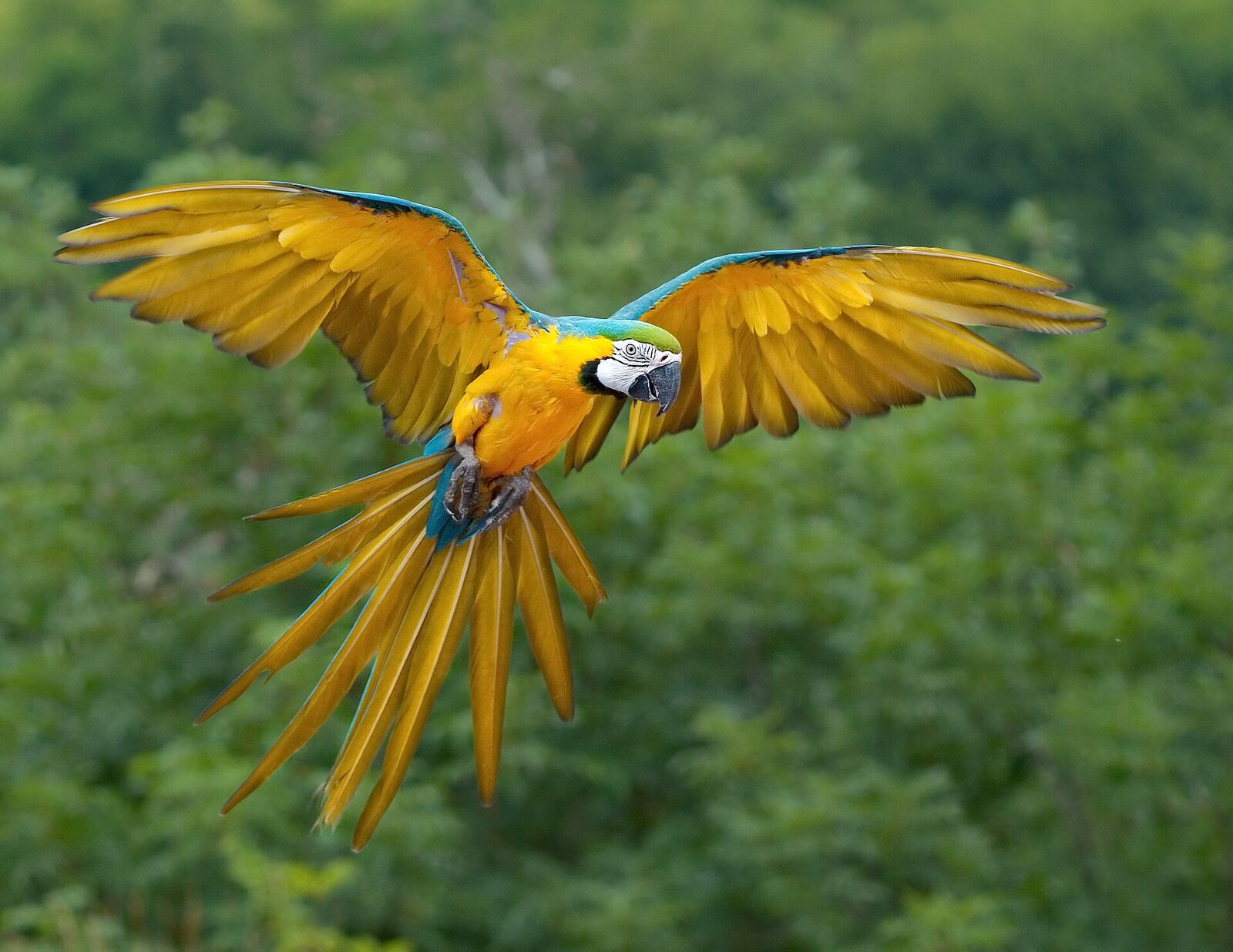
Blue-and-yellow macaw
Ara ararauna
A loud, brilliant, lifelong commitment.
Pet trade
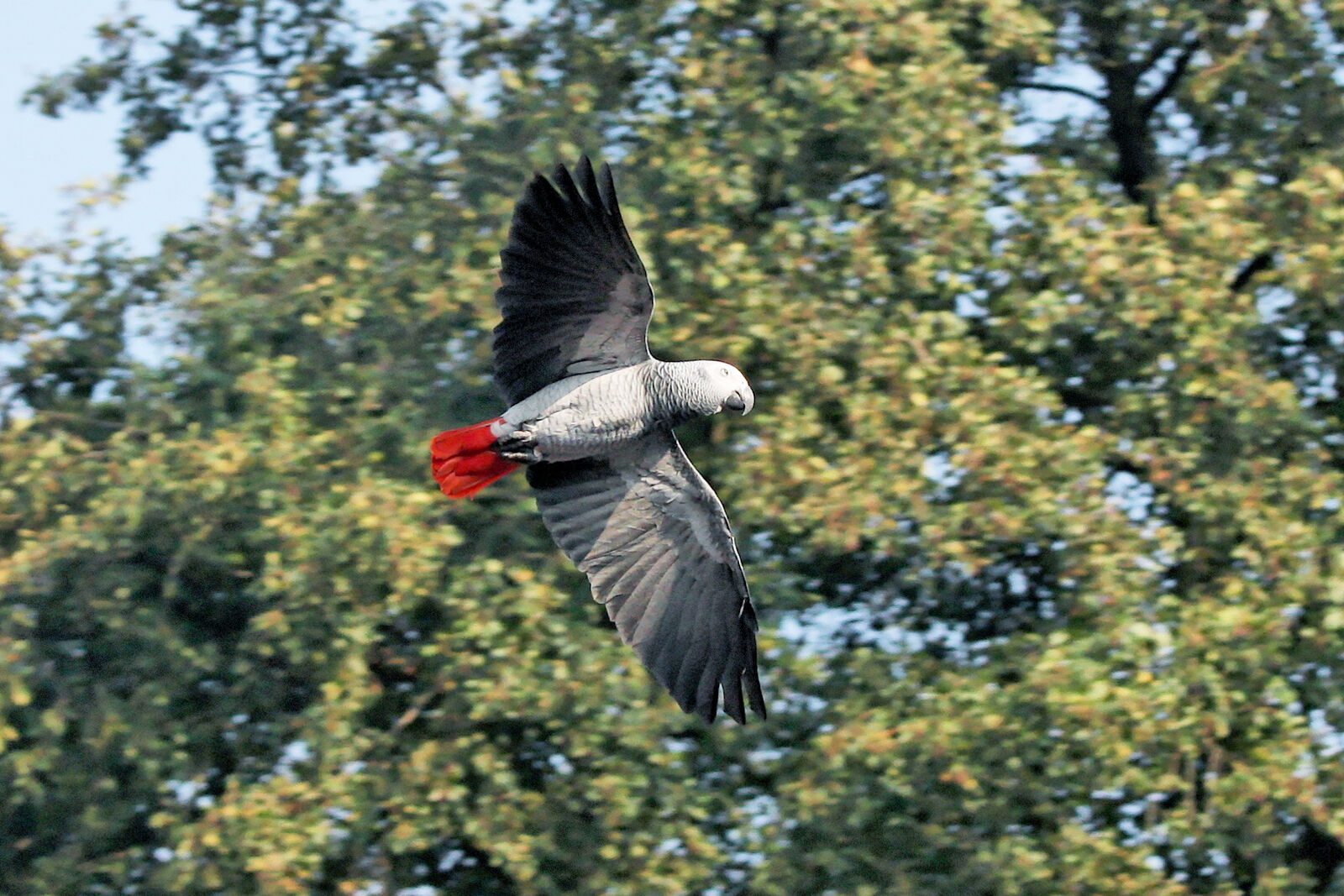
Gray parrot (Congo African grey)
Psittacus erithacus
One of the most intelligent birds on Earth.
Pet trade

Black-headed caique
Pionites melanocephalus
Pet trade

Blue-headed macaw
Primolius couloni
Aviary

Blue-throated macaw
Ara glaucogularis
Pet trade

Blue-winged (Illiger's) macaw
Primolius maracana
Pet trade