Home / Birds / Parrots / Gray parrot (Congo African grey)
Federal restrictions apply In-depth sheetGray parrot (Congo African grey)
Psittacus erithacus
Birds › Parrots (Psittaciformes) › Psittacidae (Parrots and parakeets)
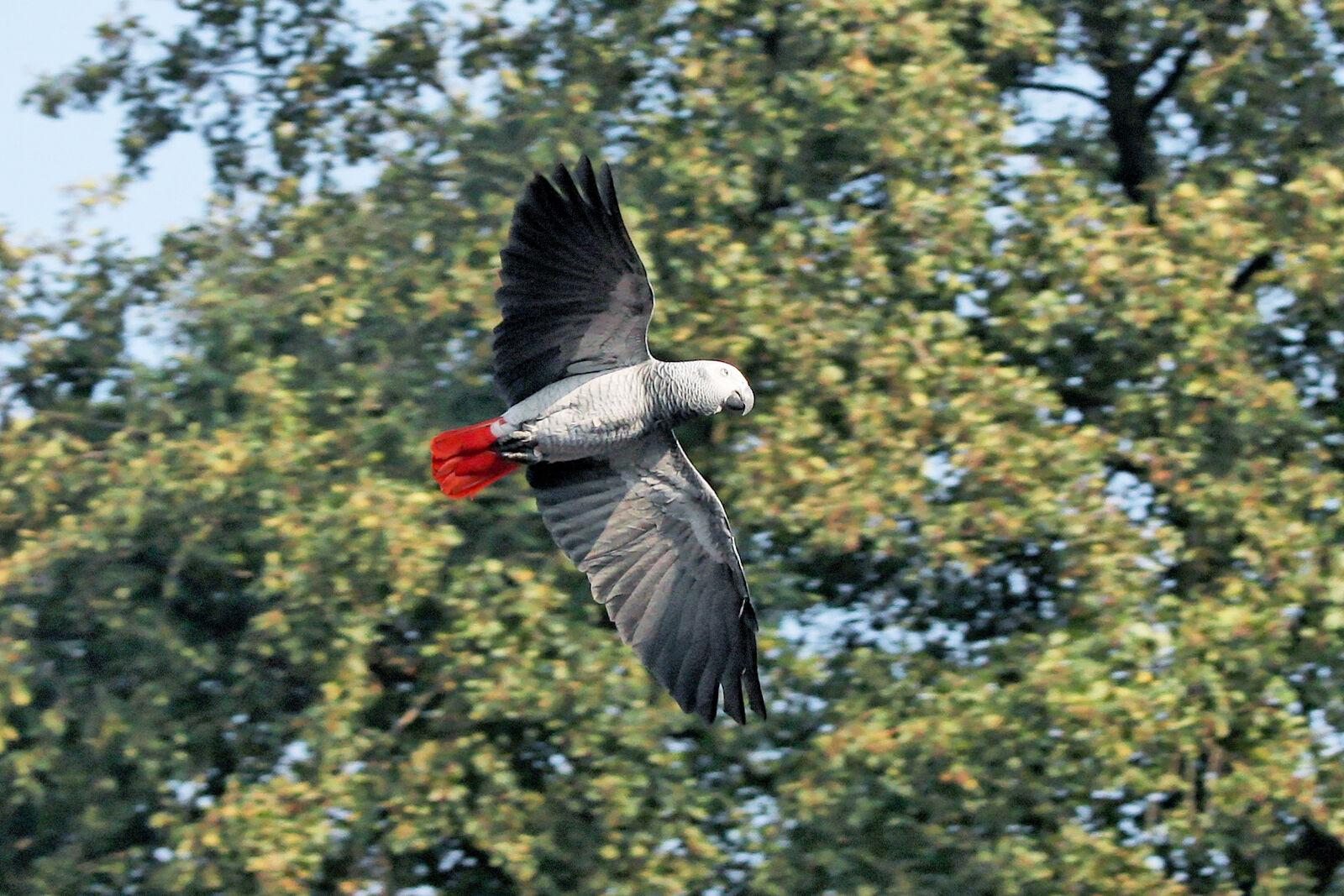
African greys are famously intelligent, sensitive parrots that can live 40–60 years. They need daily mental stimulation and social time.
Care at a glance
Species-specific values
Values researched for this exact species. Where they differ from the group guide below, follow these. Air, surface and water temperatures are listed separately, and each source is kept as published rather than averaged.
| Minimum cage dimensions | length: 40 in; width: 30 in; height: 60 in Table cage minimum; exercise space additional. Bar-spacing rendering is ambiguous and is not imported. | 316 |
| Lighting | Appropriate UVB or safe direct sunlight is especially relevant to calcium/vitamin-D balance; avoid unsupervised vitamin-D supplementation. | 319 |
Warnings
Care guide
Diet
- The bulk (about 80%) should be a commercial pelleted parrot food, plus fresh vegetables and some fruit; dark leafy greens add calcium.
Behavior
- The parrot Alex learned to label 50 objects, 7 colors and 5 shapes. Expect a bird that needs puzzles and attention every day.
Sources 85
Show the group care guide for mid-sized parrots (amazons, greys, pionus, caiques and others)
Mid-sized parrots (amazons, greys, pionus, caiques and others)
Applies to most species in this group. Habitat: Tropical forests of Africa and the Americas. Individual species can differ, so compare with the species numbers above and the linked sources.
Housing & setup
- A large cage with daily out-of-cage time, foraging toys and training.
Diet
- Pellets plus vegetables; eclectus need a more vegetable- and fruit-heavy diet and fewer pellets.
- African greys need adequate calcium and vitamin D through a balanced diet and suitable UVB or safe direct sunlight. Extra supplements require an avian veterinarian’s assessment.
Social life
- Social and intelligent.
Health watch
- Low blood calcium in greys; obesity and fatty liver in amazons.
Understanding the animal
In the wild
In the wild
Researched for this exact species, not its family. Good care copies these conditions.123
| Where it lives | Equatorial African lowland forests and edges, including the Congo Basin and populations extending west into Ghana and east into Uganda. Uses tree cavities for nesting and communal tree roosts. |
| Ground it lives on | mainly arboreal; sometimes descends to ground feeding sites |
| Climate | The species occurs in tropical habitats. In West Africa it makes seasonal movements out of the driest parts of its range during the dry season. |
| Active | Diurnal; flock departures and calls are conspicuous in mornings and evenings. |
| Social life | Pairs and family units within larger feeding and roosting flocks; nest-site competition can be aggressive. |
| Wild diet | Fruit, nuts and seeds, notably oil-palm fruit; also flowers, leaves and occasional insects. |
| Behavior to plan for | Travels between roosts and feeding areas and is wary at exposed ground sites. Social learning and prolonged family association are prominent. |
What this means for care
- Provide flight and climbing opportunities with sheltered feeding positions.
- Include challenging food-search tasks and sustained compatible social interaction.
- Use balanced nutrition rather than directly copying a wild palm-fruit or nut diet.
Native climate (measured)
Native climate (measured)
| Warm-season highs | about 85°F (up to 89°F in the hottest sampled areas) |
| Cool-season lows | about 66°F (down to 62°F in the coldest sampled areas) |
| Average temperature | 71–78°F across sampled records |
| Relative humidity | 78–86% on average (driest month about 75%) |
| Rainfall | about 1480 mm a year |
Measured at 52 wild occurrence records sampled against WorldClim 2.1 climate data (1970–2000 averages). Air conditions in the range are ecological context, not enclosure settings: microhabitats such as burrows, leaf litter or basking rocks can be cooler, warmer or more humid.
Profile
Profile
Researched for this exact species. Sources are listed under In the wild above.
Keeper tips
- Provide opportunities for elevated perching that reflect the species' natural tree-roosting behavior.
- Include environmental complexity appropriate to a bird naturally associated with forests, edges, clearings, and wooded savannahs.
- Recognize that tree cavities are part of the species' natural nesting biology.
- Avoid assuming the species naturally occupies only dense rainforest; the source also records it in mangroves, savannahs, cultivated areas, gardens, and forest edges.
Behaviors reported
- Roosts in trees over water.
- May prefer roosting on islands in rivers.
- Nests in tree holes, sometimes using cavities abandoned by woodpeckers.
- Makes seasonal movements out of the driest parts of its West African range during the dry season.
- Frequently visits open land adjacent to woodland.
Remarkable facts
- African grey parrots occur across the forest belt of central and West Africa and on the island of Príncipe.
- They can occur at elevations up to 2,200 m in eastern portions of their range.
- Typical body length is about 33 cm from head to tail.
- Individuals weigh up to about 407 g.
- Average wingspan is about 46 to 52 cm.
- The nominate form is light grey with a distinct red tail and solid black beak.
From the sources
From the sources
Quoted from the matching sections of reputable sources for this exact species. Specialist databases are used first; Wikipedia (community-edited, CC BY-SA 4.0) only fills gaps. Other sources are short credited quotes.
| Overview | The grey parrot (Psittacus erithacus), also known as the Congo grey parrot, is an African parrot in the family Psittacidae. Psittacus erithacus was previously also known as the African grey parrot until the Timneh parrot (Psittacus timneh), previously treated as a subspecies, was elevated to a full species. The grey parrot is known for its intelligence, being considered one of the smartest bird species and is regarded for its speaking abilities. — Wikipedia (community-edited) |
| Where it lives | The habitat of African grey parrots is usually moist lowland forests, although they are found up to 2,200 m altitude in the eastern parts of the range. — Animal Diversity Web |
| Wild diet | Grey parrots are mainly frugivorous, with most of their diet consisting of fruit, nuts, and seeds, including oil palm fruit. They sometimes also eat flowers and tree bark, as well as insects and snails. In the wild, the grey parrot is partly a ground feeder. — Wikipedia (community-edited) |
| Behavior | Wild African grey parrots are very shy and rarely allow humans to approach them. — Animal Diversity Web |
| Reproduction | African grey parrots are very social birds. — Animal Diversity Web |
| Lifespan | In captive and wild parrots the average lifespan is between 40 and 50 years. — Animal Diversity Web |
| Appearance and size | The plumage of Psittacus erithacus is various shades of grey with very distinctive red tail feathers. — Animal Diversity Web |
| History and naming | The grey parrot was formally described in 1758 by Swedish naturalist Carl Linnaeus in the tenth edition of Systema Naturae. He placed it with all other parrots in the genus Psittacus and coined the binomial name Psittacus erithacus. Linnaeus erroneously specified the type locality as "Guinea": the locality was later designated as Ghana in West Africa. — Wikipedia (community-edited) |
| Conservation | Natural predators for this species include palm-nut vultures and several raptors. Monkeys target eggs and the young for food. Humans are by far the largest threat to wild grey populations. — Wikipedia (community-edited) |
Data and studies
Researched care notes
Researched care notes
Findings checked against veterinary, zoo, welfare, keeper and peer-reviewed sources. Air, basking-surface and water temperatures are kept separate, and where sources disagree both are shown. “Study” notes report what a paper measured, not a universal rule.
Grey Parrot (species-focused foraging evidence)
- The studied birds worked for food even when identical food was freely available. Study finding.1
- Foraging motivation supports opportunities to work for food; it does not prove that toys cure feather-damaging behaviour. Research interpretation.1
Grey Parrot
- African grey parrots are especially susceptible to hypocalcemia and vitamin-D-related bone problems; weakness, tremors or seizures warrant prompt avian veterinary assessment.2
- Merck reports greater UVB dependence for calcium maintenance in African greys than in Amazona parrots; that comparison does not specify a universally safe avian lamp distance.2
- Provide perches of varied diameter and texture to distribute foot loading.3
- Use consistent routines and positive-reinforcement training; abrupt changes can be stressful for strongly attached individuals.3
The numbers
The numbers
Each bar is what one source reports. Where several sources weigh in, the dashed gold band marks their average.
Lifespan in care
Maximum recorded lifespan
Longest recorded lifespan reported by each database; typical lifespans are usually shorter. The AnAge record comes from an animal in human care.
Typical adult weight
Average adult body mass in each database (FishBase gives the maximum recorded weight).
Incubation
Veterinary & husbandry research
Veterinary & husbandry research
- Natural history of avian papillomaviruses Truchado DA et al., Virus research 2018
- Staphylococcus pseudintermedius sp. nov., a coagulase-positive species from animals Devriese LA et al., International journal of systematic and evolutionary microbiology 2005
- Comparative Cytogenetics of the Congo African Grey Parrot (Psittacus erithacus) Seibold-Torres C et al., Cytogenetic and genome research 2015
- Psittacid herpesviruses associated with mucosal papillomas in neotropical parrots Styles DK et al., Virology 2004
Peer-reviewed papers that mention this species alongside captivity, zoos, veterinary care or aquaculture. Some cover several species or mention it only in passing, so check the abstract. See all 42 on PubMed → 170
Sources for this sheet
- Royal Veterinary College Exotics Service: Parrot care Zoo, university or veterinaryVet-school exotics hospital factsheet, reviewed 2021–2024.
- Animal Diversity Web (University of Michigan): Psittacus erithacus Zoo, university or veterinaryUniversity-hosted species account, mostly wild biology.
- AnAge: The Animal Ageing and Longevity Database (Human Ageing Genomic Resources) Peer-reviewed researchCurated, referenced longevity and life-history records for thousands of species; maximum lifespans are often from zoo animals.
- Myhrvold et al. (2015). An amniote life-history database. Ecology 96: 3109 Peer-reviewed researchPeer-reviewed compilation of life-history data for over 21,000 birds, mammals and reptiles.
- Species+ (UNEP-WCMC and the CITES Secretariat) Zoo, university or veterinaryThe official database of species listed under CITES.
- USFWS International Affairs: CITES Zoo, university or veterinaryFederal agency that issues CITES permits.
- 9 CFR 2.1: Animal Welfare Act licensing (USDA) Zoo, university or veterinaryWho needs a USDA license to breed, sell or exhibit animals.
- Merck Veterinary Manual: Management of pet birds Zoo, university or veterinaryThe Merck Veterinary Manual: a standard veterinary reference written and reviewed by veterinary specialists.
- Merck Veterinary Manual: Nutritional diseases of pet birds Zoo, university or veterinaryThe Merck Veterinary Manual: a standard veterinary reference written and reviewed by veterinary specialists.
- MSD Veterinary Manual — Nutritional Diseases of Pet Birds Zoo, university or veterinaryAdded in the 2026 source-checked care-guide review.
- GBIF Backbone Taxonomy (Global Biodiversity Information Facility) Peer-reviewed researchInternational scientific taxonomy used here for classification.
- Wikipedia (species article) Community referenceFree encyclopedia; useful overviews with their own citations. Intro text is quoted under CC BY-SA 4.0.
- PubMed (U.S. National Library of Medicine) Peer-reviewed researchIndex of peer-reviewed veterinary, zoo and husbandry research.
- iNaturalist (captive observations) Community referenceCommunity observation platform run by the California Academy of Sciences and National Geographic; observations marked captive show animals living in homes, zoos and aquariums.
More parrots and parakeets
 In-depth
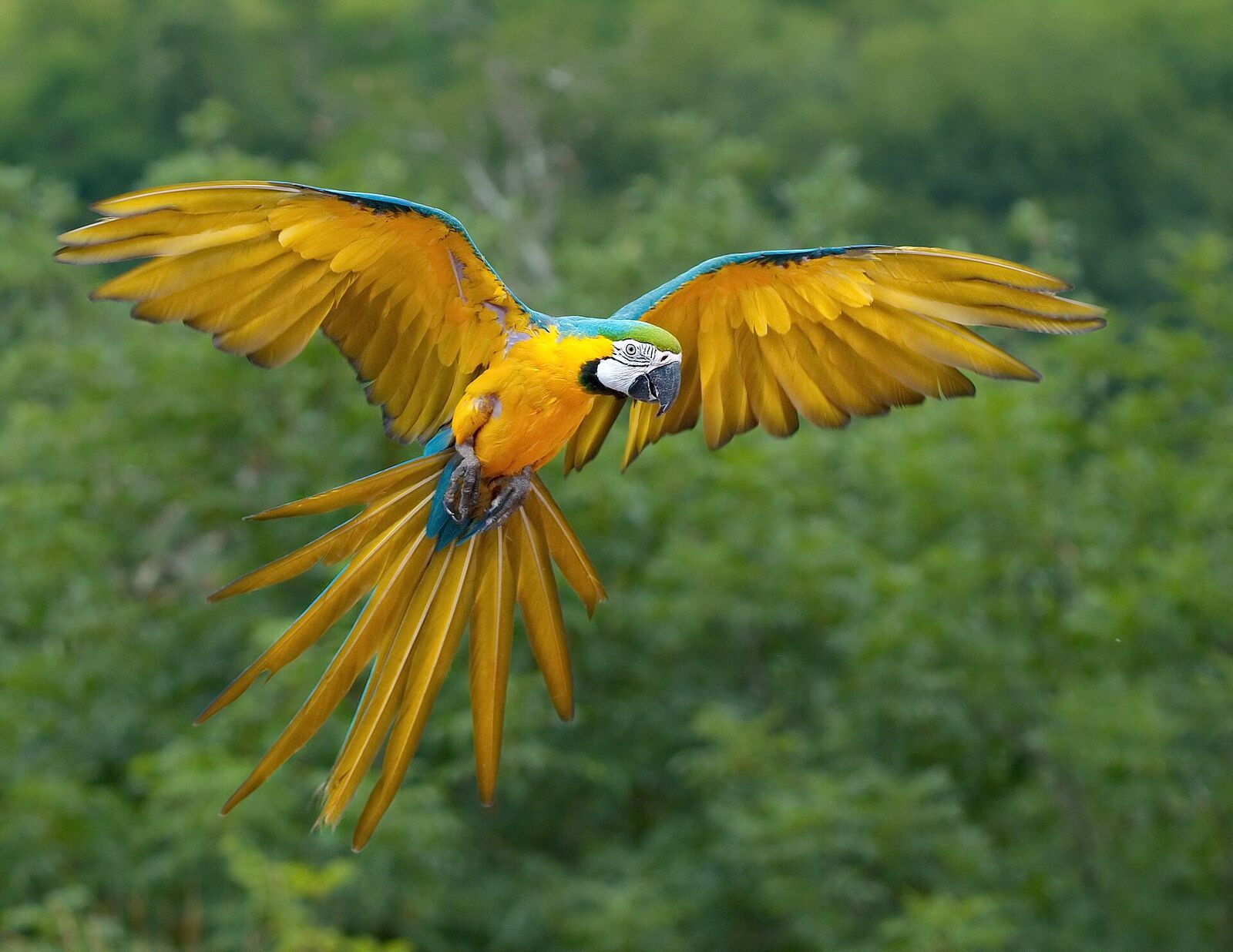
Blue-and-yellow macaw
Ara ararauna
A loud, brilliant, lifelong commitment.
Pet trade
 In-depth
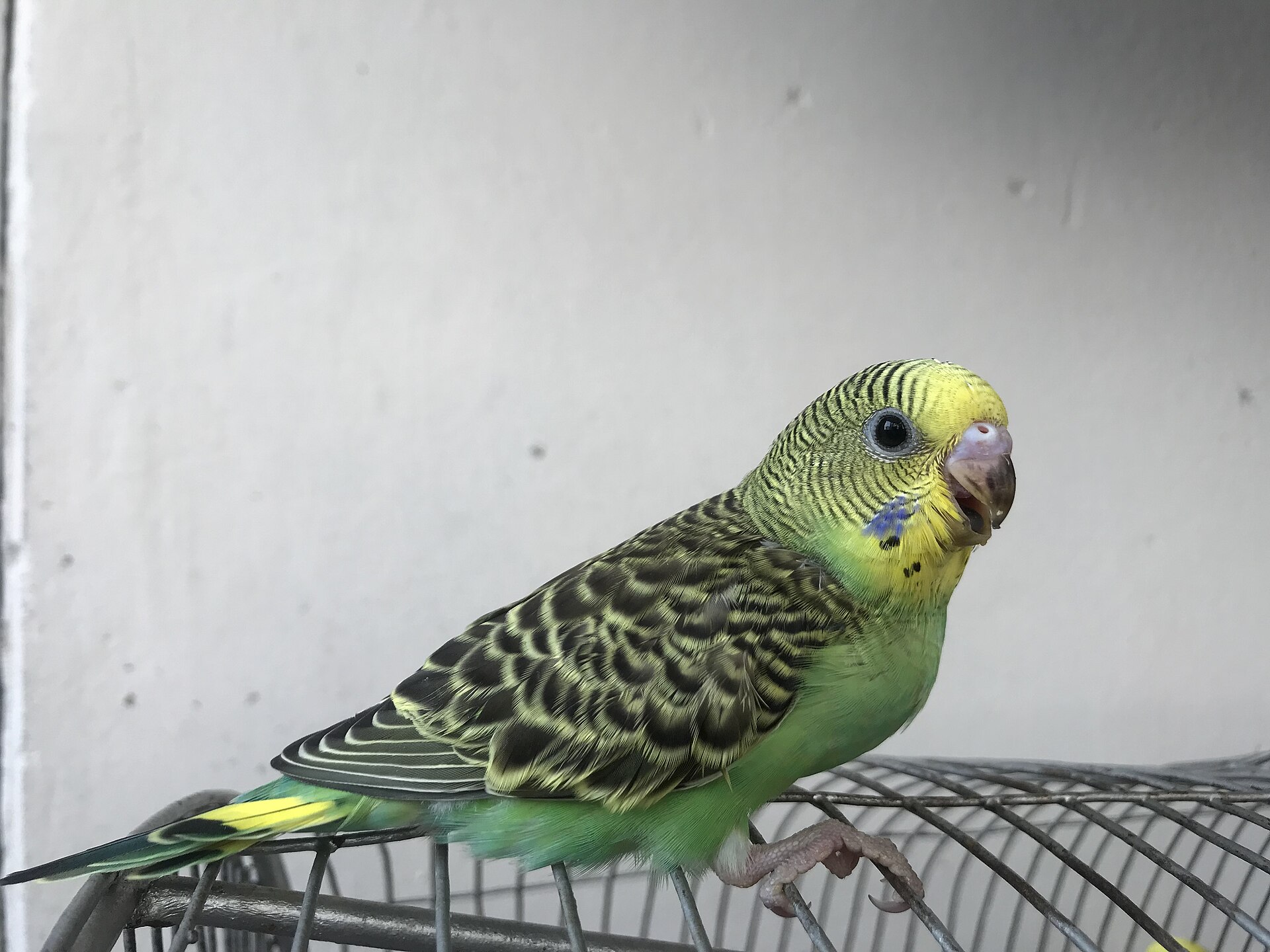
Budgerigar
Melopsittacus undulatus
A small parrot with a big vocabulary.
Pet trade

Hyacinth macaw
Anodorhynchus hyacinthinus
Pet trade

Kea
Nestor notabilis
Pet trade

Rosy-faced lovebird
Agapornis roseicollis
Pet trade