Home / Reptiles / Snakes / Central African rock python
Federal restrictions apply In-depth sheetCentral African rock python
Python sebae
Reptiles › Snakes (Serpentes) › Pythonidae (Pythons)
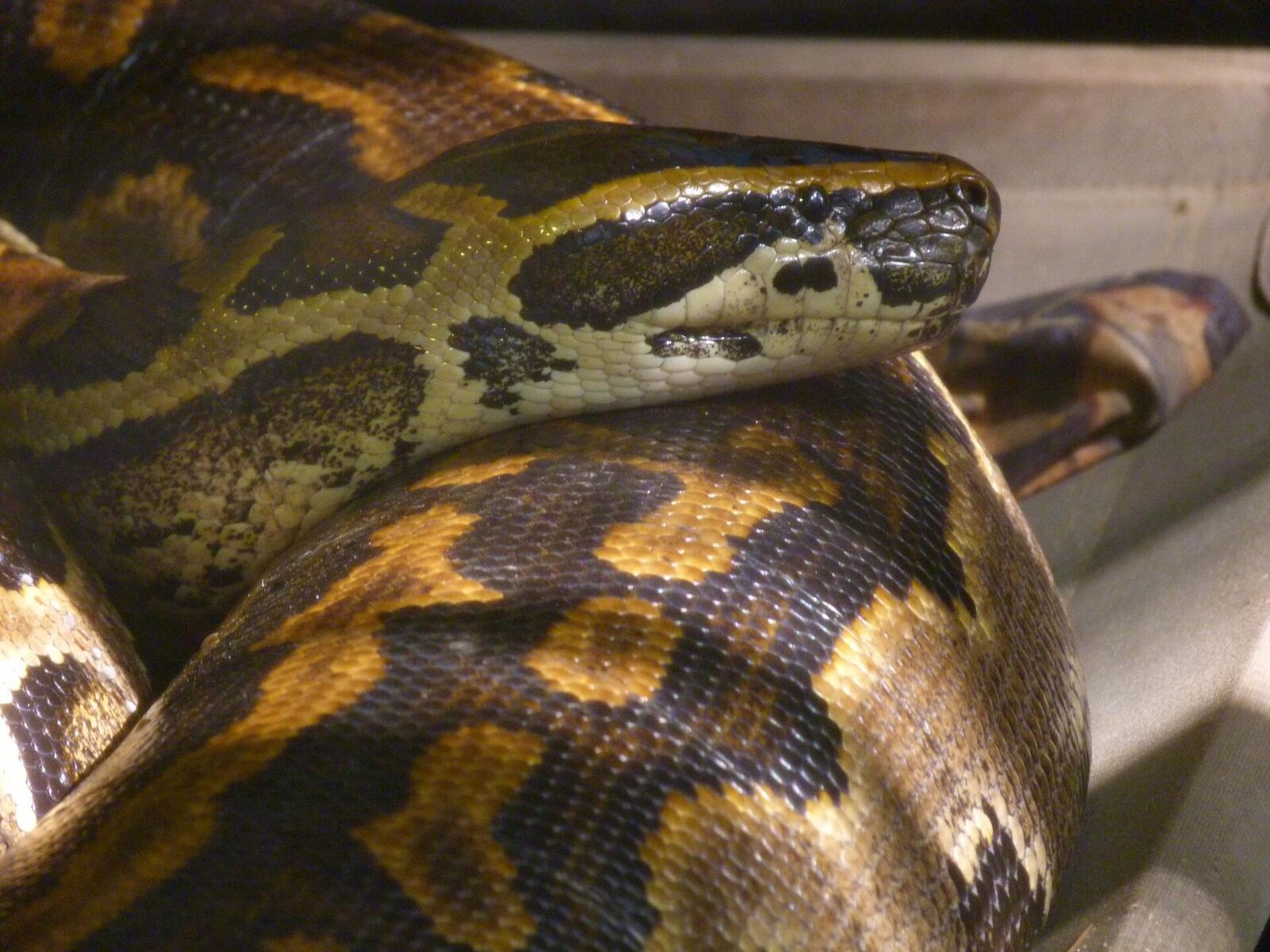
African rock pythons are Africa's largest snakes, living near water in savannas and forests. They're known for a feisty temperament; captive-bred individuals can calm down with steady handling, but they're best for very experienced keepers.
Warnings
Care guide
Enclosure
- Juveniles: about 4×2×2 ft. Adult males about 7×3×2 ft; females larger.
- House singly, with hides and a sturdy water bowl.
Sources 20
Climate
- Mid to low humidity, with a humid hide (moist moss) available when shedding.
Sources 20
Feeding
- Frozen-thawed prey, from mice for juveniles up to rats and rabbits; at least 1–2 weeks between meals.
Sources 20
Handling & safety
- Defensive and quick to strike, with large recurved teeth; bites are painful and prone to infection. Captive-bred animals handled regularly are the best bet.
Show the group care guide for giant constrictors
Giant constrictors
Applies to most species in this group. Habitat: Tropical forests, wetlands and savannas. Individual species can differ, so compare with the species numbers above and the linked sources.
Housing & setup
- Room-sized or custom enclosures: plan for an adult that may exceed 12–20 ft and 100+ lb.
- Large, filtered or frequently changed water features for anacondas; heavy, chew-proof hides and locks for all.
- Plan for the full adult size before buying a baby.
Climate & lighting
| Warm side / daytime | 86–92°F |
| Cool side | 78–82°F |
| Night | 75–80°F |
| Humidity | 60–80% |
Diet
- Large rodents, rabbits and poultry; adults may eat every 3–6 weeks.
- Use feeding tongs or a hook to separate feeding from handling.
Social life
- Solitary.
Handling
- Never handle a giant constrictor alone; one person per 4–5 ft of snake is a common safety rule.
Health watch
- Obesity, respiratory infections and blister disease from dirty, wet conditions.
- Bites from large constrictors need medical attention.
Understanding the animal
In the wild
In the wild
Researched for this exact species, not its family. Good care copies these conditions.1234
| Where it lives | Forests, savannas and inland wetlands of northern and central sub-Saharan Africa, from West Africa east to Ethiopia and Somalia and south toward Angola and northern Tanzania. Often shelters among rocks or in burrows near rivers and lakes. |
| Ground it lives on | Soil and forest litter with rock crevices or mammal burrows. |
| Water it lives in | Associated with freshwater rivers and lakes and swims readily; wild chemistry, clarity and temperature ranges were not established. |
| Climate | Occurs in tropical and temperate regions and has a dry season during which the snake becomes dormant; the sources provide no temperatures or humidity values. |
| Active | Adults primarily nocturnal, with daytime basking; juveniles often crepuscular. |
| Social life | Generally solitary outside breeding encounters. |
| Wild diet | Rodents and other small vertebrates when young; larger mammals, birds and reptiles as adults, with occasional fish. |
| Behavior to plan for | A powerful nonvenomous constrictor that swims and sometimes climbs. Cornered snakes can bite and constrict defensively. |
What this means for care
- Provide an adult-sized land enclosure, secure shelter and accessible bathing water.
- Use barriers and handling procedures appropriate to a very large constrictor.
- Provide sturdy climbing support for smaller animals.
Profile
Profile
Researched for this exact species. Sources are listed under In the wild above.
History
Johann Friedrich Gmelin first described the species in 1789. The specific name sebae is a Latinized reference to Dutch zoologist Albertus Seba, and Python sebae natalensis was later elevated to full-species status as Python natalensis.
Keeper tips
- Plan enclosure dimensions and furnishings around adults averaging 3 to 5 m long and 44 to 55 kg.
- Provide robust enclosed hiding locations comparable to rocky crevices or burrows.
- Provide dependable access to water because wild animals are closely associated with rivers and lakes.
- Be aware that nesting females protect their eggs and may sometimes continue protecting hatchlings.
Behaviors reported
- Kills prey through constriction.
- Becomes dormant during the dry season.
- Females protect their nests.
- Females sometimes protect their hatchlings.
- Uses rocky outcrops or mammal burrows as hiding places.
Unique adaptations
- Constriction enables the snake to subdue large vertebrate prey.
- Dry-season dormancy allows a seasonal reduction in activity.
- Use of rocky outcrops and mammal burrows provides concealed shelter in different types of terrain.
Remarkable facts
- It is described as Africa's largest snake.
- Adults average about 3 to 5 m in length.
- Adults average approximately 44 to 55 kg, with reports of individuals exceeding 91 kg.
- Hatchlings are approximately 35 to 45 cm long.
- The species is nonvenomous.
- It is oviparous.
Stories
- A 7.5 m specimen was reported from Ivory Coast, while another reported Ivory Coast specimen of 9.8 m is described as questionable.
- The original type locality was given as 'Guaira dans le Bresil,' but this is considered erroneous; commentary in The Reptile Database suggests the specimen was actually collected on the African west coast during the journey back to Europe.
From the sources
From the sources
Quoted from the matching sections of reputable sources for this exact species. Specialist databases are used first; Wikipedia (community-edited, CC BY-SA 4.0) only fills gaps. Other sources are short credited quotes.
| Overview | The Central African rock python (Python sebae) is a species of large constrictor snake in the family Pythonidae. The species is native to sub-Saharan Africa. It is one of ten living species in the genus Python. It is Africa's largest snake, and one of the eight largest snake species in the world, along with the green anaconda, reticulated python, Burmese python, Southern African rock python, Indian python, yellow anaconda and Australian scrub python. — Wikipedia (community-edited) |
| Where it lives | African rock pythons prefer evergreen forests or moist, open savannahs. — Animal Diversity Web |
| Social life and communication | As in all snakes, African rock pythons have a well-developed vomeronasal (Jacobson's) organ system, supplied by the tongue. — Animal Diversity Web |
| Wild diet | African rock pythons are carnivores and feed primarily on terrestrial vertebrates. — Animal Diversity Web |
| Behavior | Like many other snake species, African rock pythons are fairly solitary snakes, seeking out their own kind only during the breeding season. — Animal Diversity Web |
| Reproduction | Some authors have reported large, seasonal congregations of African rock pythons and have suggested that these are mating aggregations, but little is known about mating in the wild. — Animal Diversity Web |
| Lifespan | African rock pythons can live for up to 30 years in captivity. — Animal Diversity Web |
| Appearance and size | The largest snake in Africa, Python sebae averages 3 to 5 m in length. — Animal Diversity Web |
| History and naming | Named after the naturalist Albertus Seba (1665-1736) who illustrated the species first in his pre-Linnean “Thesaurus”. — The Reptile Database |
Data and studies
The numbers
The numbers
Each bar is what one source reports. Where several sources weigh in, the dashed gold band marks their average.
Maximum recorded lifespan
Longest recorded lifespan reported by each database; typical lifespans are usually shorter. The AnAge record comes from an animal in human care.
Typical adult weight
Average adult body mass in each database (FishBase gives the maximum recorded weight).
Veterinary & husbandry research
Veterinary & husbandry research
- Molecular Identification of Cryptosporidium Species from Pet Snakes in Thailand Yimming B et al., The Korean journal of parasitology 2016
- Hematological and plasma chemistry values for the African rock python (Python sebae) Jegede HO et al., International journal of veterinary science and medicine 2017
- Severe Tick Infestation and Haemogregarina spp. Infection in a Captive African Rock Python (Python sebae): A Clinical and Parasitological Case from Nigeria Akande FA et al., Veterinary medicine and science 2026
- Discovery of Novel Definitive Hosts Broadens the Known Host Range of the Invasive Pentastome, Raillietiella orientalis, across Snakes, Lizards, and Chelonians Palmisano JN et al., Journal of wildlife diseases 2026
Peer-reviewed papers that mention this species alongside captivity, zoos, veterinary care or aquaculture. Some cover several species or mention it only in passing, so check the abstract. 170
Sources for this sheet
- The Reptile Centre: African rock python care sheet Specialist retailerUK specialist reptile retailer with a solid basic care sheet.
- Animal Diversity Web: Python sebae Zoo, university or veterinaryUniversity-hosted species account.
- AnAge: The Animal Ageing and Longevity Database (Human Ageing Genomic Resources) Peer-reviewed researchCurated, referenced longevity and life-history records for thousands of species; maximum lifespans are often from zoo animals.
- Myhrvold et al. (2015). An amniote life-history database. Ecology 96: 3109 Peer-reviewed researchPeer-reviewed compilation of life-history data for over 21,000 birds, mammals and reptiles.
- 50 CFR Part 16: Injurious wildlife (Lacey Act) Zoo, university or veterinaryCurrent federal regulation, read from eCFR.
- U.S. Association of Reptile Keepers v. Zinke (D.C. Cir. 2017) Zoo, university or veterinaryAppeals ruling that the Lacey Act's shipping ban does not cover moves between the continental states.
- Species+ (UNEP-WCMC and the CITES Secretariat) Zoo, university or veterinaryThe official database of species listed under CITES.
- USFWS International Affairs: CITES Zoo, university or veterinaryFederal agency that issues CITES permits.
- Merck Veterinary Manual: Management and husbandry of reptiles Zoo, university or veterinaryThe Merck Veterinary Manual: a standard veterinary reference written and reviewed by veterinary specialists.
- Merck Veterinary Manual: Nutritional, metabolic and endocrine diseases of reptiles Zoo, university or veterinaryThe Merck Veterinary Manual: a standard veterinary reference written and reviewed by veterinary specialists.
- The Reptile Database Peer-reviewed researchScientist-curated catalog of every reptile species, with taxonomy and literature.
- GBIF Backbone Taxonomy (Global Biodiversity Information Facility) Peer-reviewed researchInternational scientific taxonomy used here for classification.
- Wikipedia (species article) Community referenceFree encyclopedia; useful overviews with their own citations. Intro text is quoted under CC BY-SA 4.0.
- PubMed (U.S. National Library of Medicine) Peer-reviewed researchIndex of peer-reviewed veterinary, zoo and husbandry research.
- iNaturalist (captive observations) Community referenceCommunity observation platform run by the California Academy of Sciences and National Geographic; observations marked captive show animals living in homes, zoos and aquariums.
More pythons
 In-depth
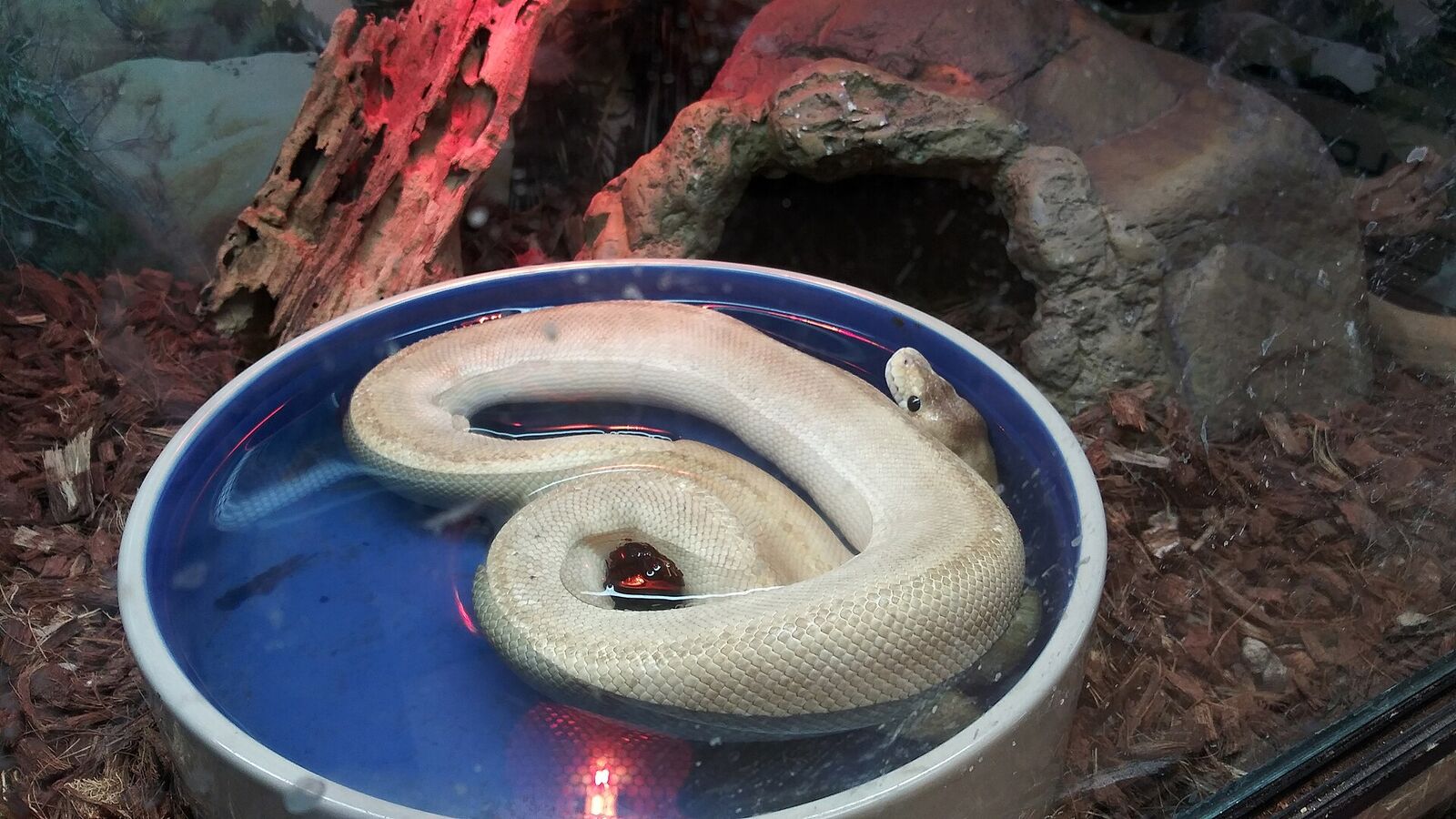
Ball python
Python regius
The calm, curl-up classic of pet snakes.
Pet trade
 In-depth
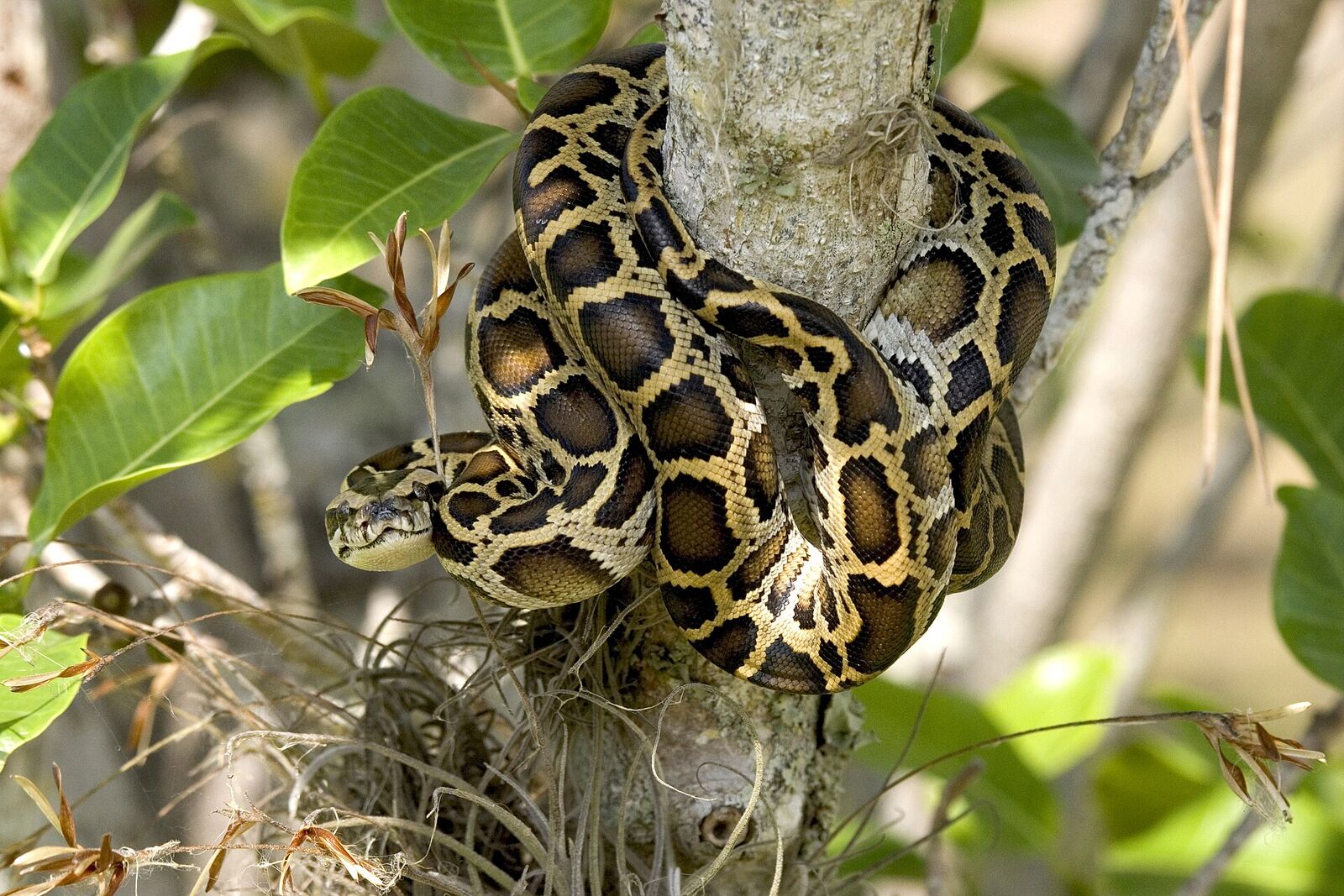
Burmese python
Python bivittatus
A heavy-bodied giant with a famously calm reputation.
Pet trade
 In-depth
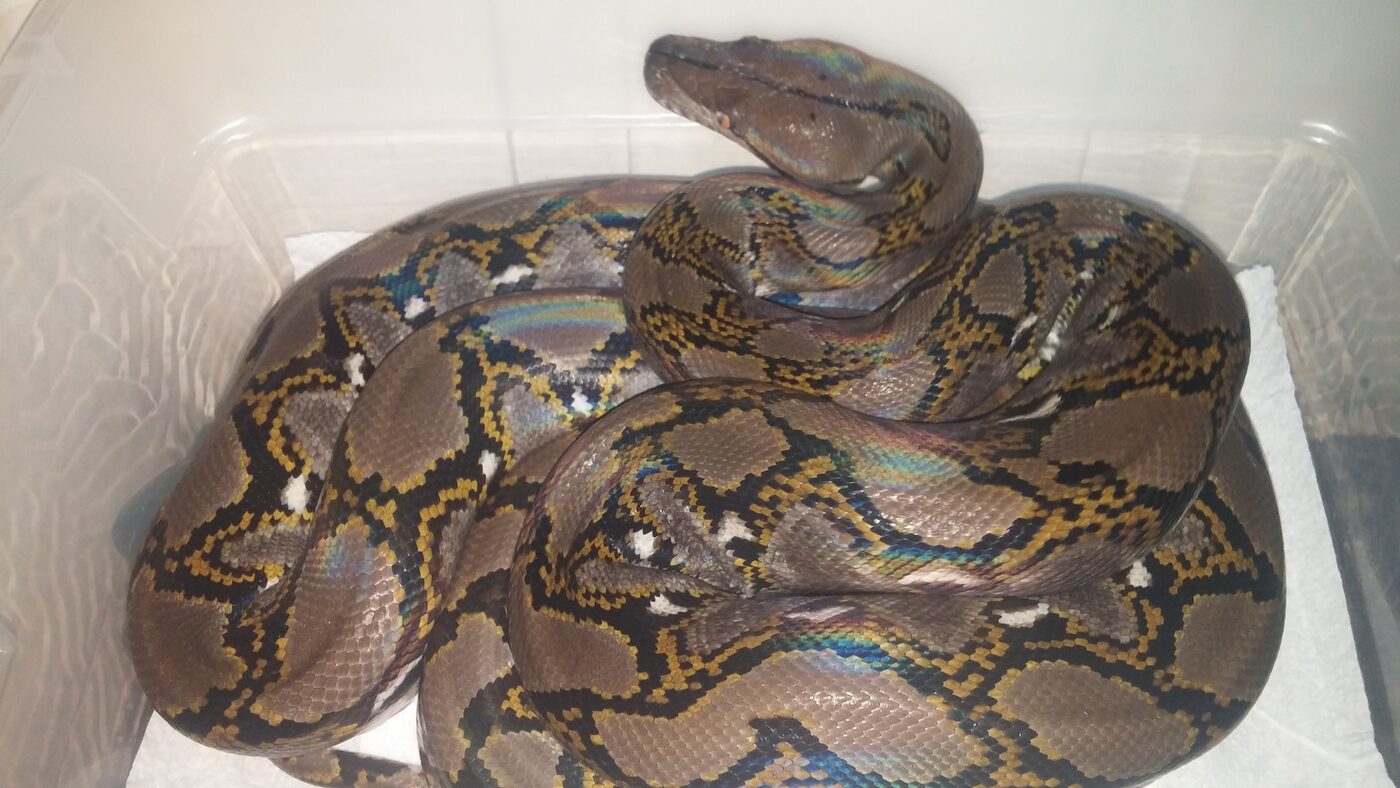
Reticulated python
Malayopython reticulatus
The world's longest snake, and a brilliant, active giant.
Pet trade
Green tree python
Morelia viridis
Pet trade