
Home / Reptiles / Snakes / Colubridae / Beauty rat snake
No federal permit to keepBeauty rat snake
Orthriophis taeniurus
Reptiles › Snakes (Serpentes) › Colubridae (Colubrid snakes)
The beauty rat snake (Elaphe taeniura), also called the beauty ratsnake, the beauty snake, or the cave racer, is a species of snake in the family Colubridae.
From Wikipedia: Beauty rat snake, CC BY-SA 4.0 (excerpt)

Care at a glance
Species-specific values
Values researched for this exact species. Air, surface and water temperatures are listed separately, and each source is kept as published rather than averaged.
| Seasonal cooling | 60–65 °F Source: reptilesmagazine.com | |
| Seasonal cooling | For the Chinese, Yunnan, and Mocquard’s beauty snakes, the cooling period lasts from October to December; ambient temperatures are raised in January. Source: reptilesmagazine.com | |
| Warm side air temperature | 85–88 °F Source: reptilesmagazine.com | |
| Substrate | Provide a humid hide filled with sphagnum moss, wet enough to yield a few drops when squeezed; mist it daily. Source: reptilesmagazine.com | |
| Humidity | 80 % Source: reptilesmagazine.com | |
| Warm side air temperature | 85 °F Source: reptilesmagazine.com | |
| Diet | Feed hatchlings frozen/thawed pinky mice; thaw until they develop a slightly spoiled-meat smell to entice reluctant feeders. Source: reptilesmagazine.com |
Understanding the animal
About this animal
About this animal
The species is native to the eastern and southeastern regions of Asia. It is a long, thin, semi-arboreal species of snake with several recognized subspecies.
From Wikipedia: Beauty rat snake, CC BY-SA 4.0 (excerpt)
In the wild
In the wild
| Overview | The beauty rat snake (Elaphe taeniura), also called the beauty ratsnake, the beauty snake, or the cave racer, is a species of snake in the family Colubridae. The species is native to the eastern and southeastern regions of Asia. It is a long, thin, semi-arboreal species of snake with several recognized subspecies. This constrictor feeds on rodents, and though it is favored in some locations as a natural pest control or pet, it is also considered an invasive species in other locations. — From Wikipedia: Beauty rat snake, CC BY-SA 4.0 (excerpt) |
| Where it lives | The range of the species covers much of southern and southeastern Asia, excluding western and northeastern China. Within these countries, these snakes can be typically found in rain forests as well as within caves. Outside of Asia, the Chinese beauty snake has established a population in the Belgian city of Hasselt and surrounding municipalities. — From Wikipedia: Beauty rat snake, CC BY-SA 4.0 (excerpt) |
| Wild diet | The beauty rat snake typically feeds on ground rodents such as mice and, due to the snake's climbing abilities, even bats that are roosting within the caves they share. In addition to small mammals, beauty rat snakes have also been known to eat birds and bird eggs occasionally. — From Wikipedia: Beauty rat snake, CC BY-SA 4.0 (excerpt) |
| Behavior | Due to their preference for caves, beauty snakes have become able climbers and are known to move along cave walls. This ability becomes a strong asset for them when it comes to hunting. In addition, likely due to its cave-dwelling habits, beauty rat snakes are cathemeral, meaning that they are active at random times during the 24-hour day regardless of whether it is day or night outside. — From Wikipedia: Beauty rat snake, CC BY-SA 4.0 (excerpt) |
| Reproduction | The beauty rat snake species is oviparous, and mating usually results about a month after the hibernation period which is during times when the temperature is around 18–20 C. After laying 4-12 eggs, the female will incubate and defend them for about 70 days, only taking occasional breaks to hunt. Recently hatched young range about 11+3/4 in length. About two weeks later they will begin to shed their first skin. — From Wikipedia: Beauty rat snake, CC BY-SA 4.0 (excerpt) |
| Appearance and size | Living about 15–25 years, the average length of the beauty rat snake (including the tail) is about 4–6 ft. — From Wikipedia: Beauty rat snake, CC BY-SA 4.0 (excerpt) |
| History and naming | The subspecific name, grabowskyi, is in honor of biologist Friedrich J. Grabowsky. The subspecific name, mocquardi, is in honor of French herpetologist François Mocquard. — From Wikipedia: Beauty rat snake, CC BY-SA 4.0 (excerpt) |
| Conservation | Though beauty rat snakes are typically in less accessible caves, the top predators of these serpents are birds and mammals. — From Wikipedia: Beauty rat snake, CC BY-SA 4.0 (excerpt) |
Native climate (measured)
Native climate (measured)
| Warm-season highs | about 86°F (up to 89°F in the hottest sampled areas) |
| Cool-season lows | about 53°F (down to 44°F in the coldest sampled areas) |
| Average temperature | 63–73°F across sampled records |
| Relative humidity | 79–83% on average (driest month about 76%) |
| Rainfall | about 2016 mm a year, with strong wet and dry seasons |
Measured at 16 wild occurrence records sampled against WorldClim 2.1 climate data (1970–2000 averages). Air conditions in the range are ecological context, not enclosure settings: microhabitats such as burrows, leaf litter or basking rocks can be cooler, warmer or more humid.
Profile
Profile
Researched for this exact species. Sources are listed under In the wild above.
History
The subspecific name, grabowskyi, is in honor of biologist Friedrich J. Grabowsky. The subspecific name, mocquardi, is in honor of French herpetologist François Mocquard.
From Wikipedia: Beauty rat snake, CC BY-SA 4.0 (excerpt)
Data and studies
The numbers
The numbers
Each bar is what one source reports. Where several sources weigh in, the dashed gold band marks their average.
Maximum recorded lifespan
Longest recorded lifespan reported by each database; typical lifespans are usually shorter. The AnAge record comes from an animal in human care.
Incubation
Care articles for this species
Care articles for this species
- Beauty Snake Breeding (Reptiles Magazine)
Written by keepers, breeders and vets Reptiles MagazineReptiFiles
Sources for this sheet
- AnAge: The Animal Ageing and Longevity Database (Human Ageing Genomic Resources) (CC BY 3.0) Peer-reviewed researchCurated, referenced longevity and life-history records for thousands of species; maximum lifespans are often from zoo animals.
- Myhrvold et al. (2015). An amniote life-history database. Ecology 96: 3109 Peer-reviewed researchPeer-reviewed compilation of life-history data for over 21,000 birds, mammals and reptiles.
- The Reptile Database Peer-reviewed researchScientist-curated catalog of every reptile species, with taxonomy and literature.
- GBIF Backbone Taxonomy (Global Biodiversity Information Facility) (CC BY 4.0) Peer-reviewed researchInternational scientific taxonomy used here for classification. GBIF Secretariat (2023). GBIF Backbone Taxonomy. Checklist dataset https://doi.org/10.15468/39omei, accessed via GBIF.org.
- Wikipedia (species article) (CC BY-SA 4.0) Community referenceFree encyclopedia; useful overviews with their own citations. Short excerpts are quoted under CC BY-SA 4.0, each credited with a link to its article.
- Reptiles Magazine (care articles) Experienced keeper or breederEstablished reptile and amphibian hobby magazine; care articles are written by breeders, keepers and veterinarians.
More colubrid snakes
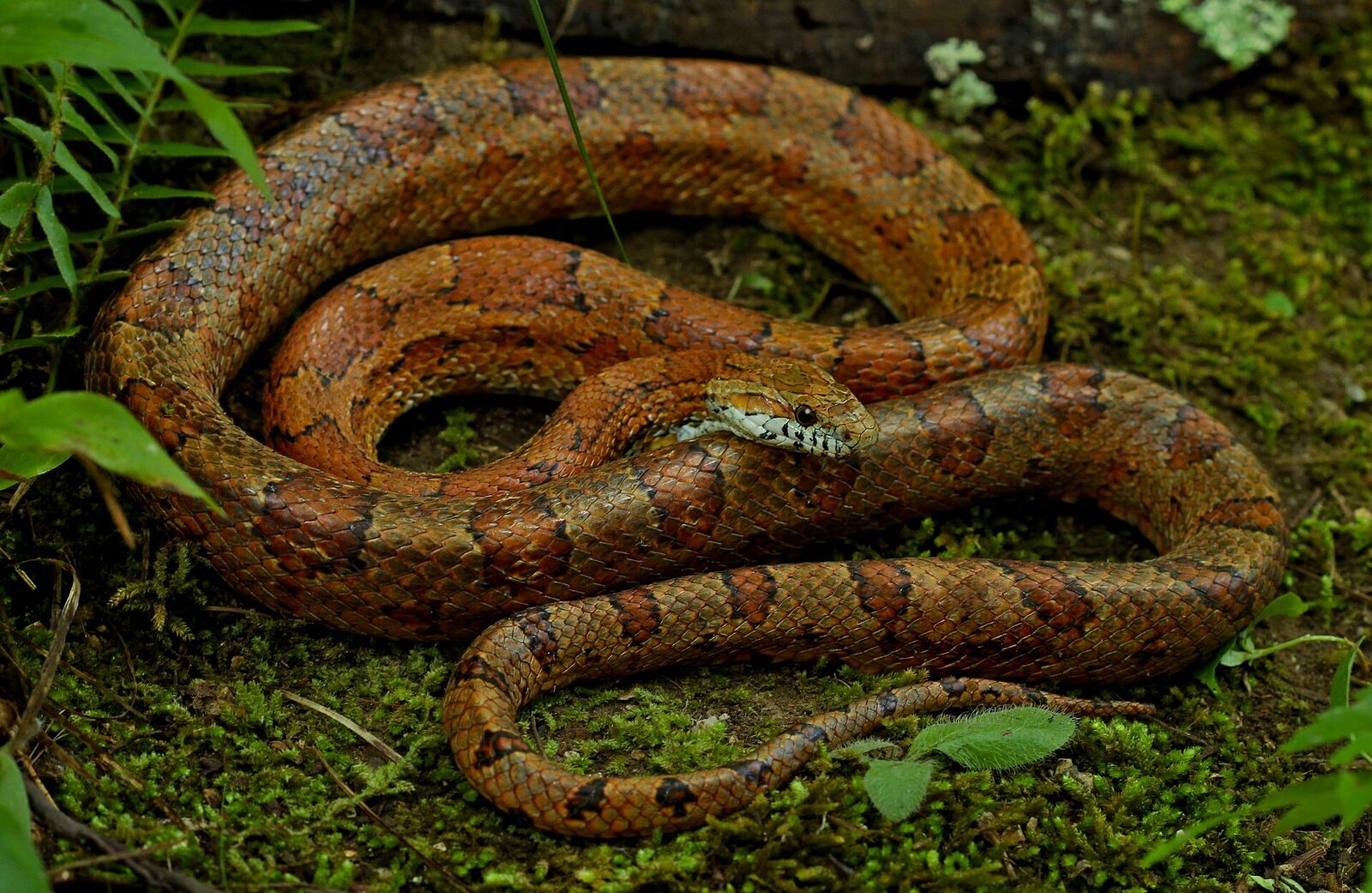
Corn snake
Pantherophis guttatus
Hardy, easy-going and colorful.
Pet trade
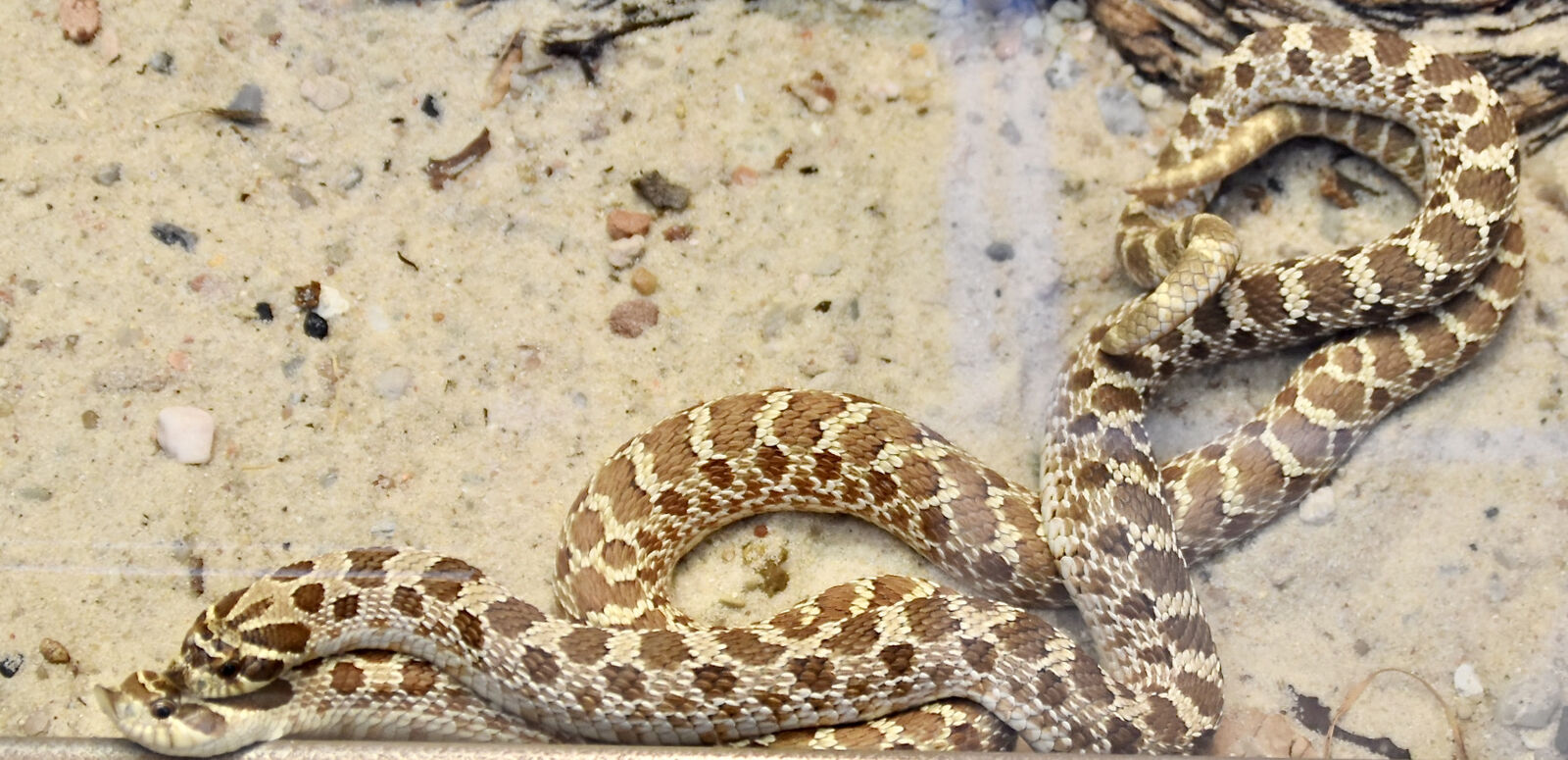
Western hognose snake
Heterodon nasicus
Dramatic bluffs from a tiny, upturned-nose snake.
Pet trade

Amur (Russian) rat snake
Elaphe schrenckii
Pet trade

Andean milk snake
Lampropeltis micropholis
Pet trade

Arizona mountain kingsnake
Lampropeltis pyromelana
Pet trade

Baird's rat snake
Pantherophis bairdi
Pet trade