
Home / Birds / Songbirds and perching birds / Black-chinned siskin
No federal permit to keepBlack-chinned siskin
Spinus barbatus
Birds › Songbirds and perching birds (Passeriformes) › Fringillidae (Finches and canaries)
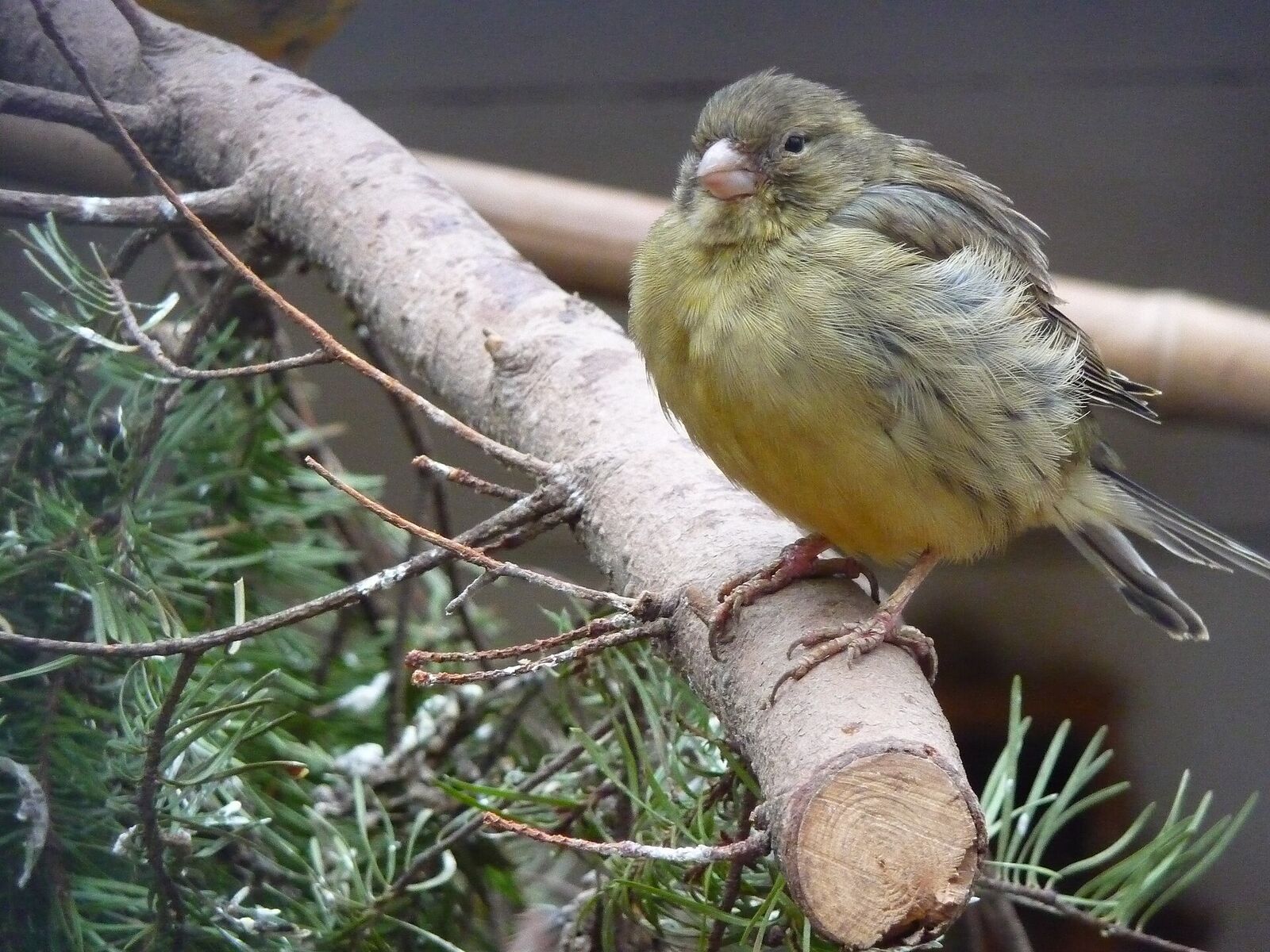
The black-chinned siskin (Spinus barbatus) is a species of bird in the family Fringillidae, the finches and euphonias.
From Wikipedia: Black-chinned siskin, CC BY-SA 4.0 (excerpt)

Care at a glance
Species-specific values
Values researched for this exact species. Air, surface and water temperatures are listed separately, and each source is kept as published rather than averaged.
| Minimum enclosure | Provide enough room to fly, perch, and explore comfortably. Source: exoticbirdsstore.com | |
| Diet | Offer quality finch seed, suitable fresh greens, and clean drinking water. Source: exoticbirdsstore.com | |
| Social housing | Compatible birds may share an aviary if there is sufficient space and suitable social conditions. Source: exoticbirdsstore.com |
Understanding the animal
About this animal
About this animal
It is found in Argentina, Chile and the Falkland Islands.
From Wikipedia: Black-chinned siskin, CC BY-SA 4.0 (excerpt)
In the wild
In the wild
| Overview | The black-chinned siskin (Spinus barbatus) is a species of bird in the family Fringillidae, the finches and euphonias. It is found in Argentina, Chile and the Falkland Islands. — From Wikipedia: Black-chinned siskin, CC BY-SA 4.0 (excerpt) |
| Where it lives | The black-chinned siskin is the most southerly of its genus. It is found in Chile from the Atacama Region south to the southernmost Magallanes Region, in Argentina from southern Mendoza and La Pampa provinces to Tierra del Fuego, and on the Falkland Islands. On the mainland it primarily inhabits tall coniferous and broadleaf forest and is also found in more open country with brush, thickets, and Nothofagus shrubs. — From Wikipedia: Black-chinned siskin, CC BY-SA 4.0 (excerpt) |
| Wild diet | The black-chinned siskin feeds primarily on seeds. It has also been observed feeding on insect larvae extracted from under tree bark, on flowers in a plum (Prunus domestica) farm, and on farmed flax (Linum) wheat (Triticum). It forages in pairs and small flocks during the breeding season and outside it in flocks as large as 100 individuals. — From Wikipedia: Black-chinned siskin, CC BY-SA 4.0 (excerpt) |
| Reproduction | The black-chinned siskin breeds from July to February; on the Falklands three broods have been noted in a season. Its nest is a cup made from grasses, other plant fibers, and animal hair. It is typically placed in a shrub's branch fork up to about 2 m above the ground. — From Wikipedia: Black-chinned siskin, CC BY-SA 4.0 (excerpt) |
| Appearance and size | The black-chinned siskin is 12 to 13 cm long and weighs about 13 to 20 g. The species is sexually dimorphic. Adult males have black lores, forehead, and crown. — From Wikipedia: Black-chinned siskin, CC BY-SA 4.0 (excerpt) |
| History and naming | The black-chinned siskin has a complicated taxonomic history. It was originally described in 1782 with the binomial Fringilla barbata. It was renamed Chrysomitris barbata in 1860. — From Wikipedia: Black-chinned siskin, CC BY-SA 4.0 (excerpt) |
Native climate (measured)
Native climate (measured)
| Warm-season highs | about 70°F (up to 84°F in the hottest sampled areas) |
| Cool-season lows | about 30°F (down to 24°F in the coldest sampled areas) |
| Average temperature | 40–58°F across sampled records |
| Relative humidity | 54–75% on average (driest month about 55%) |
| Rainfall | about 451 mm a year, spread fairly evenly |
| Winters | Cool to cold winters (lows around 30°F) in much of its native range. Seasonal slowdown may be relevant, but species-specific biology determines whether brumation or hibernation occurs. |
Measured at 816 wild occurrence records sampled against WorldClim 2.1 climate data (1970–2000 averages). Air conditions in the range are ecological context, not enclosure settings: microhabitats such as burrows, leaf litter or basking rocks can be cooler, warmer or more humid.
Profile
Profile
Researched for this exact species. Sources are listed under In the wild above.
History
The black-chinned siskin has a complicated taxonomic history. It was originally described in 1782 with the binomial Fringilla barbata. It was renamed Chrysomitris barbata in 1860.
From Wikipedia: Black-chinned siskin, CC BY-SA 4.0 (excerpt)
Sources for this sheet
- 9 CFR 2.1: Animal Welfare Act licensing (USDA) Zoo, university or veterinaryWho needs a USDA license to breed, sell or exhibit animals.
- GBIF Backbone Taxonomy (Global Biodiversity Information Facility) (CC BY 4.0) Peer-reviewed researchInternational scientific taxonomy used here for classification. GBIF Secretariat (2023). GBIF Backbone Taxonomy. Checklist dataset https://doi.org/10.15468/39omei, accessed via GBIF.org.
- Wikipedia (species article) (CC BY-SA 4.0) Community referenceFree encyclopedia; useful overviews with their own citations. Short excerpts are quoted under CC BY-SA 4.0, each credited with a link to its article.
- The eBird/Clements Checklist of Birds of the World (Cornell Lab of Ornithology) Peer-reviewed researchThe standard global bird checklist maintained by the Cornell Lab of Ornithology; used here for complete species lists of widely kept bird families.
- iNaturalist (captive observations) Community referenceCommunity observation platform run by the California Academy of Sciences and National Geographic; observations marked captive show animals living in homes, zoos and aquariums.
More finches and canaries
Domestic canary
Serinus canaria
Centuries of song in a small bird.
Pet trade

Black siskin
Spinus atratus
Aviary

Black-headed siskin
Spinus notatus
Aviary

Eurasian chaffinch
Fringilla coelebs
Zoos & aquariums

European goldfinch
Carduelis carduelis
Pet trade

European greenfinch
Chloris chloris
Pet trade