
Home / Birds / Songbirds and perching birds / Black-headed siskin
No federal permit to keepBlack-headed siskin
Spinus notatus
Birds › Songbirds and perching birds (Passeriformes) › Fringillidae (Finches and canaries)
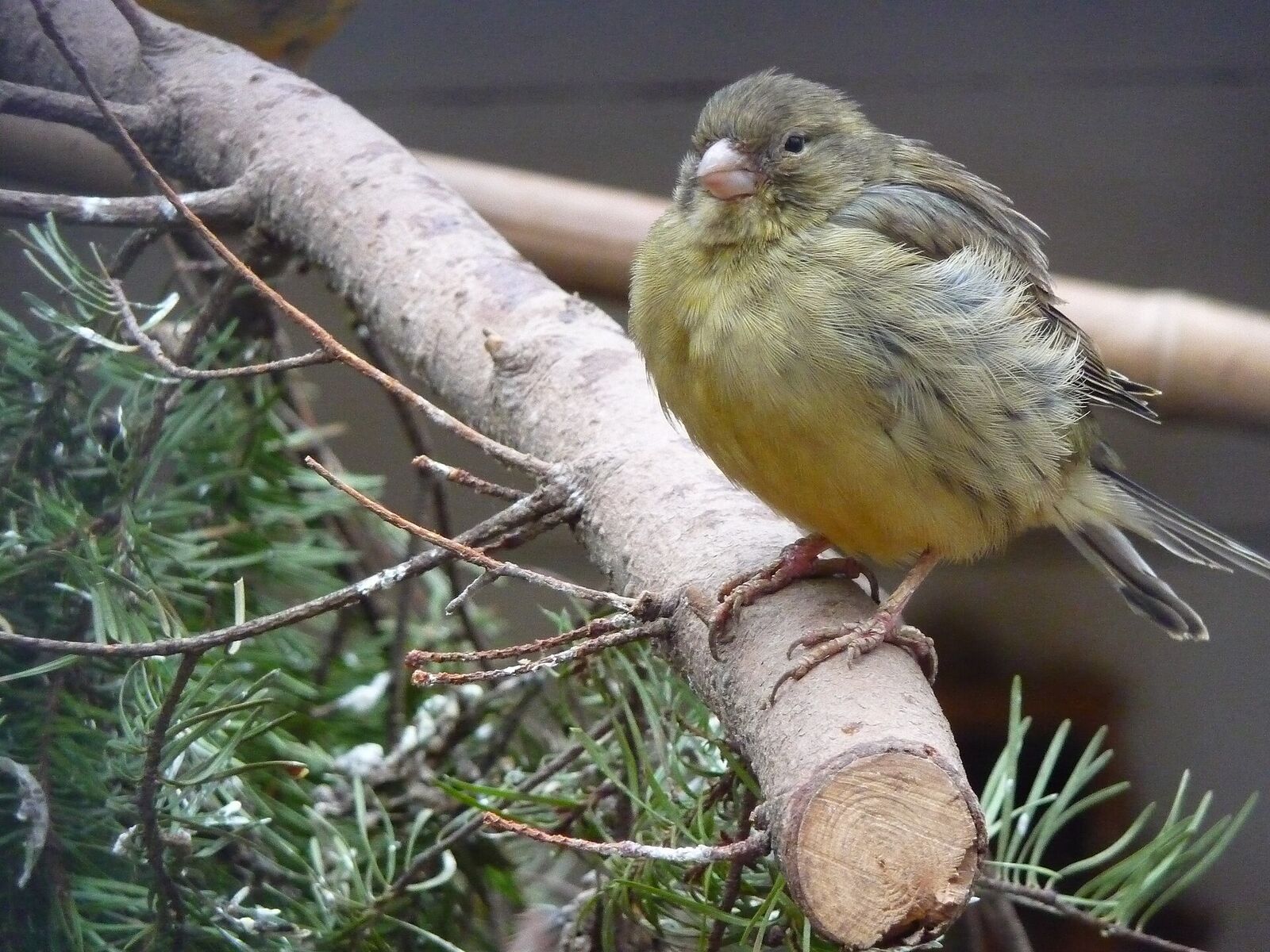
The black-headed siskin (Spinus notatus) is a species of bird in the family Fringillidae, the finches and euphonias.
From Wikipedia: Black-headed siskin, CC BY-SA 4.0 (excerpt)

Care at a glance
Species-specific values
Values researched for this exact species. Air, surface and water temperatures are listed separately, and each source is kept as published rather than averaged.
| Minimum enclosure | Minimum flight length is 2–3 meters for a single pair. Source: johnnysfinches.com | |
| Minimum enclosure | Height should be at least 1.8 meters. Source: johnnysfinches.com | |
| Minimum enclosure | Minimum width is 60–90 cm. Source: johnnysfinches.com | |
| Night temperature | 59–64 °F (15–18 °C) Source: johnnysfinches.com | |
| Diet | Provide a varied diet of species-appropriate seed mix, fresh and sprouted seeds, millet, fresh foods, protein foods, and supplements. Source: johnnysfinches.com | |
| Social housing | House one pair per enclosure during breeding season to reduce competition and stress. Source: johnnysfinches.com |
Understanding the animal
About this animal
About this animal
It is found in Mexico, Belize, El Salvador, Guatemala, Honduras, and Nicaragua.
From Wikipedia: Black-headed siskin, CC BY-SA 4.0 (excerpt)
In the wild
In the wild
| Overview | The black-headed siskin (Spinus notatus) is a species of bird in the family Fringillidae, the finches and euphonias. It is found in Mexico, Belize, El Salvador, Guatemala, Honduras, and Nicaragua. — From Wikipedia: Black-headed siskin, CC BY-SA 4.0 (excerpt) |
| Where it lives | The black-headed siskin has a disjunct distribution. The nominate subspecies is found in eastern and central Mexico and Guatemala. Subspecies S. n. forreri is found in western Mexico from Sonora and Chihuahua south to Guerrero. — From Wikipedia: Black-headed siskin, CC BY-SA 4.0 (excerpt) |
| Wild diet | The black-headed siskin feeds mostly on seeds. It forages in pairs and small flocks, and through all levels of trees. — From Wikipedia: Black-headed siskin, CC BY-SA 4.0 (excerpt) |
| Reproduction | The black-headed siskin's clutch is two eggs. Nothing else is known about the species' breeding biology. — From Wikipedia: Black-headed siskin, CC BY-SA 4.0 (excerpt) |
| Appearance and size | The black-headed siskin is 10.2 to 11.5 cm long and weighs about 10 to 14 g. The species is sexually dimorphic. Adult males of the nominate subspecies S. n. notatus have a black head and upper breast. — From Wikipedia: Black-headed siskin, CC BY-SA 4.0 (excerpt) |
| History and naming | The black-headed siskin was originally described in 1847 with the binomial Carduelis notata. It was later moved to what was then the subgenus Spinus within genus Carduelis. Beginning in about 2009 the subgenus was elevated to full genus level and the black-capped siskin, the rest of the New World siskins, and the goldfinches were therefore elevated to now-genus Spinus. — From Wikipedia: Black-headed siskin, CC BY-SA 4.0 (excerpt) |
Native climate (measured)
Native climate (measured)
| Warm-season highs | about 87°F (up to 94°F in the hottest sampled areas) |
| Cool-season lows | about 51°F (down to 35°F in the coldest sampled areas) |
| Average temperature | 58–77°F across sampled records |
| Relative humidity | 60–75% on average (driest month about 60%) |
| Rainfall | about 1180 mm a year, with strong wet and dry seasons |
Measured at 412 wild occurrence records sampled against WorldClim 2.1 climate data (1970–2000 averages). Air conditions in the range are ecological context, not enclosure settings: microhabitats such as burrows, leaf litter or basking rocks can be cooler, warmer or more humid.
Profile
Profile
Researched for this exact species. Sources are listed under In the wild above.
History
The black-headed siskin was originally described in 1847 with the binomial Carduelis notata. It was later moved to what was then the subgenus Spinus within genus Carduelis. Beginning in about 2009 the subgenus was elevated to full genus level and the black-capped siskin, the rest of the New World siskins, and the goldfinches were therefore elevated to now-genus Spinus.
From Wikipedia: Black-headed siskin, CC BY-SA 4.0 (excerpt)
Sources for this sheet
- 9 CFR 2.1: Animal Welfare Act licensing (USDA) Zoo, university or veterinaryWho needs a USDA license to breed, sell or exhibit animals.
- GBIF Backbone Taxonomy (Global Biodiversity Information Facility) (CC BY 4.0) Peer-reviewed researchInternational scientific taxonomy used here for classification. GBIF Secretariat (2023). GBIF Backbone Taxonomy. Checklist dataset https://doi.org/10.15468/39omei, accessed via GBIF.org.
- Wikipedia (species article) (CC BY-SA 4.0) Community referenceFree encyclopedia; useful overviews with their own citations. Short excerpts are quoted under CC BY-SA 4.0, each credited with a link to its article.
- The eBird/Clements Checklist of Birds of the World (Cornell Lab of Ornithology) Peer-reviewed researchThe standard global bird checklist maintained by the Cornell Lab of Ornithology; used here for complete species lists of widely kept bird families.
- iNaturalist (captive observations) Community referenceCommunity observation platform run by the California Academy of Sciences and National Geographic; observations marked captive show animals living in homes, zoos and aquariums.
More finches and canaries
Domestic canary
Serinus canaria
Centuries of song in a small bird.
Pet trade

Black siskin
Spinus atratus
Aviary

Black-chinned siskin
Spinus barbatus
Aviary

Eurasian chaffinch
Fringilla coelebs
Zoos & aquariums

European goldfinch
Carduelis carduelis
Pet trade

European greenfinch
Chloris chloris
Pet trade