
Home / Reptiles / Snakes / Pythonidae / Blood python
Some federal rules applyBlood python
Python brongersmai
Reptiles › Snakes (Serpentes) › Pythonidae (Pythons)
Python brongersmai is a species of non-venomous snake in the family Pythonidae.
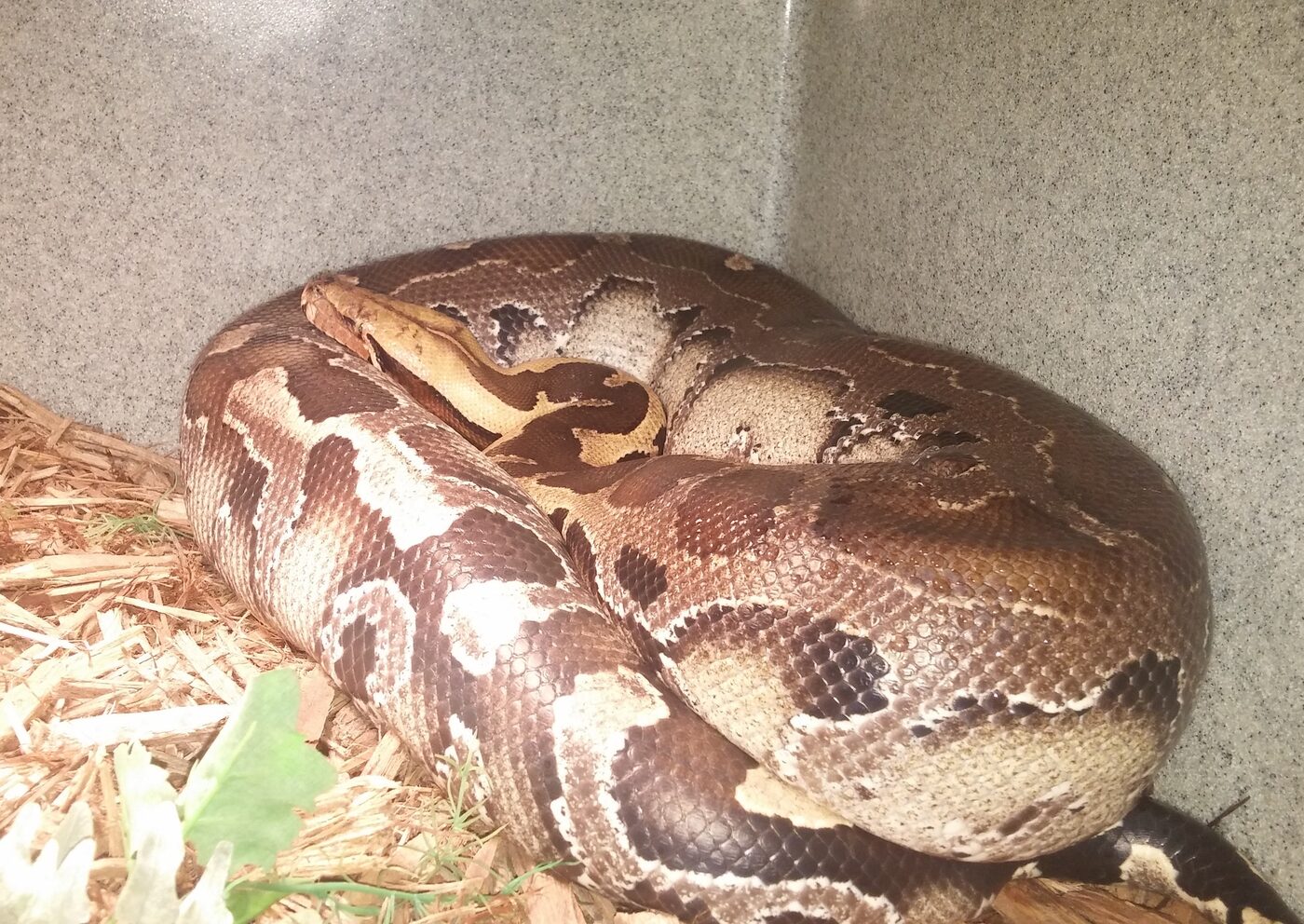
Care at a glance
Species-specific values
Values researched for this exact species. Air, surface and water temperatures are listed separately, and each source is kept as published rather than averaged.
| Minimum enclosure | Adult display enclosure: 48 × 24 × 24 inches, depending on keeper preference. Source: reptilesmagazine.com | |
| Warm side air temperature | 86–88 °F Source: reptilesmagazine.com | |
| Cool side air temperature | 80 °F Source: reptilesmagazine.com | |
| Humidity | 60–70 % Source: reptilesmagazine.com | |
| Diet | Rats are ideal prey; hatchlings may initially prefer hopper mice, then transition to rat pups. Source: reptilesmagazine.com | |
| Feeding frequency | The largest adults eat retired breeder rats every two weeks; weekly feeding can use smaller feeders. Source: reptilesmagazine.com | |
| Substrate | Paper, cypress mulch, chipped aspen, or shredded aspen can be used; hatchlings are best on paper towels. Source: reptilesmagazine.com |
Understanding the animal
About this animal
About this animal
The species is native to Southeast Asia. Previously considered a subspecies of Python curtus, it was recognized as a distinct species around 2000.
From Wikipedia: Python brongersmai, CC BY-SA 4.0 (excerpt)
In the wild
In the wild
Researched for this exact species, not its family. Wild conditions are context, not enclosure settings.1234
| Where it lives | Malay Peninsula and eastern Sumatra lowland evergreen and swamp forest. Also occurs in modified lowland landscapes, including oil-palm plantations with abundant rodents. |
| Ground it lives on | lowland forest floor and swamp margins |
| Climate | Humid tropical lowlands; reliable numerical wild temperature and humidity ranges were not found. |
| Active | Crepuscular and nocturnal. |
| Wild diet | Predominantly commensal rodents in the large northeastern Sumatran harvest study. |
| Behavior to plan for | Reported to remain loyal to particular sites; its heavy body suits concealed ground-level hunting rather than canopy travel. |
- Shine et al. (1999): Ecological attributes of two commercially-harvested python species in northern Sumatra
- Norwegian Scientific Committee (2023): Scientific assessment of trade risks to python populations
- Thailand Biodiversity Information Facility: Python brongersmai
- Wikipedia: Python brongersmai (CC BY-SA 4.0)
Native climate (measured)
Native climate (measured)
| Warm-season highs | about 89°F (up to 91°F in the hottest sampled areas) |
| Cool-season lows | about 71°F (down to 69°F in the coldest sampled areas) |
| Average temperature | 78–81°F across sampled records |
| Relative humidity | 80–83% on average (driest month about 79%) |
| Rainfall | about 2489 mm a year, spread fairly evenly |
Measured at 34 wild occurrence records sampled against WorldClim 2.1 climate data (1970–2000 averages). Air conditions in the range are ecological context, not enclosure settings: microhabitats such as burrows, leaf litter or basking rocks can be cooler, warmer or more humid.
Profile
Profile
Researched for this exact species. Sources are listed under In the wild above.
History
Python brongersmai was previously treated as a subspecies of Python curtus and was recognized as a distinct species around 2000. Its specific name honors Dutch herpetologist Leo Brongersma.
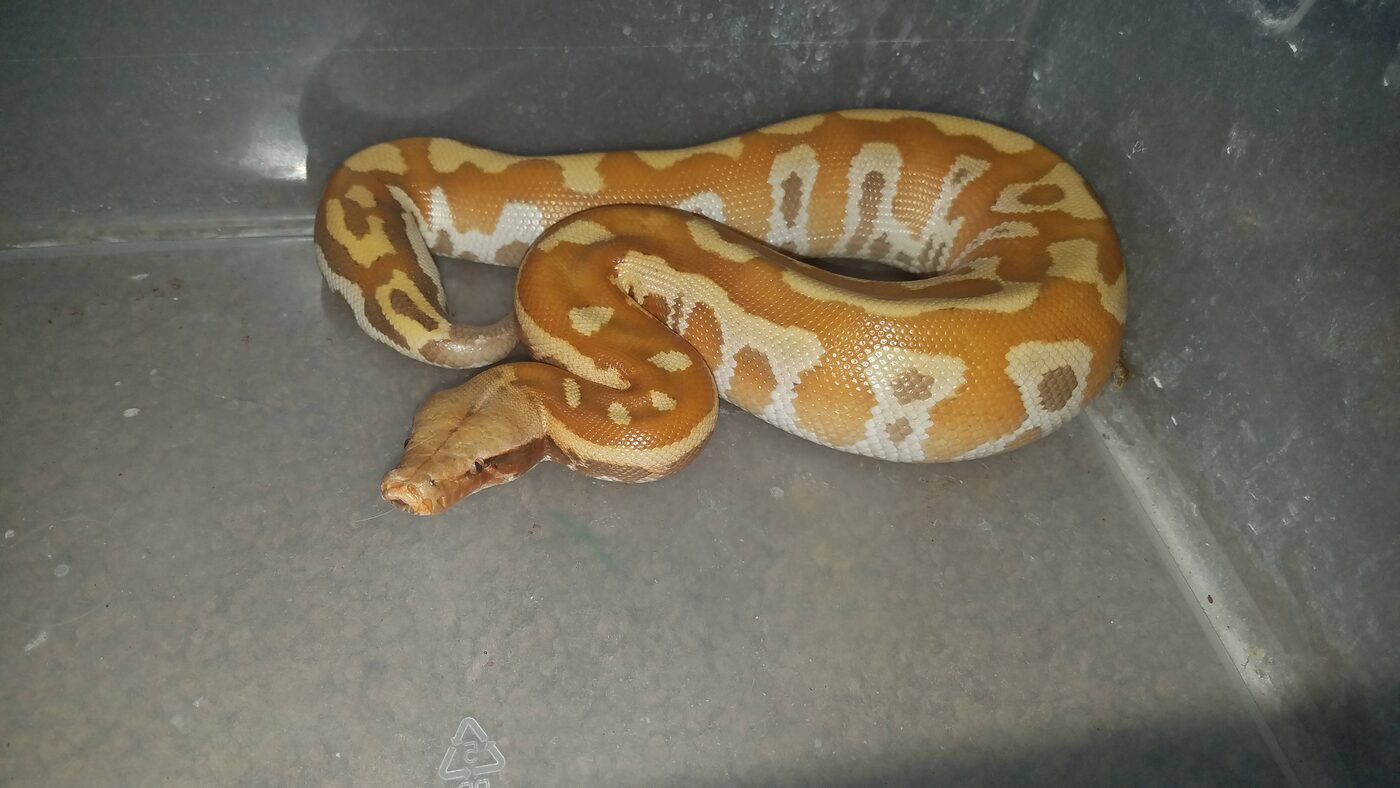
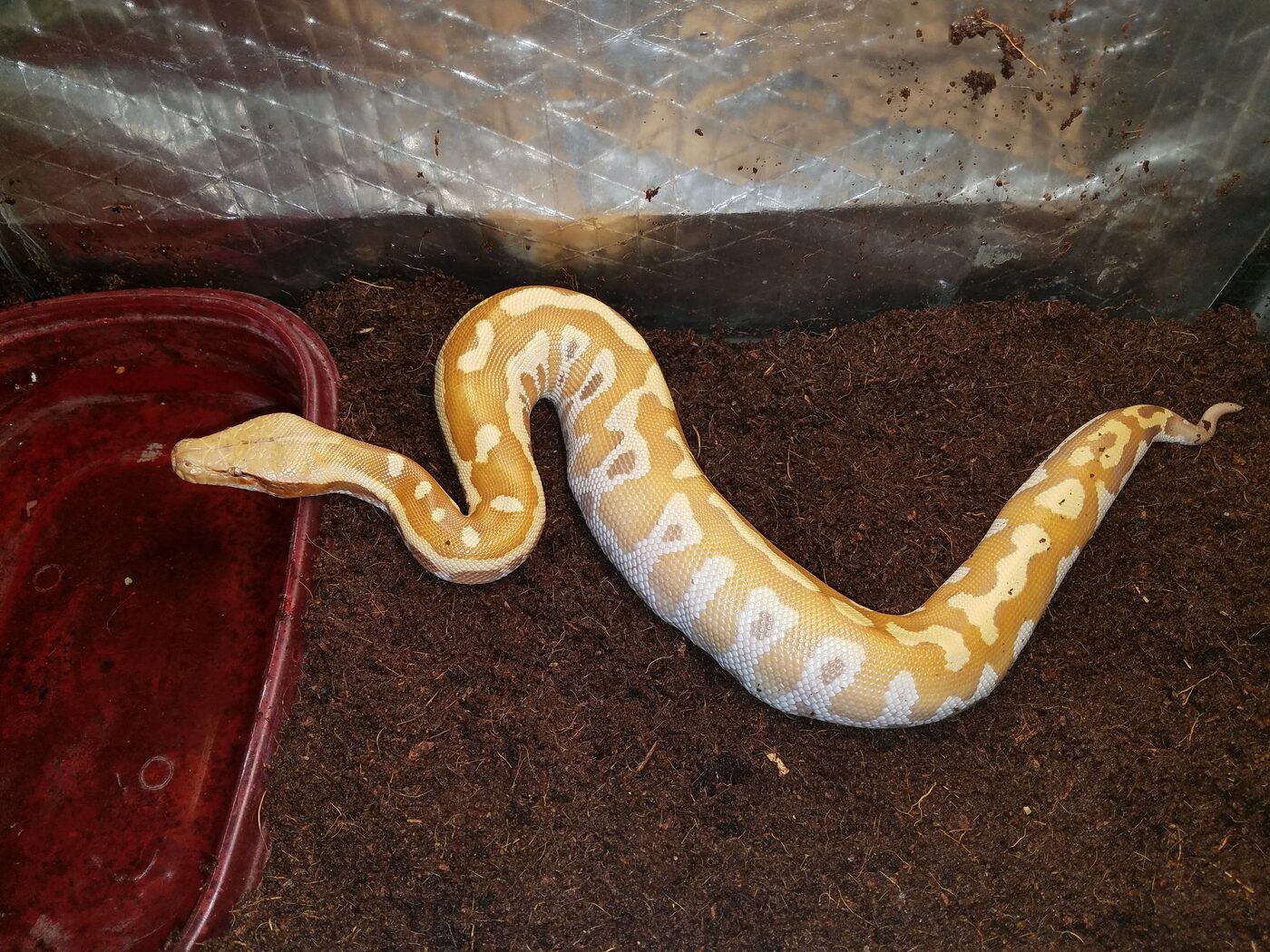
More photos
Data and studies
The numbers
The numbers
Each bar is what one source reports. Where several sources weigh in, the dashed gold band marks their average.
Maximum recorded lifespan
Longest recorded lifespan reported by each database; typical lifespans are usually shorter.
Typical adult weight
Average adult body mass in each database (FishBase gives the maximum recorded weight).
Incubation
Daytime air temperature
Species-specific values from keeper care sheets. Basking figures are often surface readings taken with an infrared thermometer, which run hotter than air.
Humidity
Species-specific values from keeper care sheets. Basking figures are often surface readings taken with an infrared thermometer, which run hotter than air.
Care articles for this species
Care articles for this species
- Blood Python Care And Husbandry (Reptiles Magazine)
Written by keepers, breeders and vets Reptiles MagazineReptiFiles
Sources for this sheet
- Myhrvold et al. (2015). An amniote life-history database. Ecology 96: 3109 Peer-reviewed researchPeer-reviewed compilation of life-history data for over 21,000 birds, mammals and reptiles.
- Reptiles Magazine (care articles) Experienced keeper or breederEstablished reptile and amphibian hobby magazine; care articles are written by breeders, keepers and veterinarians.
- Species+ (UNEP-WCMC and the CITES Secretariat) Zoo, university or veterinaryThe official database of species listed under CITES. UNEP (2026). The Species+ Website. Nairobi, Kenya. Compiled by UNEP-WCMC, Cambridge, UK. Available at: www.speciesplus.net. [Accessed 04/10/2026].
- USFWS International Affairs: CITES Zoo, university or veterinaryFederal agency that issues CITES permits.
- Clint's Reptiles (YouTube): Blood Python, The Best Pet Snake? Expert educator & keeperClint Laidlaw, PhD in Biology Education and MS in Evolutionary Ecology; owner of Clint's Reptile Room and a longtime keeper. His "Best Pet?" series reviews each species' care in depth.
- The Reptile Database Peer-reviewed researchScientist-curated catalog of every reptile species, with taxonomy and literature.
- GBIF Backbone Taxonomy (Global Biodiversity Information Facility) (CC BY 4.0) Peer-reviewed researchInternational scientific taxonomy used here for classification. GBIF Secretariat (2023). GBIF Backbone Taxonomy. Checklist dataset https://doi.org/10.15468/39omei, accessed via GBIF.org.
- Wikipedia (species article) (CC BY-SA 4.0) Community referenceFree encyclopedia; useful overviews with their own citations. Short excerpts are quoted under CC BY-SA 4.0, each credited with a link to its article.
- iNaturalist (captive observations) Community referenceCommunity observation platform run by the California Academy of Sciences and National Geographic; observations marked captive show animals living in homes, zoos and aquariums.
More pythons
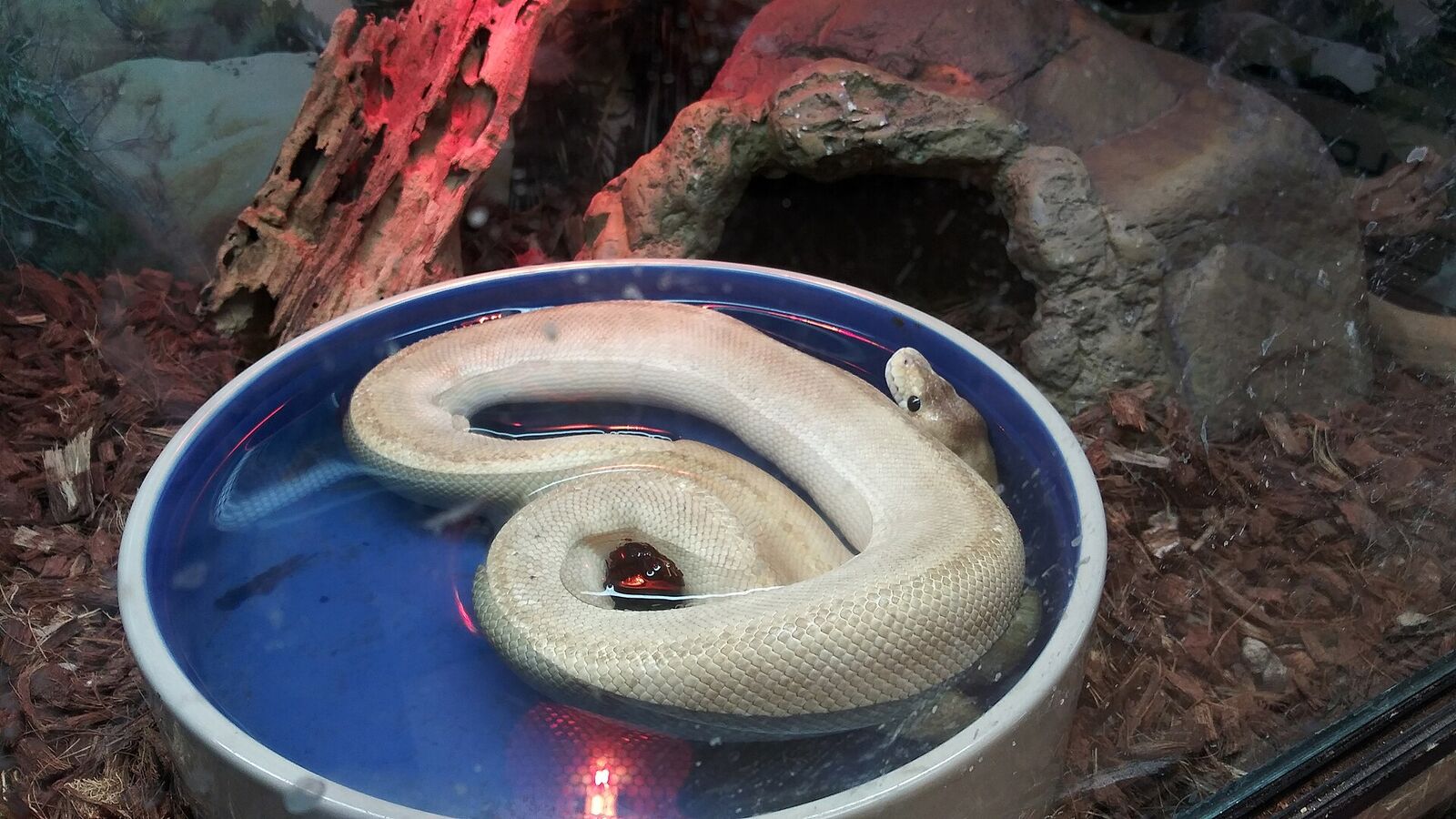
Ball python
Python regius
The calm, curl-up classic of pet snakes.
Pet trade
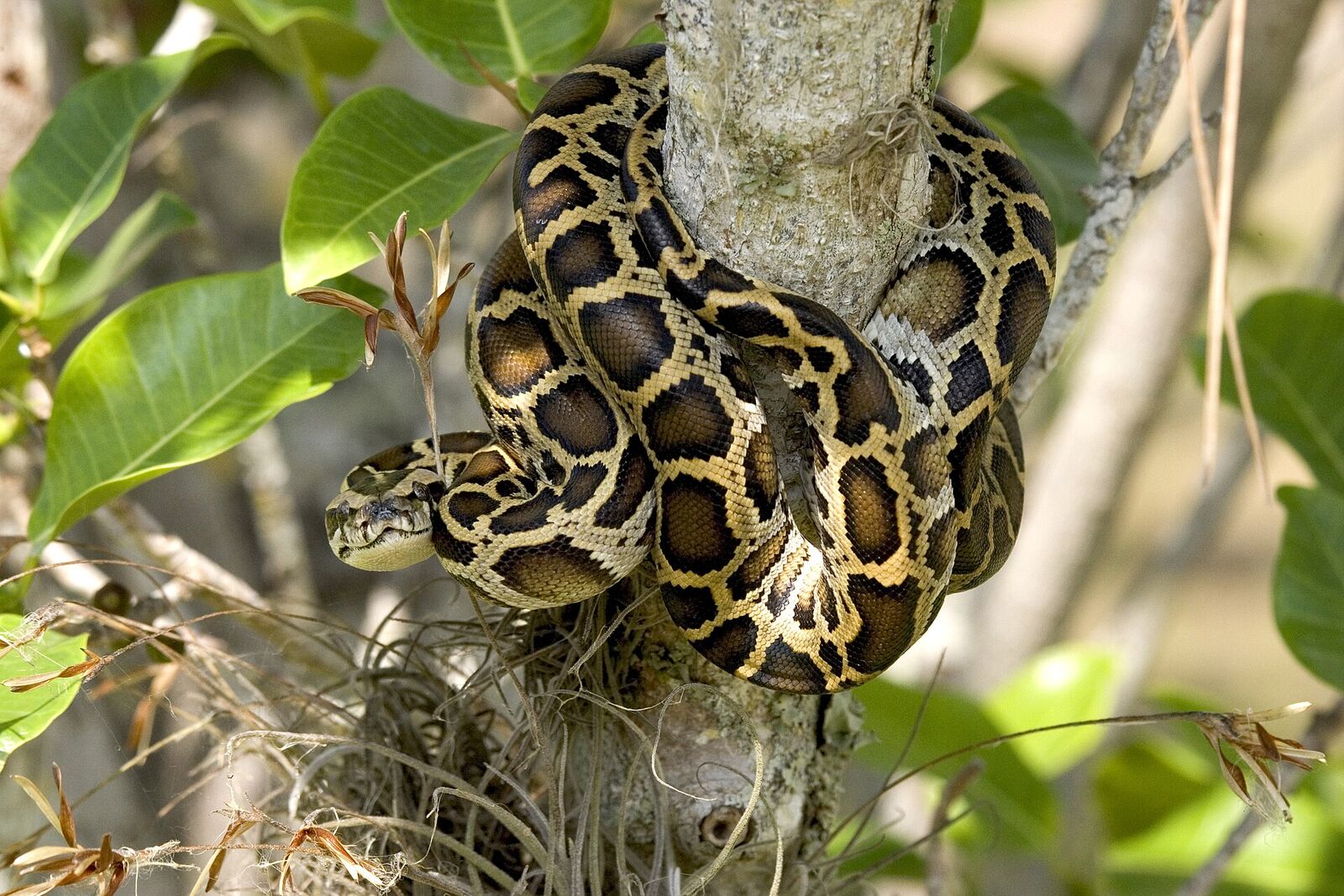
Burmese python
Python bivittatus
A heavy-bodied giant with a famously calm reputation.
Pet trade
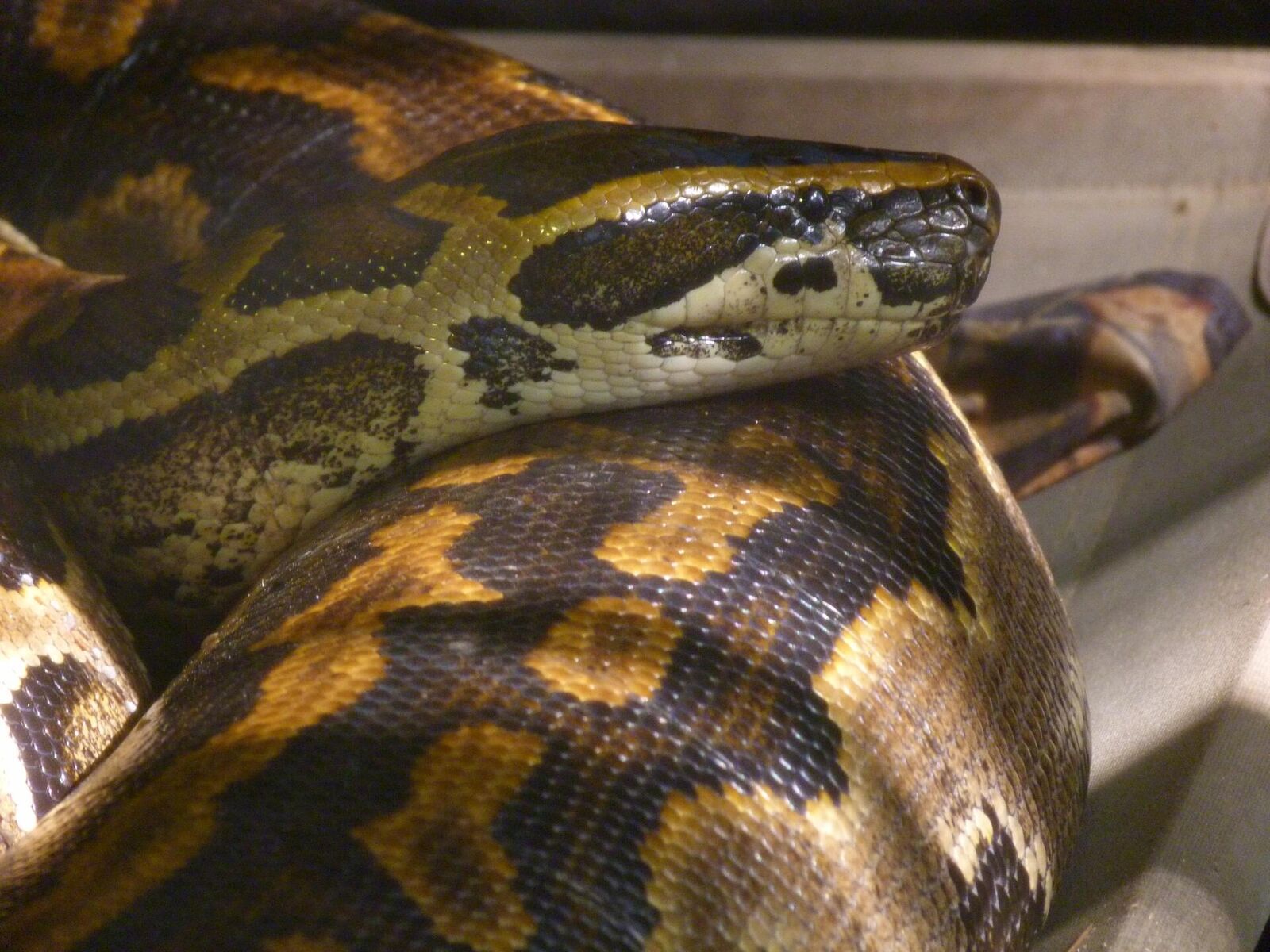
Central African rock python
Python sebae
Africa's largest snake, powerful and spirited.
Pet trade
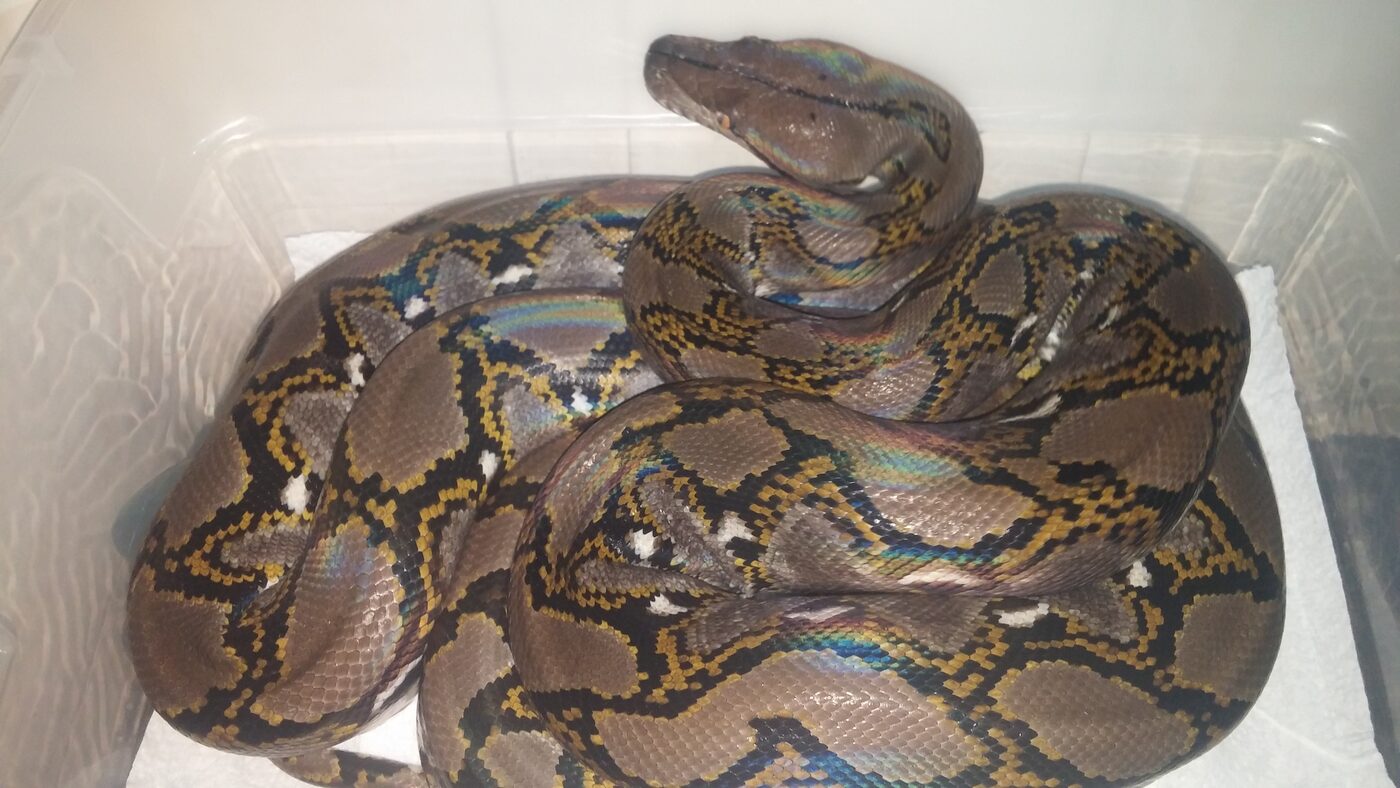
Reticulated python
Malayopython reticulatus
The world's longest snake, and a brilliant, active giant.
Pet trade

Amethystine python
Simalia amethistina
Pet trade

Angolan python
Python anchietae
Pet trade