
Home / Birds / Parrots / Blue lorikeet
Some federal rules applyBlue lorikeet
Vini peruviana
Birds › Parrots (Psittaciformes) › Psittaculidae (Old World parrots, lorikeets and lovebirds)
The blue lorikeet (Vini peruviana) is a small lorikeet from French Polynesia and the Cook Islands.
From Wikipedia: Blue lorikeet, CC BY-SA 4.0 (excerpt)

Care at a glance
Species-specific values
Values researched for this exact species. Air, surface and water temperatures are listed separately, and each source is kept as published rather than averaged.
| Diet | Offer nectar, fruit, and lorikeet mix; do not feed seeds. Source: birdscoo.com | |
| Feeding frequency | Replace food twice a day. Source: birdscoo.com | |
| Social housing | May live alone with family socialization; the article also recommends buying another of the same species. Source: birdscoo.com | |
| Substrate | Use shredded newspapers for substrate and lining; clean and replace often as needed. Source: birdscoo.com |
Warnings
Understanding the animal
About this animal
About this animal
It is also known as the Tahiti lorikeet, violet lorikeet, Tahitian lory, blue lory, nunbird, and the indigo lory. It was formerly found on 23 islands around Tahiti, but is now restricted to perhaps eight islands: Aitutaki, Apataki, Arutua, Kaukura, Manuae, Maupihaa, Motu One, Rangiroa, and possibly Manihi and Manuae.
From Wikipedia: Blue lorikeet, CC BY-SA 4.0 (excerpt)
In the wild
In the wild
| Overview | The blue lorikeet (Vini peruviana) is a small lorikeet from French Polynesia and the Cook Islands. It is also known as the Tahiti lorikeet, violet lorikeet, Tahitian lory, blue lory, nunbird, and the indigo lory. It was formerly found on 23 islands around Tahiti, but is now restricted to perhaps eight islands: Aitutaki, Apataki, Arutua, Kaukura, Manuae, Maupihaa, Motu One, Rangiroa, and possibly Manihi and Manuae. Its plumage is mainly dark blue and it has a white area over its upper chest, throat and face. — From Wikipedia: Blue lorikeet, CC BY-SA 4.0 (excerpt) |
| Where it lives | The blue lorikeet was originally endemic to the islands of French Polynesia. It is also present in the Cook Islands, where it is one of a small number of landbirds on the island of Aitutaki. Dean Amadon, writing in 1942 after the Whitney South Seas Expedition, thought that it might have been introduced to the Cooks. — From Wikipedia: Blue lorikeet, CC BY-SA 4.0 (excerpt) |
| Wild diet | Blue lorikeets feed on the nectar and pollen of coconut palms (Cocos nucifera), Guettarda speciosa, Pemphis acidula, bay cedar (Suriana maritima), beach mulberry (Morinda citrifolia), Heliotropium foertherianum, Scaevola spp and Musa. On Rangiroa they fed mostly on coconut flowers during one three-week study. They feed silently in small groups, and use their brush-like tongue to lap up nectar and pollen. — From Wikipedia: Blue lorikeet, CC BY-SA 4.0 (excerpt) |
| Behavior | They roost in coconut palm trees, rising at dawn and calling and preening before feeding. They are usually found in small flocks of less than ten birds. They rest during the heat of the day in shade before resuming feeding in the afternoon. — From Wikipedia: Blue lorikeet, CC BY-SA 4.0 (excerpt) |
| Appearance and size | The blue lorikeet is 18 cm long with a short rounded tail. Its plumage is mainly dark blue and it has a white area over its upper chest, throat and lower face. Erectile feathers on the top of its head show light blue streaks. — From Wikipedia: Blue lorikeet, CC BY-SA 4.0 (excerpt) |
Native climate (measured)
Native climate (measured)
| Warm-season highs | about 87°F (up to 87°F in the hottest sampled areas) |
| Cool-season lows | about 72°F (down to 66°F in the coldest sampled areas) |
| Average temperature | 75–80°F across sampled records |
| Relative humidity | 78–80% on average (driest month about 77%) |
| Rainfall | about 1694 mm a year, spread fairly evenly |
Measured at 14 wild occurrence records sampled against WorldClim 2.1 climate data (1970–2000 averages). Air conditions in the range are ecological context, not enclosure settings: microhabitats such as burrows, leaf litter or basking rocks can be cooler, warmer or more humid.
Data and studies
Researched care notes
Researched care notes
Findings checked against veterinary, zoo, welfare, keeper and peer-reviewed sources. Air, basking-surface and water temperatures are kept separate, and where sources disagree both are shown. “Study” notes report what a paper measured, not a universal rule.
Lories And Lorikeets (feeding group)
Researched for this genus; applies to its species unless a species note says otherwise.
- Use a suitable high-quality formulated nectar food as the staple with appropriate fresh foods.1
- Seeds are a minor occasional component for most discussed species, not the principal ration.1
- Provide fresh liquid nectar daily and position food and toys to avoid droppings contamination.1
- Provide activity space and sturdy, varied chewing and foraging toys.1
The numbers
The numbers
Each bar is what one source reports. Where several sources weigh in, the dashed gold band marks their average.
Maximum recorded lifespan
Longest recorded lifespan reported by each database; typical lifespans are usually shorter. The AnAge record comes from an animal in human care.
Typical adult weight
Average adult body mass in each database (FishBase gives the maximum recorded weight).
Sources for this sheet
- AnAge: The Animal Ageing and Longevity Database (Human Ageing Genomic Resources) (CC BY 3.0) Peer-reviewed researchCurated, referenced longevity and life-history records for thousands of species; maximum lifespans are often from zoo animals.
- Myhrvold et al. (2015). An amniote life-history database. Ecology 96: 3109 Peer-reviewed researchPeer-reviewed compilation of life-history data for over 21,000 birds, mammals and reptiles.
- Species+ (UNEP-WCMC and the CITES Secretariat) Zoo, university or veterinaryThe official database of species listed under CITES. UNEP (2026). The Species+ Website. Nairobi, Kenya. Compiled by UNEP-WCMC, Cambridge, UK. Available at: www.speciesplus.net. [Accessed 04/10/2026].
- USFWS International Affairs: CITES Zoo, university or veterinaryFederal agency that issues CITES permits.
- 9 CFR 2.1: Animal Welfare Act licensing (USDA) Zoo, university or veterinaryWho needs a USDA license to breed, sell or exhibit animals.
- Wikipedia (species article) (CC BY-SA 4.0) Community referenceFree encyclopedia; useful overviews with their own citations. Short excerpts are quoted under CC BY-SA 4.0, each credited with a link to its article.
More old world parrots, lorikeets and lovebirds
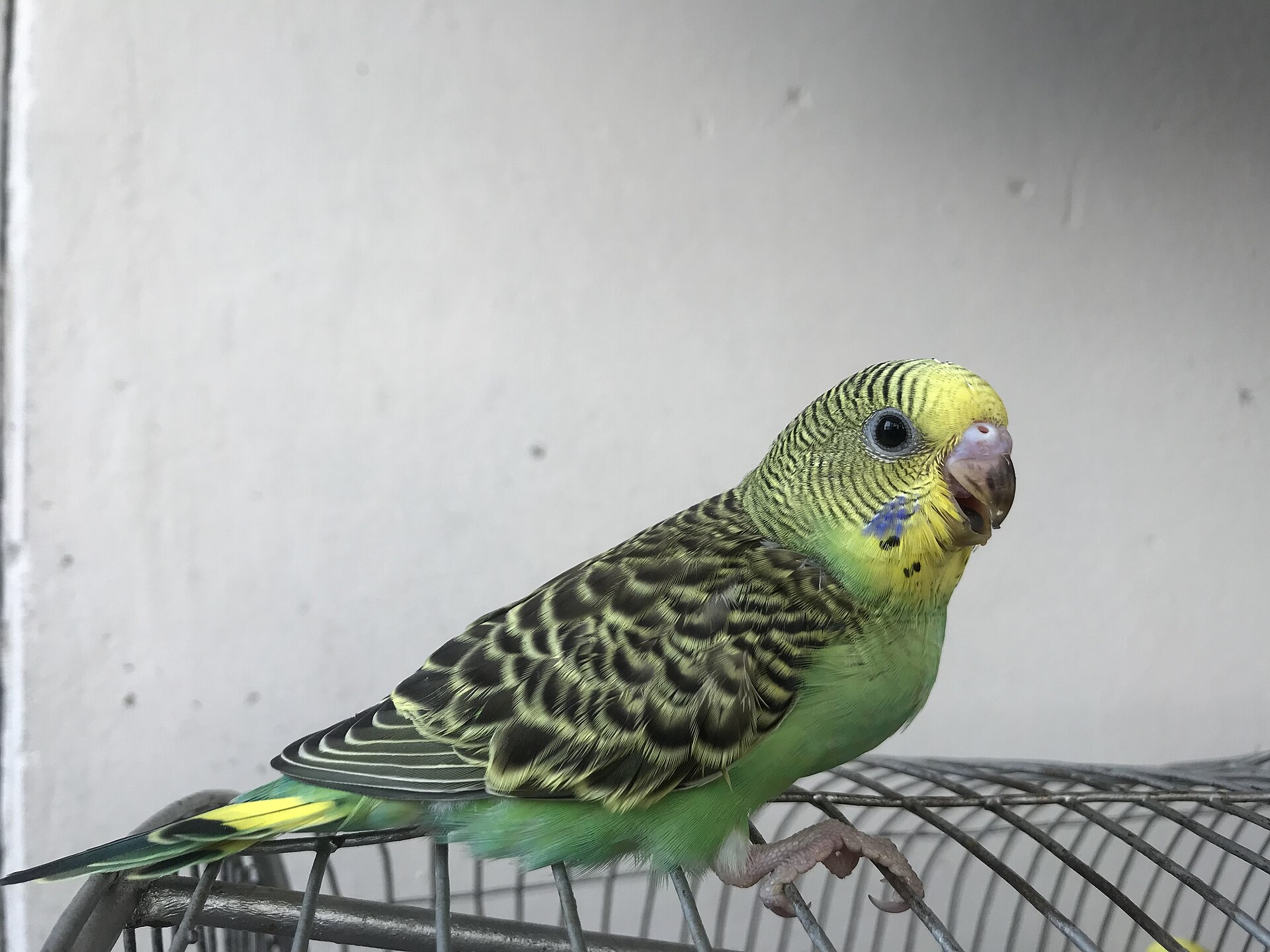
Budgerigar
Melopsittacus undulatus
A small parrot with a big vocabulary.
Pet trade

Alexandrine parakeet
Psittacula eupatria
Pet trade

Black-capped lory
Lorius lory
Pet trade

Black-cheeked lovebird
Agapornis nigrigenis
Pet trade

Blue-crowned hanging parrot
Loriculus galgulus
Zoos & aquariums

Blue-streaked lory
Eos reticulata
Zoos & aquariums