Home / Birds / Parrots / Budgerigar
No federal permit to keep In-depth sheetBudgerigar
Melopsittacus undulatus
Birds › Parrots (Psittaciformes) › Psittacidae (Parrots and parakeets)
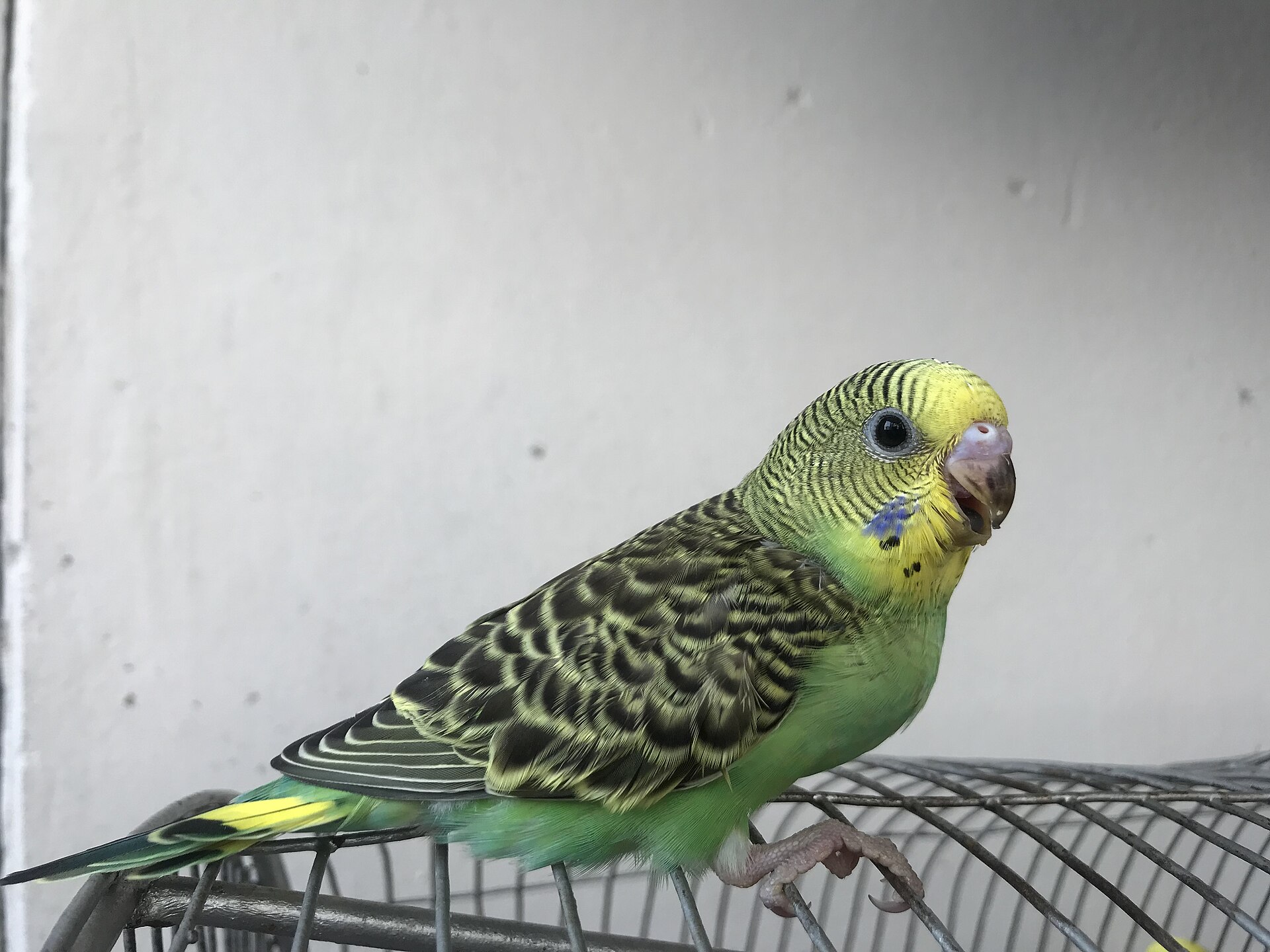
Budgies are friendly, social small parrots; some learn hundreds of words, especially when trained young.
Care at a glance
Species-specific values
Values researched for this exact species. Where they differ from the group guide below, follow these. Air, surface and water temperatures are listed separately, and each source is kept as published rather than averaged.
| Minimum cage dimensions | length: 20 in; width: 20 in; height: 30 in Table cage minimum; exercise space additional. | 316 |
| Maximum bar spacing | 0.5 in | 316 |
| Diet pellet fraction | 40–50 % MSD small-pet-bird recommendation; incompatible with higher VCA recommendation, retained separately. Source does not specify dry-weight versus offered-food basis. | 317 |
Care guide
Diet
- Pellets about 80% of the diet, plus vegetables (kale, spinach, carrot, sweet potato) and a little sprouted seed.
Sources 31
Care
- Clean the cage at least weekly with a bird-safe disinfectant.
- Training works best from about 6 weeks old.
Sources 31
Show the group care guide for small parrots (budgies, cockatiels, parrotlets and grass parakeets)
Small parrots (budgies, cockatiels, parrotlets and grass parakeets)
Applies to most species in this group. Habitat: Australian and South American grasslands and scrub. Individual species can differ, so compare with the species numbers above and the linked sources.
Housing & setup
- A flight cage wider than it is tall, so they can fly side to side.
- Pairs or small groups for budgies and grass parakeets; parrotlets can be territorial.
Diet
- Use a balanced small-parrot diet with vegetables. Pellet proportions differ between veterinary sources; retain the source-specific recommendations and verify actual food intake during conversion.
Social life
- Flock birds; budgies do best with company.
Health watch
- Obesity and fatty liver on seed-heavy diets; egg binding in hens.
- Cockatiels are dusty birds; good ventilation helps.
Understanding the animal
In the wild
In the wild
Researched for this exact species, not its family. Good care copies these conditions.123
| Where it lives | Native to much of mainland Australia's interior, especially semi-arid grasslands and open woodlands. Nomadic flocks follow rainfall-driven seed supplies, usually near water, and roost and nest in trees. |
| Ground it lives on | Open ground beneath grasses and herbs where fallen seeds accumulate; tree branches for roosting and hollows for nesting. |
| Climate | seasons: Occupies semi-arid and sub-humid regions. Budgerigars seasonally move north during winter to maintain access to food. |
| Active | Diurnal; feeding and drinking are concentrated in the morning, with shade-seeking rest during extreme heat and overnight roosting. |
| Social life | Highly social flocks, usually a few to hundreds of birds but occasionally tens of thousands after abundant rain; monogamous breeding pairs nest in colonies. Females can be more aggressive than males. |
| Wild diet | Almost exclusively seeds of native grasses and herbs, including porcupine grass and saltbush; seeds are usually collected from the ground and dehulled. |
| Behavior to plan for | Fast, coordinated flock flight and ground foraging dominate daily life. Rain and abundant grass seed can trigger breeding in tree cavities at any time of year. |
What this means for care
- Provide compatible budgerigar companionship and enough horizontal space for flock-style flight.
- Offer clean ground-level foraging opportunities and grass seed heads as enrichment within a balanced captive diet.
- Provide shade and ready drinking water; arid habitat does not mean water deprivation.
- Avoid unrestricted access to nest cavities when breeding is not intended.
Native climate (measured)
Native climate (measured)
| Warm-season highs | about 91°F (up to 101°F in the hottest sampled areas) |
| Cool-season lows | about 42°F (down to 32°F in the coldest sampled areas) |
| Average temperature | 50–76°F across sampled records |
| Relative humidity | 37–74% on average (driest month about 53%) |
| Rainfall | about 579 mm a year |
Measured at 136 wild occurrence records sampled against WorldClim 2.1 climate data (1970–2000 averages). Air conditions in the range are ecological context, not enclosure settings: microhabitats such as burrows, leaf litter or basking rocks can be cooler, warmer or more humid.
Profile
Profile
Researched for this exact species. Sources are listed under In the wild above.
History
The budgerigar was first recorded in 1805 and has been bred in captivity since the 19th century. Its name has several proposed origins, including possible derivation from Indigenous Australian words.
Keeper tips
- Account for the fact that budgerigars are naturally flocking rather than solitary birds.
- Allow for the species' strong movement and flight tendencies, which are prominent in its nomadic wild lifestyle.
- Remember that the natural diet described is seed-based.
Behaviors reported
- Forms flocks.
- Lives nomadically and moves in response to food availability.
- Breeds opportunistically and in pairs.
- Can mimic human speech in captivity.
Unique adaptations
- A nomadic lifestyle allows the species to persist in harsh inland Australian conditions.
- The ability to breed while on the move is associated with success in unpredictable inland environments.
- Small, streamlined bodies with pointed wings and tails are characteristic of the species.
Remarkable facts
- The budgerigar is the only species in the genus Melopsittacus.
- Wild birds are naturally green and yellow with black scalloped markings.
- The species is native to Australia.
- Budgerigars have been bred in captivity since the 19th century.
- They are among the world's most popular companion animals.
- Adults can usually be sexed by cere coloration and behavior.
From the sources
From the sources
Quoted from the matching sections of reputable sources for this exact species. Specialist databases are used first; Wikipedia (community-edited, CC BY-SA 4.0) only fills gaps. Other sources are short credited quotes.
| Overview | The budgerigar (; Melopsittacus undulatus), also known as the common parakeet, shell parakeet or budgie, is a small, long-tailed, seed-eating parrot native to Australia. Naturally, the species is green and yellow with black, scalloped markings on the nape, back, and wings. Budgies are bred in captivity with colouring of blues, whites, yellows, greys, and even with small crests. Juveniles and chicks are monomorphic (the sexes are visually indistinguishable), while adults are told apart by their cere colouring and their behaviour. — Wikipedia (community-edited) |
| Where it lives | Budgerigars occupy a range of semi-arid and sub-humid habitats mainly in the interior of Australia. — Animal Diversity Web |
| Wild diet | Budgerigars are highly successful exploiters of food and water resources whenever available (Kavanau, 1987). — Animal Diversity Web |
| Behavior | Budgerigars aggregate into large flocks and are strongly social. — Animal Diversity Web |
| Reproduction | Budgerigars are monogamous and breed in large colonies throughout their range. — Animal Diversity Web |
| Appearance and size | Budgerigars are small, streamlined parrots that average 18-20 cm in length. — Animal Diversity Web |
| History and naming | The budgerigar was first described by George Shaw in 1805, and given its current binomial name by John Gould in 1840. The budgerigar was once proposed to be a link between the genera Neophema and Pezoporus, based on the barred plumage. However, recent phylogenetic studies using DNA sequences place the budgerigar very close to the lories (tribe Loriini) and the fig parrots (tribe Cyclopsittini). — Wikipedia (community-edited) |
Data and studies
Researched care notes
Researched care notes
Findings checked against veterinary, zoo, welfare, keeper and peer-reviewed sources. Air, basking-surface and water temperatures are kept separate, and where sources disagree both are shown. “Study” notes report what a paper measured, not a universal rule.
Budgerigars, Cockatiels, And Lovebirds (nutrition module, not completed species sheets)
- MSD discusses a mixed formulated-food/seed strategy for these small parrots, differing from its large-parrot percentages.1
- Offered food and selected food may differ. Measure actual consumption during diet changes.1
Budgerigar
- Provide safe opportunities to fly, play and chew, using bird-safe toys suited to this active small parrot.2
- Iodine-deficient all-seed diets can cause goiter in budgerigars; respiratory noises or difficulty breathing require veterinary assessment rather than empirical home iodine dosing.3
Budgerigar, Cockatiel And Lovebirds (Shared reproductive additions)
- Persistent laying can deplete calcium and lead to egg binding or other reproductive disease; it requires assessment beyond simply replacing a cuttlebone.4
- For birds laying excessively, veterinary management can include reducing reproductive cues such as nest boxes, extended daylight and sexualized owner interactions.4
- A weak or nonperching hen with straining or breathing difficulty may have egg binding and needs urgent veterinary attention.4
The numbers
The numbers
Each bar is what one source reports. Where several sources weigh in, the dashed gold band marks their average.
Lifespan
Maximum recorded lifespan
Longest recorded lifespan reported by each database; typical lifespans are usually shorter. The AnAge record comes from an animal in human care.
Typical adult weight
Average adult body mass in each database (FishBase gives the maximum recorded weight).
Veterinary & husbandry research
Veterinary & husbandry research
- Prevalence and Genotyping of Cryptosporidium Infection in Pet Parrots in North China Zhang XX et al., BioMed research international 2015
- Eye lesions in pet birds Tsai SS et al., Avian pathology: journal of the W.V.P.A 1993
- Seroprevalence and genotype of Chlamydia in pet parrots in China Zhang NZ et al., Epidemiology and infection 2015
- Oxidative stress, activity behaviour and body mass in captive parrots Larcombe SD et al., Conservation physiology 2015
Peer-reviewed papers that mention this species alongside captivity, zoos, veterinary care or aquaculture. Some cover several species or mention it only in passing, so check the abstract. See all 70 on PubMed → 170
Sources for this sheet
- Royal Veterinary College Exotics Service: Budgie care Zoo, university or veterinaryVet-school exotics hospital factsheet, reviewed 2021–2024.
- AnAge: The Animal Ageing and Longevity Database (Human Ageing Genomic Resources) Peer-reviewed researchCurated, referenced longevity and life-history records for thousands of species; maximum lifespans are often from zoo animals.
- Myhrvold et al. (2015). An amniote life-history database. Ecology 96: 3109 Peer-reviewed researchPeer-reviewed compilation of life-history data for over 21,000 birds, mammals and reptiles.
- Merck Veterinary Manual: Management of pet birds Zoo, university or veterinaryThe Merck Veterinary Manual: a standard veterinary reference written and reviewed by veterinary specialists.
- Merck Veterinary Manual: Nutritional diseases of pet birds Zoo, university or veterinaryThe Merck Veterinary Manual: a standard veterinary reference written and reviewed by veterinary specialists.
- Royal Veterinary College Exotics Service: Cockatiel care Zoo, university or veterinaryVet-school exotics hospital factsheet, reviewed 2021–2024.
- MSD Veterinary Manual — Management of Pet Birds Zoo, university or veterinaryAdded in the 2026 source-checked care-guide review.
- VCA Animal Hospitals — Feeding Pet Cockatiels Zoo, university or veterinaryAdded in the 2026 source-checked care-guide review.
- Clint's Reptiles (YouTube): Budgie Parakeet, The Best Pet Reptile? Expert educator & keeperClint Laidlaw, PhD in Biology Education and MS in Evolutionary Ecology; owner of Clint's Reptile Room and a longtime keeper. His "Best Pet?" series reviews each species' care in depth.
- GBIF Backbone Taxonomy (Global Biodiversity Information Facility) Peer-reviewed researchInternational scientific taxonomy used here for classification.
- Species+ (UNEP-WCMC and the CITES Secretariat) Zoo, university or veterinaryThe official database of species listed under CITES.
- Wikipedia (species article) Community referenceFree encyclopedia; useful overviews with their own citations. Intro text is quoted under CC BY-SA 4.0.
- PubMed (U.S. National Library of Medicine) Peer-reviewed researchIndex of peer-reviewed veterinary, zoo and husbandry research.
- iNaturalist (captive observations) Community referenceCommunity observation platform run by the California Academy of Sciences and National Geographic; observations marked captive show animals living in homes, zoos and aquariums.
More parrots and parakeets
 In-depth
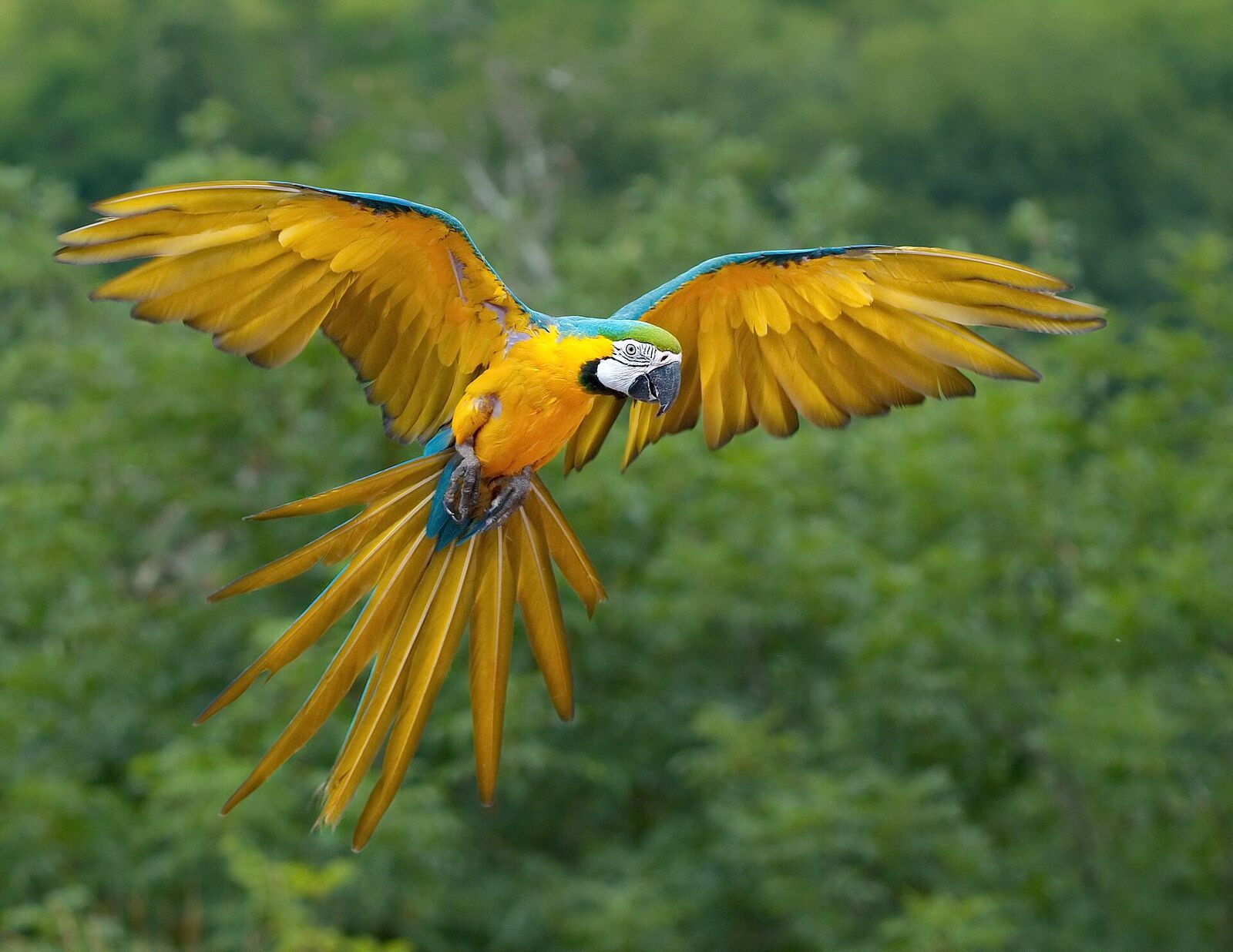
Blue-and-yellow macaw
Ara ararauna
A loud, brilliant, lifelong commitment.
Pet trade
 In-depth
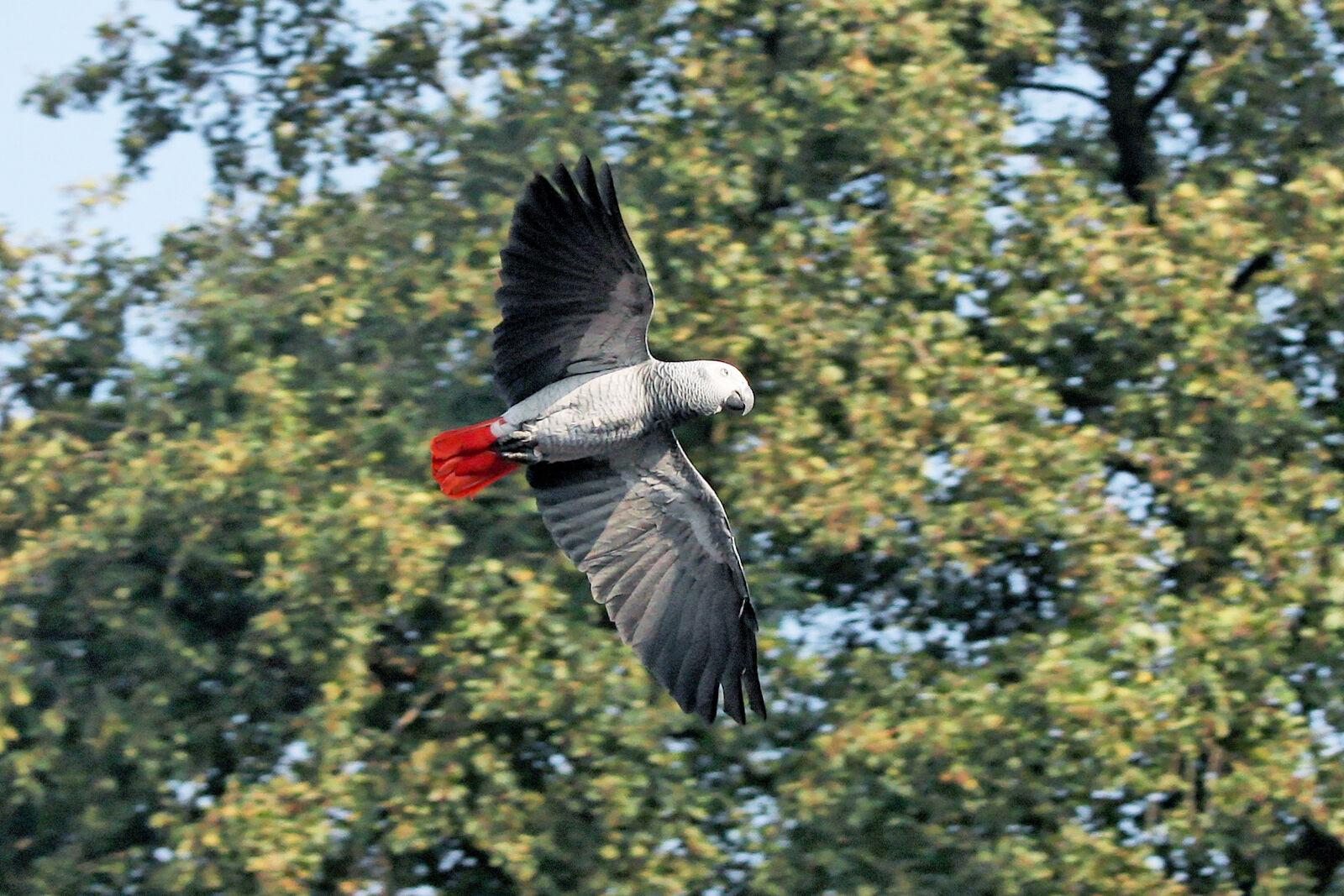
Gray parrot (Congo African grey)
Psittacus erithacus
One of the most intelligent birds on Earth.
Pet trade

Hyacinth macaw
Anodorhynchus hyacinthinus
Pet trade

Kea
Nestor notabilis
Pet trade

Rosy-faced lovebird
Agapornis roseicollis
Pet trade