
Home / Reptiles / Lizards / Phrynosomatidae / Blue spiny lizard
No federal permit to keepBlue spiny lizard
Sceloporus cyanogenys
Reptiles › Lizards (Lacertilia) › Phrynosomatidae (Spiny and horned lizards)
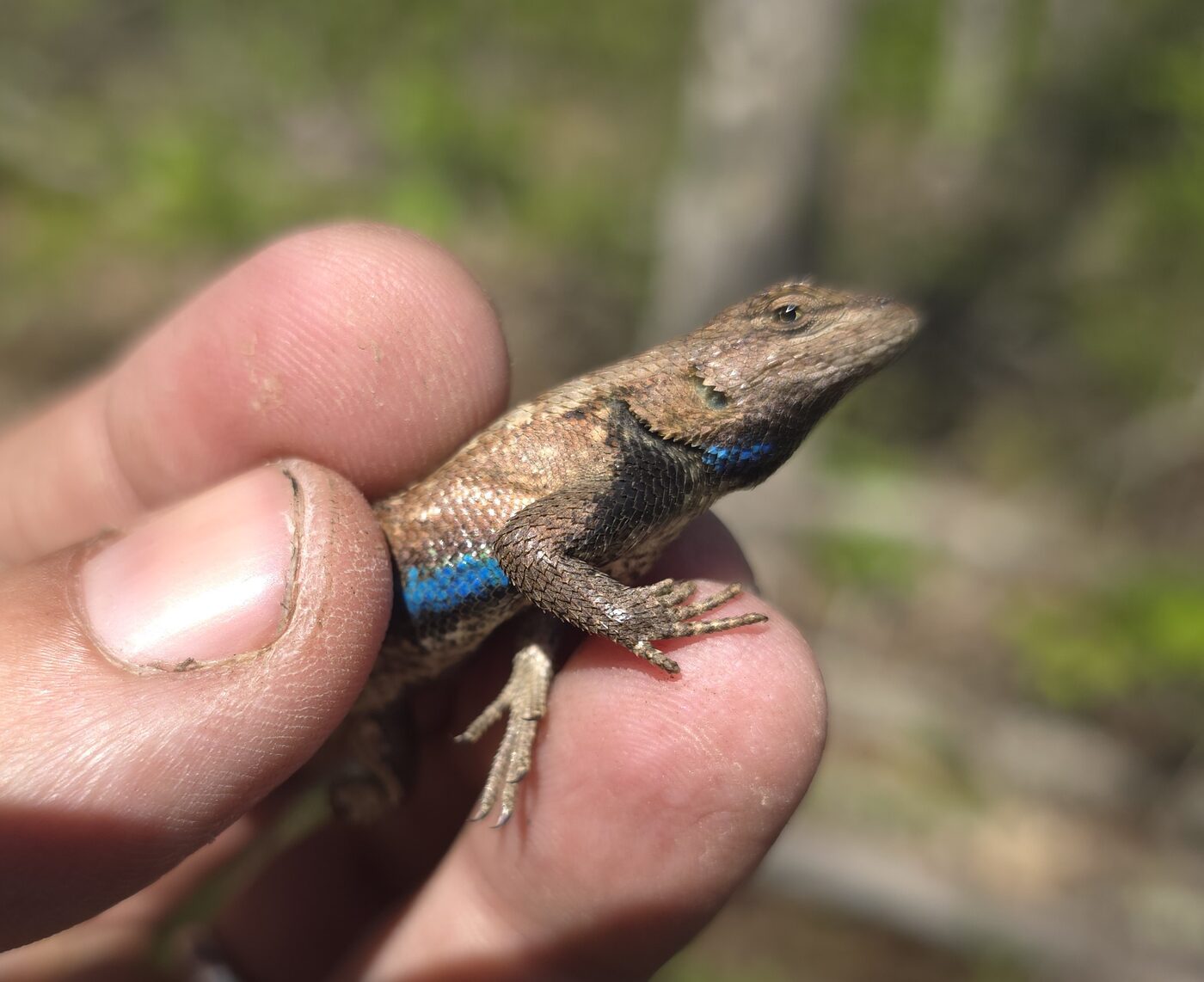
Sceloporus cyanogenys, the bluechinned roughscaled lizard or blue spiny lizard, is a species of lizard in the family Phrynosomatidae.

Care at a glance
Species-specific values
Values researched for this exact species. Air, surface and water temperatures are listed separately, and each source is kept as published rather than averaged.
| Minimum enclosure | A 36 to 50 reptile terrarium (or larger) capacity cage/terrarium is needed. Source: reptilesmagazine.com | |
| Basking surface temperature | 100–108 °F Source: reptilesmagazine.com | |
| Warm side air temperature | 80–88 °F Source: reptilesmagazine.com | |
| Night temperature | 70–80 °F Source: reptilesmagazine.com | |
| Uvb lighting | Full spectrum lighting is needed; keep the basking platform 12 inches or less from the bulb. Source: reptilesmagazine.com | |
| Diet | Feed varied small live insects; dust feed insects periodically with vitamin D3-calcium powder, except freshly collected field plankton. Source: reptilesmagazine.com | |
| Feeding frequency | Dusting intervals are 10 days to 2 weeks for adults and weekly for growing lizards. Source: reptilesmagazine.com | |
| Substrate | Small rocks mixed with coarse sand are preferred. Source: reptilesmagazine.com |
Understanding the animal
About this animal
About this animal
It is found in Texas in the United States and Mexico.
From Wikipedia: Sceloporus cyanogenys, CC BY-SA 4.0 (excerpt)
In the wild
In the wild
Read about this species in the wild at The Reptile Database.
Native climate (measured)
Native climate (measured)
| Warm-season highs | about 95°F (up to 98°F in the hottest sampled areas) |
| Cool-season lows | about 44°F (down to 43°F in the coldest sampled areas) |
| Average temperature | 66–73°F across sampled records |
| Relative humidity | 58–60% on average (driest month about 51%) |
| Rainfall | about 657 mm a year |
Measured at 38 wild occurrence records sampled against WorldClim 2.1 climate data (1970–2000 averages). Air conditions in the range are ecological context, not enclosure settings: microhabitats such as burrows, leaf litter or basking rocks can be cooler, warmer or more humid.
Profile
Profile
Researched for this exact species. Sources are listed under In the wild above.
Data and studies
The numbers
The numbers
Each bar is what one source reports. Where several sources weigh in, the dashed gold band marks their average.
Maximum recorded lifespan
Longest recorded lifespan reported by each database; typical lifespans are usually shorter.
Typical adult weight
Average adult body mass in each database (FishBase gives the maximum recorded weight).
Adult snout-to-vent length
Body length without the tail.
Care articles for this species
Care articles for this species
- Blue Spiny Lizard Care Sheet (Reptiles Magazine)
Written by keepers, breeders and vets Reptiles MagazineReptiFiles
Sources for this sheet
- Myhrvold et al. (2015). An amniote life-history database. Ecology 96: 3109 Peer-reviewed researchPeer-reviewed compilation of life-history data for over 21,000 birds, mammals and reptiles.
- The Reptile Database Peer-reviewed researchScientist-curated catalog of every reptile species, with taxonomy and literature.
- GBIF Backbone Taxonomy (Global Biodiversity Information Facility) (CC BY 4.0) Peer-reviewed researchInternational scientific taxonomy used here for classification. GBIF Secretariat (2023). GBIF Backbone Taxonomy. Checklist dataset https://doi.org/10.15468/39omei, accessed via GBIF.org.
- Wikipedia (species article) (CC BY-SA 4.0) Community referenceFree encyclopedia; useful overviews with their own citations. Short excerpts are quoted under CC BY-SA 4.0, each credited with a link to its article.
- iNaturalist (captive observations) Community referenceCommunity observation platform run by the California Academy of Sciences and National Geographic; observations marked captive show animals living in homes, zoos and aquariums.
- Reptiles Magazine (care articles) Experienced keeper or breederEstablished reptile and amphibian hobby magazine; care articles are written by breeders, keepers and veterinarians.
More spiny and horned lizards

Baja blue rock lizard
Petrosaurus thalassinus
Pet trade

Coast horned lizard
Phrynosoma coronatum
Pet trade

Crevice spiny lizard
Sceloporus poinsettii
Zoos & aquariums

Desert spiny lizard
Sceloporus magister
Pet trade
Eastern fence lizard
Sceloporus undulatus
Pet trade

Emerald swift
Sceloporus malachiticus
Pet trade