
Home / Reptiles / Snakes / Boidae / Common boa (Central American boa, BCI)
Some federal rules applyCommon boa (Central American boa, BCI)
Boa imperator
Reptiles › Snakes (Serpentes) › Boidae (Boas)
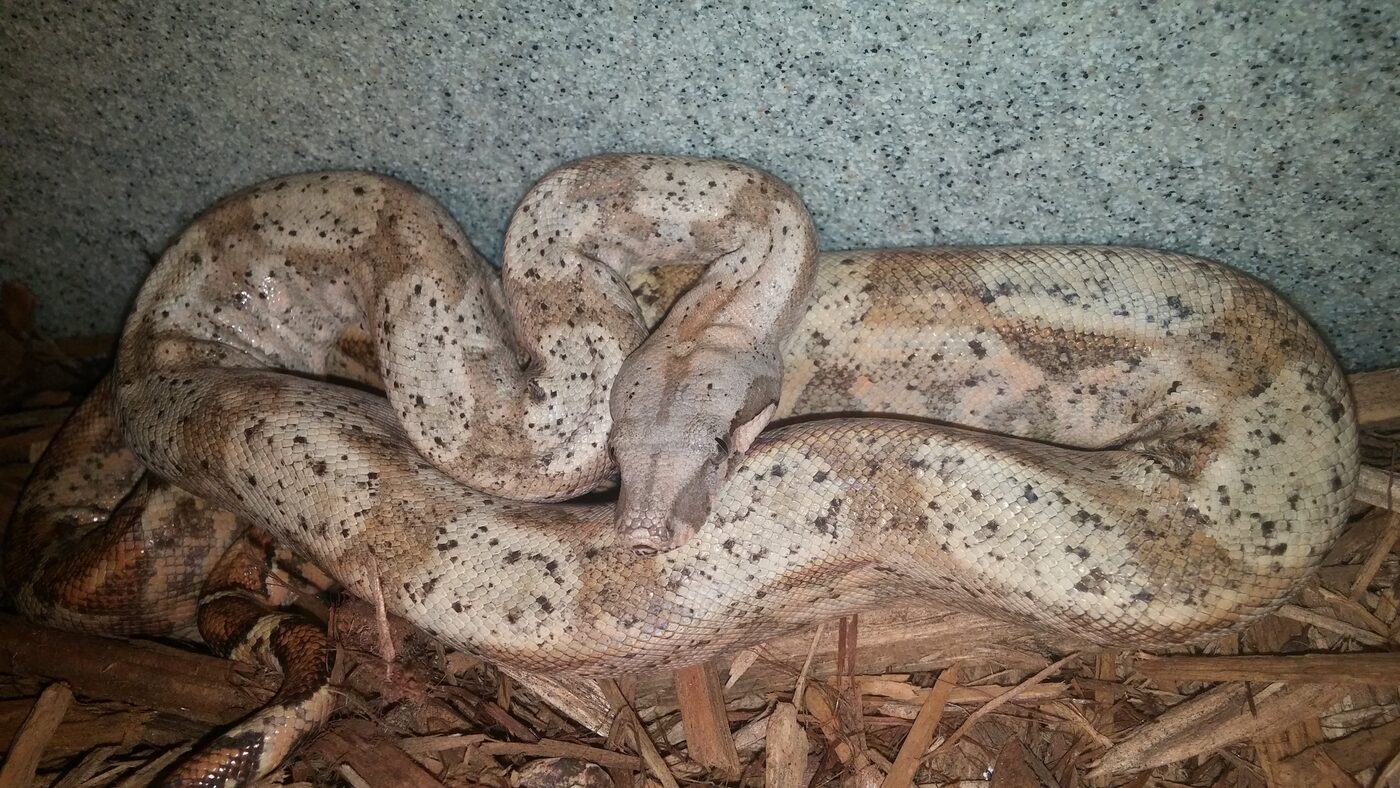
Boa imperator is a large and heavy-bodied arboreal species of nonvenomous, constrictor-type snake in the family Boidae.
Care at a glance
Setup
One answer per setting. Where sources differ, the smaller figure is the minimum and the larger is what we recommend.
| Adult enclosure | At least 4 ft Preferably 6 ft Minimum length for adults. | bluelizardreptiles.com |
| Hot spot | At least 88°F Preferably 91°F Appropriate basking surface temperature. | academy.herpeton.net |
| Humidity | At least 55% Preferably 70% Target range for enclosure humidity. | academy.herpeton.net |
| Lighting | At least 10 hours Preferably 12 hours Natural day/night cycle. | academy.herpeton.net |
Care guide
By age
| Neonate | Feeding: Smaller prey as neonates. | darrenhamillreptiles.com |
- Respiratory issues, regurgitation, or parasites.: Requires a reptile veterinarian. academy.herpeton.net
Understanding the animal
About this animal
About this animal
One of the most popular pet snakes in the world, B. imperator's native range is from Mexico through Central and South America, with local populations on several small Caribbean islands. It is commonly called the Central American boa, northern boa, Colombian boa, common boa and common northern boa.
From Wikipedia: Boa imperator, CC BY-SA 4.0 (excerpt)
Localities
Localities
Keepers buy these by where the bloodline comes from. Care is basically the same; size, color and temperament can differ. “Breeder-reported” details still need a published source.
| Hog Island boa | See its own sheet. | Breeder-reported |
| Corn Island boa | See its own sheet. | Breeder-reported |
| Crawl Cay boa | See its own sheet. | Breeder-reported |
| Sonoran desert boa | Its own sheet is not published yet. | Breeder-reported |
| Tarahumara boa | Its own sheet is not published yet. | Breeder-reported |
| Nicaraguan boa | Its own sheet is not published yet. | Breeder-reported |
| Honduran boa | See its own sheet. | Breeder-reported |
| Costa Rican boa | See its own sheet. | Breeder-reported |
| Belize boa | See its own sheet. | Breeder-reported |
| Colombian boa | See its own sheet. | Breeder-reported |
| Pearl Island (Saboga) boa | Its own sheet is not published yet. | Breeder-reported |
| Sabogae | Named after its type locality, Saboga Island. | Published reptile-database.reptarium.cz |
In the wild
In the wild
Researched for this exact species, not its family. Wild conditions are context, not enclosure settings.123
| Where it lives | Native to Mexico, Central America, and northwestern South America, they inhabit rainforest edges, dry forests, scrub, river corridors, and human-modified areas with cover. |
| Active | They are crepuscular, but may bask during the day when night temperatures are low. |
| Social life | They live solitarily and do not interact with other snakes except for mating. |
| Wild diet | Young boas climb trees and shrubs to forage, but become mostly terrestrial as they age. |
| Behavior to plan for | They strike when threatened; bites are painful but rarely dangerous. Central American specimens are often more defensive and prone to hissing. |
Profile
Profile
Researched for this exact species. Sources are listed under In the wild above.
Keeper tips
- Generally calm and handleable, though they are powerful and inquisitive.
Remarkable facts
- Captives can exceed 40 years of age.
- Typically 4.2 to 8.2 feet long, though they can reach 12 feet.
Data and studies
Veterinary & husbandry research
Veterinary & husbandry research
- COMPLETE UNILATERAL MAXILLECTOMY IN A COHORT OF FIVE COLOMBIAN BOAS (BOA IMPERATOR). et al., Journal of zoo and wildlife medicine: official publication of the American Association of Zoo Veterinarians 2022
- Development of behavioural profile in the Northern common boa (Boa imperator): Repeatable independent traits or personality? et al., PloS one 2017
- The Discovery of XY Sex Chromosomes in a Boa and Python. et al., Current biology: CB 2017
- Cytogenetic Analysis Did Not Reveal Differentiated Sex Chromosomes in Ten Species of Boas and Pythons (Reptilia: Serpentes). et al., Genes 2019
Peer-reviewed papers that mention this species alongside captivity, zoos, veterinary care or aquaculture. Some cover several species or mention it only in passing, so check the abstract. PubMed
Sources for this sheet
- Species+ (UNEP-WCMC and the CITES Secretariat) Zoo, university or veterinaryThe official database of species listed under CITES. UNEP (2026). The Species+ Website. Nairobi, Kenya. Compiled by UNEP-WCMC, Cambridge, UK. Available at: www.speciesplus.net. [Accessed 04/10/2026].
- USFWS International Affairs: CITES Zoo, university or veterinaryFederal agency that issues CITES permits.
- Common boa caresheet (bluelizardreptiles.com) Community referenceWeb page.
- Boa imperator (academy.herpeton.net) Community referenceWeb page.
- Boa imperator husbandry (darrenhamillreptiles.com) Community referenceWeb page.
- The Reptile Database: Boa imperator Zoo, university or veterinaryTaxonomy, distribution and literature for every reptile species.
- Wikipedia: Boa imperator (CC BY-SA 4.0) Community referenceEncyclopedia article.
- Clint's Reptiles (YouTube): Common Boa (BCI), The Best Pet Snake? Expert educator & keeperClint Laidlaw, PhD in Biology Education and MS in Evolutionary Ecology; owner of Clint's Reptile Room and a longtime keeper. His "Best Pet?" series reviews each species' care in depth.
- The Reptile Database Peer-reviewed researchScientist-curated catalog of every reptile species, with taxonomy and literature.
- GBIF Backbone Taxonomy (Global Biodiversity Information Facility) (CC BY 4.0) Peer-reviewed researchInternational scientific taxonomy used here for classification. GBIF Secretariat (2023). GBIF Backbone Taxonomy. Checklist dataset https://doi.org/10.15468/39omei, accessed via GBIF.org.
- Wikipedia (species article) (CC BY-SA 4.0) Community referenceFree encyclopedia; useful overviews with their own citations. Short excerpts are quoted under CC BY-SA 4.0, each credited with a link to its article.
- PubMed (U.S. National Library of Medicine) Peer-reviewed researchIndex of peer-reviewed veterinary, zoo and husbandry research.
More boas
Common boa constrictor (red-tailed boa)
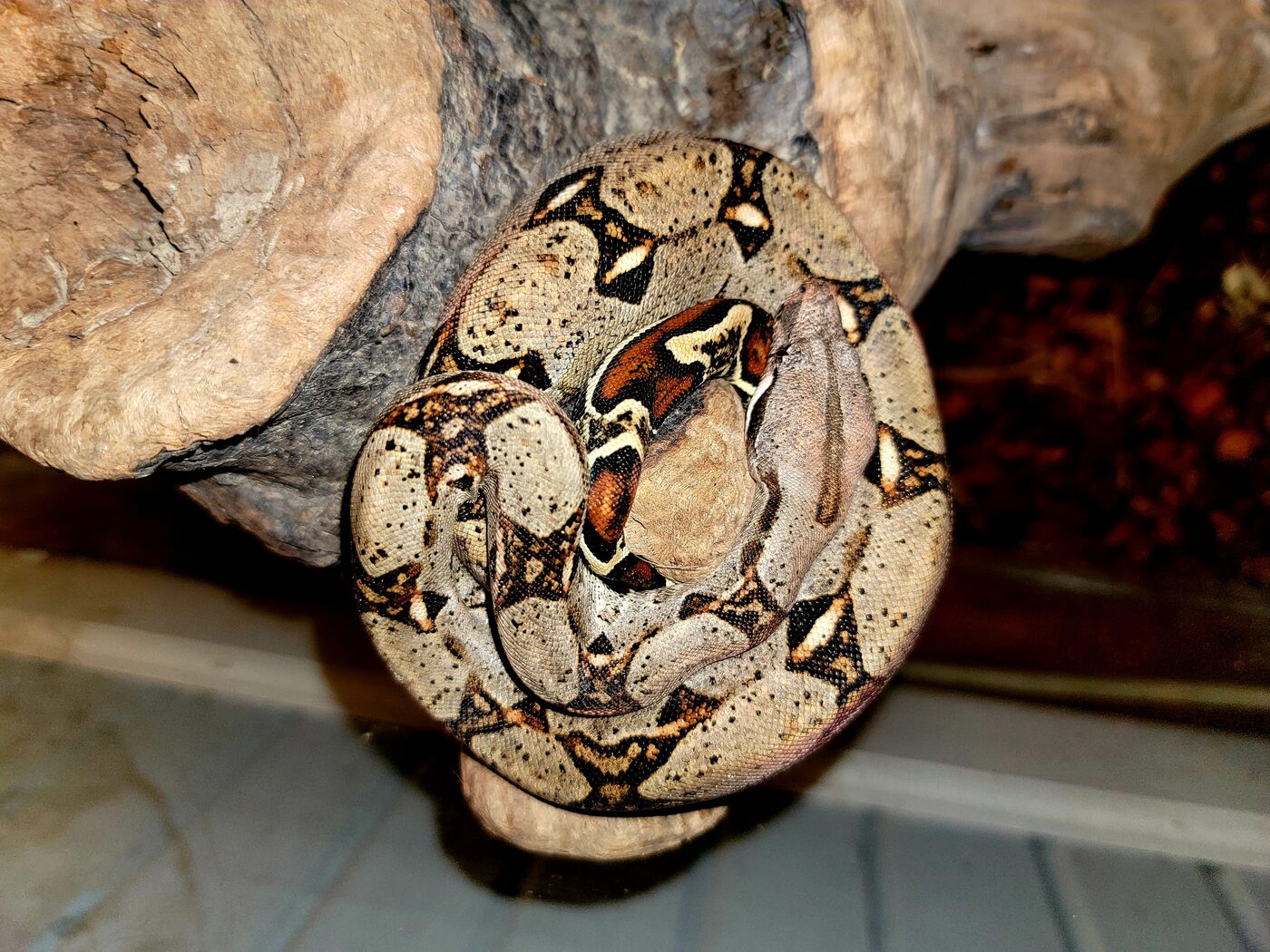
Boa constrictor
A powerful but famously steady big snake.
Pet trade
Green anaconda
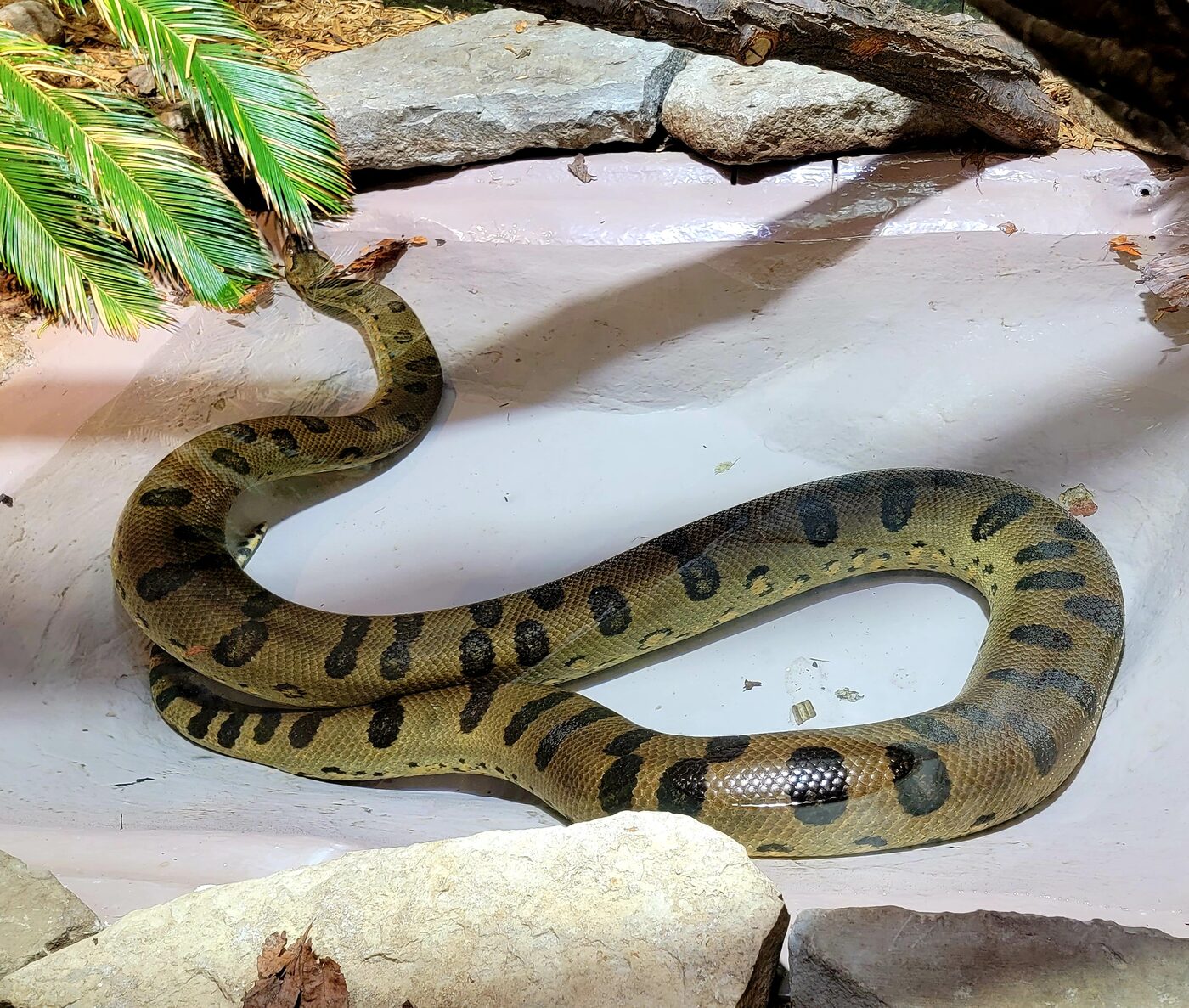
Eunectes murinus
The heaviest snake on Earth, at home in the water.
Pet trade

Amazon basin emerald tree boa
Corallus batesii
Pet trade
Amazon tree boa
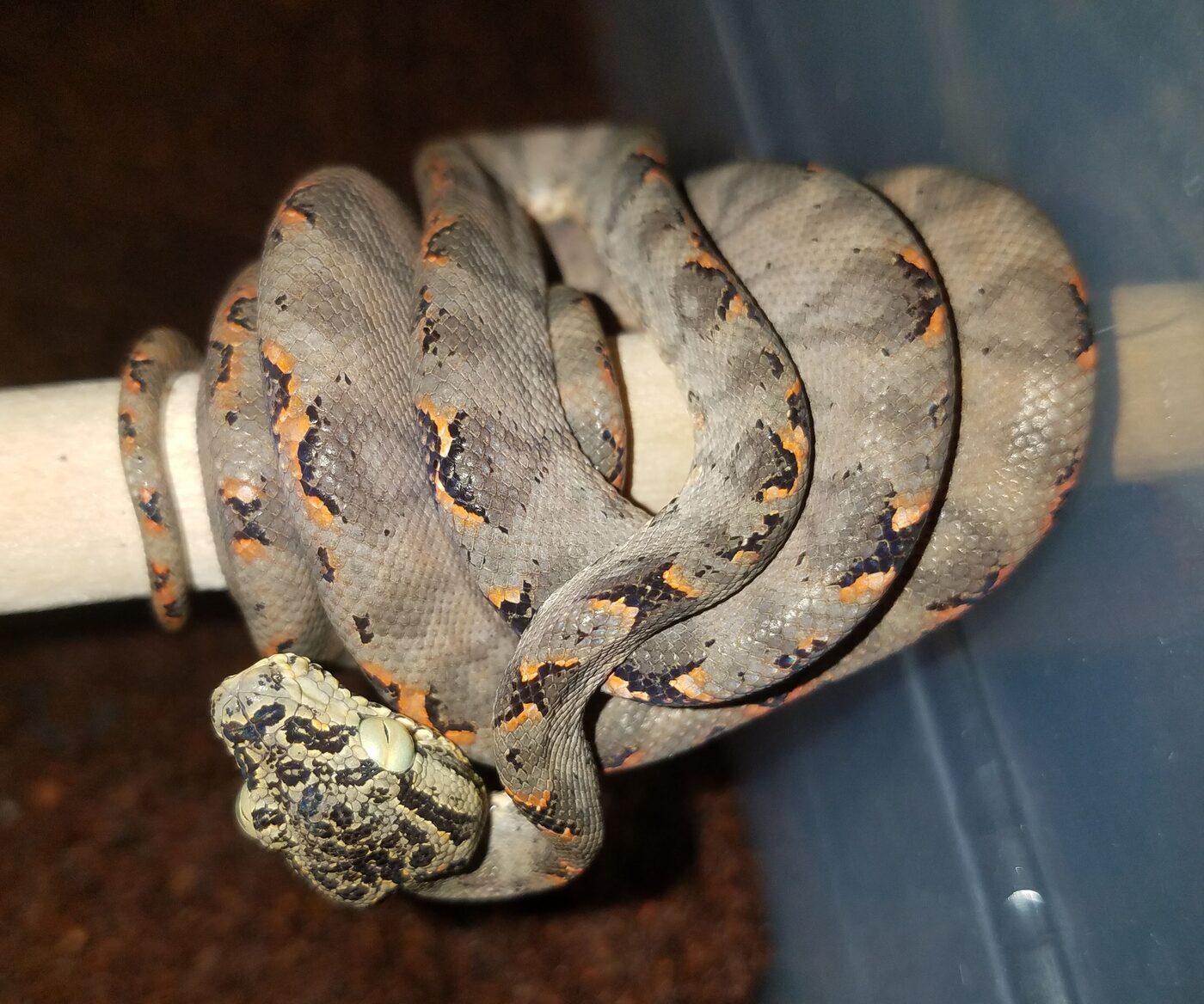
Corallus hortulana
Pet trade

Annulated tree boa
Corallus annulatus
Pet trade

Arabian sand boa
Eryx jayakari
Pet trade