
Home / Reptiles / Snakes / Boidae / Colombian rainbow boa
Some federal rules applyColombian rainbow boa
Epicrates maurus
Reptiles › Snakes (Serpentes) › Boidae (Boas)
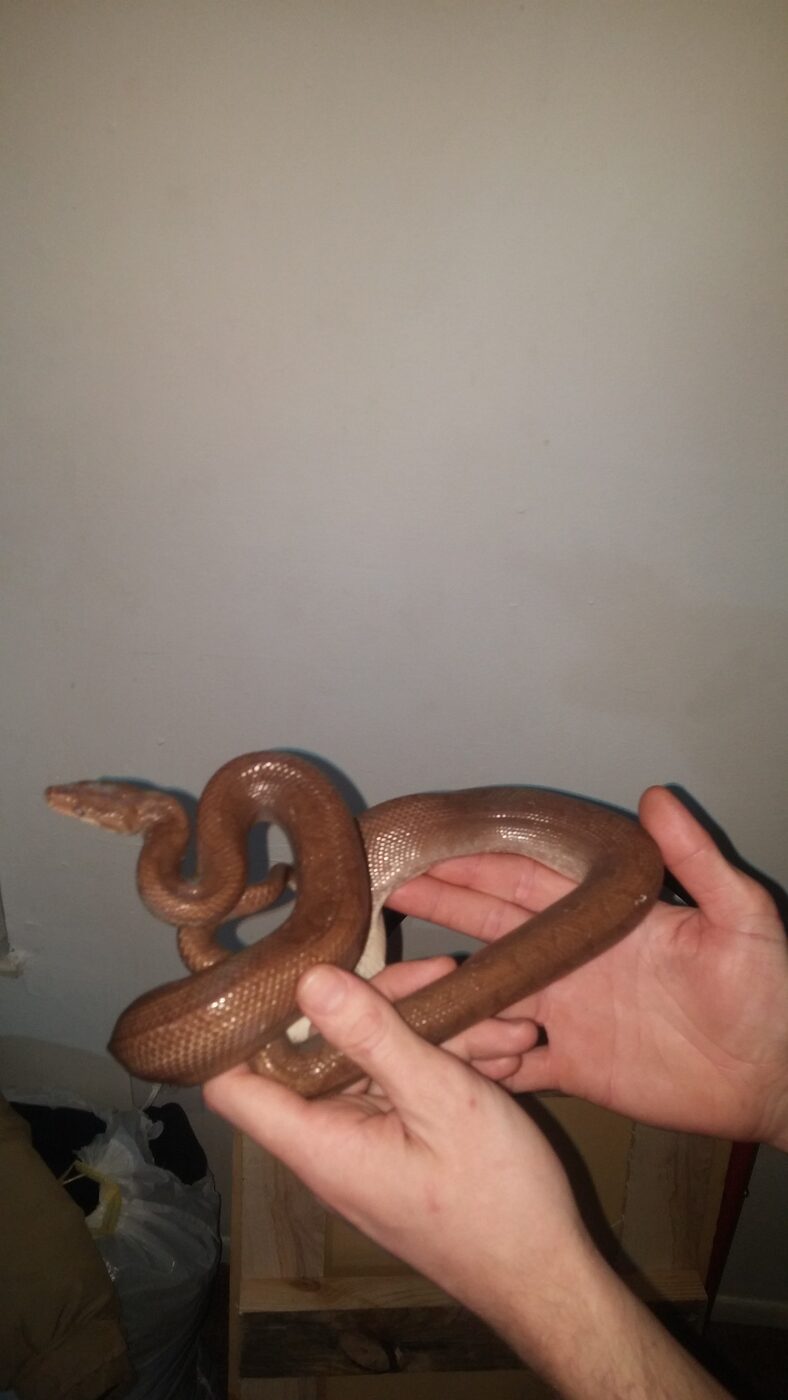
Epicrates maurus is a species of non-venomous constrictor in the family Boidae, commonly found in the Amazon region of South America.
From Wikipedia: Epicrates maurus, CC BY-SA 4.0 (excerpt)
Care at a glance
Species-specific values
Values researched for this exact species. Air, surface and water temperatures are listed separately, and each source is kept as published rather than averaged.
| Minimum enclosure | At least 6 feet long by 3 feet wide by 3 feet high. Source: reptifiles.com | |
| Basking surface temperature | 86–88 °F Source: reptifiles.com | |
| Warm side air temperature | 75–82 °F Source: reptifiles.com | |
| Night temperature | 65–70 °F Source: reptifiles.com | |
| Humidity | 60–70 % Source: reptifiles.com | |
| Humidity | 80–100 % Source: reptifiles.com | |
| Uvb lighting | Provide a Zoo Med T5 HO Reptisun 5.0 or Arcadia Forest 6% bulb, long enough to span half the enclosure and placed on the warm side. Source: reptifiles.com | |
| Social housing | House one Colombian rainbow boa per enclosure. Source: reptifiles.com |
Understanding the animal
About this animal
About this animal
The common name for this species is the brown rainbow boa. This species is semi-arboreal, spending time both on the ground and climbing trees and shrubs, although they are also known to swim.
From Wikipedia: Epicrates maurus, CC BY-SA 4.0 (excerpt)
In the wild
In the wild
| Overview | Epicrates maurus is a species of non-venomous constrictor in the family Boidae, commonly found in the Amazon region of South America. The common name for this species is the brown rainbow boa. This species is semi-arboreal, spending time both on the ground and climbing trees and shrubs, although they are also known to swim. They are nocturnal and primarily active in the middle of the night. — From Wikipedia: Epicrates maurus, CC BY-SA 4.0 (excerpt) |
| Behavior | Colombian rainbow boas, like all boas in the family Boidae, are non-venomous snakes that subdue their prey with constriction. Like most boids, they have special heat-sensing pits on their faces that allow them to detect the body heat of their warm-blooded prey. While nocturnal, they may bask during the day when night-time temperatures are low. — From Wikipedia: Epicrates maurus, CC BY-SA 4.0 (excerpt) |
Read about this species in the wild at The Reptile Database.
Native climate (measured)
Native climate (measured)
| Warm-season highs | about 89°F (up to 93°F in the hottest sampled areas) |
| Cool-season lows | about 71°F (down to 68°F in the coldest sampled areas) |
| Average temperature | 77–81°F across sampled records |
| Relative humidity | 78–83% on average (driest month about 75%) |
| Rainfall | about 2526 mm a year |
Measured at 140 wild occurrence records sampled against WorldClim 2.1 climate data (1970–2000 averages). Air conditions in the range are ecological context, not enclosure settings: microhabitats such as burrows, leaf litter or basking rocks can be cooler, warmer or more humid.
Data and studies
The numbers
The numbers
Each bar is what one source reports. Where several sources weigh in, the dashed gold band marks their average.
Maximum recorded lifespan
Longest recorded lifespan reported by each database; typical lifespans are usually shorter.
Typical adult weight
Average adult body mass in each database (FishBase gives the maximum recorded weight).
Basking spot
Species-specific values from keeper care sheets. Basking figures are often surface readings taken with an infrared thermometer, which run hotter than air.
Daytime air temperature
Species-specific values from keeper care sheets. Basking figures are often surface readings taken with an infrared thermometer, which run hotter than air.
Night temperature
Species-specific values from keeper care sheets. Basking figures are often surface readings taken with an infrared thermometer, which run hotter than air.
Humidity
Species-specific values from keeper care sheets. Basking figures are often surface readings taken with an infrared thermometer, which run hotter than air.
Cool side
Species-specific values from keeper care sheets. Basking figures are often surface readings taken with an infrared thermometer, which run hotter than air.
Care articles for this species
Care articles for this species
- Colombian Rainbow Boa Care Sheet (ReptiFiles)
- Colombian Rainbow Boa Care And Breeding (Reptiles Magazine)
Written by keepers, breeders and vets Reptiles MagazineReptiFiles
Sources for this sheet
- Myhrvold et al. (2015). An amniote life-history database. Ecology 96: 3109 Peer-reviewed researchPeer-reviewed compilation of life-history data for over 21,000 birds, mammals and reptiles.
- ReptiFiles (care guides) Experienced keeper or breederWell-researched reptile care guides that cite herpetological literature and experienced keepers.
- Reptiles Magazine (care articles) Experienced keeper or breederEstablished reptile and amphibian hobby magazine; care articles are written by breeders, keepers and veterinarians.
- Species+ (UNEP-WCMC and the CITES Secretariat) Zoo, university or veterinaryThe official database of species listed under CITES. UNEP (2026). The Species+ Website. Nairobi, Kenya. Compiled by UNEP-WCMC, Cambridge, UK. Available at: www.speciesplus.net. [Accessed 04/10/2026].
- USFWS International Affairs: CITES Zoo, university or veterinaryFederal agency that issues CITES permits.
- The Reptile Database Peer-reviewed researchScientist-curated catalog of every reptile species, with taxonomy and literature.
- GBIF Backbone Taxonomy (Global Biodiversity Information Facility) (CC BY 4.0) Peer-reviewed researchInternational scientific taxonomy used here for classification. GBIF Secretariat (2023). GBIF Backbone Taxonomy. Checklist dataset https://doi.org/10.15468/39omei, accessed via GBIF.org.
- Wikipedia (species article) (CC BY-SA 4.0) Community referenceFree encyclopedia; useful overviews with their own citations. Short excerpts are quoted under CC BY-SA 4.0, each credited with a link to its article.
- iNaturalist (captive observations) Community referenceCommunity observation platform run by the California Academy of Sciences and National Geographic; observations marked captive show animals living in homes, zoos and aquariums.
More boas
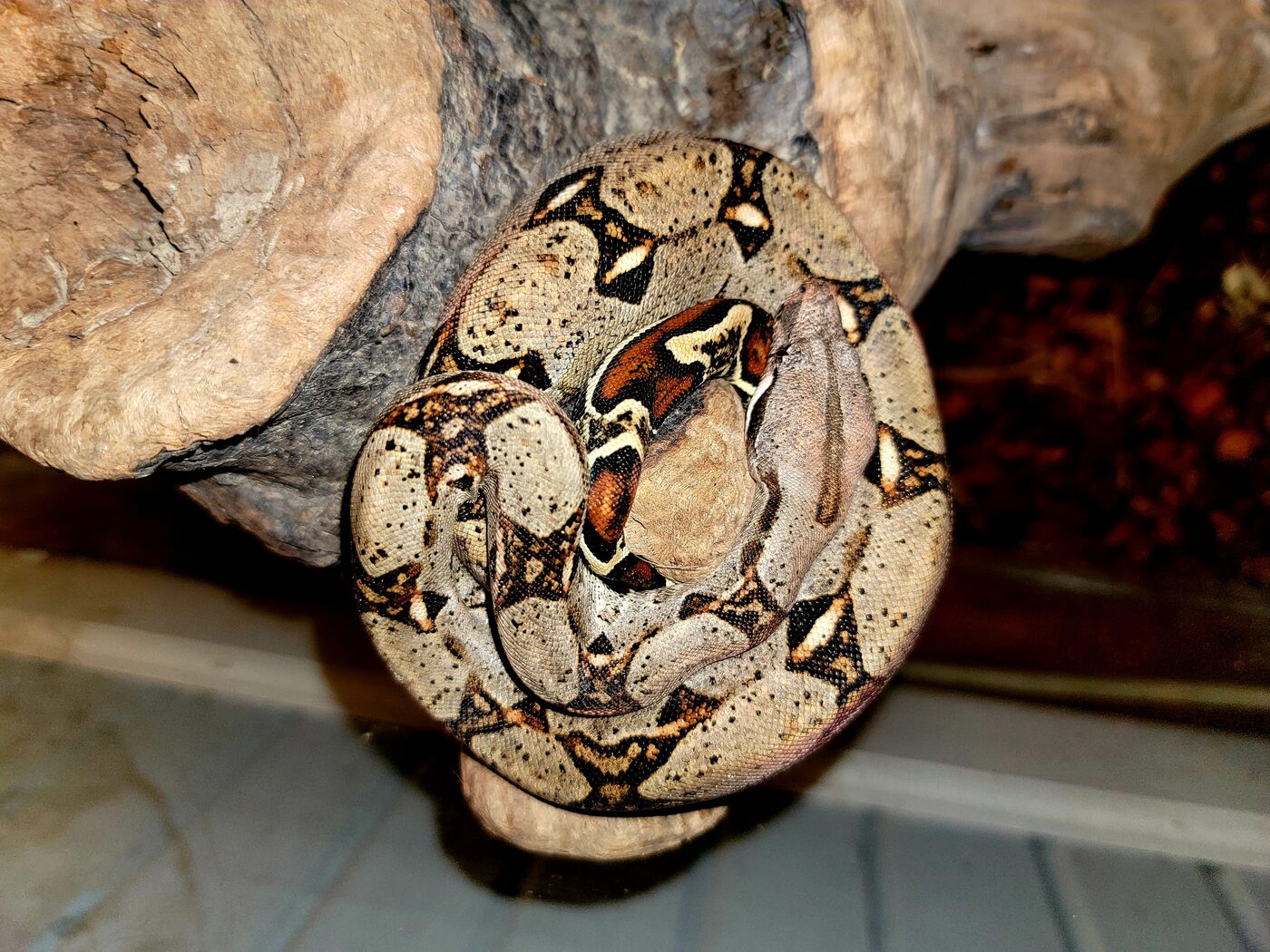
Common boa constrictor (red-tailed boa)
Boa constrictor
A powerful but famously steady big snake.
Pet trade
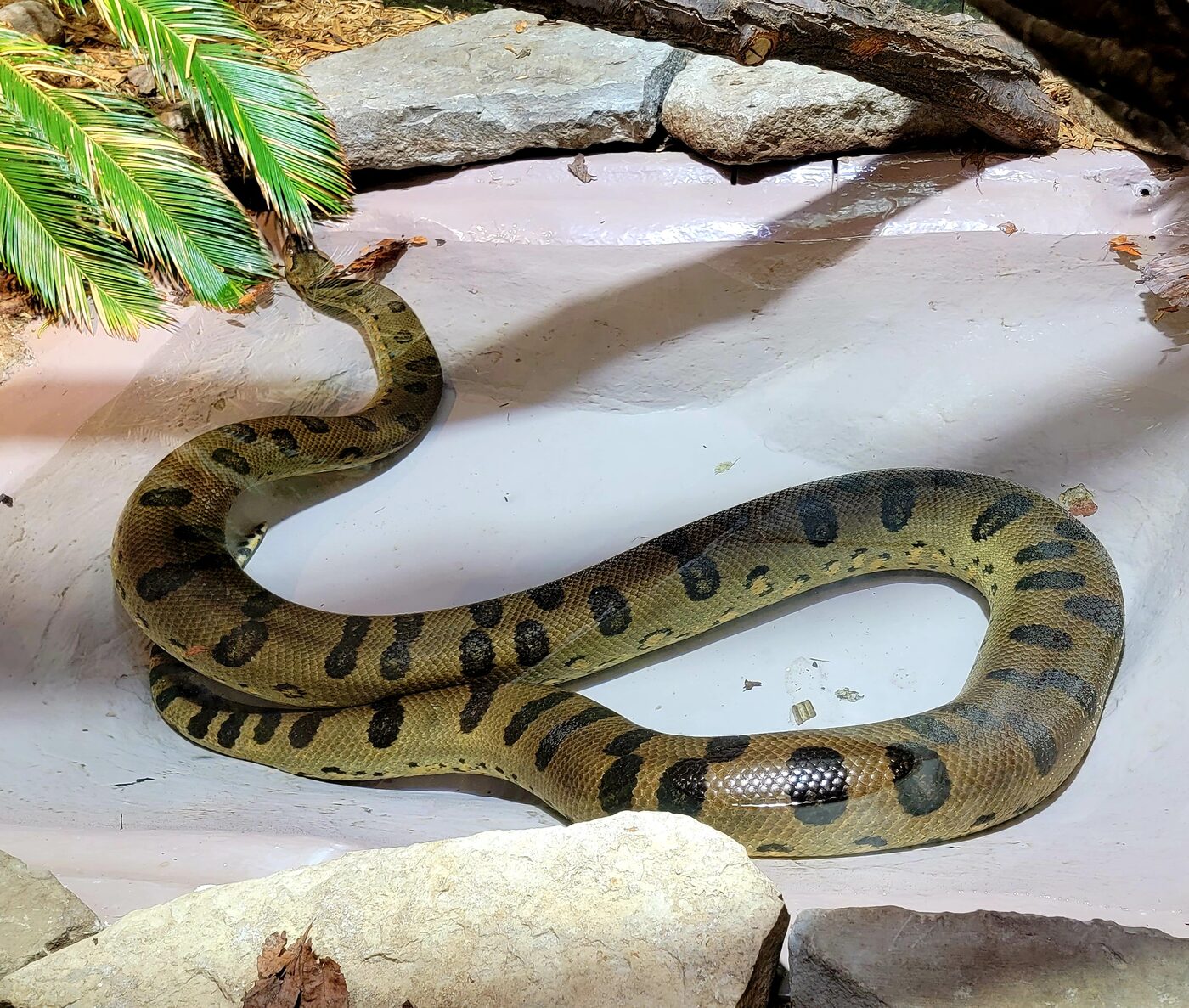
Green anaconda
Eunectes murinus
The heaviest snake on Earth, at home in the water.
Pet trade

Amazon basin emerald tree boa
Corallus batesii
Pet trade
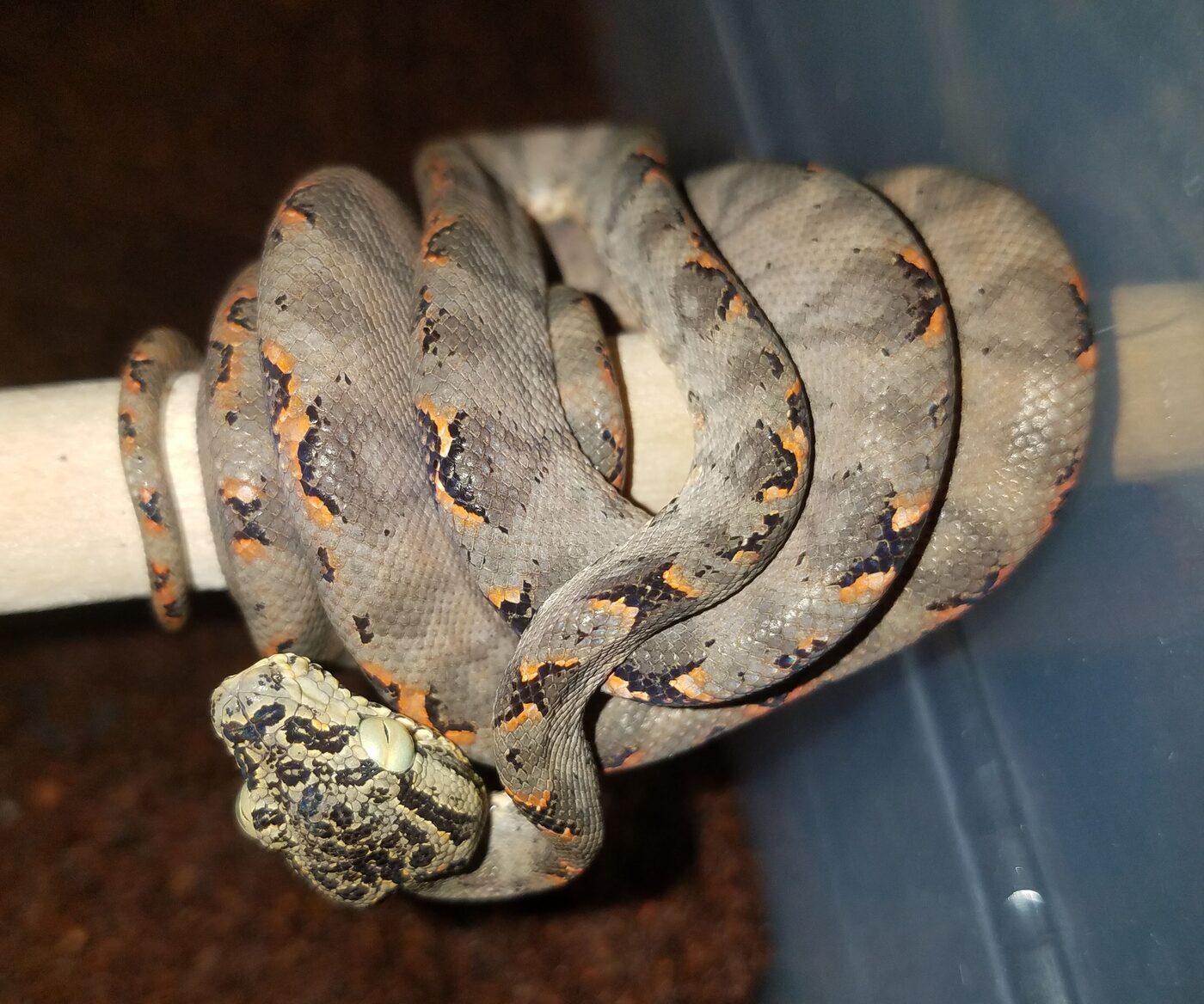
Amazon tree boa
Corallus hortulana
Pet trade

Annulated tree boa
Corallus annulatus
Pet trade

Arabian sand boa
Eryx jayakari
Pet trade