
Home / Reptiles / Snakes / Colubridae / Banded Mangrove Snake
No federal permit to keepBanded Mangrove Snake
Boiga melanota
Reptiles › Snakes (Serpentes) › Colubridae (Colubrid snakes)
Boiga melanota, the western mangrove cat snake, is one of the biggest cat snake species in Asia.
From Wikipedia: Boiga melanota, CC BY-SA 4.0 (excerpt)

Care at a glance
Species-specific values
Values researched for this exact species. Air, surface and water temperatures are listed separately, and each source is kept as published rather than averaged.
| Basking surface temperature | 86–87 °F Source: dmexotics.com | |
| Diet | Usually takes rodents; first meals are offered as live rat pups, with chicks, quail, or scented lizards or frogs as alternatives. Source: dmexotics.com | |
| Feeding frequency | Adults are usually fed once per week; meals spaced closer together are also acceptable. Source: dmexotics.com | |
| Social housing | Pair introductions are timed a day or two after meals to reduce feeding-related pairing risk. Source: dmexotics.com | |
| Substrate | Use arboreal caging with hides both on and off the ground; no substrate is specified. Source: dmexotics.com | |
| Uvb lighting | Little or no lighting is recommended. Source: dmexotics.com |
Understanding the animal
About this animal
About this animal
It is found in Thailand, West Malaysia, Singapore, and Indonesia (Sumatra). It is shiny bluish black in colour, marked with 40-50 yellow stripes.
From Wikipedia: Boiga melanota, CC BY-SA 4.0 (excerpt)
In the wild
In the wild
| Overview | Boiga melanota, the western mangrove cat snake, is one of the biggest cat snake species in Asia. It is found in Thailand, West Malaysia, Singapore, and Indonesia (Sumatra). It is shiny bluish black in colour, marked with 40-50 yellow stripes. The mouth and throat area are yellow, whereas the ventral part of the body is yellowish black. — From Wikipedia: Boiga melanota, CC BY-SA 4.0 (excerpt) |
Read about this species in the wild at The Reptile Database.
Native climate (measured)
Native climate (measured)
| Warm-season highs | about 89°F (up to 92°F in the hottest sampled areas) |
| Cool-season lows | about 71°F (down to 67°F in the coldest sampled areas) |
| Average temperature | 76–81°F across sampled records |
| Relative humidity | 79–84% on average (driest month about 78%) |
| Rainfall | about 2405 mm a year |
Measured at 83 wild occurrence records sampled against WorldClim 2.1 climate data (1970–2000 averages). Air conditions in the range are ecological context, not enclosure settings: microhabitats such as burrows, leaf litter or basking rocks can be cooler, warmer or more humid.
Profile
Profile
Researched for this exact species. Sources are listed under In the wild above.
History
Named after Greek melanos (μέλανος), black + Greek notos (νοτος), back, dorsum.
Sources for this sheet
- The Reptile Database Peer-reviewed researchScientist-curated catalog of every reptile species, with taxonomy and literature.
- GBIF Backbone Taxonomy (Global Biodiversity Information Facility) (CC BY 4.0) Peer-reviewed researchInternational scientific taxonomy used here for classification. GBIF Secretariat (2023). GBIF Backbone Taxonomy. Checklist dataset https://doi.org/10.15468/39omei, accessed via GBIF.org.
- Species+ (UNEP-WCMC and the CITES Secretariat) Zoo, university or veterinaryThe official database of species listed under CITES. UNEP (2026). The Species+ Website. Nairobi, Kenya. Compiled by UNEP-WCMC, Cambridge, UK. Available at: www.speciesplus.net. [Accessed 04/10/2026].
- Wikipedia (species article) (CC BY-SA 4.0) Community referenceFree encyclopedia; useful overviews with their own citations. Short excerpts are quoted under CC BY-SA 4.0, each credited with a link to its article.
- iNaturalist (captive observations) Community referenceCommunity observation platform run by the California Academy of Sciences and National Geographic; observations marked captive show animals living in homes, zoos and aquariums.
More colubrid snakes
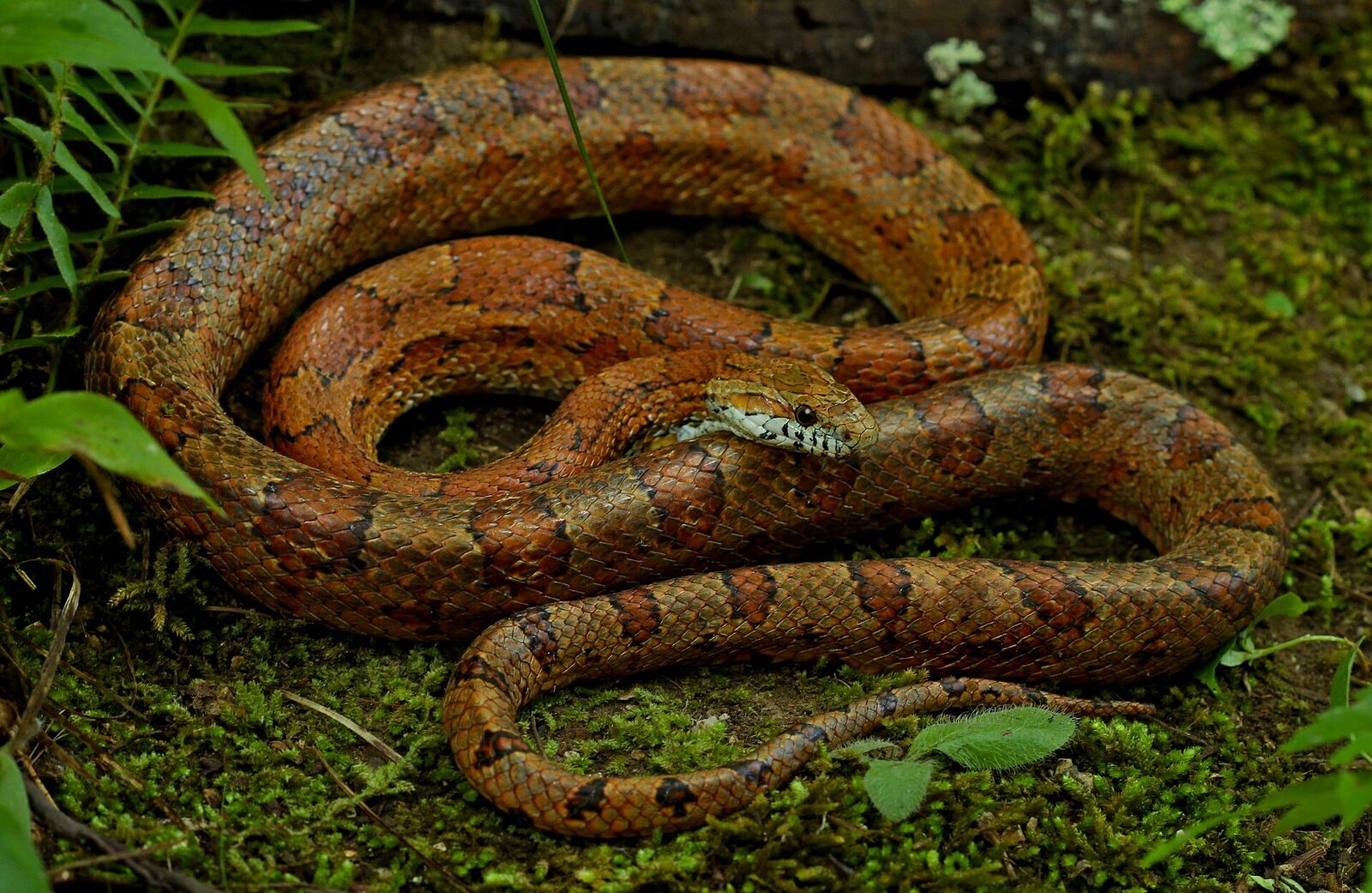
Corn snake
Pantherophis guttatus
Hardy, easy-going and colorful.
Pet trade
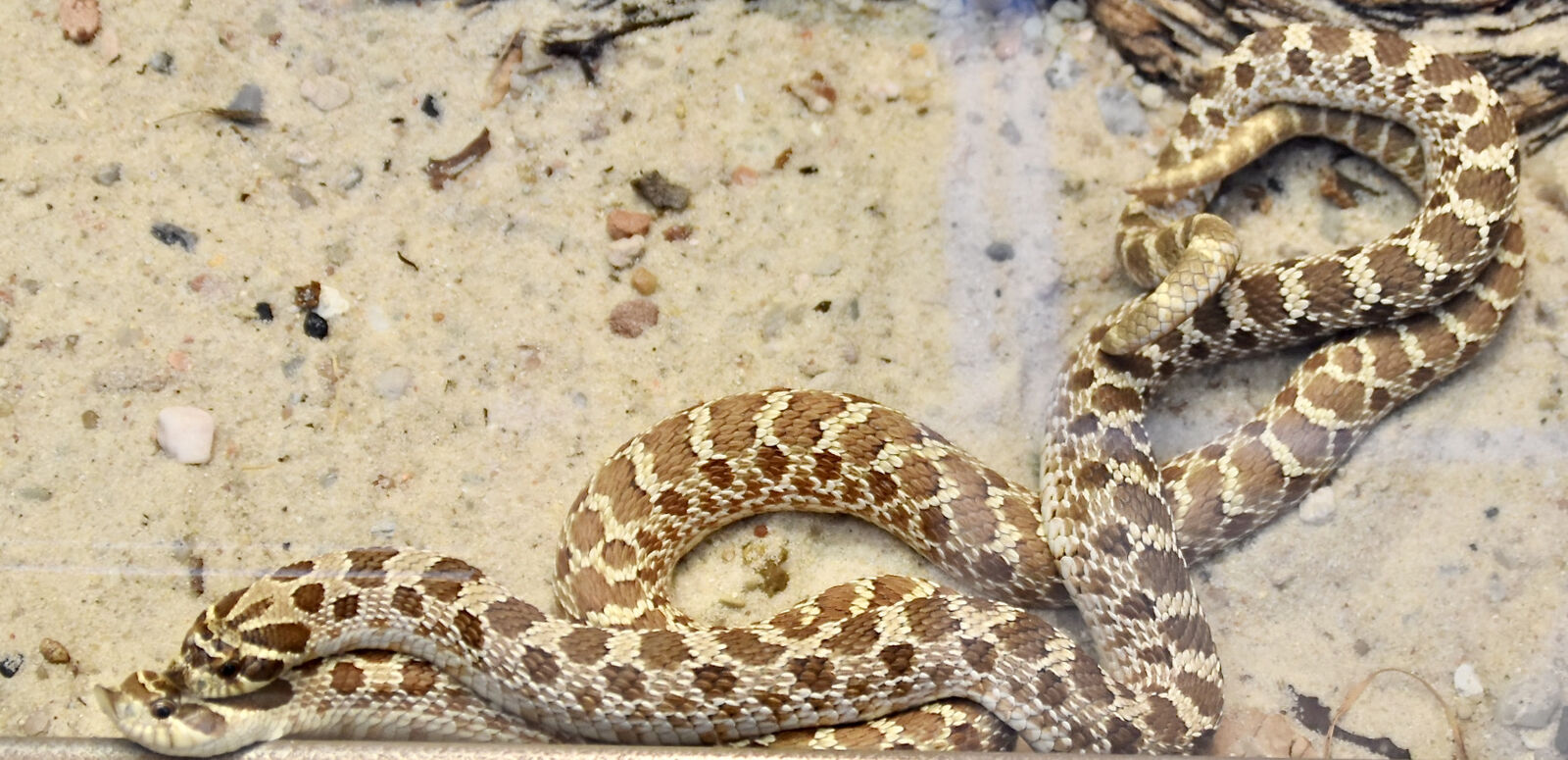
Western hognose snake
Heterodon nasicus
Dramatic bluffs from a tiny, upturned-nose snake.
Pet trade

Amur (Russian) rat snake
Elaphe schrenckii
Pet trade

Andean milk snake
Lampropeltis micropholis
Pet trade

Arizona mountain kingsnake
Lampropeltis pyromelana
Pet trade

Baird's rat snake
Pantherophis bairdi
Pet trade