
Home / Reptiles / Snakes / Pythonidae / Borneo short-tailed python
Some federal rules applyBorneo short-tailed python
Python breitensteini
Reptiles › Snakes (Serpentes) › Pythonidae (Pythons)

Care at a glance
Setup
One answer per setting. Where sources differ, the smaller figure is the minimum and the larger is what we recommend.
| Adult enclosure | At least 5x2x2 feet Preferably 6x3x2 feet Supports their heavy girth and need for horizontal space. | furrycritter.com |
| Hot spot | 88-90°F Essential for proper thermoregulation. | furrycritter.com |
| Warm side | At least 82°F Preferably 85°F Provides necessary heat at substrate level. | furrycritter.com |
| Cool side | At least 78°F Preferably 80°F Allows for natural thermal gradients. | furrycritter.com |
| Night temperature | At least 75°F Preferably 78°F Allows for natural daily temperature fluctuations. | furrycritter.com |
| Humidity | At least 65% Preferably 75% Critical for health and successful shedding. | furrycritter.com |
Care guide
By age
| Baby | Enclosure: 10 inches long by 6 inches wide and 4 inches tall | reptilesmagazine.com |
| Juvenile | Enclosure: 18 inches long by 10 inches wide and 7 inches tall | reptilesmagazine.com |
- Excessive soaking: Possible mite infestation, too warm, or lack of proper hide. reptilesmagazine.com
Understanding the animal
In the wild
In the wild
Researched for this exact species, not its family. Wild conditions are context, not enclosure settings.123
| Where it lives | Found in Brunei, Indonesia, and Malaysia at low elevations, poorly drained flood plains, swampy areas, and man-made farmland irrigation areas. |
| Active | They are terrestrial snakes that primarily hunt in darkness using specialized heat-sensing pits located on their lips. |
| Social life | Females are generally larger than males. |
| Wild diet | They consume various mammals including squirrels, rats, and civets. |
| Behavior to plan for | They are strictly terrestrial, heavy-bodied snakes that use heat-receptive scales to locate prey. |
Profile
Profile
Researched for this exact species. Sources are listed under In the wild above.
Keeper tips
- They are known for being defensive, aggressive, and having a powerful feeding response that requires caution.
- Due to their size, power, and defensive nature, they are considered potentially dangerous animals for keepers.
Remarkable facts
- These snakes have a captive lifespan of 20 to 25 years.
- Adults commonly measure 5 to 7 feet, with exceptional females occasionally exceeding 7 feet and approaching 8 feet.
Data and studies
Veterinary & husbandry research
Veterinary & husbandry research
- Heterochrony and early left-right asymmetry in the development of the cardiorespiratory system of snakes. et al., PloS one 2015
Peer-reviewed papers that mention this species alongside captivity, zoos, veterinary care or aquaculture. Some cover several species or mention it only in passing, so check the abstract. PubMed
Sources for this sheet
- Species+ (UNEP-WCMC and the CITES Secretariat) Zoo, university or veterinaryThe official database of species listed under CITES. UNEP (2026). The Species+ Website. Nairobi, Kenya. Compiled by UNEP-WCMC, Cambridge, UK. Available at: www.speciesplus.net. [Accessed 04/10/2026].
- USFWS International Affairs: CITES Zoo, university or veterinaryFederal agency that issues CITES permits.
- Bornean short tailed python (furrycritter.com) Experienced keeper or breederKeeper care guide.
- Blood and short tailed python care sheet (reptilesmagazine.com) Experienced keeper or breederKeeper care guide.
- Wikipedia: Python breitensteini (CC BY-SA 4.0) Community referenceEncyclopedia article.
- The Reptile Database: Python breitensteini Zoo, university or veterinaryTaxonomy, distribution and literature for every reptile species.
- The Reptile Database Peer-reviewed researchScientist-curated catalog of every reptile species, with taxonomy and literature.
- GBIF Backbone Taxonomy (Global Biodiversity Information Facility) (CC BY 4.0) Peer-reviewed researchInternational scientific taxonomy used here for classification. GBIF Secretariat (2023). GBIF Backbone Taxonomy. Checklist dataset https://doi.org/10.15468/39omei, accessed via GBIF.org.
- PubMed (U.S. National Library of Medicine) Peer-reviewed researchIndex of peer-reviewed veterinary, zoo and husbandry research.
More pythons
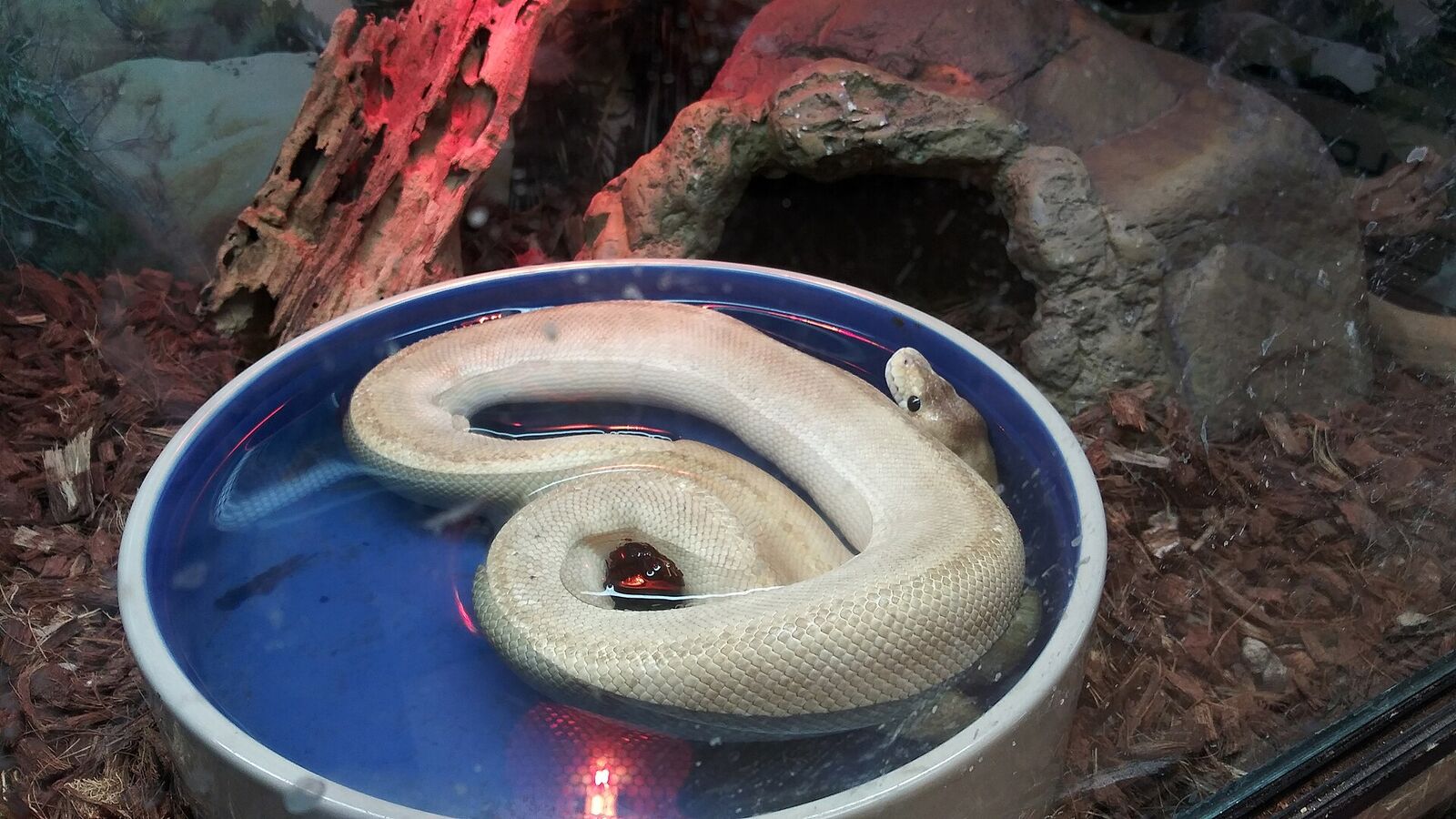
Ball python
Python regius
The calm, curl-up classic of pet snakes.
Pet trade
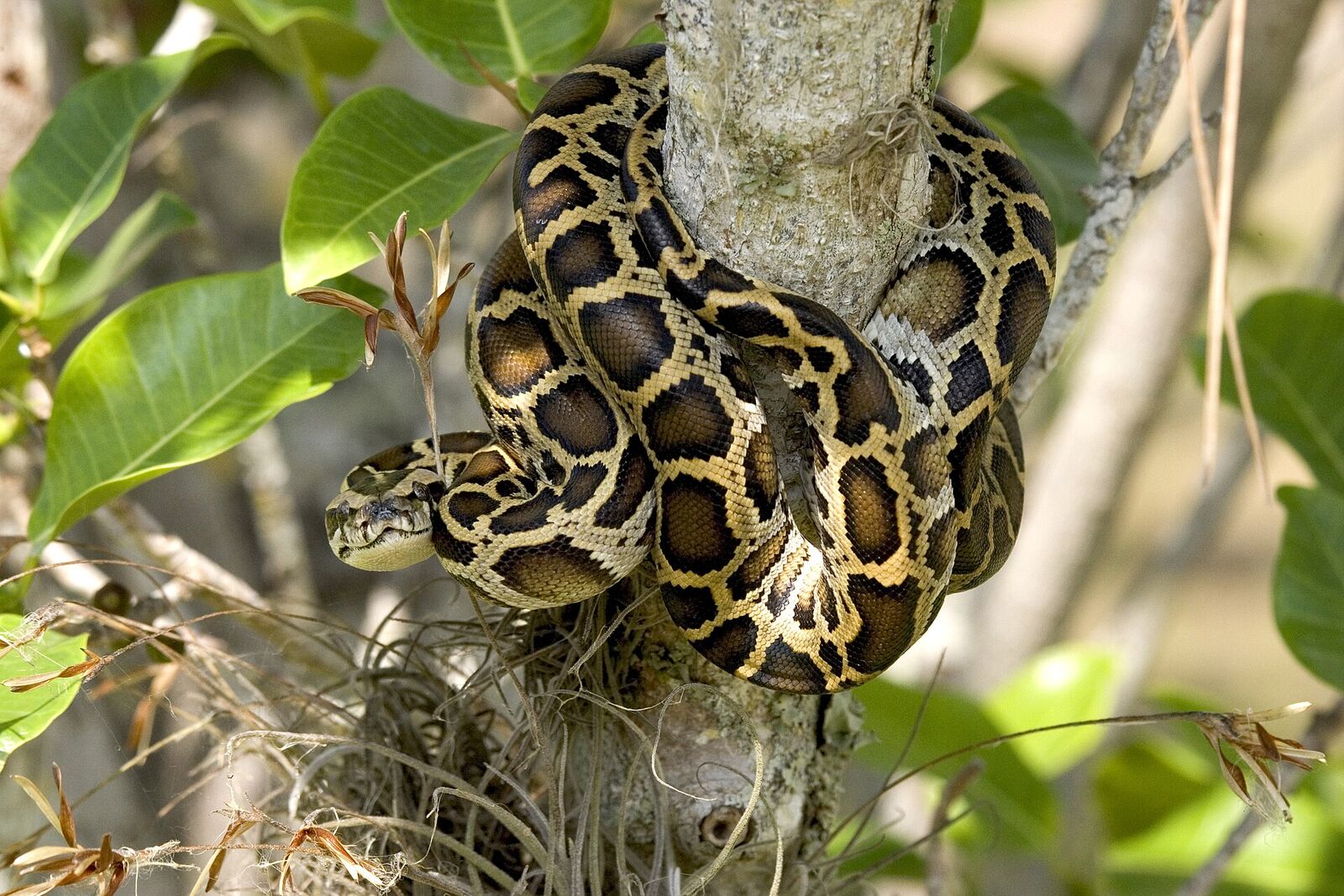
Burmese python
Python bivittatus
A heavy-bodied giant with a famously calm reputation.
Pet trade
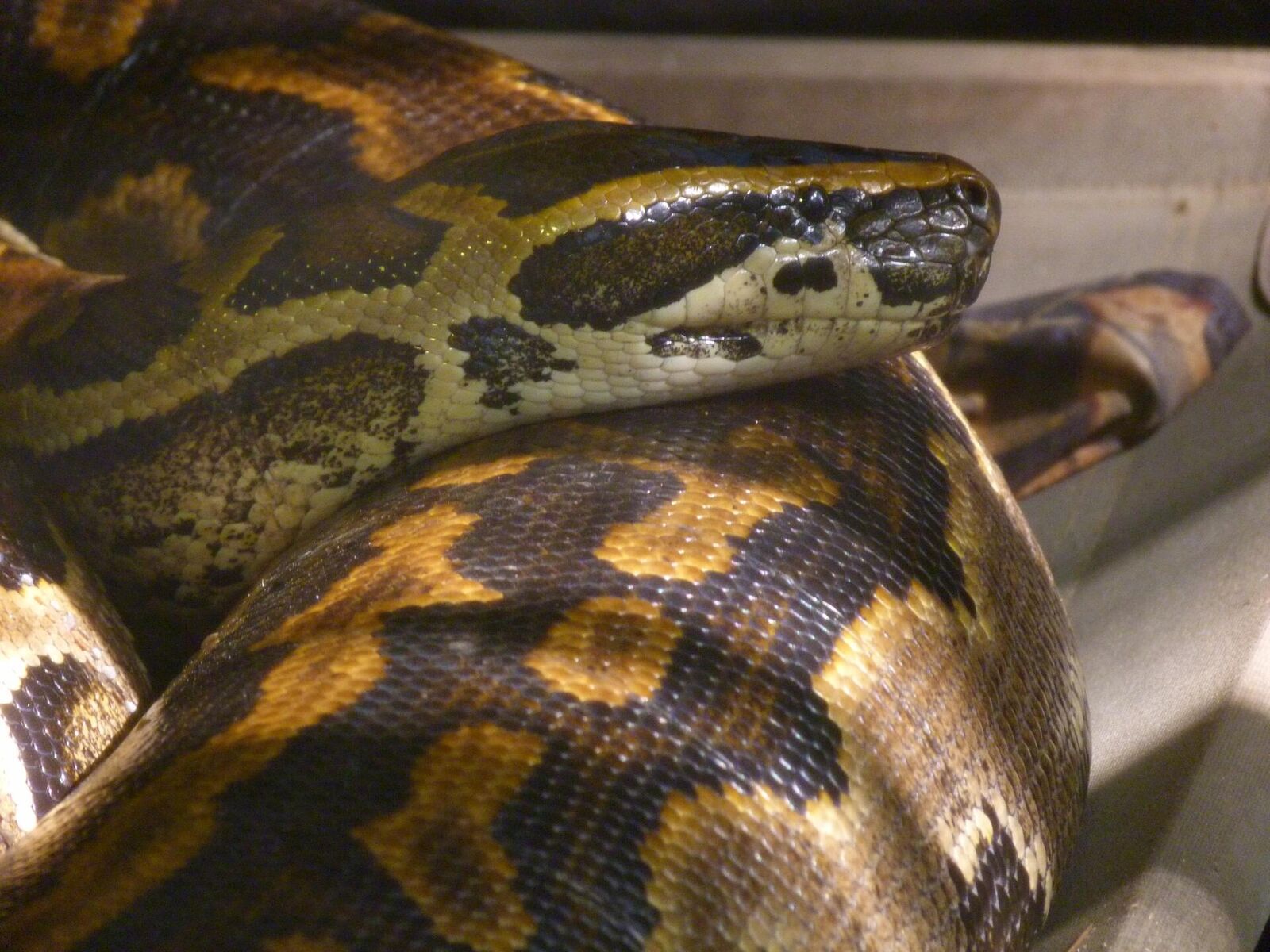
Central African rock python
Python sebae
Africa's largest snake, powerful and spirited.
Pet trade
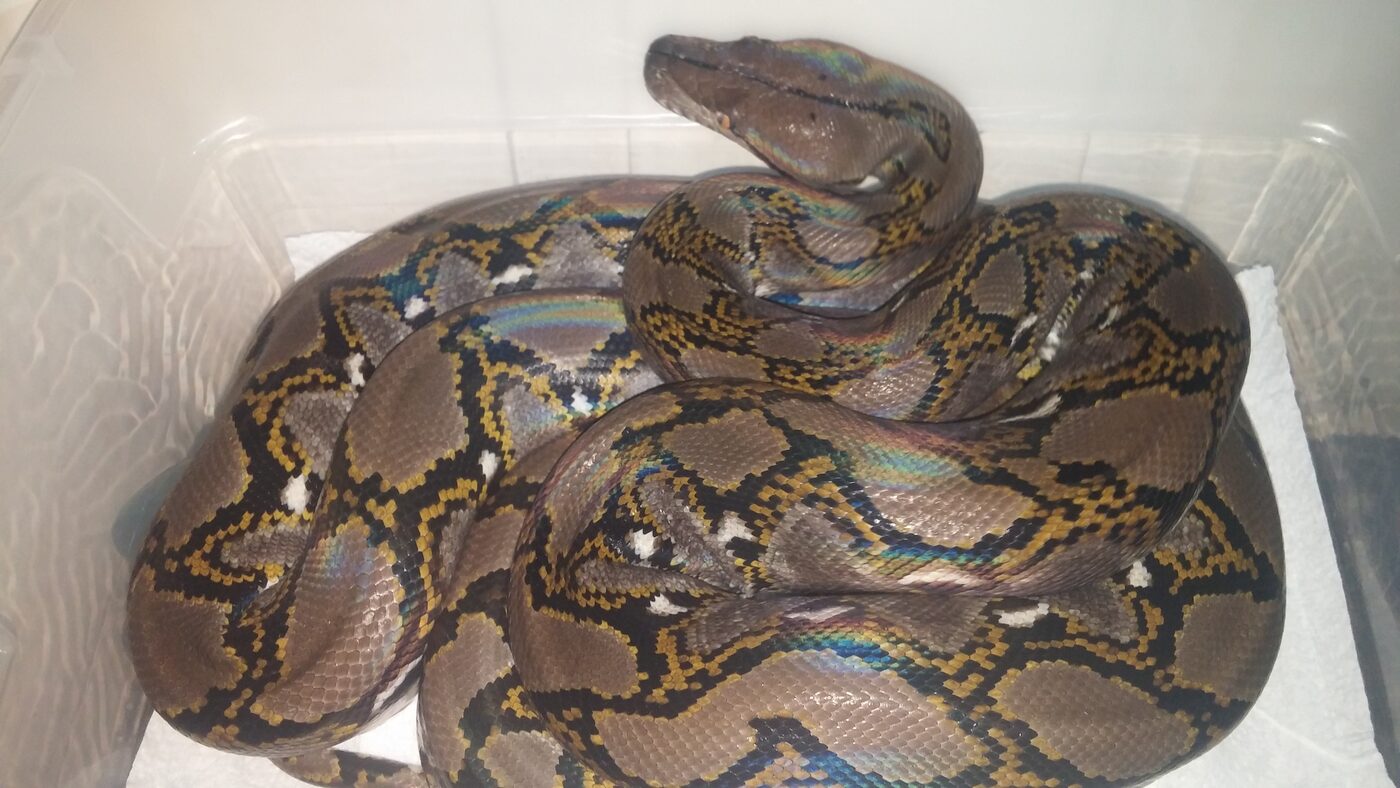
Reticulated python
Malayopython reticulatus
The world's longest snake, and a brilliant, active giant.
Pet trade

Amethystine python
Simalia amethistina
Pet trade

Angolan python
Python anchietae
Pet trade