
Home / Reptiles / Lizards / Eublepharidae / Central American banded gecko
No federal permit to keepCentral American banded gecko
Coleonyx mitratus
Reptiles › Lizards (Lacertilia) › Eublepharidae (Leopard, banded and cave geckos)

Care at a glance
Setup
One answer per setting. Where sources differ, the smaller figure is the minimum and the larger is what we recommend.
| Adult enclosure | At least 20 gallon Preferably 30”L x 12”W x 12”H Minimum terrarium size for a single gecko or small group. | dubiaroaches.com |
| Hot spot | At least 86°F Preferably 90°F Provides proper warm hide and body temperature for thermoregulation. | thebiodude.com |
| Cool side | At least 75°F Preferably 80°F Maintains a proper temperature gradient. | thebiodude.com |
| Night temperature | At least 64°F Preferably 68°F Safe nighttime temperature range when heat sources are turned off. | dubiaroaches.com |
| Lighting | 12 hours Provides a clear day/night cycle. | dubiaroaches.com |
| UVB | At least 2.0 Preferably 5.0 Strongly recommended to promote calcium metabolism and natural behavior. | thebiodude.com |
| Water | daily Provides clean drinking water. | thebiodude.com |
| Substrate | At least 2” Preferably 4” Provides necessary depth for burrowing, shedding, and hydration. | thebiodude.com |
Care guide
By age
| Juvenile | Feeding: Juvenile banded geckos should be fed every day. | dubiaroaches.com |
| Adult | Feeding: Adults should be fed every other day or 3-4x per week. | thebiodude.com |
- Leftover shed on toes: Incomplete sheds or leftover skin can cause toes to fall off if not carefully removed. thebiodude.com
Understanding the animal
In the wild
In the wild
Researched for this exact species, not its family. Wild conditions are context, not enclosure settings.1234
| Where it lives | Native to Central America, they live in areas of tropical and subtropical forest, often near rock piles or rocky terrain. |
| Active | They are crepuscular and nocturnal, spending daylight hours hiding in soil or burrows before emerging at dusk. |
| Social life | Wild social structure is not detailed, but captive observations note they generally get along in groups. |
| Wild diet | They emerge at dusk to forage for insects, which make up the vast majority of their diet. |
| Behavior to plan for | If threatened, they can drop their tail, which most individuals can regenerate within a year. |
Profile
Profile
Researched for this exact species. Sources are listed under In the wild above.
Keeper tips
- They have a friendly demeanor and are great for beginners, though they have a low tolerance for rough handling.
Remarkable facts
- With good captive care, they may live for 15 or more years.
Data and studies
Veterinary & husbandry research
Veterinary & husbandry research
- Independent Evolution of Sex Chromosomes in Eublepharid Geckos, A Lineage with Environmental and Genotypic Sex Determination. et al., Life (Basel, Switzerland) 2020
Peer-reviewed papers that mention this species alongside captivity, zoos, veterinary care or aquaculture. Some cover several species or mention it only in passing, so check the abstract. PubMed
Sources for this sheet
- Central american banded gecko care sheet (dubiaroaches.com) Experienced keeper or breederKeeper care guide.
- Central american banded gecko caresheet (thebiodude.com) Community referenceWeb page.
- Wikipedia: Coleonyx mitratus (CC BY-SA 4.0) Community referenceEncyclopedia article.
- The Reptile Database: Coleonyx mitratus Zoo, university or veterinaryTaxonomy, distribution and literature for every reptile species.
- Central american banded gecko (reptilesmagazine.com) Experienced keeper or breederKeeper care guide.
- The Reptile Database Peer-reviewed researchScientist-curated catalog of every reptile species, with taxonomy and literature.
- GBIF Backbone Taxonomy (Global Biodiversity Information Facility) (CC BY 4.0) Peer-reviewed researchInternational scientific taxonomy used here for classification. GBIF Secretariat (2023). GBIF Backbone Taxonomy. Checklist dataset https://doi.org/10.15468/39omei, accessed via GBIF.org.
- PubMed (U.S. National Library of Medicine) Peer-reviewed researchIndex of peer-reviewed veterinary, zoo and husbandry research.
More leopard, banded and cave geckos
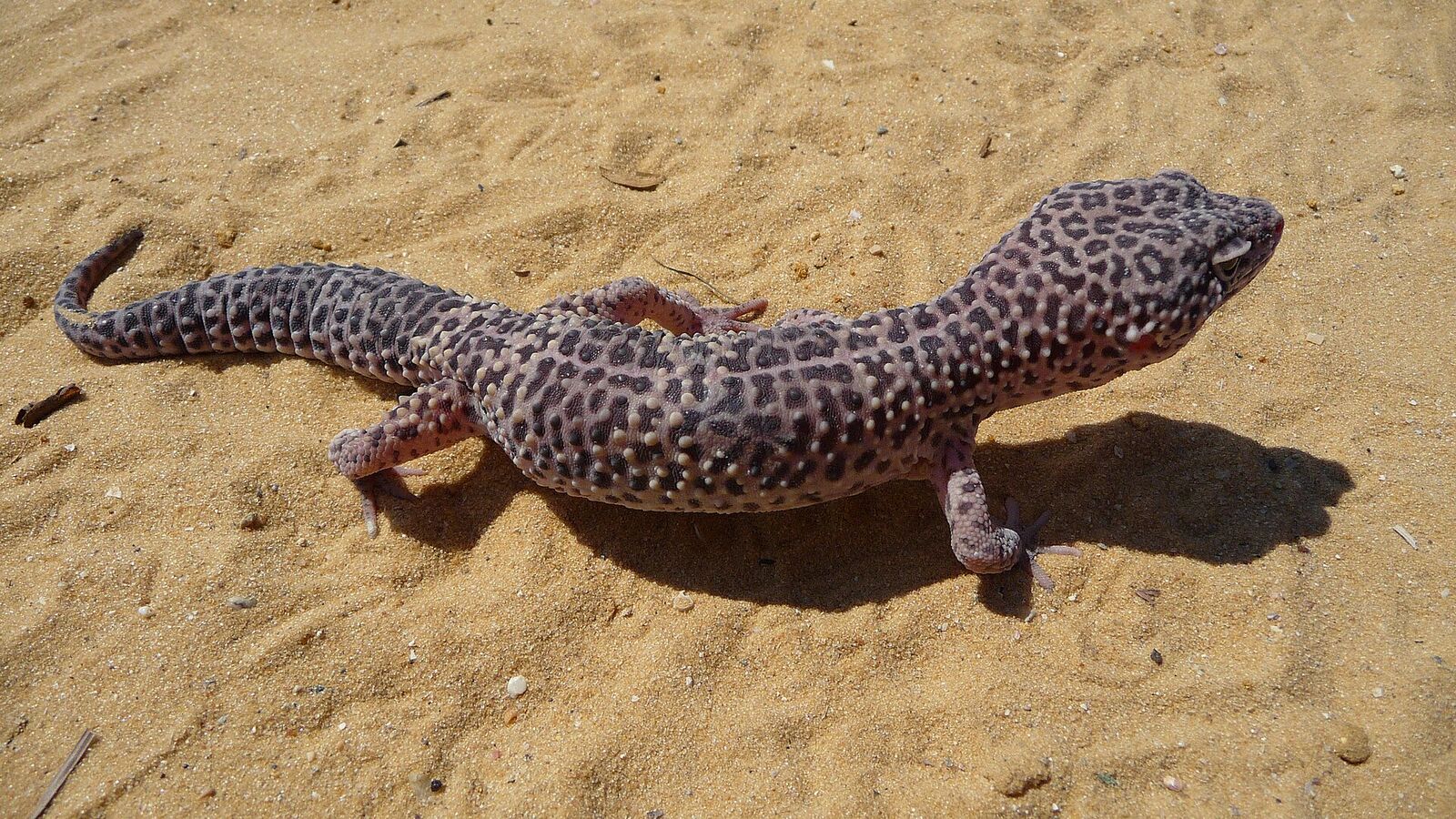
Leopard gecko
Eublepharis macularius
Maybe the best beginner lizard there is.
Pet trade

African fat-tailed gecko
Hemitheconyx caudicinctus
Pet trade

Bawangling Leopard gecko
Goniurosaurus bawanglingensis
Pet trade

Cat gecko
Aeluroscalabotes felinus
Pet trade
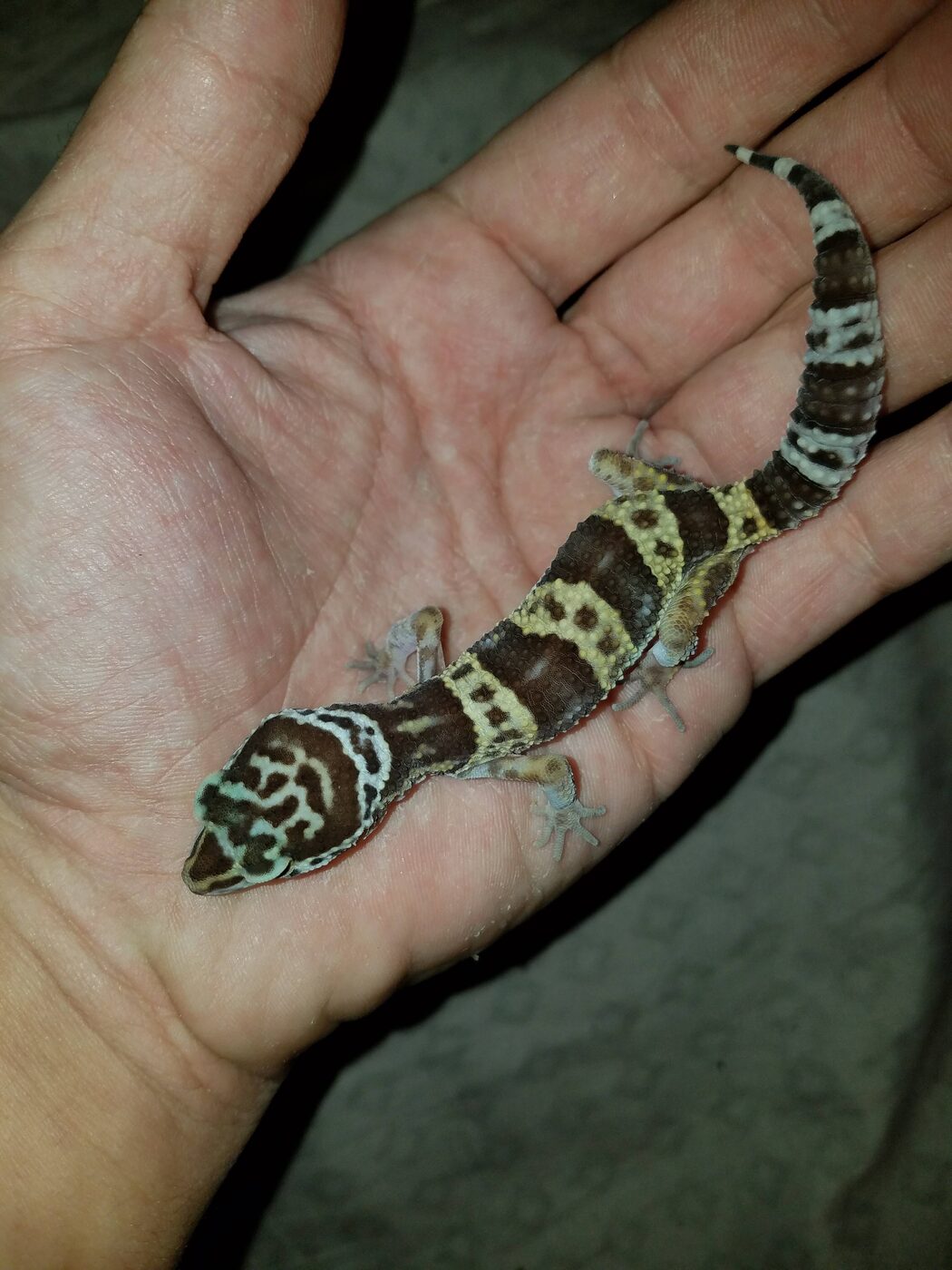
Chinese cave gecko
Goniurosaurus hainanensis
Pet trade

Chinese leopard gecko
Goniurosaurus luii
Pet trade