
Home / Reptiles / Lizards / Eublepharidae / Chinese leopard gecko
Some federal rules applyChinese leopard gecko
Goniurosaurus luii
Reptiles › Lizards (Lacertilia) › Eublepharidae (Leopard, banded and cave geckos)
Goniurosaurus luii is a species of gecko, a lizard in the family Eublepharidae.

Care at a glance
Species-specific values
Values researched for this exact species. Air, surface and water temperatures are listed separately, and each source is kept as published rather than averaged.
| Minimum enclosure | Single adult: minimum enclosure is 24 x 18 x 18 in (60 x 45 x 45 cm). Source: baskden.com | |
| Basking surface temperature | 80–82 °F Source: baskden.com | |
| Cool side air temperature | 70–77 °F Source: baskden.com | |
| Humidity | 60–80 % Source: baskden.com | |
| Uvb lighting | Use low-output UVB targeting UVI 1.0-2.0 at basking height, or an equivalent low (5.0 / 2-5%) tube. Source: baskden.com | |
| Diet | Feed varied, appropriately sized live insects, including crickets, roaches, mealworms and occasional treats. Source: baskden.com | |
| Feeding frequency | Juveniles daily; adults every other day, about 3-4 times a week. Source: baskden.com | |
| Social housing | Best kept singly; females may sometimes group, but never house males together. Source: baskden.com | |
| Substrate | Use moisture-holding coconut fiber with topsoil and/or sphagnum, or orchid bark, at least 2-4 in (5-10 cm) deep. Source: baskden.com | |
| Seasonal cooling | A natural winter cool-down and slight night drop are fine and may help cycle breeders; avoid damp, frigid conditions. Source: baskden.com |
Understanding the animal
About this animal
About this animal
The species is native to China and Vietnam.
From Wikipedia: Goniurosaurus luii, CC BY-SA 4.0 (excerpt)
In the wild
In the wild
Researched for this exact species, not its family. Wild conditions are context, not enclosure settings.1234
| Where it lives | A limestone-karst forest specialist in southern China and northern Vietnam, including Cao Bang and northern Lang Son. It uses steep limestone surfaces near caves and crevices under dense evergreen canopy. |
| Ground it lives on | mostly dry limestone faces and crevices; occasionally wood or forest floor |
| Climate | Vietnamese surveys measured air temperatures of 71.4–83.5°F (21.9–28.6°C) and 59–85% relative humidity at occupied sites, not annual limits. Its monsoon region has warmer wet summers and cooler, drier winters. |
| Active | Nocturnal; highest observed activity was approximately 9 p.m.–1 a.m. |
| Social life | Recorded at low densities, sometimes clustered near caves; territoriality and stable social groups were not established. |
| Behavior to plan for | Climbs inclined and vertical rock surfaces and uses crevices as daytime refuges; humid air does not mean its walking surfaces remain wet. |
Profile
Profile
Researched for this exact species. Sources are listed under In the wild above.
History
The Reptile Database notes that Grismer and colleagues in 2021 considered Goniurosaurus kadoorieorum a synonym of G. luii. The species may have disappeared from its type locality under collecting pressure.
Data and studies
The numbers
The numbers
Each bar is what one source reports. Where several sources weigh in, the dashed gold band marks their average.
Typical adult weight
Average adult body mass in each database (FishBase gives the maximum recorded weight).
Sources for this sheet
- Myhrvold et al. (2015). An amniote life-history database. Ecology 96: 3109 Peer-reviewed researchPeer-reviewed compilation of life-history data for over 21,000 birds, mammals and reptiles.
- Species+ (UNEP-WCMC and the CITES Secretariat) Zoo, university or veterinaryThe official database of species listed under CITES. UNEP (2026). The Species+ Website. Nairobi, Kenya. Compiled by UNEP-WCMC, Cambridge, UK. Available at: www.speciesplus.net. [Accessed 04/10/2026].
- USFWS International Affairs: CITES Zoo, university or veterinaryFederal agency that issues CITES permits.
- Clint's Reptiles (YouTube): Cave Gecko, The Best Pet Lizard? Expert educator & keeperClint Laidlaw, PhD in Biology Education and MS in Evolutionary Ecology; owner of Clint's Reptile Room and a longtime keeper. His "Best Pet?" series reviews each species' care in depth.
- The Reptile Database Peer-reviewed researchScientist-curated catalog of every reptile species, with taxonomy and literature.
- GBIF Backbone Taxonomy (Global Biodiversity Information Facility) (CC BY 4.0) Peer-reviewed researchInternational scientific taxonomy used here for classification. GBIF Secretariat (2023). GBIF Backbone Taxonomy. Checklist dataset https://doi.org/10.15468/39omei, accessed via GBIF.org.
- Wikipedia (species article) (CC BY-SA 4.0) Community referenceFree encyclopedia; useful overviews with their own citations. Short excerpts are quoted under CC BY-SA 4.0, each credited with a link to its article.
- iNaturalist (captive observations) Community referenceCommunity observation platform run by the California Academy of Sciences and National Geographic; observations marked captive show animals living in homes, zoos and aquariums.
More leopard, banded and cave geckos
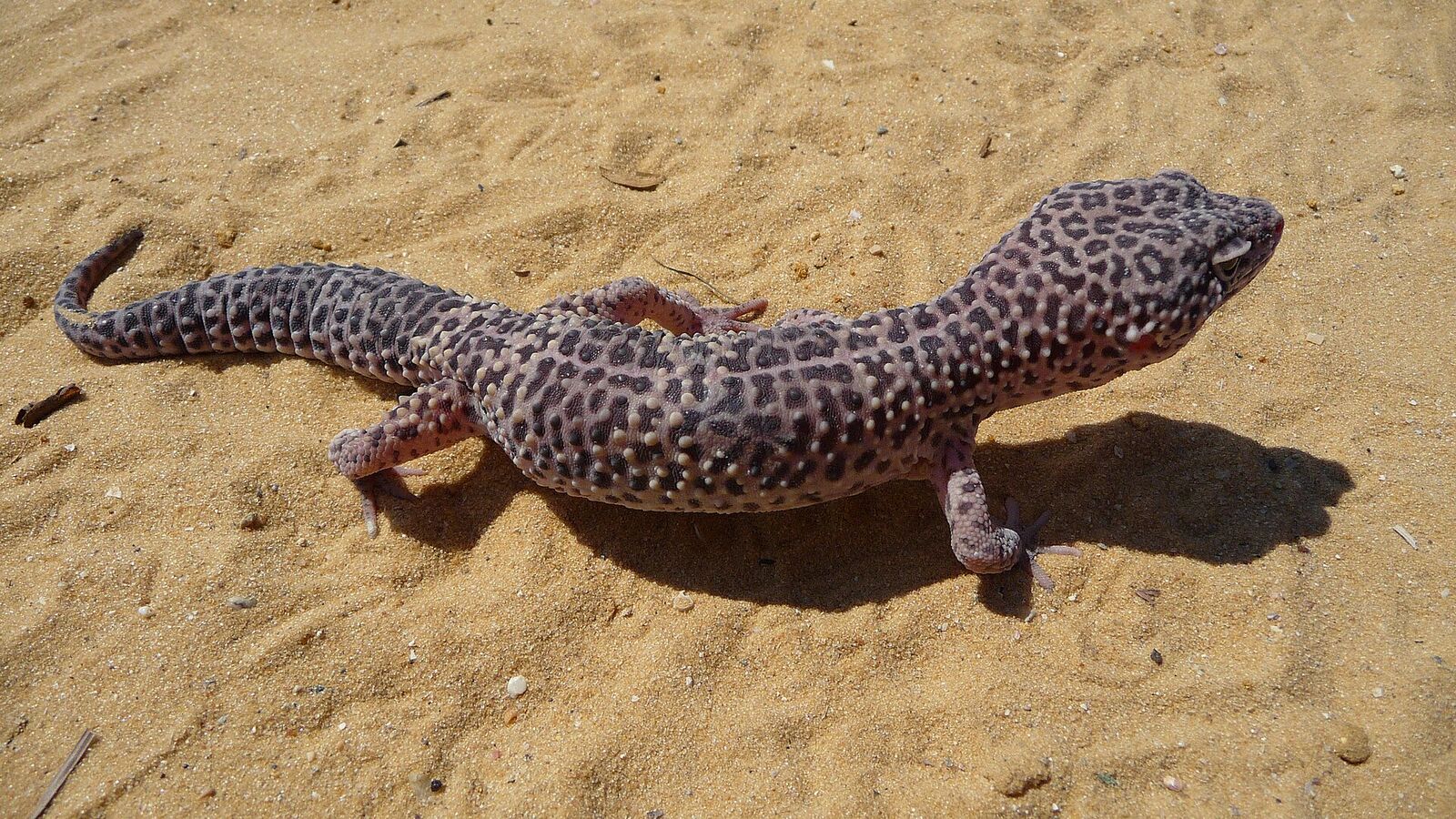
Leopard gecko
Eublepharis macularius
Maybe the best beginner lizard there is.
Pet trade

African fat-tailed gecko
Hemitheconyx caudicinctus
Pet trade

Bawangling Leopard gecko
Goniurosaurus bawanglingensis
Pet trade

Cat gecko
Aeluroscalabotes felinus
Pet trade

Central American banded gecko
Coleonyx mitratus
Pet trade
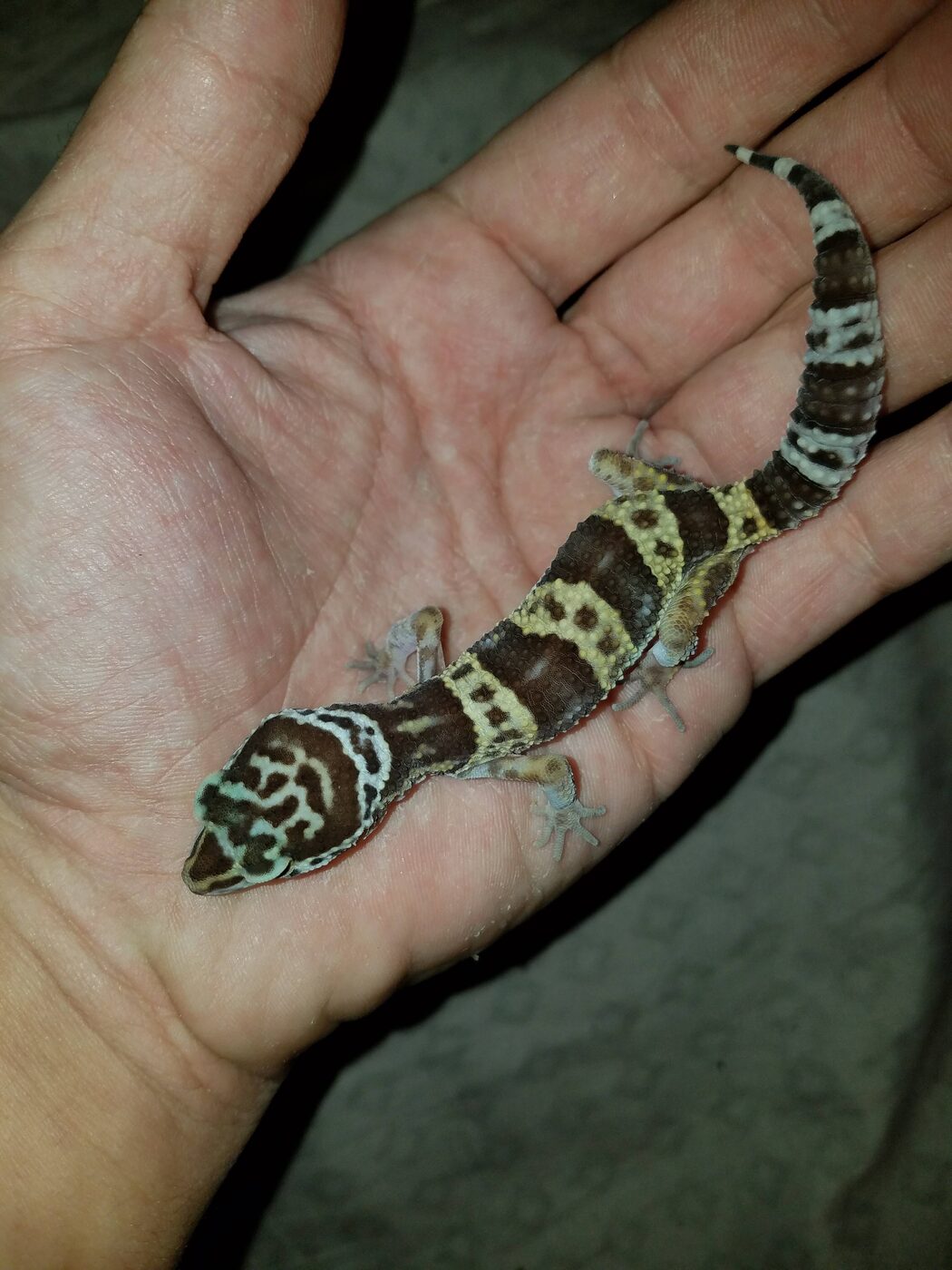
Chinese cave gecko
Goniurosaurus hainanensis
Pet trade