
Home / Reptiles / Lizards / Eublepharidae / Chinese cave gecko
Some federal rules applyChinese cave gecko
Goniurosaurus hainanensis
Reptiles › Lizards (Lacertilia) › Eublepharidae (Leopard, banded and cave geckos)
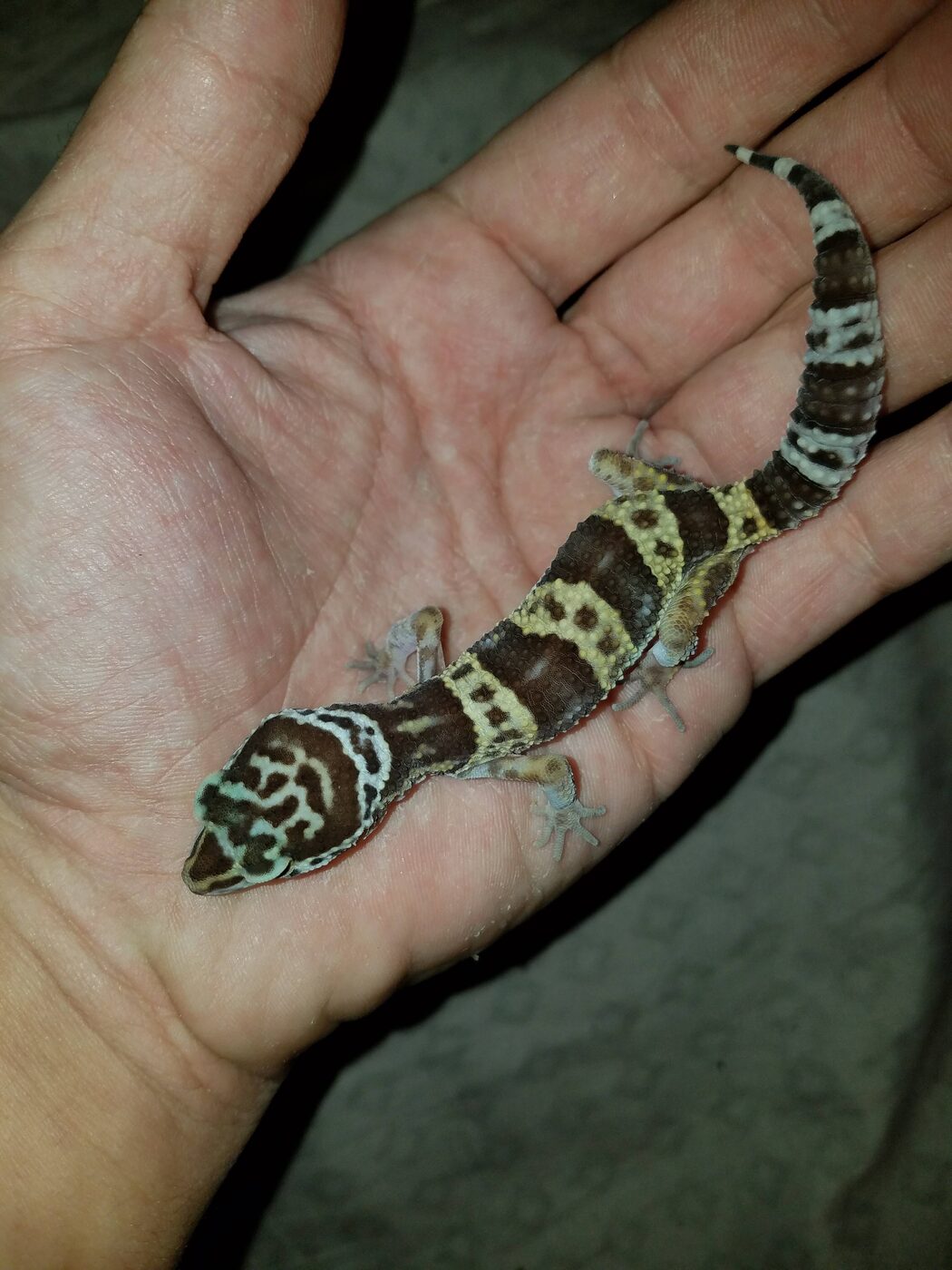
Goniurosaurus hainanensis is a nocturnal species of gecko endemic to the Hainan Island of China.
Care at a glance
Species-specific values
Values researched for this exact species. Air, surface and water temperatures are listed separately, and each source is kept as published rather than averaged.
| Minimum enclosure | Minimum enclosure: 24 inches long × 18 inches wide × 18 inches high. Source: reptifiles.com | |
| Basking surface temperature | 80–82 °F Source: reptifiles.com | |
| Cool side air temperature | 72–77 °F Source: reptifiles.com | |
| Night temperature | 68–72 °F Source: reptifiles.com | |
| Humidity | 50–90 % Source: reptifiles.com | |
| Uvb lighting | UVB is recommended; aim for UVI 1.0–2.0 in the basking area. Source: reptifiles.com | |
| Social housing | Females may be housed in groups; males should not be housed together. Source: reptifiles.com | |
| Substrate | Use moisture-retentive substrate; options include a tropical soil and coconut fiber mix. Source: reptifiles.com |
Understanding the animal
About this animal
About this animal
Its common names are the Chinese cave gecko, Hainan cave gecko or simply the Chinese leopard gecko. The exotic pet trade has been driving numbers of this rare species down since its categorization in the early 2000s, and could eventually lead to its extinction.
From Wikipedia: Goniurosaurus hainanensis, CC BY-SA 4.0 (excerpt)
In the wild
In the wild
Researched for this exact species, not its family. Wild conditions are context, not enclosure settings.12345
| Where it lives | Endemic to Hainan Island, China, in forest habitats including the Diaoluoshan reserve. Uses forest-floor cover, rock formations and sheltered areas near forest streams rather than living exclusively inside caves. |
| Ground it lives on | forest leaf litter and soil beneath rocks and fallen wood |
| Climate | Humid sheltered forest microhabitats; at Diaoluoshan the rainy season runs roughly late May-late October and the drier season November-early May. Verified wild microhabitat temperature and relative-humidity ranges were not found. |
| Active | Nocturnal, with crepuscular activity also reported. |
| Wild diet | Insectivorous. |
| Behavior to plan for | Uses concealed ground-level retreats and rocky surfaces, emerging after dark. The common name does not justify an enclosure consisting only of bare cave-like rock. |
Native climate (measured)
Native climate (measured)
| Warm-season highs | about 86°F (up to 89°F in the hottest sampled areas) |
| Cool-season lows | about 58°F (down to 56°F in the coldest sampled areas) |
| Average temperature | 72–75°F across sampled records |
| Relative humidity | 80–82% on average (driest month about 78%) |
| Rainfall | about 1649 mm a year |
Measured at 6 wild occurrence records sampled against WorldClim 2.1 climate data (1970–2000 averages). Air conditions in the range are ecological context, not enclosure settings: microhabitats such as burrows, leaf litter or basking rocks can be cooler, warmer or more humid.
Profile
Profile
Researched for this exact species. Sources are listed under In the wild above.
History
Goniurosaurus hainanensis is endemic to Hainan, and the Reptile Database records type material from the island, including specimens from approximately 750 m elevation. Its wild population has been affected by collection for the exotic-pet trade.
Data and studies
The numbers
The numbers
Each bar is what one source reports. Where several sources weigh in, the dashed gold band marks their average.
Typical adult weight
Average adult body mass in each database (FishBase gives the maximum recorded weight).
Adult snout-to-vent length
Body length without the tail.
Incubation
Basking spot
Species-specific values from keeper care sheets. Basking figures are often surface readings taken with an infrared thermometer, which run hotter than air.
Night temperature
Species-specific values from keeper care sheets. Basking figures are often surface readings taken with an infrared thermometer, which run hotter than air.
Humidity
Species-specific values from keeper care sheets. Basking figures are often surface readings taken with an infrared thermometer, which run hotter than air.
Care articles for this species
Care articles for this species
- Chinese Cave Gecko Care Sheet (ReptiFiles)
Written by keepers, breeders and vets Reptiles MagazineReptiFiles
Sources for this sheet
- Myhrvold et al. (2015). An amniote life-history database. Ecology 96: 3109 Peer-reviewed researchPeer-reviewed compilation of life-history data for over 21,000 birds, mammals and reptiles.
- ReptiFiles (care guides) Experienced keeper or breederWell-researched reptile care guides that cite herpetological literature and experienced keepers.
- Species+ (UNEP-WCMC and the CITES Secretariat) Zoo, university or veterinaryThe official database of species listed under CITES. UNEP (2026). The Species+ Website. Nairobi, Kenya. Compiled by UNEP-WCMC, Cambridge, UK. Available at: www.speciesplus.net. [Accessed 04/10/2026].
- USFWS International Affairs: CITES Zoo, university or veterinaryFederal agency that issues CITES permits.
- Clint's Reptiles (YouTube): Cave Gecko, The Best Pet Lizard? Expert educator & keeperClint Laidlaw, PhD in Biology Education and MS in Evolutionary Ecology; owner of Clint's Reptile Room and a longtime keeper. His "Best Pet?" series reviews each species' care in depth.
- The Reptile Database Peer-reviewed researchScientist-curated catalog of every reptile species, with taxonomy and literature.
- GBIF Backbone Taxonomy (Global Biodiversity Information Facility) (CC BY 4.0) Peer-reviewed researchInternational scientific taxonomy used here for classification. GBIF Secretariat (2023). GBIF Backbone Taxonomy. Checklist dataset https://doi.org/10.15468/39omei, accessed via GBIF.org.
- Wikipedia (species article) (CC BY-SA 4.0) Community referenceFree encyclopedia; useful overviews with their own citations. Short excerpts are quoted under CC BY-SA 4.0, each credited with a link to its article.
- iNaturalist (captive observations) Community referenceCommunity observation platform run by the California Academy of Sciences and National Geographic; observations marked captive show animals living in homes, zoos and aquariums.
More leopard, banded and cave geckos
Leopard gecko
Eublepharis macularius
Maybe the best beginner lizard there is.
Pet trade

African fat-tailed gecko
Hemitheconyx caudicinctus
Pet trade

Bawangling Leopard gecko
Goniurosaurus bawanglingensis
Pet trade

Cat gecko
Aeluroscalabotes felinus
Pet trade

Central American banded gecko
Coleonyx mitratus
Pet trade

Chinese leopard gecko
Goniurosaurus luii
Pet trade