
Home / Reptiles / Lizards / Eublepharidae / East Indian leopard gecko
No federal permit to keepEast Indian leopard gecko
Eublepharis hardwickii
Reptiles › Lizards (Lacertilia) › Eublepharidae (Leopard, banded and cave geckos)
The East Indian leopard gecko (Eublepharis hardwickii), also known commonly as Hardwicke's gecko, is a species of gecko, a lizard in the family Eublepharidae.
From Wikipedia: East Indian leopard gecko, CC BY-SA 4.0 (excerpt)

Care at a glance
Species-specific values
Values researched for this exact species. Air, surface and water temperatures are listed separately, and each source is kept as published rather than averaged.
| Minimum enclosure | Hatchlings and juveniles: 5–10 gallons; adults: 15–30 gallons. Source: allreptiles.ca | |
| Basking surface temperature | 88–95 °F Source: allreptiles.ca | |
| Cool side air temperature | 72–80 °F Source: allreptiles.ca | |
| Humidity | 40–60 % Source: allreptiles.ca | |
| Uvb lighting | UVB is optional and may provide benefits in small amounts. Source: allreptiles.ca | |
| Diet | Feed varied live insects, or meal replacement powders if the gecko learns to eat them. Source: allreptiles.ca | |
| Feeding frequency | Juveniles daily; adults every 2–3 days. Source: allreptiles.ca | |
| Substrate | A soil blend with mulch is recommended; avoid loose substrate under 3 months, use paper towels initially, then Repti Chips. Source: allreptiles.ca | |
| Warm side air temperature | 86 °F (30 °C) Source: herpetoculturenetwork.com | |
| Cool side air temperature | 77 °F (25 °C) Source: herpetoculturenetwork.com | |
| Humidity | Spray the enclosure in the morning and evening; water moss and plants to maintain humidity. Source: herpetoculturenetwork.com | |
| Uvb lighting | UVB is not essential, but benefits the enclosure's natural plants. Source: herpetoculturenetwork.com | |
| Diet | Strictly insectivorous; crickets are the main food source and should be dusted with calcium and vitamin D3. Source: herpetoculturenetwork.com | |
| Feeding frequency | During breeding, adult females are fed every second day; babies are fed about 4–5 times weekly. Source: herpetoculturenetwork.com | |
| Social housing | Groups can work with enough space and retreats, but individual housing may be safer for beginners. Source: herpetoculturenetwork.com | |
| Substrate | Provide a combination of coconut humus and earth, including dry leaves and plants; place moss over certain zones. Source: herpetoculturenetwork.com |
Understanding the animal
About this animal
About this animal
The species is endemic to India and Bangladesh.
From Wikipedia: East Indian leopard gecko, CC BY-SA 4.0 (excerpt)
In the wild
In the wild
| Overview | The East Indian leopard gecko (Eublepharis hardwickii), also known commonly as Hardwicke's gecko, is a species of gecko, a lizard in the family Eublepharidae. The species is endemic to India and Bangladesh. — From Wikipedia: East Indian leopard gecko, CC BY-SA 4.0 (excerpt) |
| Where it lives | Günther mentions four specimens of E. hardwickii: one from Chittagong, two from Russelconda, Madras Presidency, and a fourth from the Anamallai Mountains, collected by Captain R. H. Beddome. W. Elliot, Esq., has also found it in the public bath at Waltair, a suburb of Vizagapatam. — From Wikipedia: East Indian leopard gecko, CC BY-SA 4.0 (excerpt) |
| Biology | Singh (1984) writes that the species E. hardwickii was common (in the 1970s) at Tikerpada, a village at 600m elevation on the banks of the Mahanadi river in the Satkoshia Gorge Sanctuary of Odisha. In the night, during summer and rains, these may be found on the forest roads or on open areas, and in the day several individuals were found underneath rocks and stones. — From Wikipedia: East Indian leopard gecko, CC BY-SA 4.0 (excerpt) |
Read about this species in the wild at The Reptile Database.
Profile
Profile
Researched for this exact species. Sources are listed under In the wild above.
Sources for this sheet
- Myhrvold et al. (2015). An amniote life-history database. Ecology 96: 3109 Peer-reviewed researchPeer-reviewed compilation of life-history data for over 21,000 birds, mammals and reptiles.
- The Reptile Database Peer-reviewed researchScientist-curated catalog of every reptile species, with taxonomy and literature.
- GBIF Backbone Taxonomy (Global Biodiversity Information Facility) (CC BY 4.0) Peer-reviewed researchInternational scientific taxonomy used here for classification. GBIF Secretariat (2023). GBIF Backbone Taxonomy. Checklist dataset https://doi.org/10.15468/39omei, accessed via GBIF.org.
- Wikipedia (species article) (CC BY-SA 4.0) Community referenceFree encyclopedia; useful overviews with their own citations. Short excerpts are quoted under CC BY-SA 4.0, each credited with a link to its article.
More leopard, banded and cave geckos
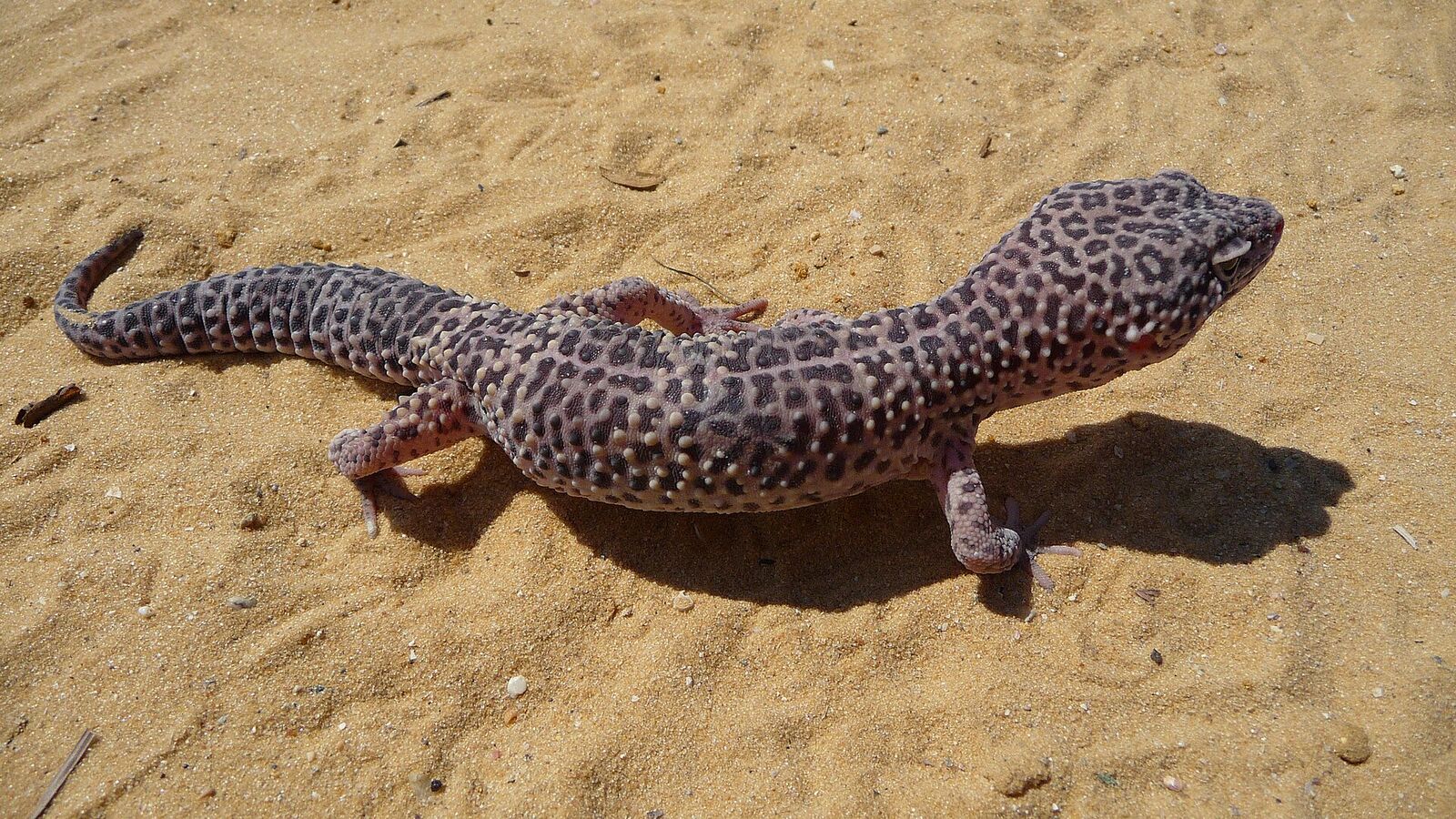
Leopard gecko
Eublepharis macularius
Maybe the best beginner lizard there is.
Pet trade

African fat-tailed gecko
Hemitheconyx caudicinctus
Pet trade

Bawangling Leopard gecko
Goniurosaurus bawanglingensis
Pet trade

Cat gecko
Aeluroscalabotes felinus
Pet trade

Central American banded gecko
Coleonyx mitratus
Pet trade
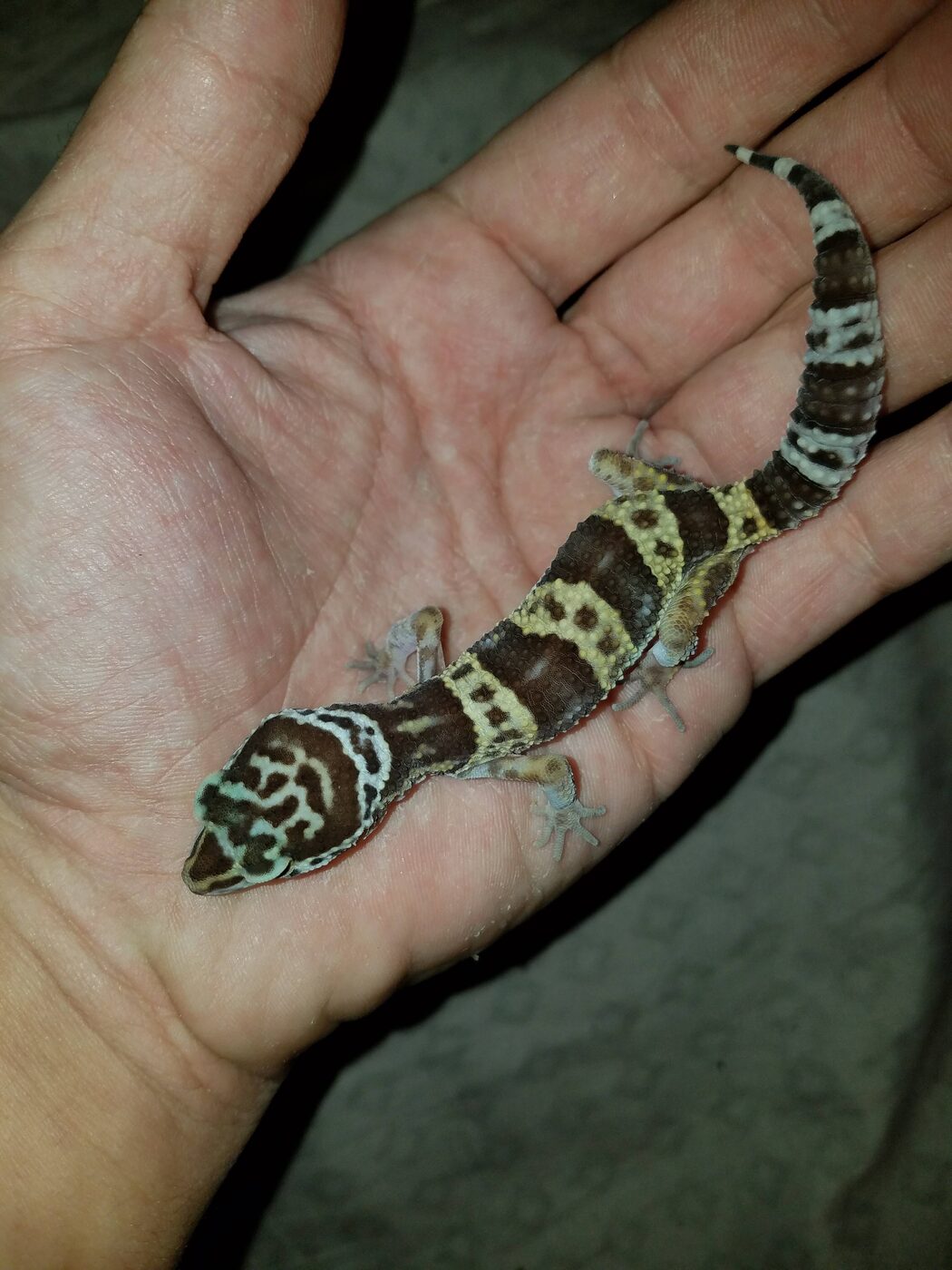
Chinese cave gecko
Goniurosaurus hainanensis
Pet trade