
Home / Reptiles / Snakes / Pythonidae / Centralian carpet python (Bredl's python)
Some federal rules applyCentralian carpet python (Bredl's python)
Morelia bredli
Reptiles › Snakes (Serpentes) › Pythonidae (Pythons)
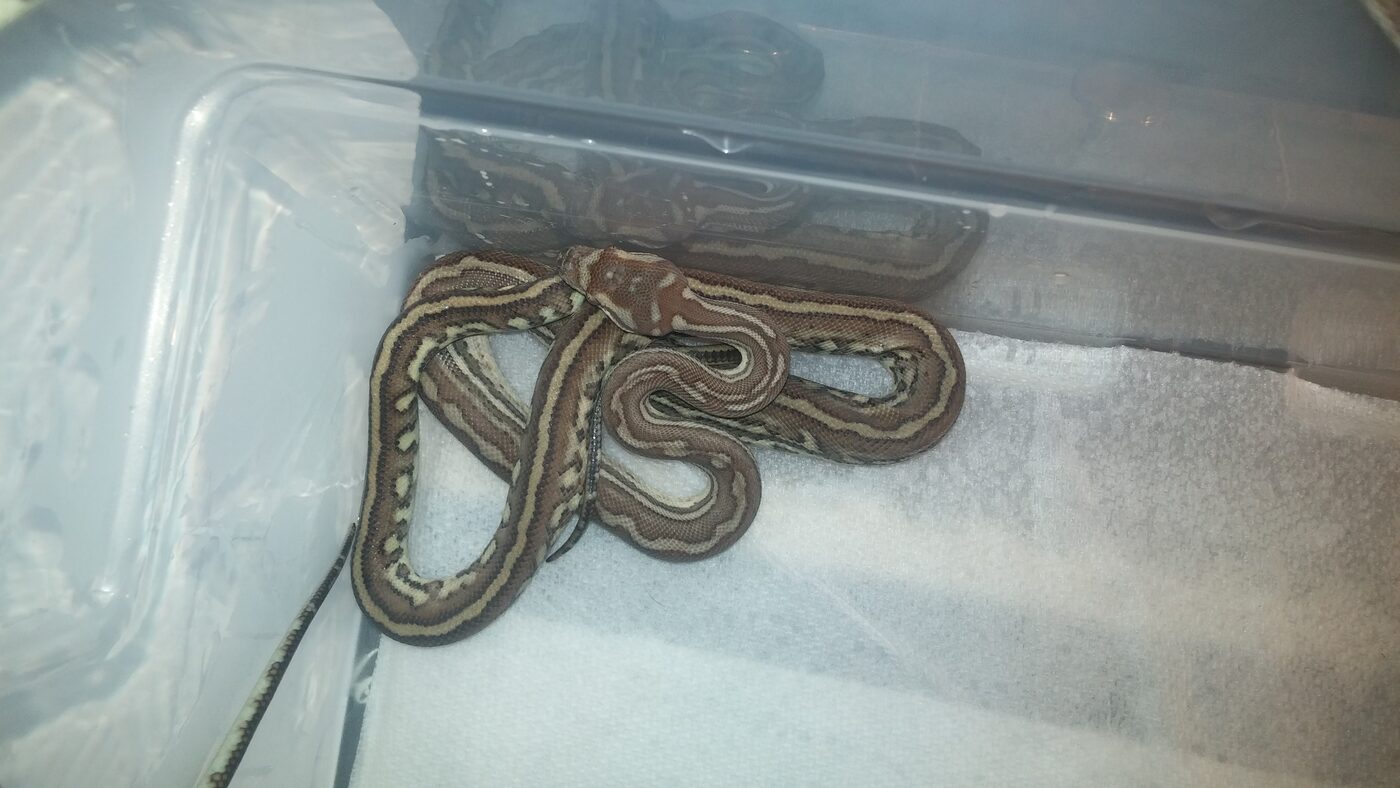
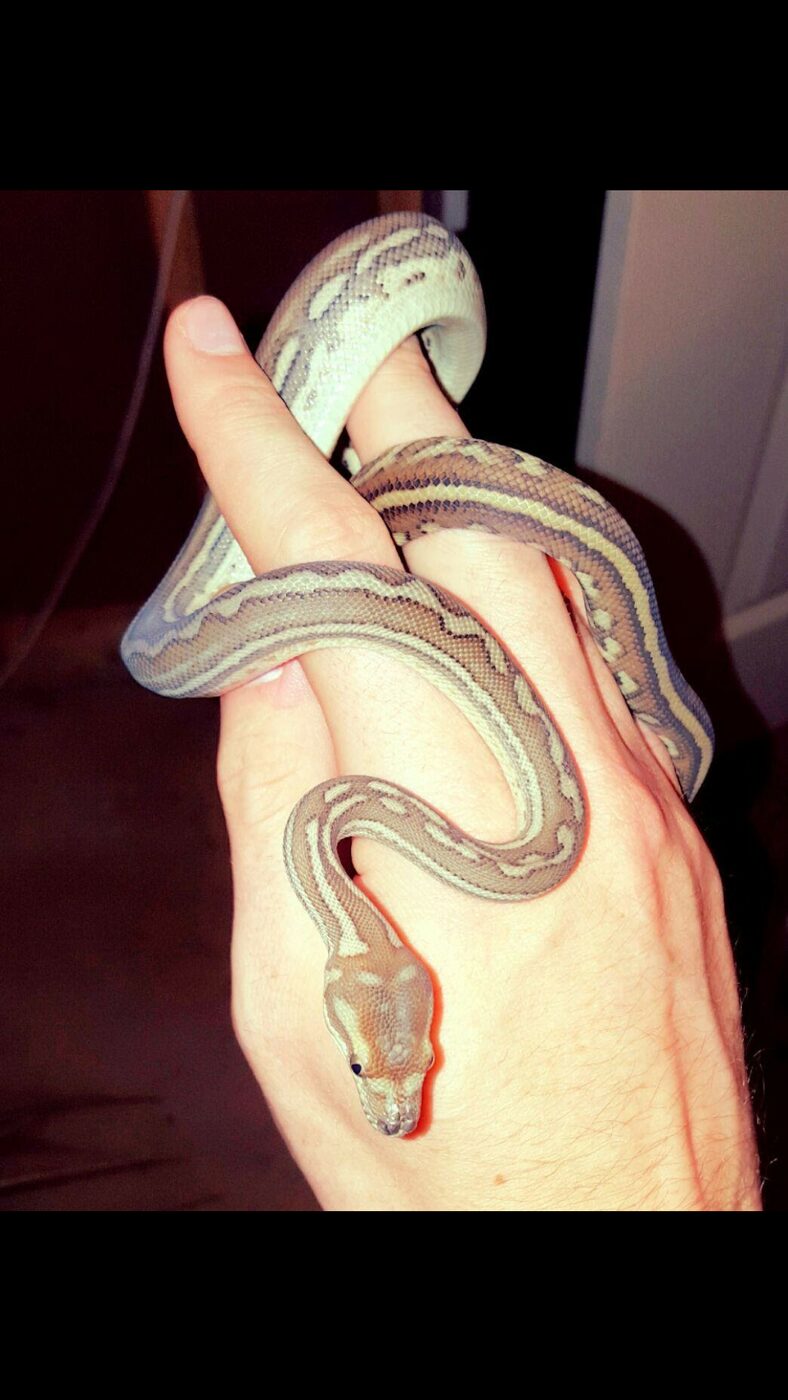
Morelia bredli is a species of non-venomous snake in the family Pythonidae.
Care at a glance
Setup
One answer per setting. Where sources differ, the smaller figure is the minimum and the larger is what we recommend.
| Adult enclosure | 7’L x 3’W x 3’H They are active snakes needing height and floor space. | thebiodude.com |
| Hot spot | At least 98°F Preferably 104°F Regulate body temperature. | thebiodude.com |
| Cool side | At least 82°F Preferably 84°F Promote rest and energy conservation. | thebiodude.com |
| Night temperature | 73°F Maintain health. | thebiodude.com |
| Humidity | 50% They are a semi-arid species. | thebiodude.com |
| Substrate | 4” Cushion snake and maintain humidity. | reptifiles.com |
Care guide
By age
| Juvenile | Feeding: 10-14 days | reptifiles.com |
| Adult | Feeding: 3-4 weeks | reptifiles.com |
- Cloudy eyes: Preparing to shed thebiodude.com
Understanding the animal
About this animal
About this animal
The species is endemic to Australia. No subspecies are recognized. Its common names include Bredl's python, the Centralian python, the Centralian carpet python, the central Australian carpet python, Bredl's carpet python, the central Australian Bredl's carpet python, and the central Bredl's carpet python.
From Wikipedia: Morelia bredli, CC BY-SA 4.0 (excerpt)
In the wild
In the wild
Researched for this exact species, not its family. Wild conditions are context, not enclosure settings.1234
| Where it lives | Found in dry desert, savanna, woodland forest, freshwater wetlands, rocky gorges, and shrubland, preferring foothills, ridges, and rocky outcroppings. |
| Active | These snakes are cathemeral, meaning they are active during both day and night. |
| Wild diet | They are carnivores that hunt prey arboreally and terrestrially. |
| Behavior to plan for | They are semi-arboreal and use their muscular bodies to climb and wrap around objects for stability. |
Profile
Profile
Researched for this exact species. Sources are listed under In the wild above.
Keeper tips
- Can be engaging, but may be nippy as babies and aggressive if they lack human interaction.
- Non-venomous, but they are large constrictors that may bite if they smell food or feel defensive.
Remarkable facts
- With proper care, they can live 20 to 30 years or longer.
- Typically 6.5 to 7 feet, though individuals can reach 8 feet or more.
More photos
Data and studies
Veterinary & husbandry research
Veterinary & husbandry research
- Metagenomics Bioinformatic Pipeline. et al., Methods in molecular biology (Clifton, N.J.) 2022
- Metales pesados en lápices labiales de uso en México. et al., Salud publica de Mexico 2025
- Prevalencia de tuberculosis latente en pacientes con enfermedad neurológica autoinmune y factores de riesgo. et al., Salud publica de Mexico 2025
- Nodular (keloidal) scleroderma. et al., Reumatologia clinica 2023
Peer-reviewed papers that mention this species alongside captivity, zoos, veterinary care or aquaculture. Some cover several species or mention it only in passing, so check the abstract. PubMed
Sources for this sheet
- Species+ (UNEP-WCMC and the CITES Secretariat) Zoo, university or veterinaryThe official database of species listed under CITES. UNEP (2026). The Species+ Website. Nairobi, Kenya. Compiled by UNEP-WCMC, Cambridge, UK. Available at: www.speciesplus.net. [Accessed 04/10/2026].
- USFWS International Affairs: CITES Zoo, university or veterinaryFederal agency that issues CITES permits.
- Bredls python caresheet and bioactive guide (thebiodude.com) Community referenceWeb page.
- Bredls python care sheet (reptifiles.com) Experienced keeper or breederKeeper care guide.
- Wikipedia: Morelia bredli (CC BY-SA 4.0) Community referenceEncyclopedia article.
- The Reptile Database: Morelia bredli Zoo, university or veterinaryTaxonomy, distribution and literature for every reptile species.
- Clint's Reptiles (YouTube): Carpet Python, The Best Pet Snake? Expert educator & keeperClint Laidlaw, PhD in Biology Education and MS in Evolutionary Ecology; owner of Clint's Reptile Room and a longtime keeper. His "Best Pet?" series reviews each species' care in depth.
- The Reptile Database Peer-reviewed researchScientist-curated catalog of every reptile species, with taxonomy and literature.
- GBIF Backbone Taxonomy (Global Biodiversity Information Facility) (CC BY 4.0) Peer-reviewed researchInternational scientific taxonomy used here for classification. GBIF Secretariat (2023). GBIF Backbone Taxonomy. Checklist dataset https://doi.org/10.15468/39omei, accessed via GBIF.org.
- Wikipedia (species article) (CC BY-SA 4.0) Community referenceFree encyclopedia; useful overviews with their own citations. Short excerpts are quoted under CC BY-SA 4.0, each credited with a link to its article.
- PubMed (U.S. National Library of Medicine) Peer-reviewed researchIndex of peer-reviewed veterinary, zoo and husbandry research.
More pythons
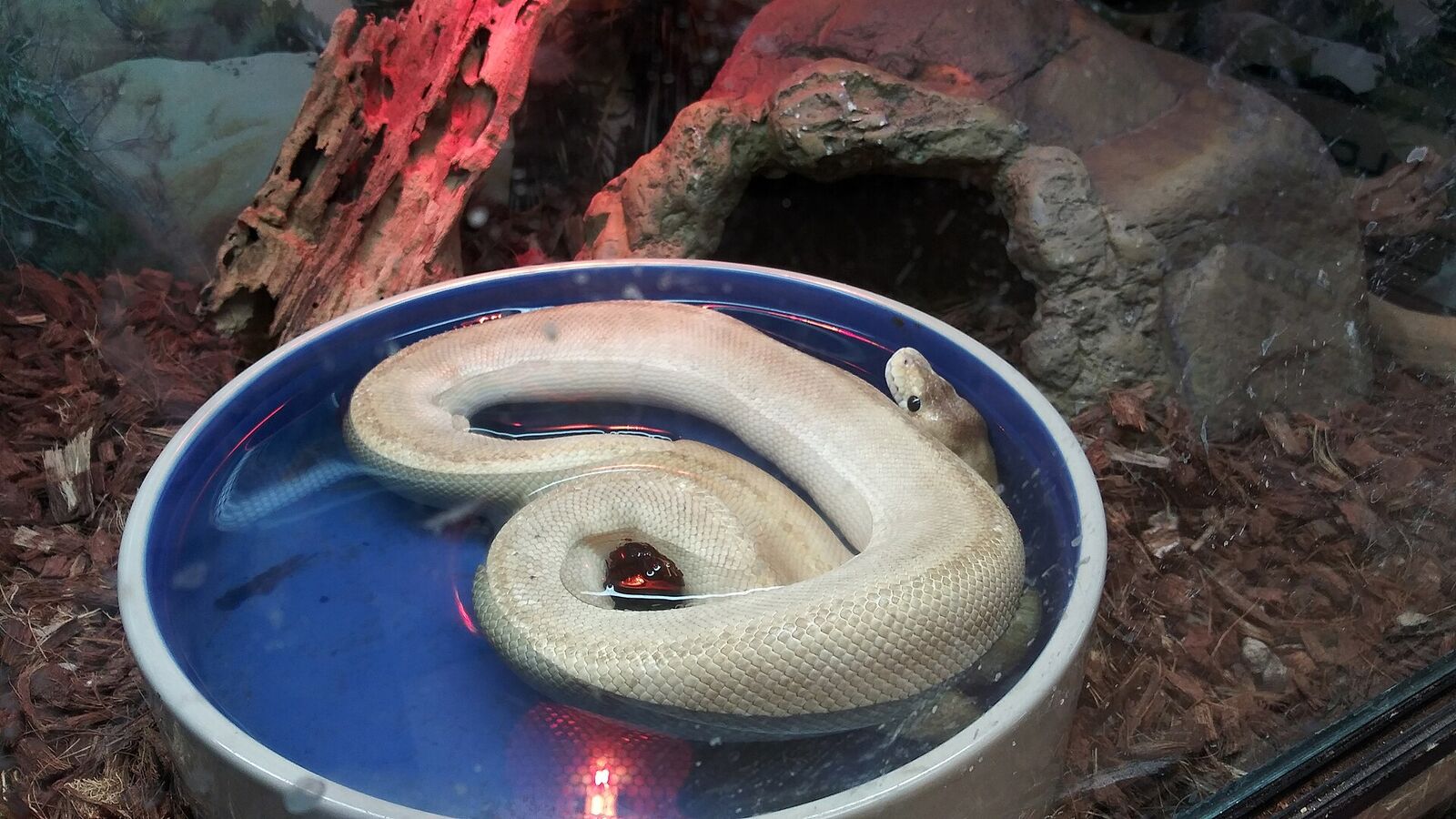
Ball python
Python regius
The calm, curl-up classic of pet snakes.
Pet trade
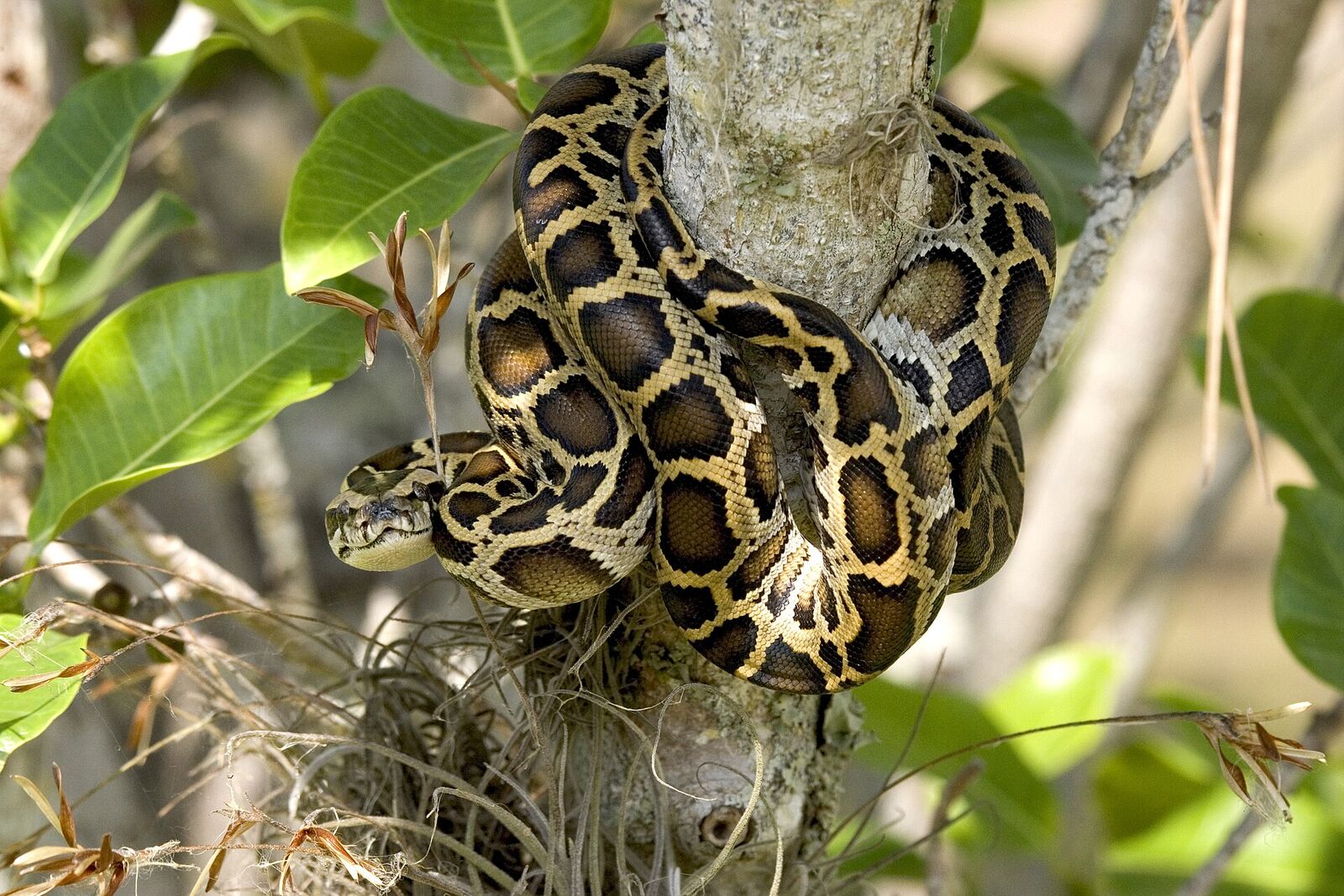
Burmese python
Python bivittatus
A heavy-bodied giant with a famously calm reputation.
Pet trade
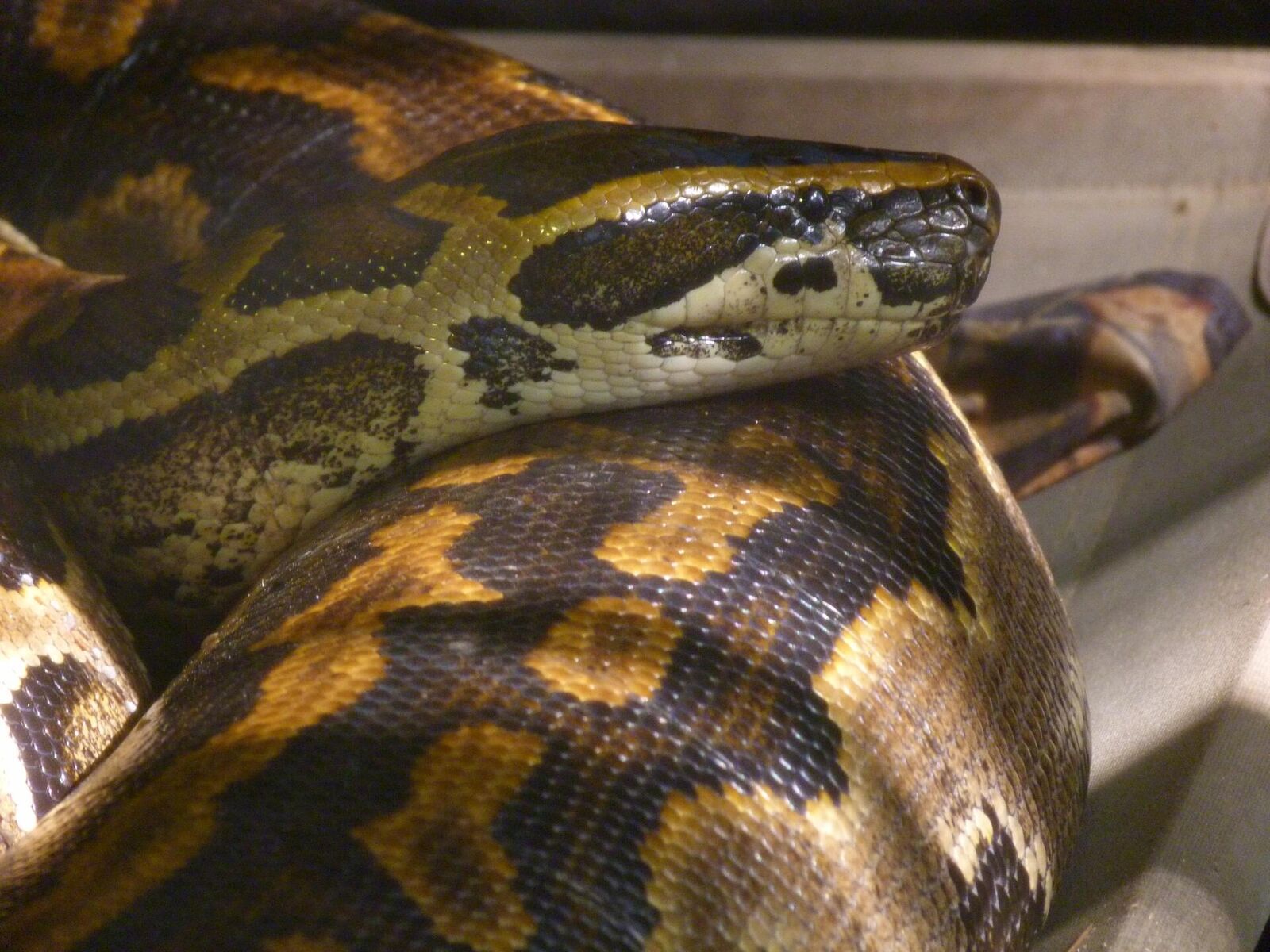
Central African rock python
Python sebae
Africa's largest snake, powerful and spirited.
Pet trade
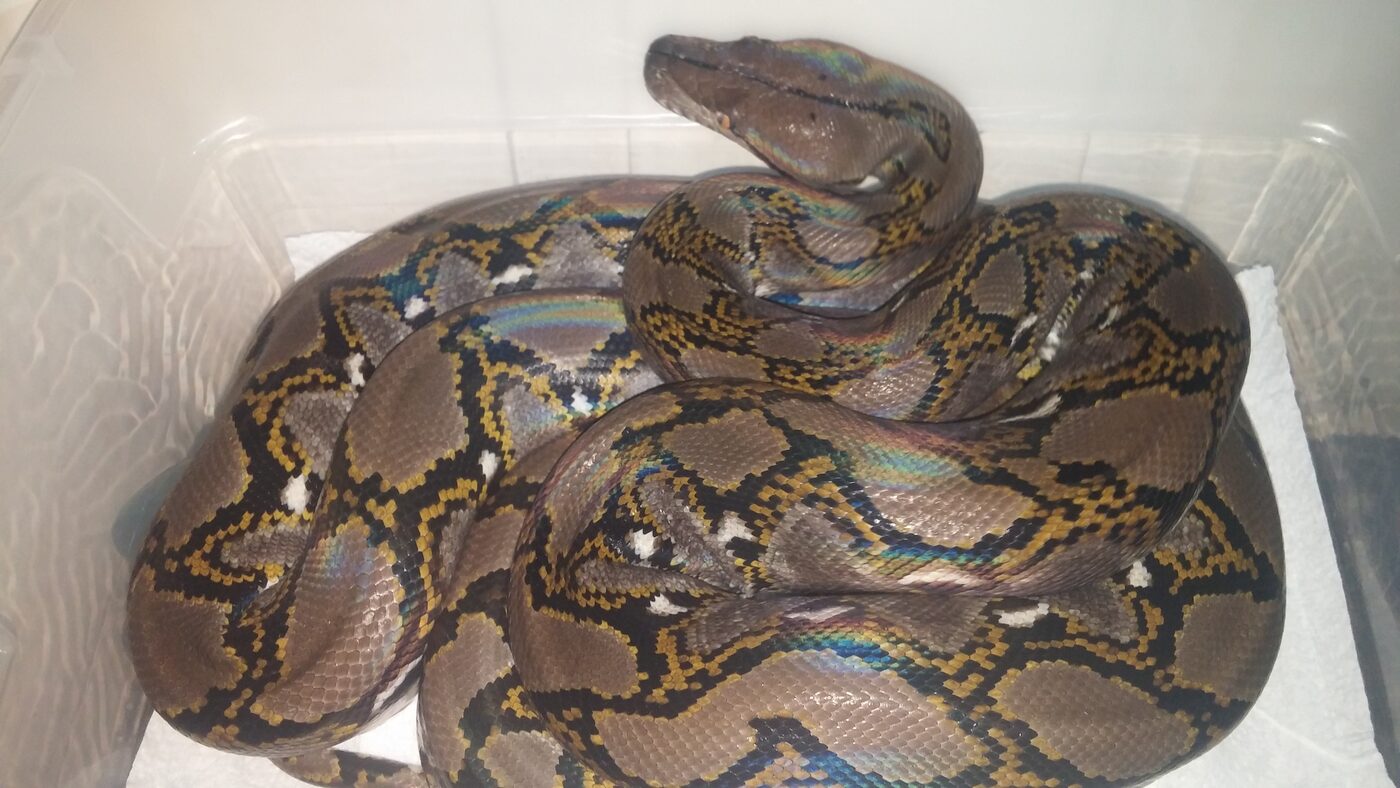
Reticulated python
Malayopython reticulatus
The world's longest snake, and a brilliant, active giant.
Pet trade

Amethystine python
Simalia amethistina
Pet trade

Angolan python
Python anchietae
Pet trade