
Home / Reptiles / Turtles and tortoises / Chaco tortoise
Some federal rules applyChaco tortoise
Chelonoidis chilensis
Reptiles › Turtles and tortoises (Testudines) › Testudinidae (Tortoises)
The Chaco tortoise (Chelonoidis chilensis), also known commonly as the Argentine tortoise, the Patagonian tortoise, or the southern wood tortoise, is a species of tortoise in the family Testudinidae.
From Wikipedia: Chaco tortoise, CC BY-SA 4.0 (excerpt)

Care at a glance
Species-specific values
Values researched for this exact species. Air, surface and water temperatures are listed separately, and each source is kept as published rather than averaged.
| Minimum enclosure | An outdoor enclosure during summer is recommended. Source: anapsid.org | |
| Warm side air temperature | 77 °F (25 °C) Source: anapsid.org | |
| Diet | The diet includes grasses, greens, salads, fruits, vegetables, and hay. Source: anapsid.org | |
| Feeding frequency | Winter activity after morning misting led the tortoises to seek their morning meal. Source: anapsid.org | |
| Substrate | The winter quarters used a mixture of potting soil and mulch. Source: anapsid.org | |
| Seasonal cooling | The author recommends against hibernating these tortoises. Source: anapsid.org |
Understanding the animal
About this animal
About this animal
The species is endemic to South America.
From Wikipedia: Chaco tortoise, CC BY-SA 4.0 (excerpt)
In the wild
In the wild
| Overview | The Chaco tortoise (Chelonoidis chilensis), also known commonly as the Argentine tortoise, the Patagonian tortoise, or the southern wood tortoise, is a species of tortoise in the family Testudinidae. The species is endemic to South America. — From Wikipedia: Chaco tortoise, CC BY-SA 4.0 (excerpt) |
| Where it lives | The Chaco tortoise is mainly found in Argentina, but also in Bolivia and Paraguay, mainly within the Chaco and Monte ecoregions. Its distribution is mainly limited by temperature-related variables, and precipitation in the reproductive period. — From Wikipedia: Chaco tortoise, CC BY-SA 4.0 (excerpt) |
| Wild diet | Like all tortoise species, the Chaco tortoise is primarily herbivorous, consuming grasses, shrubs, fruits, and cactus pads. — From Wikipedia: Chaco tortoise, CC BY-SA 4.0 (excerpt) |
| Appearance and size | The carapace of C. chilensis can measure up to 43.3 cm (but usually less than 25 cm) in a straight line, and may be either totally yellowish brown or have dark-brown to black rings surrounding a tan center on each scute. Specimens found farther south tend to be much larger than those found in farther north populations. — From Wikipedia: Chaco tortoise, CC BY-SA 4.0 (excerpt) |
Read about this species in the wild at The Reptile Database.
Profile
Profile
Researched for this exact species. Sources are listed under In the wild above.
History
Named after the original, but wrong type locality.
Data and studies
The numbers
The numbers
Each bar is what one source reports. Where several sources weigh in, the dashed gold band marks their average.
Maximum recorded lifespan
Longest recorded lifespan reported by each database; typical lifespans are usually shorter.
Typical adult weight
Average adult body mass in each database (FishBase gives the maximum recorded weight).
Incubation
Sources for this sheet
- Myhrvold et al. (2015). An amniote life-history database. Ecology 96: 3109 Peer-reviewed researchPeer-reviewed compilation of life-history data for over 21,000 birds, mammals and reptiles.
- Species+ (UNEP-WCMC and the CITES Secretariat) Zoo, university or veterinaryThe official database of species listed under CITES. UNEP (2026). The Species+ Website. Nairobi, Kenya. Compiled by UNEP-WCMC, Cambridge, UK. Available at: www.speciesplus.net. [Accessed 04/10/2026].
- USFWS International Affairs: CITES Zoo, university or veterinaryFederal agency that issues CITES permits.
- 21 CFR 1240.62: Turtles under 4 inches (FDA) Zoo, university or veterinaryFederal ban on selling small turtles.
- The Reptile Database Peer-reviewed researchScientist-curated catalog of every reptile species, with taxonomy and literature.
- GBIF Backbone Taxonomy (Global Biodiversity Information Facility) (CC BY 4.0) Peer-reviewed researchInternational scientific taxonomy used here for classification. GBIF Secretariat (2023). GBIF Backbone Taxonomy. Checklist dataset https://doi.org/10.15468/39omei, accessed via GBIF.org.
- Wikipedia (species article) (CC BY-SA 4.0) Community referenceFree encyclopedia; useful overviews with their own citations. Short excerpts are quoted under CC BY-SA 4.0, each credited with a link to its article.
- iNaturalist (captive observations) Community referenceCommunity observation platform run by the California Academy of Sciences and National Geographic; observations marked captive show animals living in homes, zoos and aquariums.
More tortoises
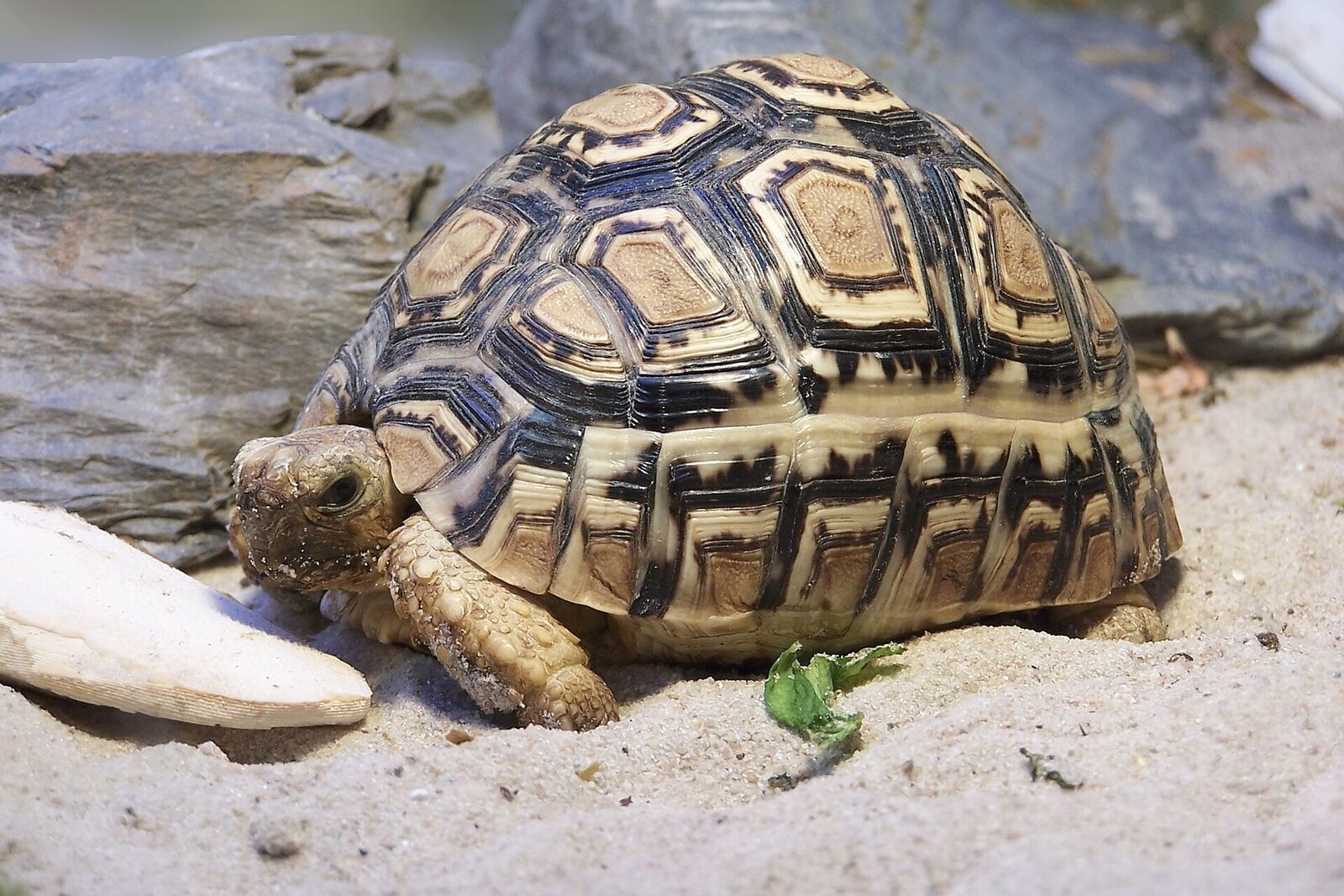
Leopard tortoise
Stigmochelys pardalis
A spotted savanna grazer.
Pet trade
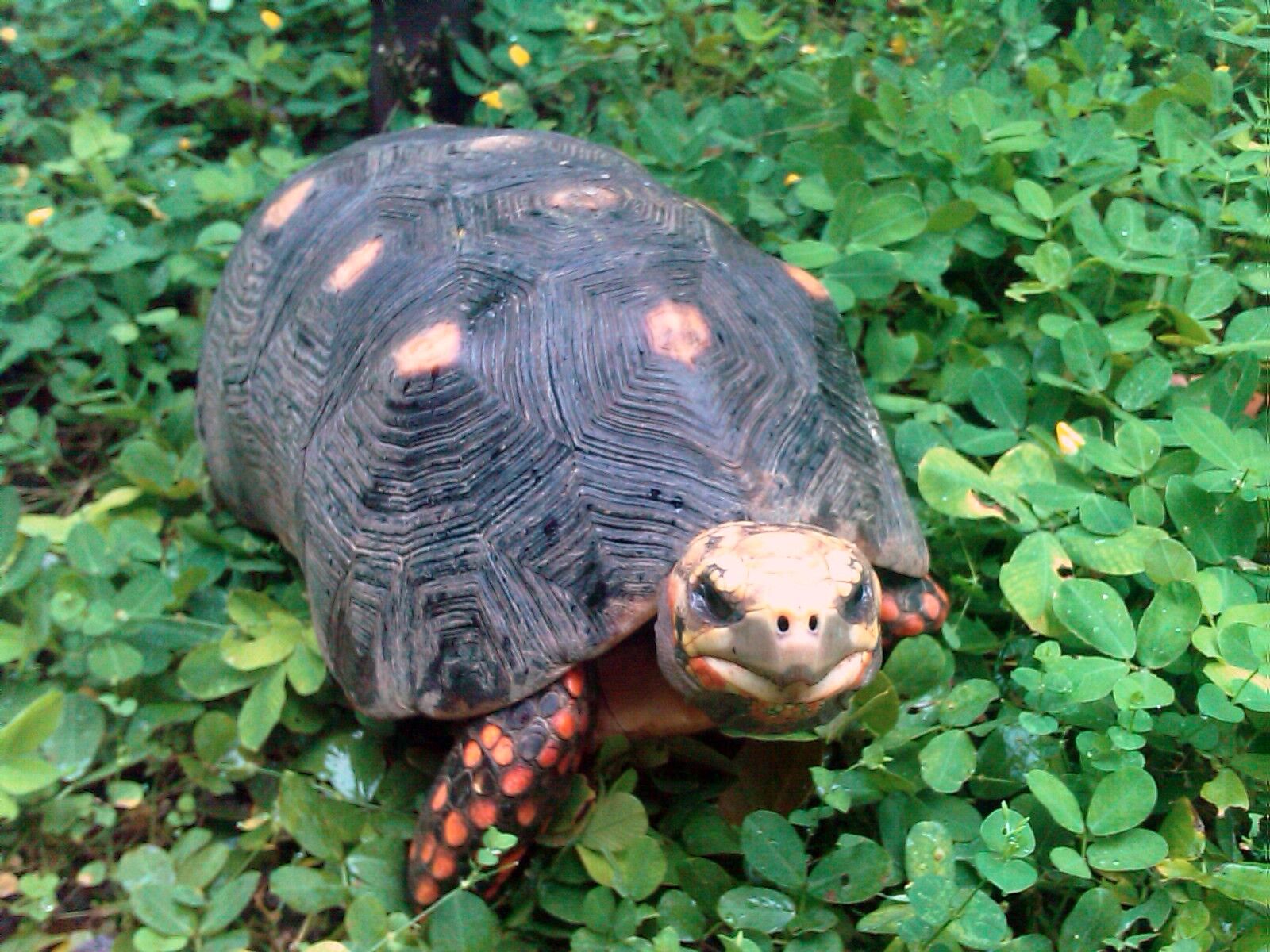
Red-footed tortoise
Chelonoidis carbonarius
A humid-forest tortoise that eats fruit.
Pet trade
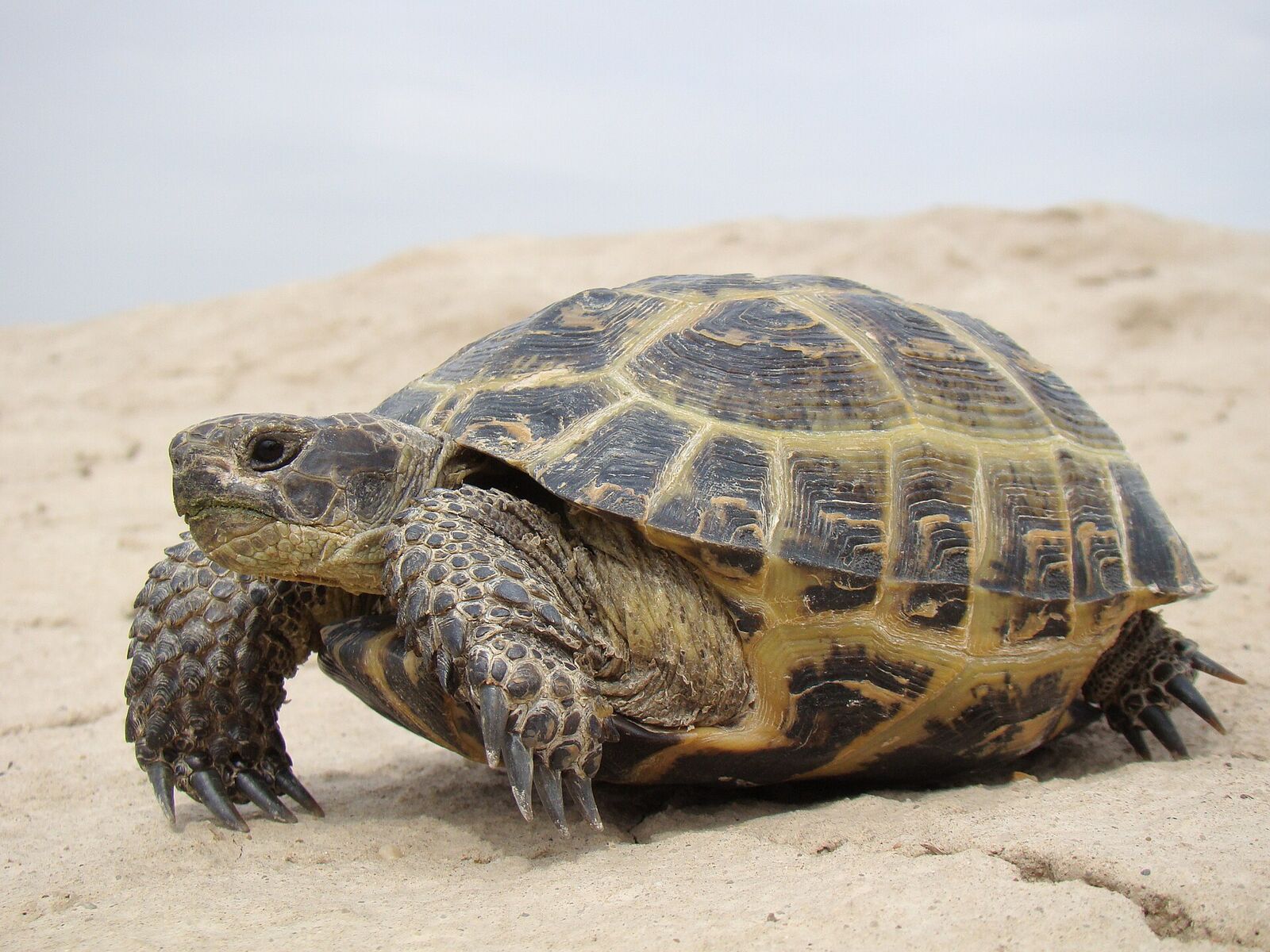
Russian tortoise
Testudo horsfieldii
Small, tough and a great first tortoise.
Pet trade
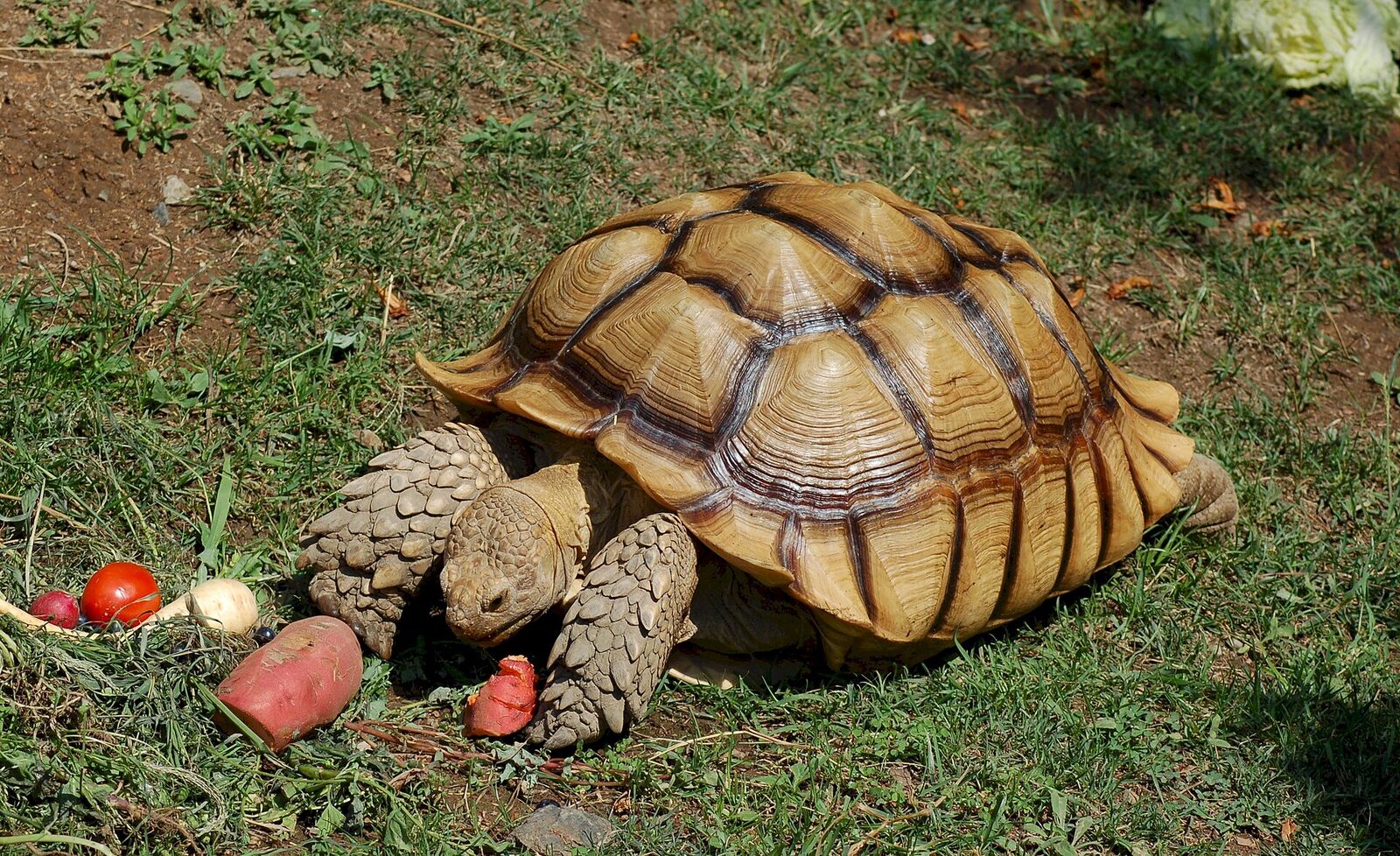
Sulcata (African spurred) tortoise
Centrochelys sulcata
The giant backyard tortoise, best adopted.
Pet trade

Aldabra giant tortoise
Aldabrachelys gigantea
Pet trade

Angulate tortoise
Chersina angulata
Pet trade