
Home / Reptiles / Lizards / Chamaeleonidae / Common chameleon
Some federal rules applyCommon chameleon
Chamaeleo chamaeleon
Reptiles › Lizards (Lacertilia) › Chamaeleonidae (Chameleons)
The common chameleon or Mediterranean chameleon (Chamaeleo chamaeleon) is a species of chameleon native to the Mediterranean Basin and parts surrounding the Red Sea.
From Wikipedia: Common chameleon, CC BY-SA 4.0 (excerpt)

Care at a glance
Species-specific values
Values researched for this exact species. Air, surface and water temperatures are listed separately, and each source is kept as published rather than averaged.
| Warm side air temperature | 78–88 °F Source: adcham.com | |
| Seasonal cooling | 50–59 °F Source: adcham.com | |
| Humidity | Humidity is not critical; they tolerate dry and humid conditions, with hydration provided by dripping and misting. Source: adcham.com | |
| Drinking (misting) | Gently mist their faces with warm water to encourage drinking. Source: adcham.com | |
| Uvb lighting | Provide full spectrum lighting, including adequate UVB; a basking light may be included. Source: adcham.com | |
| Diet | Feed insects dusted regularly with vitamins, minerals, calcium, and D3. Source: adcham.com | |
| Feeding frequency | Feed hatchlings daily and adults three times weekly. Source: adcham.com | |
| Social housing | House separately; pairs may be kept if close, prolonged observation shows no stress. Source: adcham.com | |
| Substrate | Do not use substrate in the cage because it can cause impaction, infection, or toxicity problems. Source: adcham.com |
Warnings
Understanding the animal
About this animal
About this animal
It is the only extant species of Chamaeleonidae with a range that naturally extends into Europe.
From Wikipedia: Common chameleon, CC BY-SA 4.0 (excerpt)
In the wild
In the wild
| Overview | The common chameleon or Mediterranean chameleon (Chamaeleo chamaeleon) is a species of chameleon native to the Mediterranean Basin and parts surrounding the Red Sea. It is the only extant species of Chamaeleonidae with a range that naturally extends into Europe. — From Wikipedia: Common chameleon, CC BY-SA 4.0 (excerpt) |
| Wild diet | The common chameleon is insectivorous, capturing insects by stealth and the rapid extension of its long tongue, which has a terminal pad which grasps and adheres to the prey. Common prey items include flies (Diptera), hymenopterans (Hymenoptera), true bugs (Heteroptera), crickets and grasshoppers (Orthoptera), and beetles (Coleoptera). Adults are known to eat young chameleons and have been observed to eat fruit. — From Wikipedia: Common chameleon, CC BY-SA 4.0 (excerpt) |
| Behavior | The common chameleon like others of its family enjoys an arboreal habitat, scrambling about in trees and bushes with feet that have five toes, in groups of two or three on each side for grasping branches. It also uses its prehensile tail to maintain balance and stability. Movement is usually leisurely, often with a slight swaying motion to avoid detection by predators. — From Wikipedia: Common chameleon, CC BY-SA 4.0 (excerpt) |
| Conservation | While the species is common throughout most of its range, it is threatened locally by habitat loss, principally through urban development, the intensification of agriculture, predation by domestic animals(especiallly cats), illegal collection for the pet trade, and high roadkill mortality. Wildfires constitute a threat in Turkey. — From Wikipedia: Common chameleon, CC BY-SA 4.0 (excerpt) |
Read about this species in the wild at Animal Diversity Web · The Reptile Database.
Native climate (measured)
Native climate (measured)
| Warm-season highs | about 88°F (up to 91°F in the hottest sampled areas) |
| Cool-season lows | about 45°F (down to 40°F in the coldest sampled areas) |
| Average temperature | 63–67°F across sampled records |
| Relative humidity | 64–72% on average (driest month about 60%) |
| Rainfall | about 535 mm a year, with strong wet and dry seasons |
Measured at 87 wild occurrence records sampled against WorldClim 2.1 climate data (1970–2000 averages). Air conditions in the range are ecological context, not enclosure settings: microhabitats such as burrows, leaf litter or basking rocks can be cooler, warmer or more humid.
Profile
Profile
Researched for this exact species. Sources are listed under In the wild above.
Data and studies
The numbers
The numbers
Each bar is what one source reports. Where several sources weigh in, the dashed gold band marks their average.
Maximum recorded lifespan
Longest recorded lifespan reported by each database; typical lifespans are usually shorter. The AnAge record comes from an animal in human care.
Typical adult weight
Average adult body mass in each database (FishBase gives the maximum recorded weight).
Adult snout-to-vent length
Body length without the tail.
Incubation
Sources for this sheet
- AnAge: The Animal Ageing and Longevity Database (Human Ageing Genomic Resources) (CC BY 3.0) Peer-reviewed researchCurated, referenced longevity and life-history records for thousands of species; maximum lifespans are often from zoo animals.
- Myhrvold et al. (2015). An amniote life-history database. Ecology 96: 3109 Peer-reviewed researchPeer-reviewed compilation of life-history data for over 21,000 birds, mammals and reptiles.
- Species+ (UNEP-WCMC and the CITES Secretariat) Zoo, university or veterinaryThe official database of species listed under CITES. UNEP (2026). The Species+ Website. Nairobi, Kenya. Compiled by UNEP-WCMC, Cambridge, UK. Available at: www.speciesplus.net. [Accessed 04/10/2026].
- USFWS International Affairs: CITES Zoo, university or veterinaryFederal agency that issues CITES permits.
- The Reptile Database Peer-reviewed researchScientist-curated catalog of every reptile species, with taxonomy and literature.
- Wikipedia (species article) (CC BY-SA 4.0) Community referenceFree encyclopedia; useful overviews with their own citations. Short excerpts are quoted under CC BY-SA 4.0, each credited with a link to its article.
- iNaturalist (captive observations) Community referenceCommunity observation platform run by the California Academy of Sciences and National Geographic; observations marked captive show animals living in homes, zoos and aquariums.
More chameleons
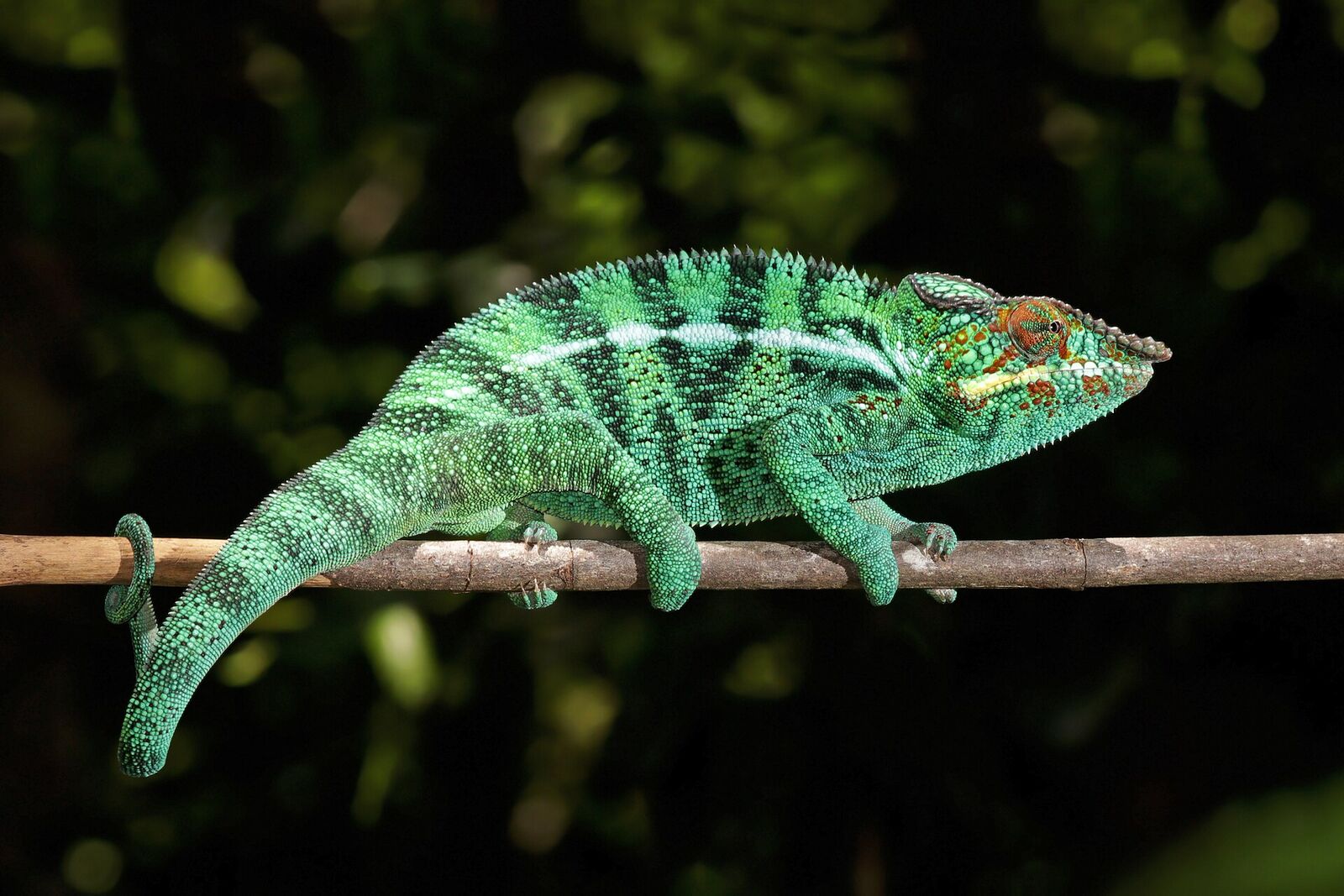
Panther chameleon
Furcifer pardalis
The most colorful chameleon of all.
Pet trade
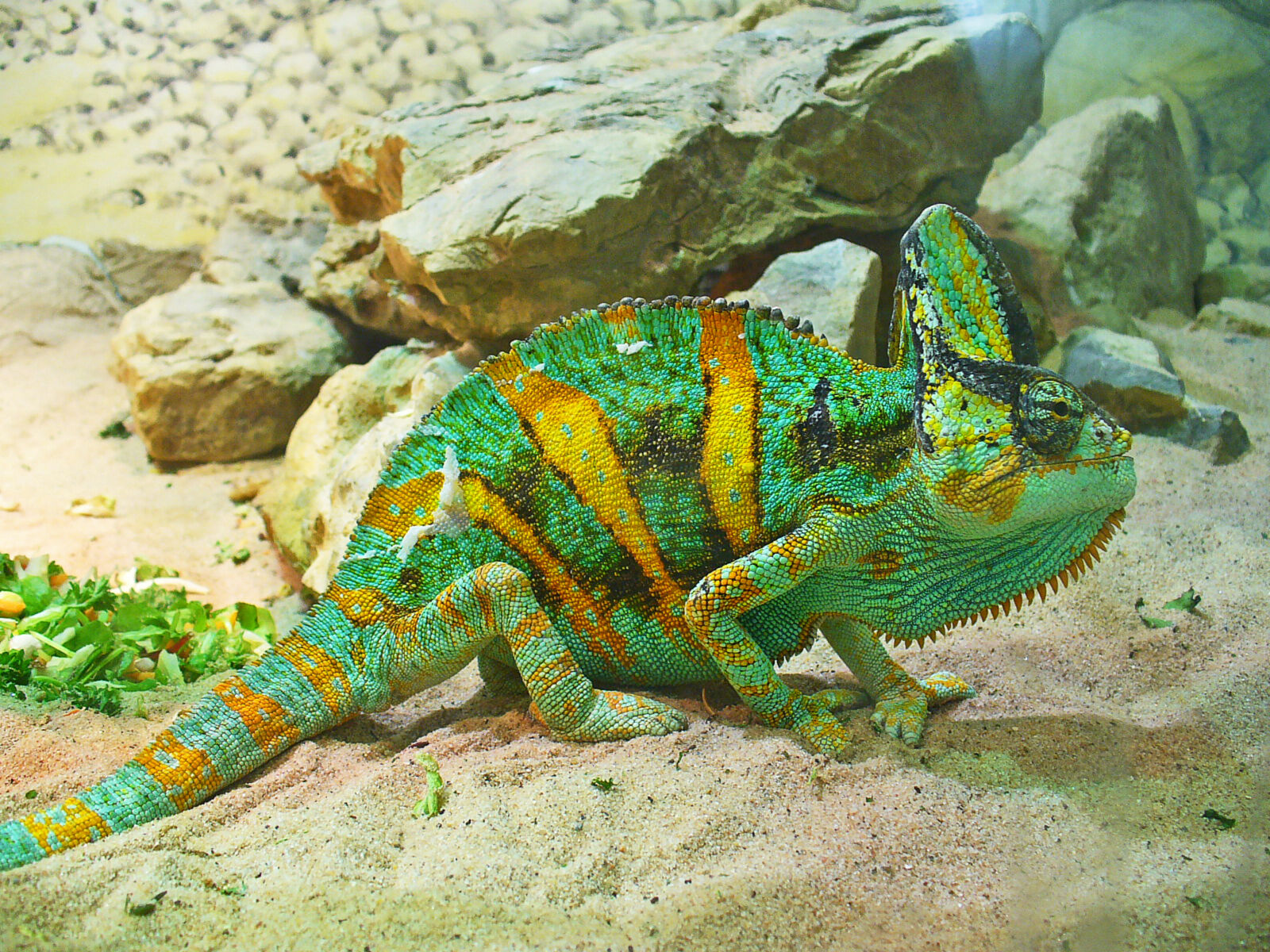
Veiled chameleon
Chamaeleo calyptratus
Color-shifting, independent, look-don't-touch.
Pet trade

Bearded pygmy chameleon
Rieppeleon brevicaudatus
Pet trade

Cape dwarf chameleon
Bradypodion pumilum
Pet trade

Carpet chameleon
Furcifer lateralis
Pet trade

Crested chameleon
Trioceros cristatus
Pet trade