
Home / Reptiles / Snakes / Colubridae / Common garter snake
Some federal rules applyCommon garter snake
Thamnophis sirtalis
Reptiles › Snakes (Serpentes) › Colubridae (Colubrid snakes)
The common garter snake (Thamnophis sirtalis) is a species of snake in the subfamily Natricinae of the family Colubridae.

Care at a glance
Species-specific values
Values researched for this exact species. Air, surface and water temperatures are listed separately, and each source is kept as published rather than averaged.
| Warm side air temperature | 78–82 °F Source: herpetoverse.com | |
| Cool side air temperature | 70–75 °F Source: herpetoverse.com | |
| Basking surface temperature | 85–90 °F Source: herpetoverse.com | |
| Night temperature | 65–72 °F Source: herpetoverse.com | |
| Humidity | 40–60 % Source: herpetoverse.com | |
| Uvb lighting | Provide UVB with a T5 HO fixture; replace every 12 months. Source: herpetoverse.com | |
| Minimum enclosure | Adult enclosure: 3x1.5x1.5 ft; larger for groups, with a large water area. Source: herpetoverse.com | |
| Substrate | Safe options are aspen, coco fiber, topsoil, or cypress mulch. Source: herpetoverse.com | |
| Diet | Adults can eat thiaminase-free fish, earthworms, and appropriately sized rodents. Source: herpetoverse.com | |
| Feeding frequency | Juveniles every 4–5 days; adults every 5–7 days. Source: herpetoverse.com |
Understanding the animal
About this animal
About this animal
The species is indigenous to North America and found widely across the continent. There are several recognized subspecies.
From Wikipedia: Common garter snake, CC BY-SA 4.0 (excerpt)
In the wild
In the wild
Researched for this exact species, not its family. Wild conditions are context, not enclosure settings.123
| Where it lives | Moist meadows, marsh margins, woodland and suburban cover across much of North America. Frequently uses grassy edges of ponds, ditches, lakes and streams. |
| Ground it lives on | Moist soil and grass beneath logs and rocks, plus animal burrows. |
| Climate | Strong geographic seasonality with northern cold winters; reported active body temperatures of 82.4–89.6°F are not ambient climate. Wild air-temperature and humidity ranges were not established. |
| Active | Mostly diurnal; northern populations brumate in winter and may bask during mild spells. |
| Social life | Often solitary while foraging; communal winter dens and breeding aggregations occur. |
| Wild diet | Earthworms, amphibians, leeches, slugs, snails, insects, crayfish and small fish; occasionally small mammals, lizards, young birds and other snakes. |
| Behavior to plan for | Swims and searches wet habitat edges; uses underground winter refuges. May release musk and bite when restrained. |
Native climate (measured)
Native climate (measured)
| Warm-season highs | about 90°F (up to 92°F in the hottest sampled areas) |
| Cool-season lows | about 40°F (down to 20°F in the coldest sampled areas) |
| Average temperature | 51–76°F across sampled records |
| Relative humidity | 69–73% on average (driest month about 66%) |
| Rainfall | about 1273 mm a year, spread fairly evenly |
| Winters | Cool to cold winters (lows around 40°F) in much of its native range. Seasonal slowdown may be relevant, but species-specific biology determines whether brumation or hibernation occurs. |
Measured at 55 wild occurrence records sampled against WorldClim 2.1 climate data (1970–2000 averages). Air conditions in the range are ecological context, not enclosure settings: microhabitats such as burrows, leaf litter or basking rocks can be cooler, warmer or more humid.
Profile
Profile
Researched for this exact species. Sources are listed under In the wild above.
History
The Reptile Database notes that Rossman in 1996 treated Thamnophis sirtalis tetrataenia as a synonym of T. s. infernalis, while later authors continued to maintain tetrataenia as distinct.
Data and studies
The numbers
The numbers
Each bar is what one source reports. Where several sources weigh in, the dashed gold band marks their average.
Maximum recorded lifespan
Longest recorded lifespan reported by each database; typical lifespans are usually shorter. The AnAge record comes from an animal in human care.
Typical adult weight
Average adult body mass in each database (FishBase gives the maximum recorded weight).
Gestation
Female maturity
Veterinary & husbandry research
Veterinary & husbandry research
- Captivity Affects Head Morphology and Allometry in Headstarted Garter Snakes, Thamnophis sirtalis Ryerson WG et al., Integrative and comparative biology 2020
- Cryptosporidium sp.-associated enteritis without gastritis in rough green snakes (Opheodrys aestivus) and a common garter snake (Thamnophis sirtalis) Brower AI et al., Journal of zoo and wildlife medicine: official publication of the American Association of Zoo Veterinarians 2001
- Annual reproductive cycle in the male red-sided garter snake, Thamnophis sirtalis parietalis: field and laboratory studies Krohmer RW et al., General and comparative endocrinology 1987
Peer-reviewed papers that mention this species alongside captivity, zoos, veterinary care or aquaculture. Some cover several species or mention it only in passing, so check the abstract. See all 10 on PubMed → PubMed
Sources for this sheet
- AnAge: The Animal Ageing and Longevity Database (Human Ageing Genomic Resources) (CC BY 3.0) Peer-reviewed researchCurated, referenced longevity and life-history records for thousands of species; maximum lifespans are often from zoo animals.
- Myhrvold et al. (2015). An amniote life-history database. Ecology 96: 3109 Peer-reviewed researchPeer-reviewed compilation of life-history data for over 21,000 birds, mammals and reptiles.
- 50 CFR 17.11: Endangered and threatened wildlife Zoo, university or veterinaryCurrent federal Endangered Species Act list.
- Clint's Reptiles (YouTube): Garter Snake, The Best Pet Snake? Expert educator & keeperClint Laidlaw, PhD in Biology Education and MS in Evolutionary Ecology; owner of Clint's Reptile Room and a longtime keeper. His "Best Pet?" series reviews each species' care in depth.
- The Reptile Database Peer-reviewed researchScientist-curated catalog of every reptile species, with taxonomy and literature.
- GBIF Backbone Taxonomy (Global Biodiversity Information Facility) (CC BY 4.0) Peer-reviewed researchInternational scientific taxonomy used here for classification. GBIF Secretariat (2023). GBIF Backbone Taxonomy. Checklist dataset https://doi.org/10.15468/39omei, accessed via GBIF.org.
- Wikipedia (species article) (CC BY-SA 4.0) Community referenceFree encyclopedia; useful overviews with their own citations. Short excerpts are quoted under CC BY-SA 4.0, each credited with a link to its article.
- PubMed (U.S. National Library of Medicine) Peer-reviewed researchIndex of peer-reviewed veterinary, zoo and husbandry research.
- iNaturalist (captive observations) Community referenceCommunity observation platform run by the California Academy of Sciences and National Geographic; observations marked captive show animals living in homes, zoos and aquariums.
More colubrid snakes
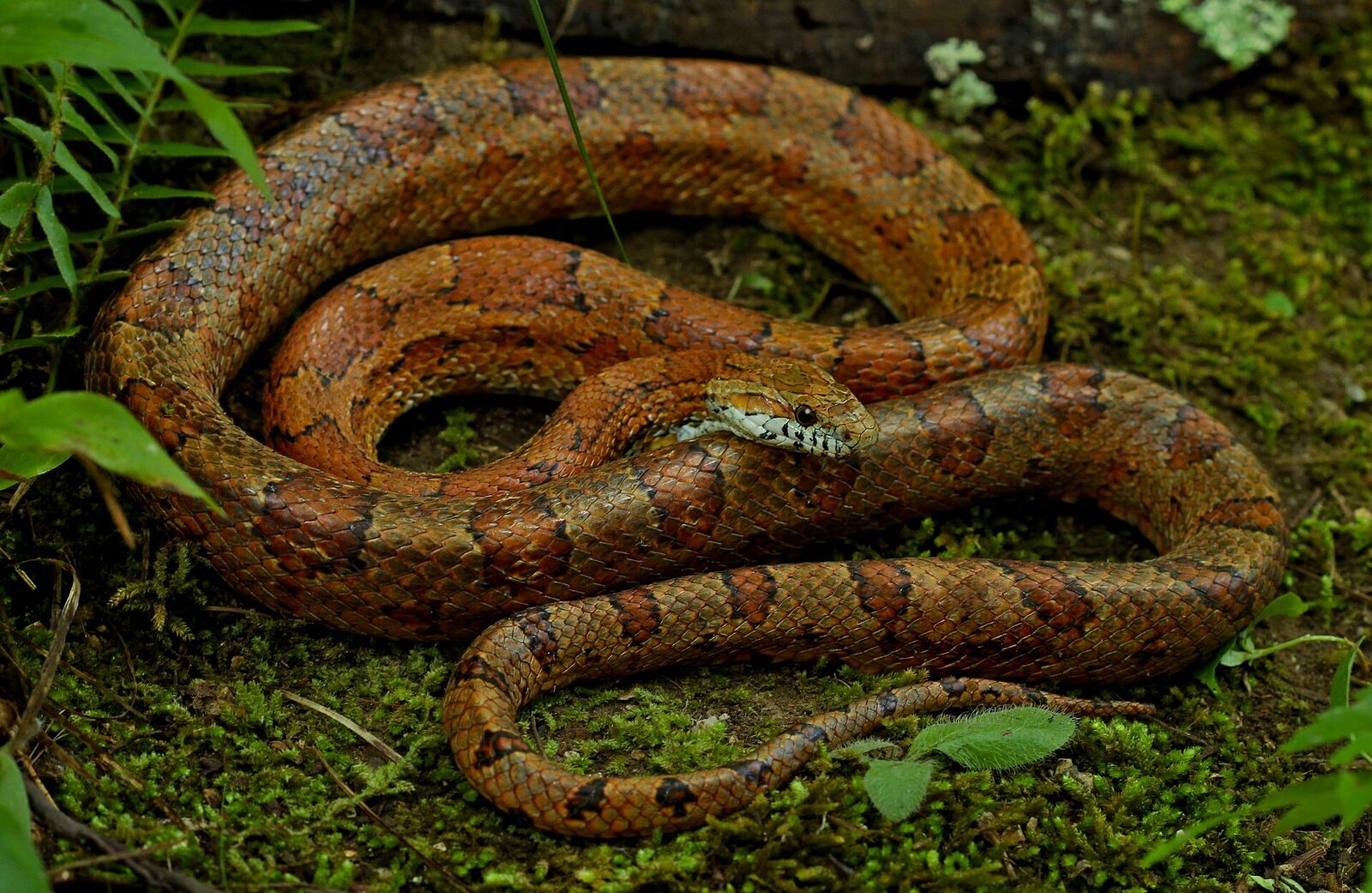
Corn snake
Pantherophis guttatus
Hardy, easy-going and colorful.
Pet trade
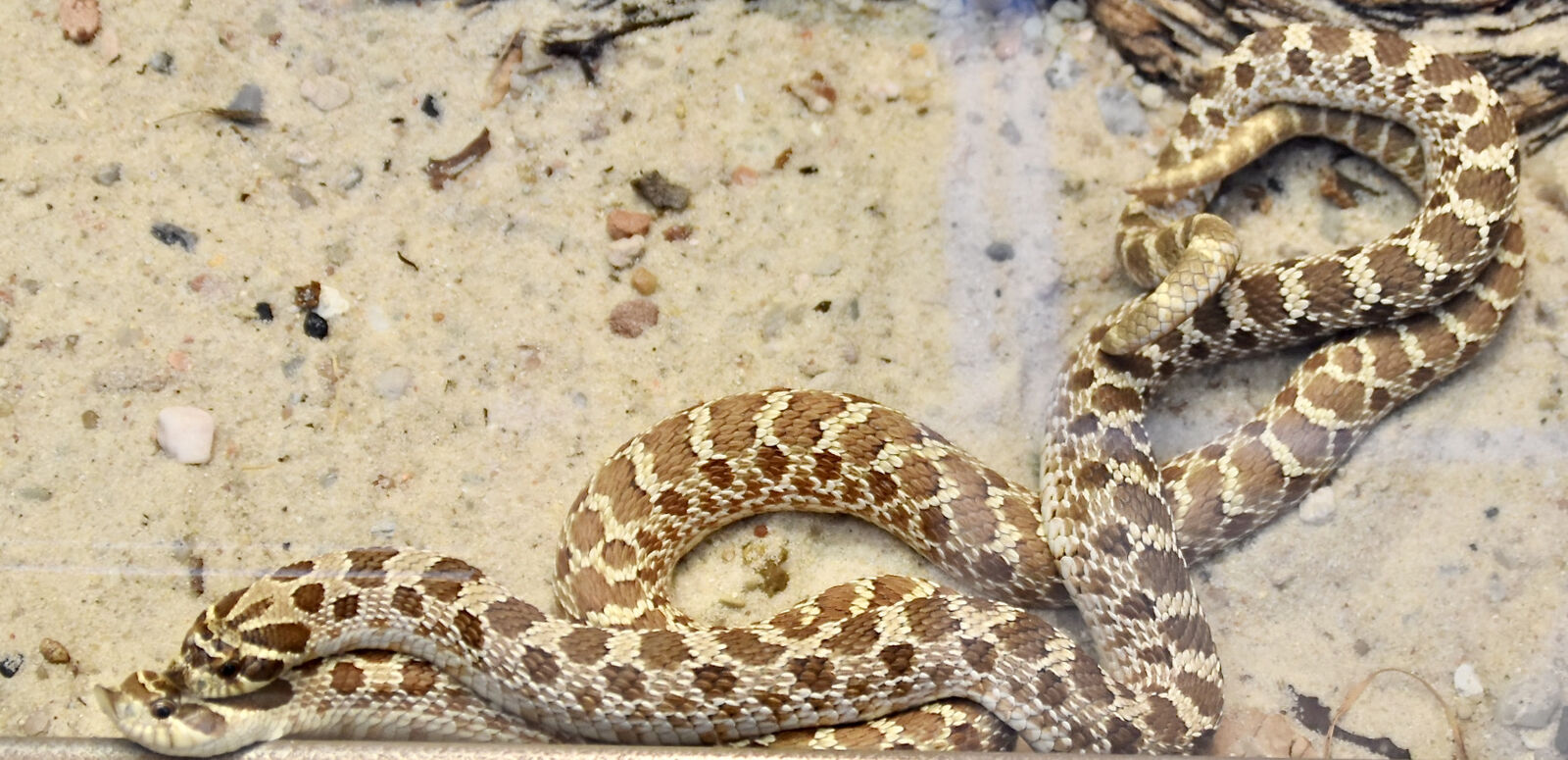
Western hognose snake
Heterodon nasicus
Dramatic bluffs from a tiny, upturned-nose snake.
Pet trade

Amur (Russian) rat snake
Elaphe schrenckii
Pet trade

Andean milk snake
Lampropeltis micropholis
Pet trade

Arizona mountain kingsnake
Lampropeltis pyromelana
Pet trade

Baird's rat snake
Pantherophis bairdi
Pet trade