
Home / Reptiles / Snakes / Colubridae / Common tiger snake
No federal permit to keepCommon tiger snake
Telescopus semiannulatus
Reptiles › Snakes (Serpentes) › Colubridae (Colubrid snakes)
Telescopus semiannulatus, commonly known as the common tiger snake, tiger cat snake, western tiger snake, or eastern tiger snake is a species of rear-fanged colubrid snake.
From Wikipedia: Telescopus semiannulatus, CC BY-SA 4.0 (excerpt)

Care at a glance
Species-specific values
Values researched for this exact species. Air, surface and water temperatures are listed separately, and each source is kept as published rather than averaged.
| Humidity | Mist the cage once a week in summer to raise humidity slightly and provide enrichment. Source: ark-kzn.co.za | |
| Basking surface temperature | 82–90 °F (28–32 °C) Source: ark-kzn.co.za | |
| Winter cooling (breeding) | 79–82 °F (26–28 °C) Source: ark-kzn.co.za | |
| Feeding frequency | In winter, feed every second week; as spring warms, feed every 5–7 days. Source: ark-kzn.co.za |
Warnings
Understanding the animal
About this animal
About this animal
It is widespread in central, eastern, and southern Africa.
From Wikipedia: Telescopus semiannulatus, CC BY-SA 4.0 (excerpt)
In the wild
In the wild
| Overview | Telescopus semiannulatus, commonly known as the common tiger snake, tiger cat snake, western tiger snake, or eastern tiger snake is a species of rear-fanged colubrid snake. It is widespread in central, eastern, and southern Africa. — From Wikipedia: Telescopus semiannulatus, CC BY-SA 4.0 (excerpt) |
| Wild diet | Its diet is largely lizards, especially geckos, but also small rodents and fledgling birds and bats. — From Wikipedia: Telescopus semiannulatus, CC BY-SA 4.0 (excerpt) |
| Behavior | Telescopus semiannulatus is found in both dry and humid subtropical and tropical habitats, from rocky desert, scrub and savanna, to lowland forest. Largely terrestrial but sometimes arboreal, it shelters under bark and rock or in thatched roofs. — From Wikipedia: Telescopus semiannulatus, CC BY-SA 4.0 (excerpt) |
| Reproduction | The tiger snake is oviparous. Females lay half a dozen to several dozen eggs in damp leaf litter. — From Wikipedia: Telescopus semiannulatus, CC BY-SA 4.0 (excerpt) |
| Appearance and size | Adults average 60–90 cm in total length, with 17–21 rows of dorsal scales. The tiger snake is one of the more colorful species of snake in the family Colubridae. The upper side is pale orange to salmon pink in color with 24–48 black or dark-brown cross bars or blotches along the back and tail; the underside is pale yellow to orangish pink along the throat, paler along the rest of the body. — From Wikipedia: Telescopus semiannulatus, CC BY-SA 4.0 (excerpt) |
Read about this species in the wild at The Reptile Database.
Native climate (measured)
Native climate (measured)
| Warm-season highs | about 89°F (up to 94°F in the hottest sampled areas) |
| Cool-season lows | about 48°F (down to 38°F in the coldest sampled areas) |
| Average temperature | 66–77°F across sampled records |
| Relative humidity | 56–68% on average (driest month about 48%) |
| Rainfall | about 776 mm a year, with strong wet and dry seasons |
Measured at 355 wild occurrence records sampled against WorldClim 2.1 climate data (1970–2000 averages). Air conditions in the range are ecological context, not enclosure settings: microhabitats such as burrows, leaf litter or basking rocks can be cooler, warmer or more humid.
Profile
Profile
Researched for this exact species. Sources are listed under In the wild above.
Data and studies
The numbers
The numbers
Each bar is what one source reports. Where several sources weigh in, the dashed gold band marks their average.
Maximum recorded lifespan
Longest recorded lifespan reported by each database; typical lifespans are usually shorter. The AnAge record comes from an animal in human care.
Incubation
Sources for this sheet
- AnAge: The Animal Ageing and Longevity Database (Human Ageing Genomic Resources) (CC BY 3.0) Peer-reviewed researchCurated, referenced longevity and life-history records for thousands of species; maximum lifespans are often from zoo animals.
- Myhrvold et al. (2015). An amniote life-history database. Ecology 96: 3109 Peer-reviewed researchPeer-reviewed compilation of life-history data for over 21,000 birds, mammals and reptiles.
- The Reptile Database Peer-reviewed researchScientist-curated catalog of every reptile species, with taxonomy and literature.
- Wikipedia (species article) (CC BY-SA 4.0) Community referenceFree encyclopedia; useful overviews with their own citations. Short excerpts are quoted under CC BY-SA 4.0, each credited with a link to its article.
- iNaturalist (captive observations) Community referenceCommunity observation platform run by the California Academy of Sciences and National Geographic; observations marked captive show animals living in homes, zoos and aquariums.
More colubrid snakes
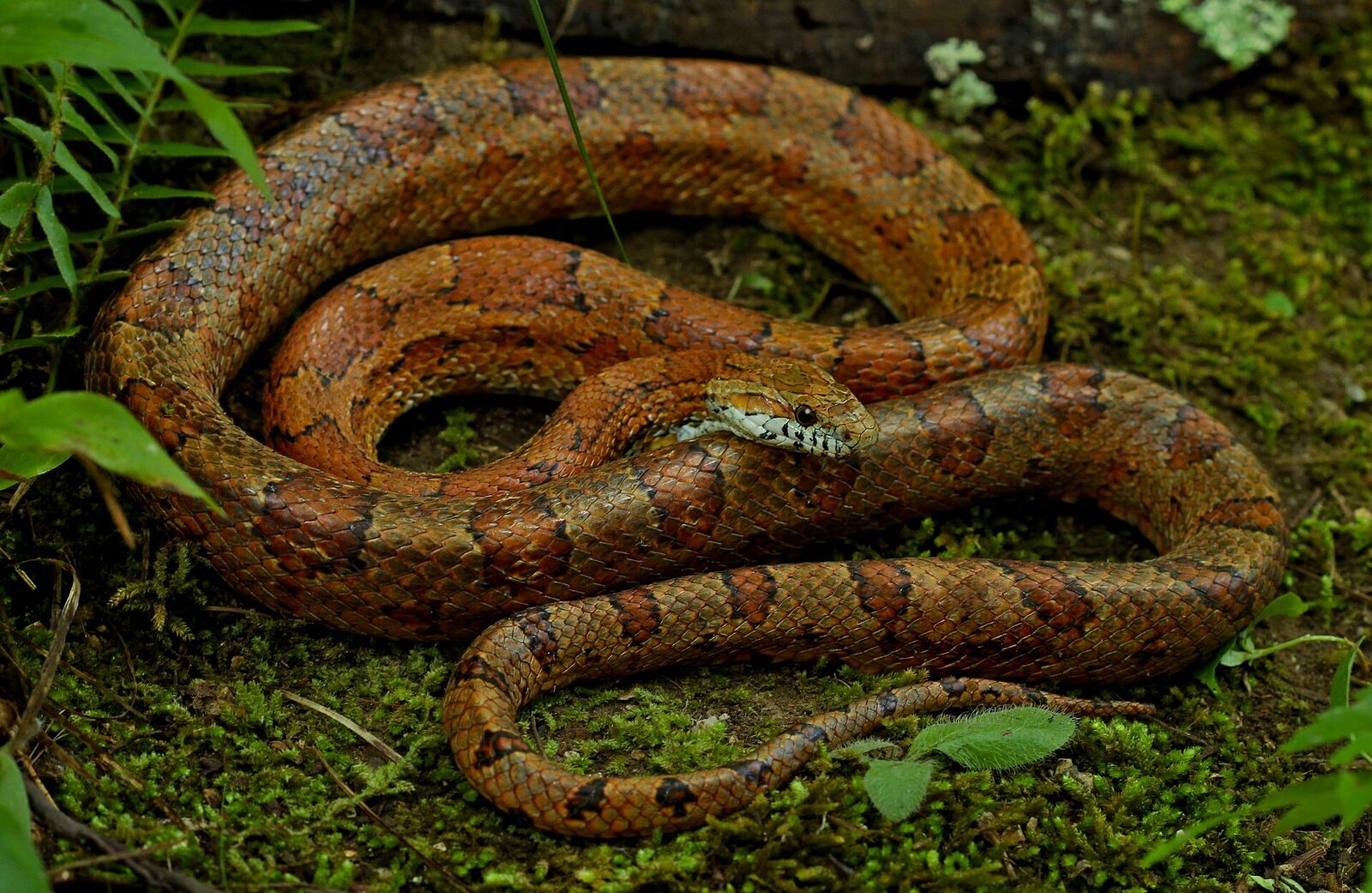
Corn snake
Pantherophis guttatus
Hardy, easy-going and colorful.
Pet trade
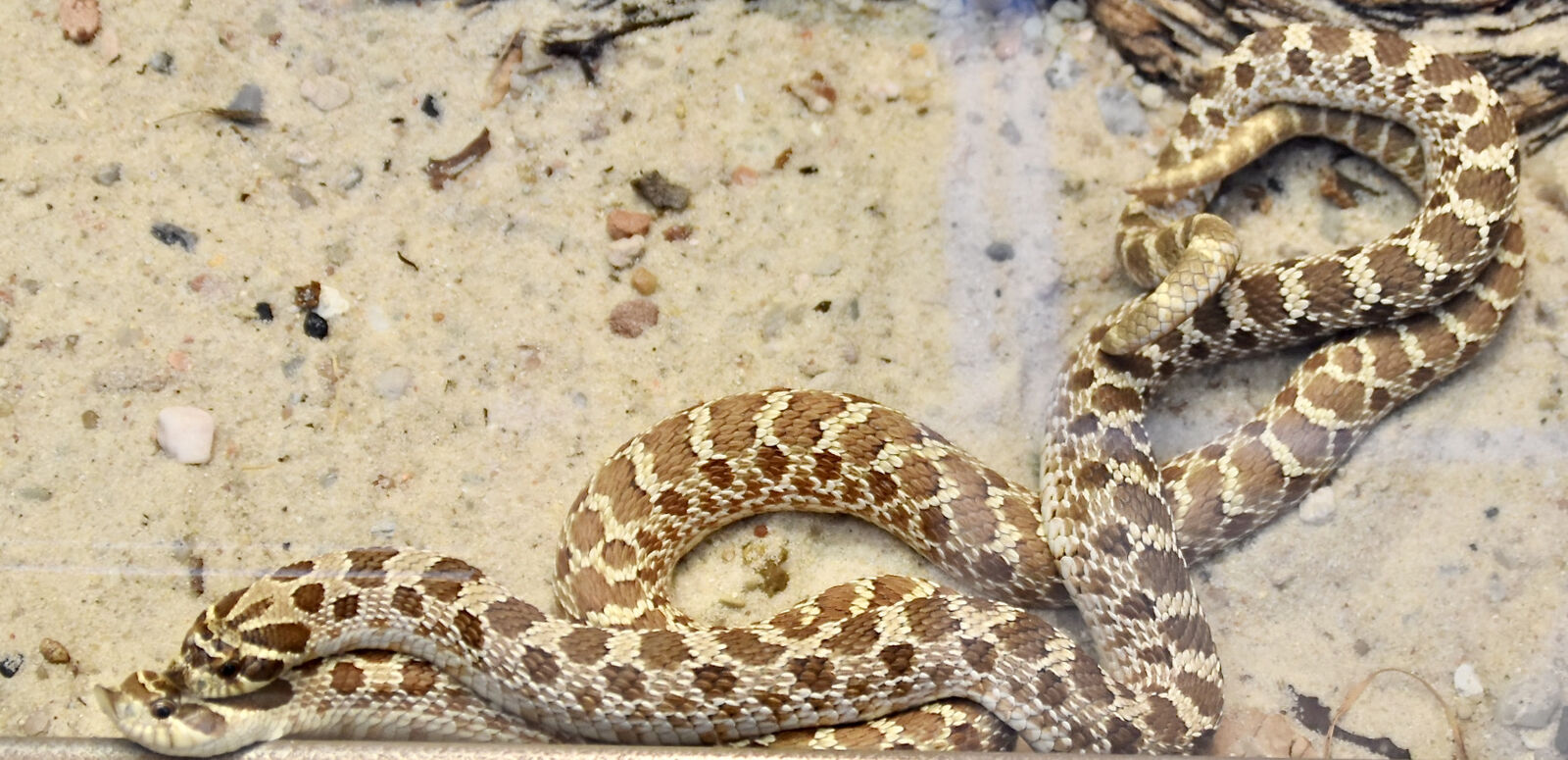
Western hognose snake
Heterodon nasicus
Dramatic bluffs from a tiny, upturned-nose snake.
Pet trade

Amur (Russian) rat snake
Elaphe schrenckii
Pet trade

Andean milk snake
Lampropeltis micropholis
Pet trade

Arizona mountain kingsnake
Lampropeltis pyromelana
Pet trade

Baird's rat snake
Pantherophis bairdi
Pet trade