
Care at a glance
Setup
One answer per setting. Where sources differ, the smaller figure is the minimum and the larger is what we recommend.
| Adult enclosure | 72” (length) x 30” (width) x 18” (height) Needs to accommodate their size and allow for climbing. | thesnakeguide.com |
| Warm side | 80°F Necessary for maintaining the required temperature gradient. | thesnakeguide.com |
| Cool side | 72°F Necessary for maintaining the required temperature gradient. | thesnakeguide.com |
| Humidity | At least 55% Preferably 80% Maintains proper hydration and skin health. | thesnakeguide.com |
Care guide
By age
| Baby | Feeding: Every 6 to 7 days | vhm-abc.com |
| Adult | Feeding: Every 8 to 20 days | vhm-abc.com |
Understanding the animal
Localities
Localities
Keepers buy these by where the bloodline comes from. Care is basically the same; size, color and temperament can differ. “Breeder-reported” details still need a published source.
| Western Cuba | Often lacks dark colors in the dorsal pattern, featuring fused medium brown to pale tan markings. | Published Wikipedia |
In the wild
In the wild
Researched for this exact species, not its family. Wild conditions are context, not enclosure settings.1234
| Where it lives | Native to Cuba and nearby islands, they inhabit various forest types including rainforest, cloud, evergreen, semi-deciduous, thorn, coastal scrub, and sugar cane plantations. |
| Active | Cuban boas are partly arboreal, spending a significant portion of their lives in trees, but are also found on the ground. |
| Social life | This species exhibits group hunting behavior, specifically when targeting bats. |
| Wild diet | They are apex predators consuming a varied diet of mammals (54.7%), birds (41.3%), and smaller portions of reptiles and amphibians. |
| Behavior to plan for | Females are biennial breeders, and males engage in ritualized combat during the mating season. |
Profile
Profile
Researched for this exact species. Sources are listed under In the wild above.
Keeper tips
- While wild-caught individuals can be aggressive and fragrant, captive-bred boas can become very tame and friendly.
- These snakes are non-venomous but possess sharp, needle-like teeth that can cause injury if they bite.
Remarkable facts
- In captivity, this species can live for more than 20 years.
Data and studies
Veterinary & husbandry research
Veterinary & husbandry research
- Sex allocation and secondary sex ratio in Cuban boa (Chilabothrus angulifer): mother's body size affects the ratio between sons and daughters. et al., Die Naturwissenschaften 2016
Peer-reviewed papers that mention this species alongside captivity, zoos, veterinary care or aquaculture. Some cover several species or mention it only in passing, so check the abstract. PubMed
Sources for this sheet
- Species+ (UNEP-WCMC and the CITES Secretariat) Zoo, university or veterinaryThe official database of species listed under CITES. UNEP (2026). The Species+ Website. Nairobi, Kenya. Compiled by UNEP-WCMC, Cambridge, UK. Available at: www.speciesplus.net. [Accessed 04/10/2026].
- USFWS International Affairs: CITES Zoo, university or veterinaryFederal agency that issues CITES permits.
- Cuban boa (thesnakeguide.com) Community referenceWeb page.
- Chilabothrus angulifer (Cuba boa, Cuba tree boa) (vhm-abc.com) Community referenceWeb page.
- Wikipedia: Chilabothrus angulifer (CC BY-SA 4.0) Community referenceEncyclopedia article.
- The Reptile Database: Chilabothrus angulifer Zoo, university or veterinaryTaxonomy, distribution and literature for every reptile species.
- Care sheet cuban boa (scribd.com) Community referenceWeb page.
- The Reptile Database Peer-reviewed researchScientist-curated catalog of every reptile species, with taxonomy and literature.
- GBIF Backbone Taxonomy (Global Biodiversity Information Facility) (CC BY 4.0) Peer-reviewed researchInternational scientific taxonomy used here for classification. GBIF Secretariat (2023). GBIF Backbone Taxonomy. Checklist dataset https://doi.org/10.15468/39omei, accessed via GBIF.org.
- PubMed (U.S. National Library of Medicine) Peer-reviewed researchIndex of peer-reviewed veterinary, zoo and husbandry research.
More boas
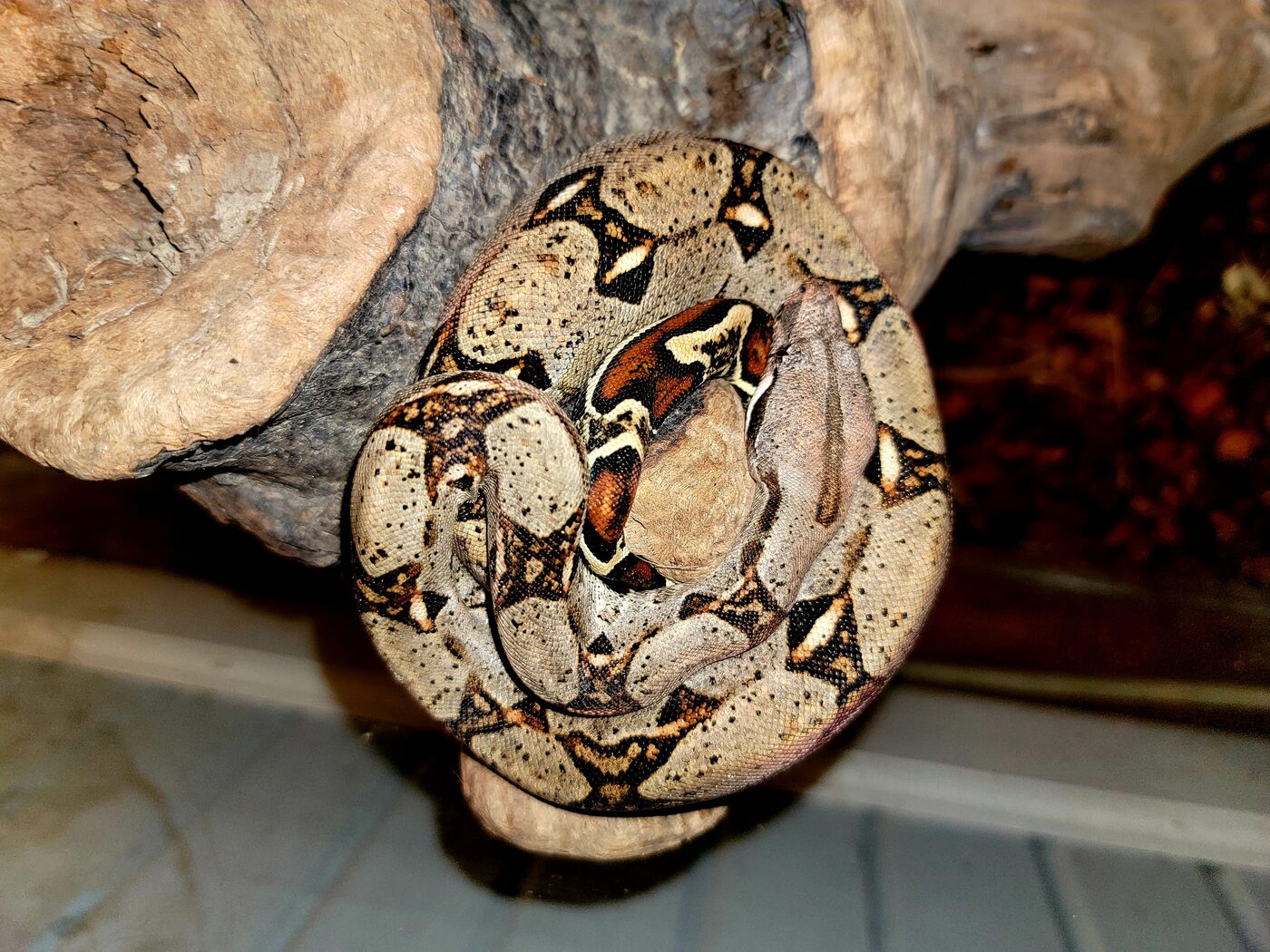
Common boa constrictor (red-tailed boa)
Boa constrictor
A powerful but famously steady big snake.
Pet trade
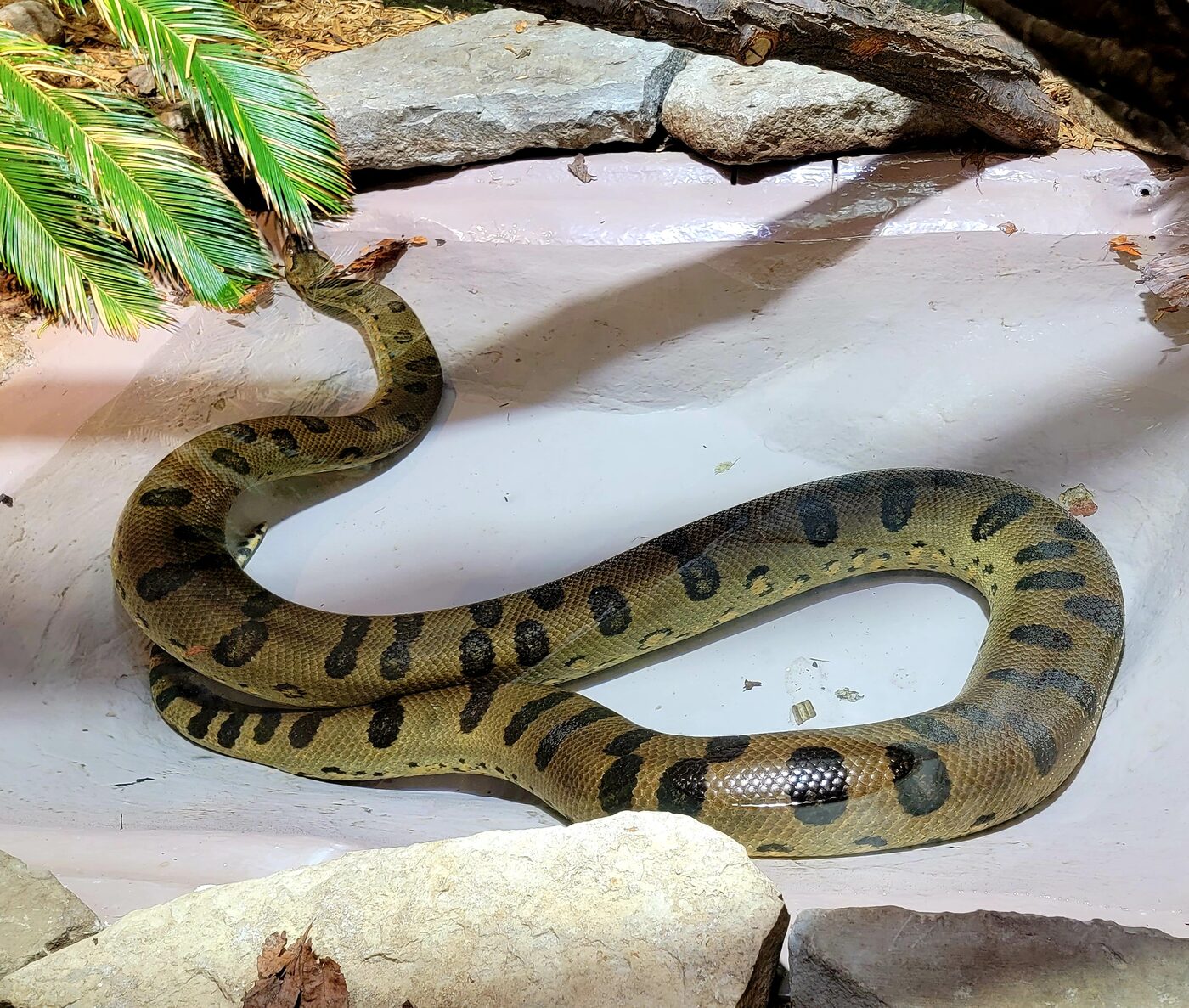
Green anaconda
Eunectes murinus
The heaviest snake on Earth, at home in the water.
Pet trade

Amazon basin emerald tree boa
Corallus batesii
Pet trade
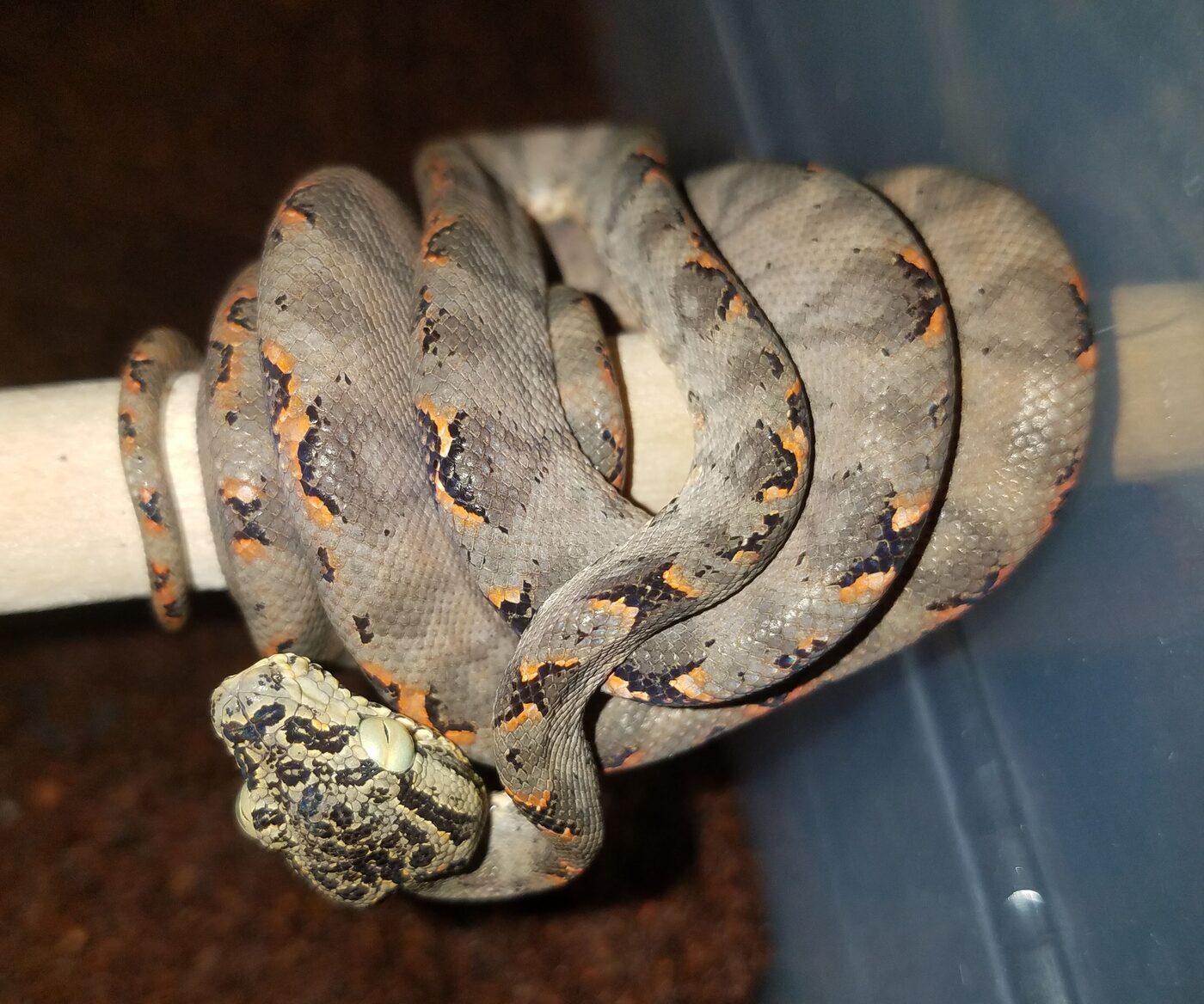
Amazon tree boa
Corallus hortulana
Pet trade

Annulated tree boa
Corallus annulatus
Pet trade

Arabian sand boa
Eryx jayakari
Pet trade