
Home / Reptiles / Lizards / Scincidae / Fire skink
No federal permit to keepFire skink
Lepidothyris fernandi
Reptiles › Lizards (Lacertilia) › Scincidae (Skinks)
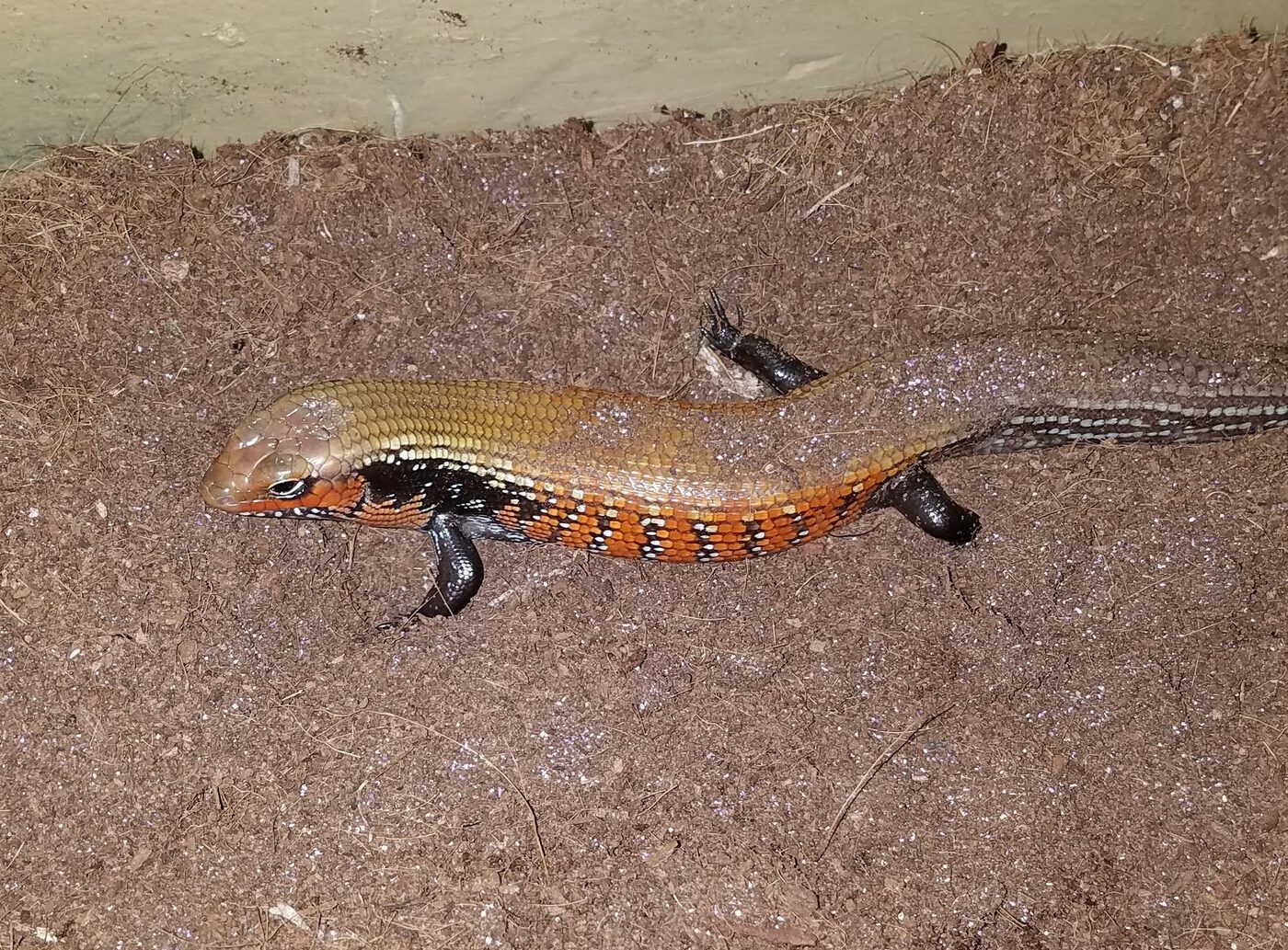
The fire skink (Lepidothyris fernandi), also known commonly as Fernand's skink, the Togo fire skink, and the true fire skink, is a fairly large skink, a species of lizard in the family Scincidae.
Care at a glance
Species-specific values
Values researched for this exact species. Air, surface and water temperatures are listed separately, and each source is kept as published rather than averaged.
| Minimum enclosure dimensions | length: 36 in; width: 18 in; height: 18 in One adult. | reptifiles.com |
| Basking surface temperature | 92–96 °F Probe on basking surface. | reptifiles.com |
| Cool zone temperature | 75–85 °F Cool-end probe; type not expressly stated. | reptifiles.com |
| Night temperature | 70–75 °F Measurement type not expressly stated. | reptifiles.com |
| Relative humidity | 60–70 % Average; ventilation and moisture gradients. | reptifiles.com |
| Adult total length | 12–15 in | reptifiles.com |
| Diet | Varied invertebrate prey, predominantly insects. | reptifiles.com |
| Social needs | Can live alone; never combine males. | reptifiles.com |
Understanding the animal
About this animal
About this animal
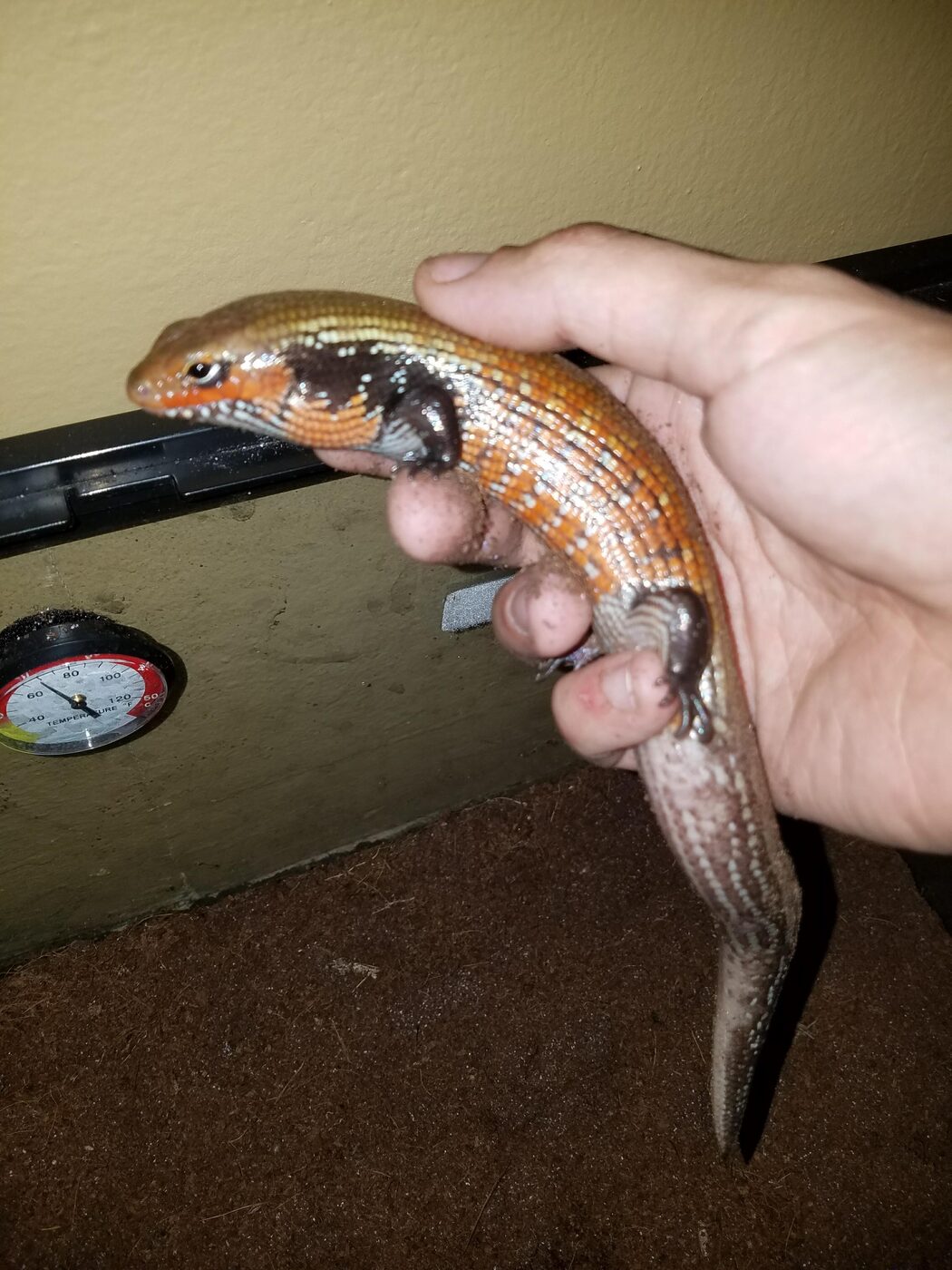
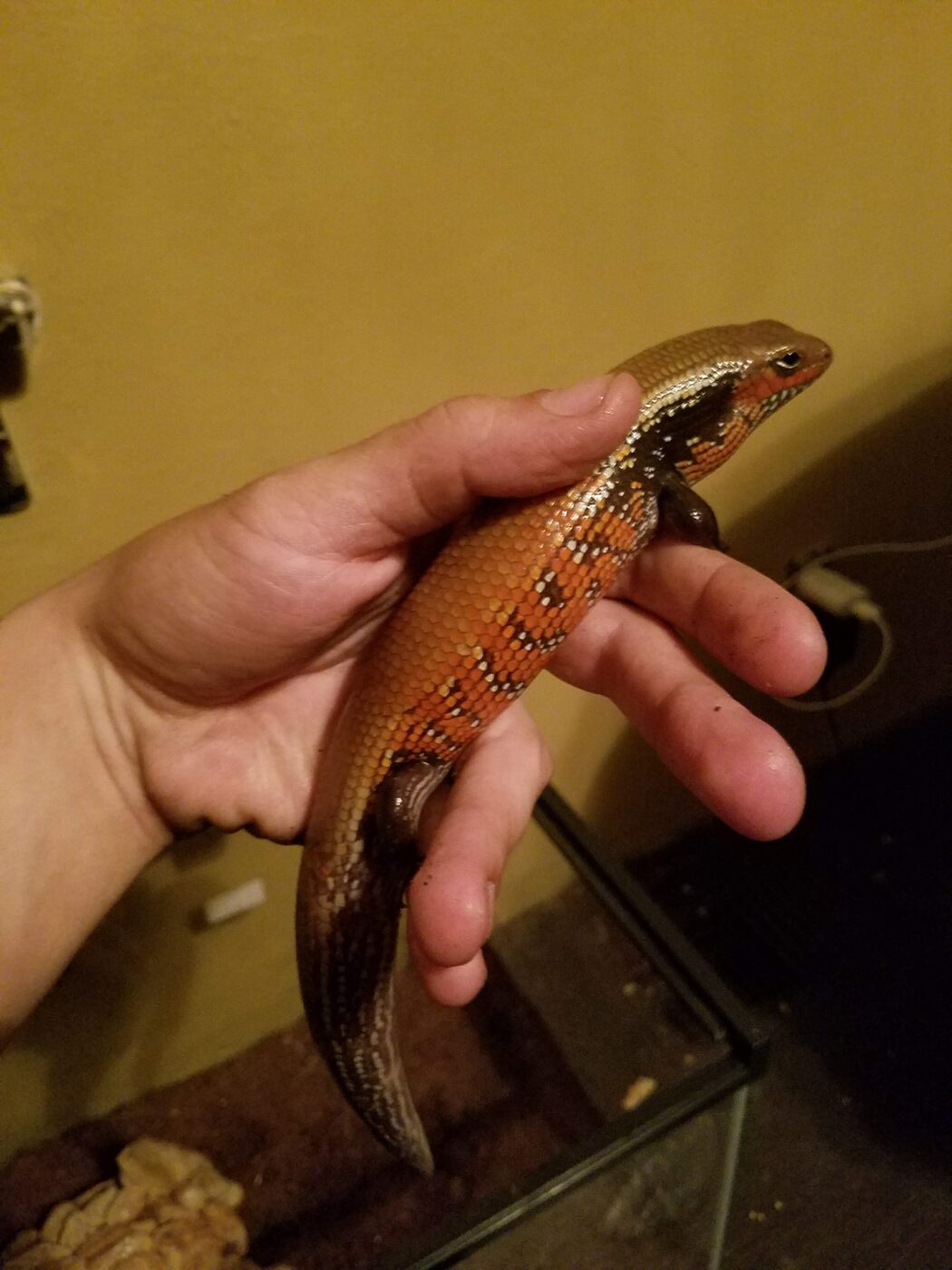
The species is known for its bright and vivid coloration. Native to tropical forests in West and Central Africa, the fire skink lives 15 to 20 years.
From Wikipedia: Fire skink, CC BY-SA 4.0 (excerpt)
In the wild
In the wild
Researched for this exact species, not its family. Wild conditions are context, not enclosure settings.12345
| Where it lives | A terrestrial forest skink of western and central tropical Africa. Niger Delta field research found it in dryland and swamp forest, using excavable ground burrows. |
| Ground it lives on | forest litter over soil with burrows |
| Climate | Southern Nigerian study sites have wet seasons in April–October and drier seasons in November–March, with relatively small monthly temperature changes; numerical wild temperature and relative-humidity ranges were not provided. |
| Active | Diurnal. |
| Wild diet | Mostly arthropods: isopods and beetles dominated Nigerian samples; ants and many other invertebrates were eaten, with occasional lizards in swamp-forest wet-season samples. |
| Behavior to plan for | Burrows through soil and litter, remaining concealed much of the time and emerging to hunt at the surface. |
Native climate (measured)
Native climate (measured)
| Warm-season highs | about 89°F (up to 93°F in the hottest sampled areas) |
| Cool-season lows | about 69°F (down to 60°F in the coldest sampled areas) |
| Average temperature | 72–81°F across sampled records |
| Relative humidity | 77–82% on average (driest month about 74%) |
| Rainfall | about 1600 mm a year |
Measured at 26 wild occurrence records sampled against WorldClim 2.1 climate data (1970–2000 averages). Air conditions in the range are ecological context, not enclosure settings: microhabitats such as burrows, leaf litter or basking rocks can be cooler, warmer or more humid.
Profile
Profile
Researched for this exact species. Sources are listed under In the wild above.
History
The specific name fernandi refers to the island formerly called Fernando Po, now Bioko. The species has historically been placed in several genera, and the supplied sources use both Lepidothyris fernandi and Mochlus fernandi; ReptiFiles treats it as Mochlus fernandi.
More photos
Data and studies
The numbers
The numbers
Each bar is what one source reports. Where several sources weigh in, the dashed gold band marks their average.
Incubation
Basking spot
Species-specific values from keeper care sheets. Basking figures are often surface readings taken with an infrared thermometer, which run hotter than air.
Night temperature
Species-specific values from keeper care sheets. Basking figures are often surface readings taken with an infrared thermometer, which run hotter than air.
Humidity
Species-specific values from keeper care sheets. Basking figures are often surface readings taken with an infrared thermometer, which run hotter than air.
Daytime air temperature
Species-specific values from keeper care sheets. Basking figures are often surface readings taken with an infrared thermometer, which run hotter than air.
Care articles for this species
Care articles for this species
- Fire Skink Care Sheet (ReptiFiles)
- African Fire Skink Care Sheet (Reptiles Magazine)
Written by keepers, breeders and vets Reptiles MagazineReptiFiles
Sources for this sheet
- Myhrvold et al. (2015). An amniote life-history database. Ecology 96: 3109 Peer-reviewed researchPeer-reviewed compilation of life-history data for over 21,000 birds, mammals and reptiles.
- ReptiFiles (care guides) Experienced keeper or breederWell-researched reptile care guides that cite herpetological literature and experienced keepers.
- Reptiles Magazine (care articles) Experienced keeper or breederEstablished reptile and amphibian hobby magazine; care articles are written by breeders, keepers and veterinarians.
- Clint's Reptiles (YouTube): Fire Skink, The Best Pet Lizard? Expert educator & keeperClint Laidlaw, PhD in Biology Education and MS in Evolutionary Ecology; owner of Clint's Reptile Room and a longtime keeper. His "Best Pet?" series reviews each species' care in depth.
- The Reptile Database Peer-reviewed researchScientist-curated catalog of every reptile species, with taxonomy and literature.
- GBIF Backbone Taxonomy (Global Biodiversity Information Facility) (CC BY 4.0) Peer-reviewed researchInternational scientific taxonomy used here for classification. GBIF Secretariat (2023). GBIF Backbone Taxonomy. Checklist dataset https://doi.org/10.15468/39omei, accessed via GBIF.org.
- Wikipedia (species article) (CC BY-SA 4.0) Community referenceFree encyclopedia; useful overviews with their own citations. Short excerpts are quoted under CC BY-SA 4.0, each credited with a link to its article.
More skinks
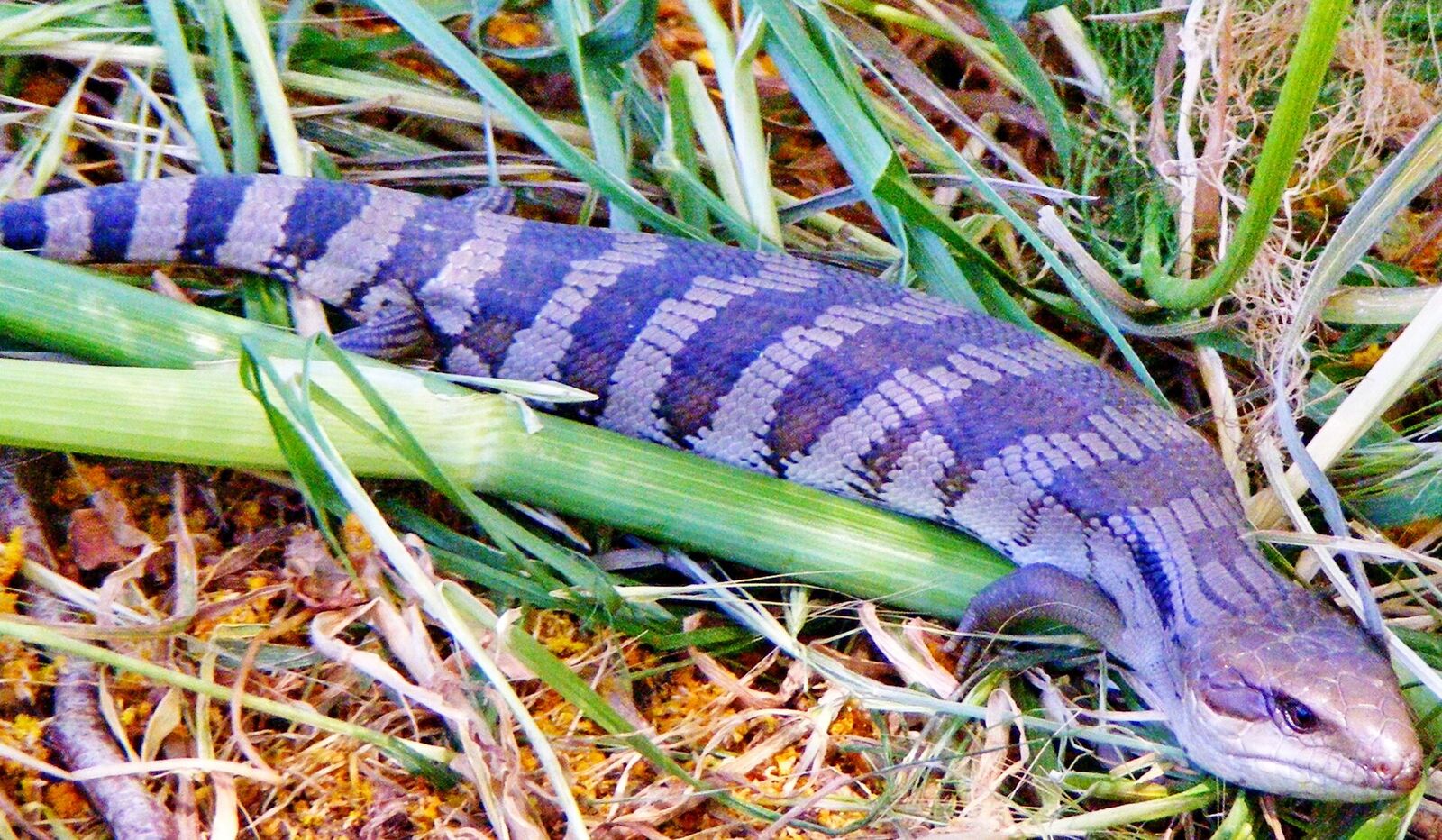
Common blue-tongued skink
Tiliqua scincoides
Docile, chunky and flashes a blue tongue.
Pet trade

Blotched blue-tongued skink
Tiliqua nigrolutea
Pet trade

Centralian blue-tongued skink
Tiliqua multifasciata
Pet trade

Cunningham's skink
Egernia cunninghami
Pet trade

East Indian brown mabuya
Eutropis multifasciata
Pet trade

Eastern Pilbara spiny-tailed skink
Egernia epsisolus
Pet trade