
Home / Birds / Parrots / Gold-capped conure
Some federal rules applyGold-capped conure
Aratinga auricapillus
Birds › Parrots (Psittaciformes) › Psittacidae (New World and African parrots)
The golden-capped parakeet (Aratinga auricapillus) is a species of parrot in the family Psittacidae endemic to Brazil.
From Wikipedia: Golden-capped parakeet, CC BY-SA 4.0 (excerpt)

Care at a glance
Species-specific values
Values researched for this exact species. Air, surface and water temperatures are listed separately, and each source is kept as published rather than averaged.
| Minimum enclosure | Provide a spacious cage with perches, swings, ladders, bells, and bird-safe chew toys. Source: articles.pangovet.com | |
| Diet | Feed pellets, commercial birdseed, fruits, vegetables, and occasional treats; pellets and seeds form the base diet. Source: articles.pangovet.com | |
| Feeding frequency | Maintain a varied, well-balanced diet at all times. Source: articles.pangovet.com | |
| Social housing | Can get along with other conures and sometimes similarly sized or smaller birds; can thrive alone with daily interaction. Source: articles.pangovet.com | |
| Substrate | Change cage lining at least every other day. Source: articles.pangovet.com |
Understanding the animal
About this animal
About this animal
Its natural habitats are subtropical or tropical dry forest, subtropical or tropical moist lowland forest, dry savanna, and plantations. It is threatened by habitat loss.
From Wikipedia: Golden-capped parakeet, CC BY-SA 4.0 (excerpt)
In the wild
In the wild
| Overview | The golden-capped parakeet (Aratinga auricapillus) is a species of parrot in the family Psittacidae endemic to Brazil. Its natural habitats are subtropical or tropical dry forest, subtropical or tropical moist lowland forest, dry savanna, and plantations. It is threatened by habitat loss. The A. auricapillus is a good biological indicator because of its vulnerability, high detectability as well as its sensitivity to forest fragmentation. — From Wikipedia: Golden-capped parakeet, CC BY-SA 4.0 (excerpt) |
| Where it lives | The Aratinga auricapillus inhabits mostly the semi-deciduous forests in northeastern Brazil, although through time it has adapted to rural agricultural areas and sometimes even urban cities, spreading throughout the states of Bahia, Minas Gerais, Espírito Santo, Rio de Janeiro, São Paulo, Goiás, and Paraná. — From Wikipedia: Golden-capped parakeet, CC BY-SA 4.0 (excerpt) |
| Wild diet | A. auricapillus's dietary behavior is classified as frugivorous. However, the parakeets have been reported to have other food sources, including seeds, flower petals and buds, nectar, and lichens. During a 2010 to 2012 study on the eating habits of the golden-capped parakeets, the birds were noted to primarily ignore the exocarp and mesocarp or outer layers of the fruits in order to eat the seeds within. — From Wikipedia: Golden-capped parakeet, CC BY-SA 4.0 (excerpt) |
| Behavior | As members of the Aratinga solstitialis subspecies, golden-capped parakeets tend to populate their areas of residence within forests in groups, which can range from 4 to 15 individual parakeets. The breeding season occurs during the austral summer, which in the southern hemisphere is from December to March, with pairs being sighted around November and dependent young around March. — From Wikipedia: Golden-capped parakeet, CC BY-SA 4.0 (excerpt) |
| Appearance and size | It is 30 cm long and mostly green with a black beak, white eyerings, orange-red belly, and red face fading to yellow over the crown. Juvenile members of the A. auricapillus group develop their yellow head markings and red coloration on the lower body in adulthood. The approximate weight for golden-capped parakeets is 4.9-5.25 oz. — From Wikipedia: Golden-capped parakeet, CC BY-SA 4.0 (excerpt) |
| History and naming | The Aratinga genus name was created to describe medium to small south American conures and parrots. As such, alongside its common name as the golden-capped parakeet, it is also called the golden-capped conure. Within the A. solstitialis species group, the golden-capped parakeet is the only member considered to be polytypic: A. auricapillus is said to contain the subspecies A. a. aurifrons. — From Wikipedia: Golden-capped parakeet, CC BY-SA 4.0 (excerpt) |
Profile
Profile
Researched for this exact species. Sources are listed under In the wild above.
History
The Aratinga genus name was created to describe medium to small south American conures and parrots. As such, alongside its common name as the golden-capped parakeet, it is also called the golden-capped conure. Within the A. solstitialis species group, the golden-capped parakeet is the only member considered to be polytypic: A. auricapillus is said to contain the subspecies A. a. aurifrons.
From Wikipedia: Golden-capped parakeet, CC BY-SA 4.0 (excerpt)
Data and studies
The numbers
The numbers
Each bar is what one source reports. Where several sources weigh in, the dashed gold band marks their average.
Maximum recorded lifespan
Longest recorded lifespan reported by each database; typical lifespans are usually shorter. The AnAge record comes from an animal in human care.
Typical adult weight
Average adult body mass in each database (FishBase gives the maximum recorded weight).
Sources for this sheet
- AnAge: The Animal Ageing and Longevity Database (Human Ageing Genomic Resources) (CC BY 3.0) Peer-reviewed researchCurated, referenced longevity and life-history records for thousands of species; maximum lifespans are often from zoo animals.
- Myhrvold et al. (2015). An amniote life-history database. Ecology 96: 3109 Peer-reviewed researchPeer-reviewed compilation of life-history data for over 21,000 birds, mammals and reptiles.
- Species+ (UNEP-WCMC and the CITES Secretariat) Zoo, university or veterinaryThe official database of species listed under CITES. UNEP (2026). The Species+ Website. Nairobi, Kenya. Compiled by UNEP-WCMC, Cambridge, UK. Available at: www.speciesplus.net. [Accessed 04/10/2026].
- USFWS International Affairs: CITES Zoo, university or veterinaryFederal agency that issues CITES permits.
- 9 CFR 2.1: Animal Welfare Act licensing (USDA) Zoo, university or veterinaryWho needs a USDA license to breed, sell or exhibit animals.
- GBIF Backbone Taxonomy (Global Biodiversity Information Facility) (CC BY 4.0) Peer-reviewed researchInternational scientific taxonomy used here for classification. GBIF Secretariat (2023). GBIF Backbone Taxonomy. Checklist dataset https://doi.org/10.15468/39omei, accessed via GBIF.org.
- Wikipedia (species article) (CC BY-SA 4.0) Community referenceFree encyclopedia; useful overviews with their own citations. Short excerpts are quoted under CC BY-SA 4.0, each credited with a link to its article.
- iNaturalist (captive observations) Community referenceCommunity observation platform run by the California Academy of Sciences and National Geographic; observations marked captive show animals living in homes, zoos and aquariums.
More new world and african parrots
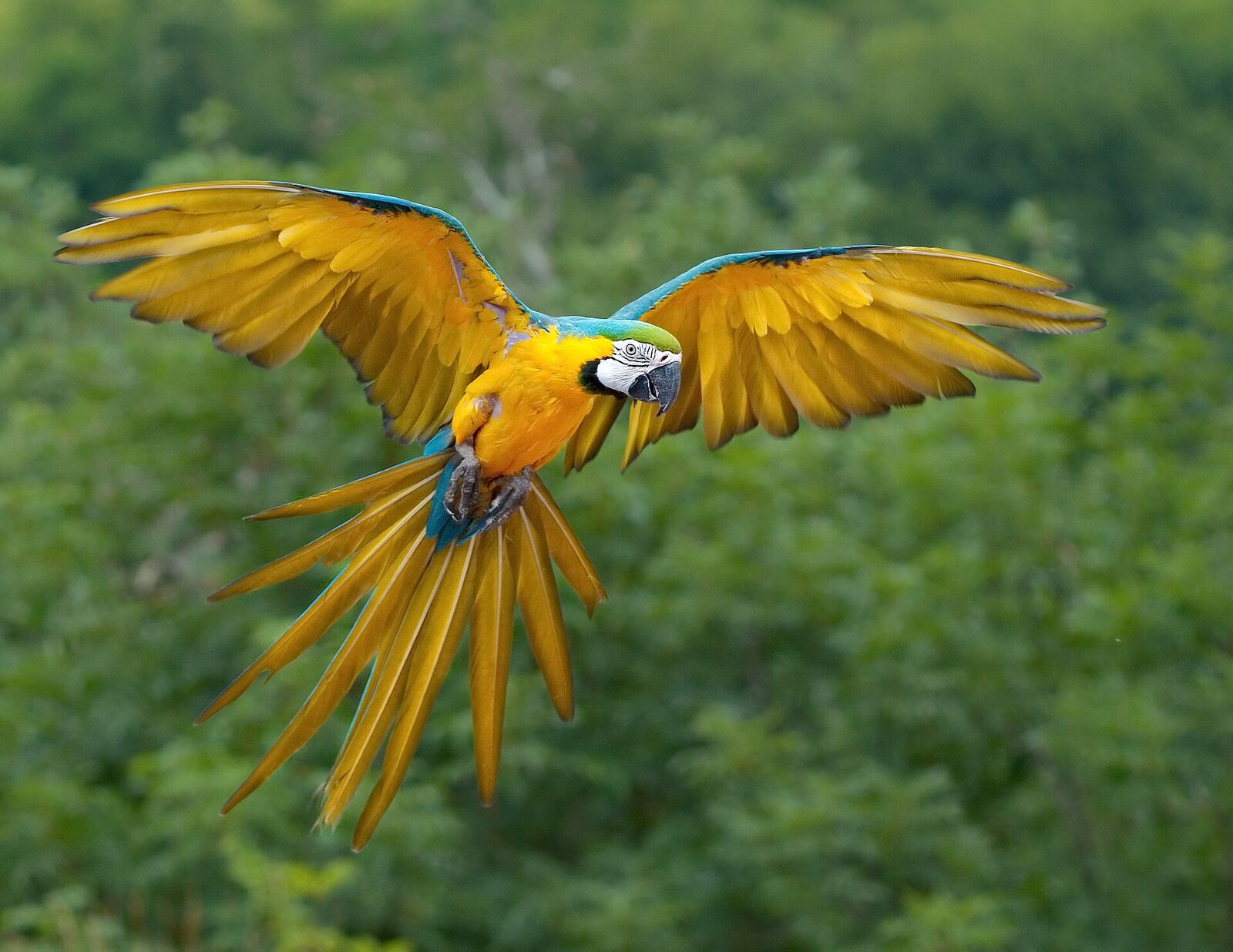
Blue-and-yellow macaw
Ara ararauna
A loud, brilliant, lifelong commitment.
Pet trade
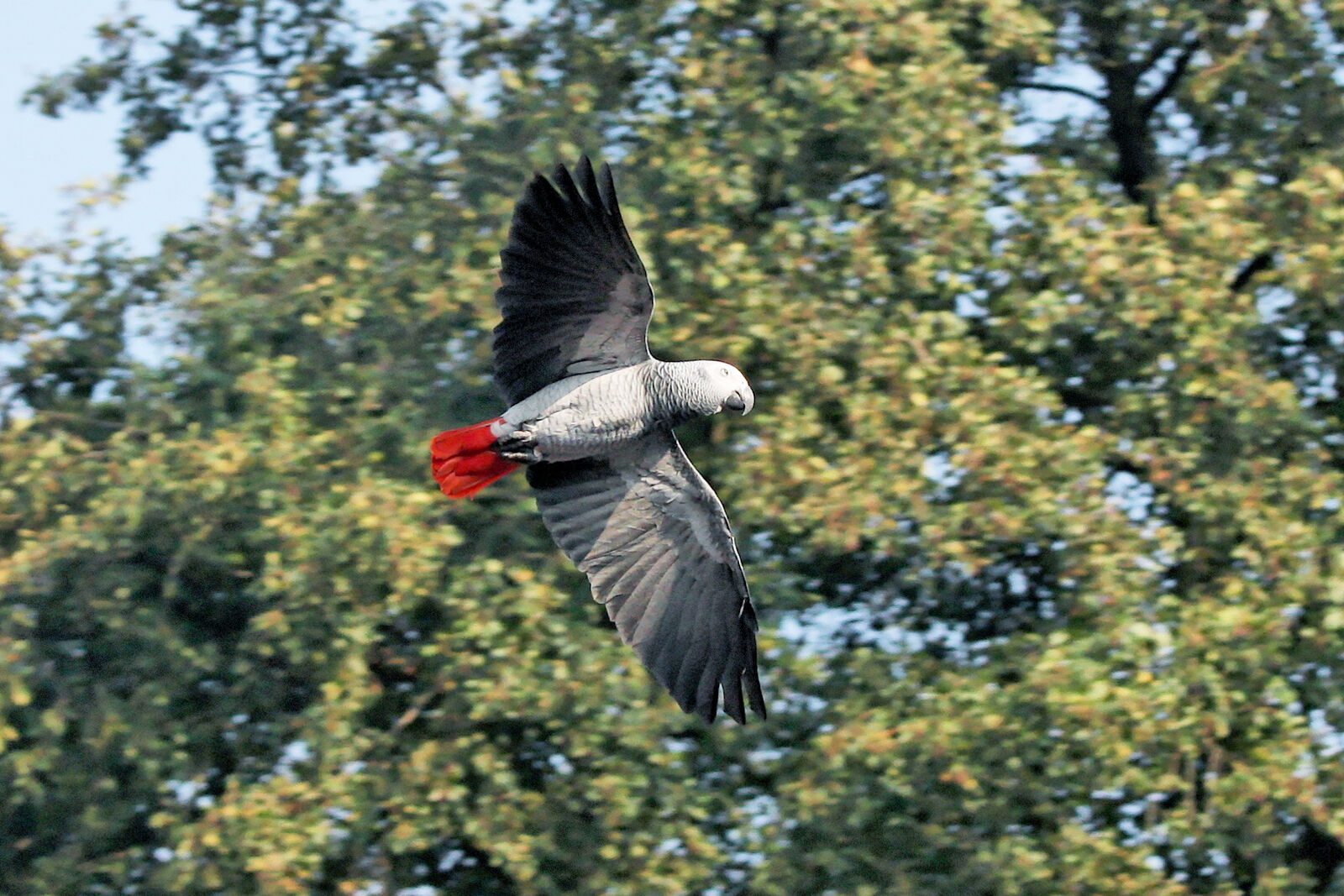
Gray parrot (Congo African grey)
Psittacus erithacus
One of the most intelligent birds on Earth.
Pet trade

Black-headed caique
Pionites melanocephalus
Pet trade

Blue-headed macaw
Primolius couloni
Aviary

Blue-throated macaw
Ara glaucogularis
Pet trade

Blue-winged (Illiger's) macaw
Primolius maracana
Pet trade