
Home / Birds / Parrots / Golden conure
Federal restrictions applyGolden conure
Guaruba guarouba
Birds › Parrots (Psittaciformes) › Psittacidae (New World and African parrots)
The golden parakeet, golden conure, or Queen of Bavaria conure (Guaruba guarouba) is a medium-sized golden-yellow Neotropical parrot native to the Amazon Basin of interior northern Brazil.
From Wikipedia: Golden parakeet, CC BY-SA 4.0 (excerpt)

Care at a glance
Species-specific values
Values researched for this exact species. Air, surface and water temperatures are listed separately, and each source is kept as published rather than averaged.
| Minimum enclosure | A lone bird's cage should measure 3 ft × 3 ft × 3 ft. Source: birdscoo.com | |
| Minimum enclosure | A pair's cage should measure at least 12 ft × 6 ft × 6 ft. Source: birdscoo.com | |
| Warm side air temperature | at least 60 °F Source: birdscoo.com | |
| Diet | Feed a mix of fresh foods and pelleted seeds, including the listed fruits and vegetables. Source: birdscoo.com | |
| Social housing | Pairs can be housed together in the specified larger cage. Source: birdscoo.com |
Warnings
Understanding the animal
About this animal
About this animal
It is the only species placed in the genus Guaruba. Its plumage is mostly bright yellow, hence its common name, but it also possesses green remiges.
From Wikipedia: Golden parakeet, CC BY-SA 4.0 (excerpt)
In the wild
In the wild
| Overview | The golden parakeet, golden conure, or Queen of Bavaria conure (Guaruba guarouba) is a medium-sized golden-yellow Neotropical parrot native to the Amazon Basin of interior northern Brazil. It is the only species placed in the genus Guaruba. Its plumage is mostly bright yellow, hence its common name, but it also possesses green remiges. It lives in the drier, upland rainforests in Amazonian Brazil, and is threatened by deforestation and flooding, and also by the now-illegal trapping of wild individuals for the pet trade. — From Wikipedia: Golden parakeet, CC BY-SA 4.0 (excerpt) |
| Where it lives | Its range is estimated to be limited to about 174,000 km2. between the Tocantins, lower Xingu, and Tapajós Rivers in the Amazon Basin south of the Amazon River in the state of Pará, northern Brazil. Additional records occur from adjacent northern Maranhão. — From Wikipedia: Golden parakeet, CC BY-SA 4.0 (excerpt) |
| Behavior | Golden parakeets are a social species, living, feeding, sleeping, and even breeding together. In the wild, they have a varied diet, feeding on fruits such as mango, muruci and açai, flowers, buds, seeds (including Croton matouensis, and crop plants, particularly maize. — From Wikipedia: Golden parakeet, CC BY-SA 4.0 (excerpt) |
| Reproduction | The golden parakeet's breeding system is almost unique amongst parrots, as pairs are aided by a number of helpers which aid in the raising of the young. This behavior is less common with parakeets in captivity, which often abandon their young after three weeks. After the golden parakeet reaches sexual maturity at the age of three years, the breeding season starts in November and runs through February. — From Wikipedia: Golden parakeet, CC BY-SA 4.0 (excerpt) |
| Appearance and size | The golden parakeet is 34–36 cm long and mainly yellow with green in the outer wings and with an all-yellow tail. It has a large horn-colored (gray) beak, pale-pink bare eye rings, brown irises, and pink legs. Males and females have identical external appearance. — From Wikipedia: Golden parakeet, CC BY-SA 4.0 (excerpt) |
| History and naming | The golden parakeet was listed in 1633 by the Dutch geographer Joannes de Laet in his History of the New World. He gave the local name as Guiarubas. De Laet included the parakeet in the 1640 French translation of his book. — From Wikipedia: Golden parakeet, CC BY-SA 4.0 (excerpt) |
| Conservation | The golden parakeet is listed on the IUCN Red List as vulnerable. This is largely due to deforestation and the capture of wild birds for aviculture, where it is in high demand due to the attractiveness of its plumage. Locally, they are considered as pests for feeding on crops, and are hunted for food or sport. — From Wikipedia: Golden parakeet, CC BY-SA 4.0 (excerpt) |
Native climate (measured)
Native climate (measured)
| Warm-season highs | about 91°F (up to 91°F in the hottest sampled areas) |
| Cool-season lows | about 70°F (down to 65°F in the coldest sampled areas) |
| Average temperature | 78–80°F across sampled records |
| Relative humidity | 81–82% on average (driest month about 76%) |
| Rainfall | about 2084 mm a year |
Measured at 45 wild occurrence records sampled against WorldClim 2.1 climate data (1970–2000 averages). Air conditions in the range are ecological context, not enclosure settings: microhabitats such as burrows, leaf litter or basking rocks can be cooler, warmer or more humid.
Profile
Profile
Researched for this exact species. Sources are listed under In the wild above.
History
The golden parakeet was listed in 1633 by the Dutch geographer Joannes de Laet in his History of the New World. He gave the local name as Guiarubas. De Laet included the parakeet in the 1640 French translation of his book.
From Wikipedia: Golden parakeet, CC BY-SA 4.0 (excerpt)
Data and studies
The numbers
The numbers
Each bar is what one source reports. Where several sources weigh in, the dashed gold band marks their average.
Maximum recorded lifespan
Longest recorded lifespan reported by each database; typical lifespans are usually shorter. The AnAge record comes from an animal in human care.
Typical adult weight
Average adult body mass in each database (FishBase gives the maximum recorded weight).
Veterinary & husbandry research
Veterinary & husbandry research
- Hematologic reference values for clinically healthy captive golden conures (Guaruba guarouba) Prioste FE et al., Avian diseases 2012
Peer-reviewed papers that mention this species alongside captivity, zoos, veterinary care or aquaculture. Some cover several species or mention it only in passing, so check the abstract. See all 2 on PubMed → PubMed
Sources for this sheet
- AnAge: The Animal Ageing and Longevity Database (Human Ageing Genomic Resources) (CC BY 3.0) Peer-reviewed researchCurated, referenced longevity and life-history records for thousands of species; maximum lifespans are often from zoo animals.
- Myhrvold et al. (2015). An amniote life-history database. Ecology 96: 3109 Peer-reviewed researchPeer-reviewed compilation of life-history data for over 21,000 birds, mammals and reptiles.
- 50 CFR 17.11: Endangered and threatened wildlife Zoo, university or veterinaryCurrent federal Endangered Species Act list.
- Species+ (UNEP-WCMC and the CITES Secretariat) Zoo, university or veterinaryThe official database of species listed under CITES. UNEP (2026). The Species+ Website. Nairobi, Kenya. Compiled by UNEP-WCMC, Cambridge, UK. Available at: www.speciesplus.net. [Accessed 04/10/2026].
- USFWS International Affairs: CITES Zoo, university or veterinaryFederal agency that issues CITES permits.
- 9 CFR 2.1: Animal Welfare Act licensing (USDA) Zoo, university or veterinaryWho needs a USDA license to breed, sell or exhibit animals.
- GBIF Backbone Taxonomy (Global Biodiversity Information Facility) (CC BY 4.0) Peer-reviewed researchInternational scientific taxonomy used here for classification. GBIF Secretariat (2023). GBIF Backbone Taxonomy. Checklist dataset https://doi.org/10.15468/39omei, accessed via GBIF.org.
- Wikipedia (species article) (CC BY-SA 4.0) Community referenceFree encyclopedia; useful overviews with their own citations. Short excerpts are quoted under CC BY-SA 4.0, each credited with a link to its article.
- PubMed (U.S. National Library of Medicine) Peer-reviewed researchIndex of peer-reviewed veterinary, zoo and husbandry research.
- iNaturalist (captive observations) Community referenceCommunity observation platform run by the California Academy of Sciences and National Geographic; observations marked captive show animals living in homes, zoos and aquariums.
More new world and african parrots
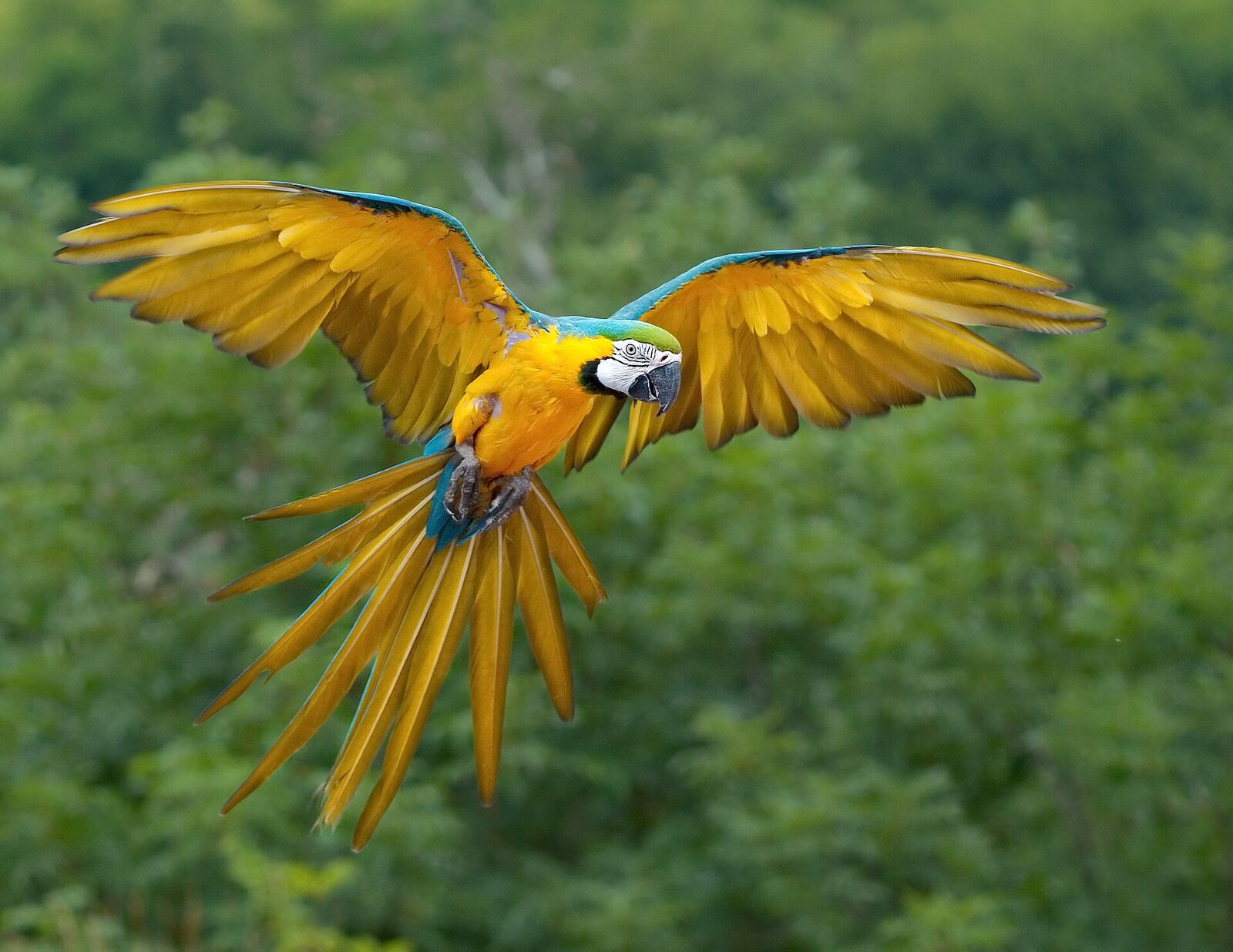
Blue-and-yellow macaw
Ara ararauna
A loud, brilliant, lifelong commitment.
Pet trade
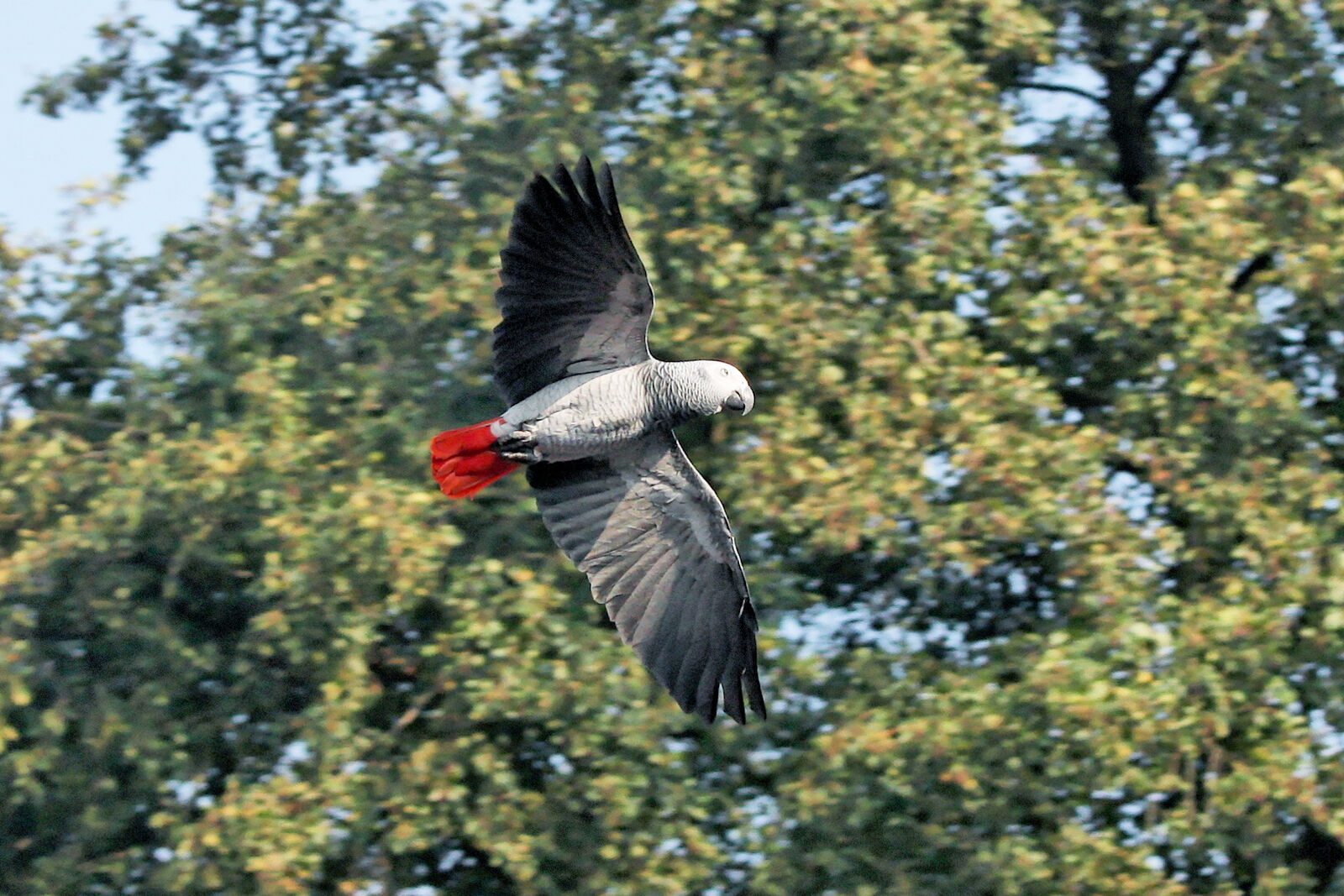
Gray parrot (Congo African grey)
Psittacus erithacus
One of the most intelligent birds on Earth.
Pet trade

Black-headed caique
Pionites melanocephalus
Pet trade

Blue-headed macaw
Primolius couloni
Aviary

Blue-throated macaw
Ara glaucogularis
Pet trade

Blue-winged (Illiger's) macaw
Primolius maracana
Pet trade