
Home / Birds / Parrots / Great green macaw
Federal restrictions applyGreat green macaw
Ara ambiguus
Birds › Parrots (Psittaciformes) › Psittacidae (New World and African parrots)
The great green macaw (Ara ambiguus), also known as Buffon's macaw or the great military macaw, is a critically endangered Central and South America parrot found in Nicaragua, Honduras, Costa Rica, Panama, Colombia and Ecuador.
From Wikipedia: Great green macaw, CC BY-SA 4.0 (excerpt)

Care at a glance
Species-specific values
Values researched for this exact species. Air, surface and water temperatures are listed separately, and each source is kept as published rather than averaged.
| Minimum enclosure | A large enclosure 15 m (50 ft) long in the off breeding season; permanent indoor housing is not recommended. Source: parrots.org | |
| Diet | Soaked or sprouted sunflower seed, listed nuts, fresh corn, cooked maize, fruits, and nutritionally complete macaw kibble. Source: parrots.org | |
| Social housing | Provide a large aviary. Source: parrots.org |
Warnings
Understanding the animal
About this animal
About this animal
Two allopatric subspecies are recognized; the nominate subspecies, Ara ambiguus ssp. ambiguus, occurs from Honduras to Colombia, while Ara ambiguus ssp.
From Wikipedia: Great green macaw, CC BY-SA 4.0 (excerpt)
In the wild
In the wild
| Overview | The great green macaw (Ara ambiguus), also known as Buffon's macaw or the great military macaw, is a critically endangered Central and South America parrot found in Nicaragua, Honduras, Costa Rica, Panama, Colombia and Ecuador. Two allopatric subspecies are recognized; the nominate subspecies, Ara ambiguus ssp. ambiguus, occurs from Honduras to Colombia, while Ara ambiguus ssp. guayaquilensis appears to be endemic to remnants of dry forests on the southern Pacific coast of Ecuador. — From Wikipedia: Great green macaw, CC BY-SA 4.0 (excerpt) |
| Where it lives | The great green macaw lives in tropical forests in the Atlantic wet lowlands of Central America from Honduras to Panama and Colombia, and in South America in the Pacific coastal lowlands in Panama, Colombia and western Ecuador, where they also occur in deciduous (seasonal), dry tropical forests. In Colombia, where both species occur, it prefers more humid woodlands than the closely related military macaw. — From Wikipedia: Great green macaw, CC BY-SA 4.0 (excerpt) |
| Behavior | Birds are usually observed in pairs or small groups of up to four to eight birds, very rarely more. In Costa Rica it breeds in the lowlands, but disperses to higher elevations afterwards, gathering together in flocks which migrate in search of food. In Costa Rica these flocks usually consist of up to 18 birds. — From Wikipedia: Great green macaw, CC BY-SA 4.0 (excerpt) |
| Appearance and size | Great green macaws are the largest parrots in their natural range, the second heaviest macaw species (although they are relatively shorter tailed than other large macaws such as the red-and-green macaw and are thus somewhat shorter), and the third heaviest parrot species in the world. This species averages 85–90 cm in length and 1.3 kg in weight. — From Wikipedia: Great green macaw, CC BY-SA 4.0 (excerpt) |
| History and naming | The great green macaw belongs to the genus Ara, which includes other large parrots, such as the scarlet macaw, the military macaw, and the blue-and-yellow macaw. This bird was first described and illustrated in 1801 by the French naturalist François Le Vaillant for his Histoire Naturelle Des Perroquets under the name "le grand Ara militaire", using a skin deposited at the Muséum national d'histoire naturelle in Paris. — From Wikipedia: Great green macaw, CC BY-SA 4.0 (excerpt) |
Profile
Profile
Researched for this exact species. Sources are listed under In the wild above.
History
The great green macaw belongs to the genus Ara, which includes other large parrots, such as the scarlet macaw, the military macaw, and the blue-and-yellow macaw. This bird was first described and illustrated in 1801 by the French naturalist François Le Vaillant for his Histoire Naturelle Des Perroquets under the name "le grand Ara militaire", using a skin deposited at the Muséum national d'histoire naturelle in Paris.
From Wikipedia: Great green macaw, CC BY-SA 4.0 (excerpt)
Data and studies
The numbers
The numbers
Each bar is what one source reports. Where several sources weigh in, the dashed gold band marks their average.
Maximum recorded lifespan
Longest recorded lifespan reported by each database; typical lifespans are usually shorter. The AnAge record comes from an animal in human care.
Typical adult weight
Average adult body mass in each database (FishBase gives the maximum recorded weight).
Veterinary & husbandry research
Veterinary & husbandry research
- Psittacine beak and feather disease in 2 free-living great green macaws: a case report and literature review Olivares RWI et al., Journal of veterinary diagnostic investigation: official publication of the American Association of Veterinary Laboratory Diagnosticians, Inc 2025
Peer-reviewed papers that mention this species alongside captivity, zoos, veterinary care or aquaculture. Some cover several species or mention it only in passing, so check the abstract. See all 3 on PubMed → PubMed
Sources for this sheet
- AnAge: The Animal Ageing and Longevity Database (Human Ageing Genomic Resources) (CC BY 3.0) Peer-reviewed researchCurated, referenced longevity and life-history records for thousands of species; maximum lifespans are often from zoo animals.
- Myhrvold et al. (2015). An amniote life-history database. Ecology 96: 3109 Peer-reviewed researchPeer-reviewed compilation of life-history data for over 21,000 birds, mammals and reptiles.
- 50 CFR 17.11: Endangered and threatened wildlife Zoo, university or veterinaryCurrent federal Endangered Species Act list.
- Species+ (UNEP-WCMC and the CITES Secretariat) Zoo, university or veterinaryThe official database of species listed under CITES. UNEP (2026). The Species+ Website. Nairobi, Kenya. Compiled by UNEP-WCMC, Cambridge, UK. Available at: www.speciesplus.net. [Accessed 04/10/2026].
- USFWS International Affairs: CITES Zoo, university or veterinaryFederal agency that issues CITES permits.
- 9 CFR 2.1: Animal Welfare Act licensing (USDA) Zoo, university or veterinaryWho needs a USDA license to breed, sell or exhibit animals.
- GBIF Backbone Taxonomy (Global Biodiversity Information Facility) (CC BY 4.0) Peer-reviewed researchInternational scientific taxonomy used here for classification. GBIF Secretariat (2023). GBIF Backbone Taxonomy. Checklist dataset https://doi.org/10.15468/39omei, accessed via GBIF.org.
- Wikipedia (species article) (CC BY-SA 4.0) Community referenceFree encyclopedia; useful overviews with their own citations. Short excerpts are quoted under CC BY-SA 4.0, each credited with a link to its article.
- PubMed (U.S. National Library of Medicine) Peer-reviewed researchIndex of peer-reviewed veterinary, zoo and husbandry research.
- iNaturalist (captive observations) Community referenceCommunity observation platform run by the California Academy of Sciences and National Geographic; observations marked captive show animals living in homes, zoos and aquariums.
More new world and african parrots
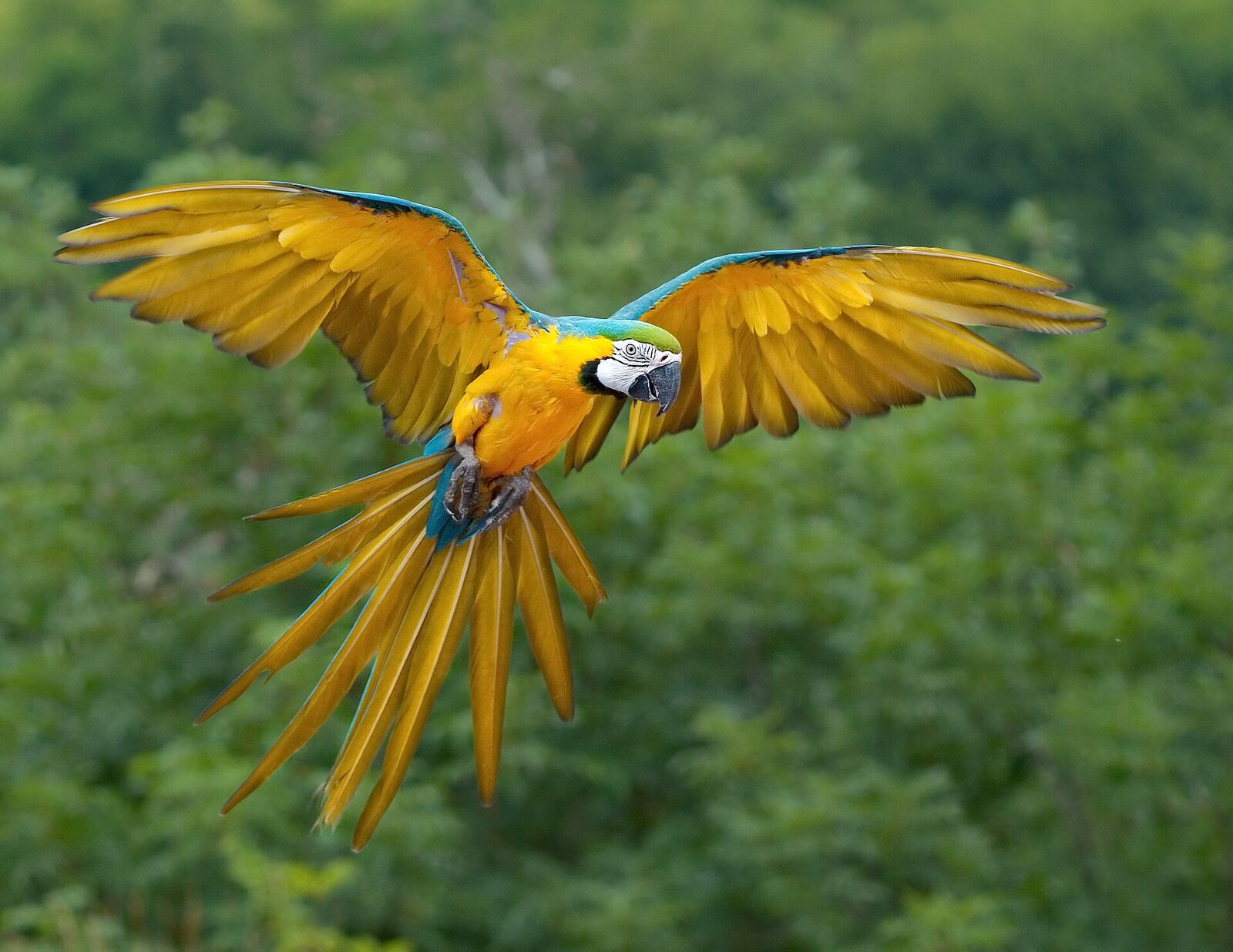
Blue-and-yellow macaw
Ara ararauna
A loud, brilliant, lifelong commitment.
Pet trade
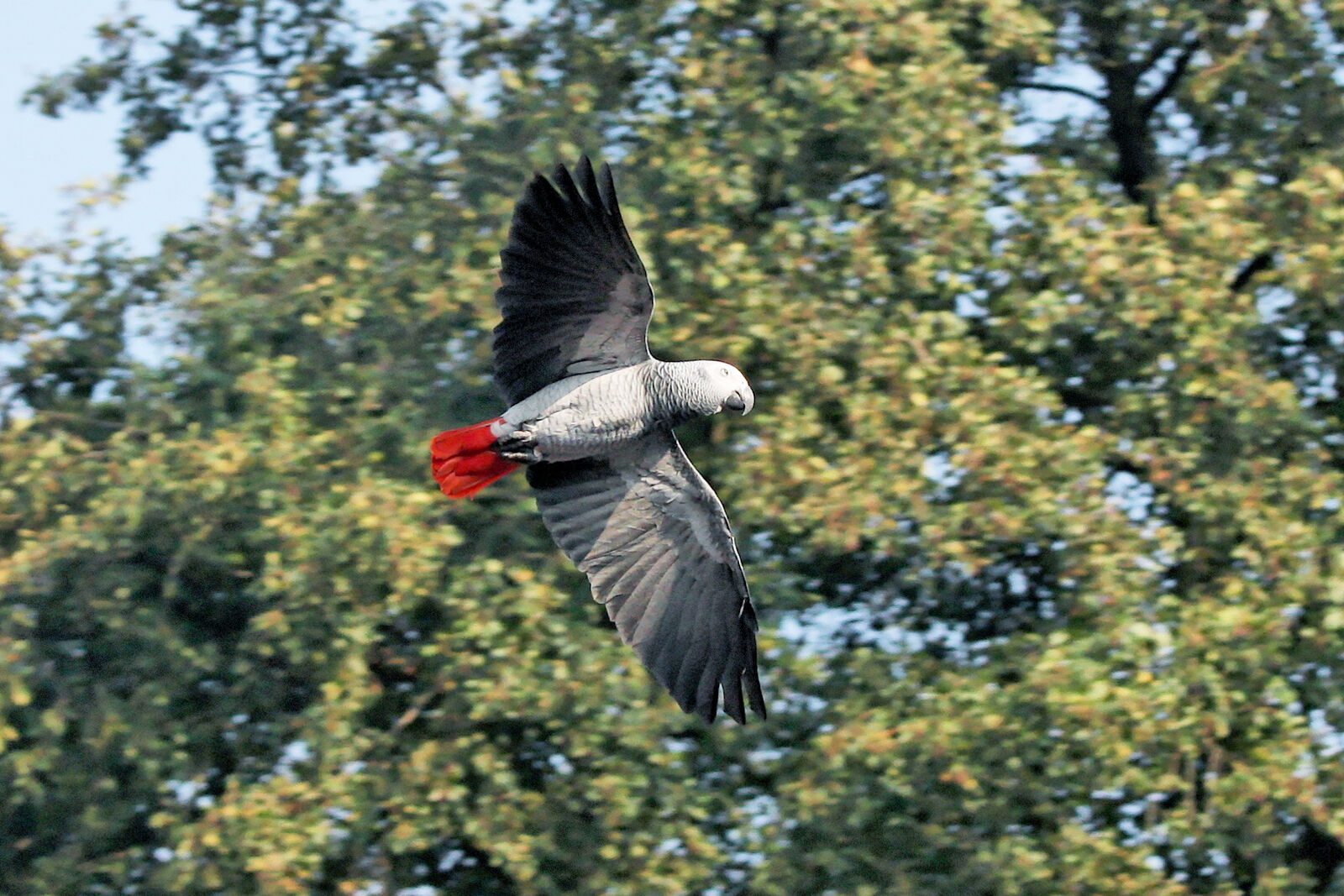
Gray parrot (Congo African grey)
Psittacus erithacus
One of the most intelligent birds on Earth.
Pet trade

Black-headed caique
Pionites melanocephalus
Pet trade

Blue-headed macaw
Primolius couloni
Aviary

Blue-throated macaw
Ara glaucogularis
Pet trade

Blue-winged (Illiger's) macaw
Primolius maracana
Pet trade