
Home / Reptiles / Snakes / Colubridae / Gray rat snake
No federal permit to keepGray rat snake
Pantherophis spiloides
Reptiles › Snakes (Serpentes) › Colubridae (Colubrid snakes)
The central ratsnake (Pantherophis alleghaniensis), also commonly known as the black ratsnake, chicken snake, gray ratsnake, midland ratsnake, and pilot black snake, is a species of nonvenomous snake in the subfamily Colubrinae of the family Colubridae.

Care at a glance
Species-specific values
Values researched for this exact species. Air, surface and water temperatures are listed separately, and each source is kept as published rather than averaged.
| Minimum enclosure | Use shoe-box-sized enclosures for babies; larger enclosures are better as they grow. Source: reptilesmagazine.com | |
| Cool side air temperature | at least 72 °F Source: reptilesmagazine.com | |
| Warm side air temperature | up to 82 °F Source: reptilesmagazine.com | |
| Humidity | 30–70 % Source: reptilesmagazine.com | |
| Uvb lighting | A low level UVB light of 6% or less is recommended. Source: reptilesmagazine.com | |
| Diet | They readily eat appropriately sized mice and rats, and may also take birds, chicks, or eggs. Source: reptilesmagazine.com | |
| Social housing | They generally do better housed individually; groups require monitoring and room for each snake. Source: reptilesmagazine.com | |
| Substrate | Non-toxic aspen shavings or coconut coir are ideal; the keeper may choose another suitable substrate. Source: reptilesmagazine.com |
Understanding the animal
About this animal
About this animal
The gray ratsnake is one of eight species within the American ratsnake genus Pantherophis.
From Wikipedia: Central ratsnake, CC BY-SA 4.0 (excerpt)
In the wild
In the wild
Researched for this exact species, not its family. Wild conditions are context, not enclosure settings.12345
| Where it lives | Under older gray-ratsnake taxonomy, these populations occupy deciduous forest, rocky hillsides, stream valleys and woodland–field mosaics in central and eastern North America. Recent revisions synonymize this name with Pantherophis alleghaniensis, so this is not an additional distinct modern species. |
| Ground it lives on | leaf litter and soil, rock crevices, hollow trees and branches |
| Climate | Temperate seasons with warm summers and cold winters; numerical wild temperature and relative-humidity ranges were not established. |
| Active | Cathemeral with seasonal shifts; northern populations brumate in shared underground winter refuges. |
| Social life | Generally independent outside mating; communal winter refuges occur. |
| Wild diet | Mice and other rodents, birds and bird eggs. |
| Behavior to plan for | An excellent climber that searches tree cavities and barn rafters; it may freeze in a kinked posture or vibrate its tail defensively. |
Native climate (measured)
Native climate (measured)
| Warm-season highs | about 90°F (up to 91°F in the hottest sampled areas) |
| Cool-season lows | about 27°F (down to 24°F in the coldest sampled areas) |
| Average temperature | 56–67°F across sampled records |
| Relative humidity | 70–72% on average (driest month about 66%) |
| Rainfall | about 1371 mm a year, spread fairly evenly |
| Winters | Cool to cold winters (lows around 27°F) in much of its native range. Seasonal slowdown may be relevant, but species-specific biology determines whether brumation or hibernation occurs. |
Measured at 145 wild occurrence records sampled against WorldClim 2.1 climate data (1970–2000 averages). Air conditions in the range are ecological context, not enclosure settings: microhabitats such as burrows, leaf litter or basking rocks can be cooler, warmer or more humid.
Profile
Profile
Researched for this exact species. Sources are listed under In the wild above.
History
The supplied Reptiles Magazine material uses the older name Elaphe obsoleta spiloides as well as Pantherophis spiloides. One author recalls keeping gray rat snakes as early as 1982, when acquiring different locality forms was substantially more difficult than in the internet era.
Data and studies
The numbers
The numbers
Each bar is what one source reports. Where several sources weigh in, the dashed gold band marks their average.
Maximum recorded lifespan
Longest recorded lifespan reported by each database; typical lifespans are usually shorter.
Incubation
Female maturity
Humidity
Species-specific values from keeper care sheets. Basking figures are often surface readings taken with an infrared thermometer, which run hotter than air.
Care articles for this species
Care articles for this species
- Gray Rat Snake Care Sheet (Reptiles Magazine)
- Care And Breeding The Gray Rat Snake (Reptiles Magazine)
Written by keepers, breeders and vets Reptiles MagazineReptiFiles
Sources for this sheet
- Myhrvold et al. (2015). An amniote life-history database. Ecology 96: 3109 Peer-reviewed researchPeer-reviewed compilation of life-history data for over 21,000 birds, mammals and reptiles.
- Reptiles Magazine (care articles) Experienced keeper or breederEstablished reptile and amphibian hobby magazine; care articles are written by breeders, keepers and veterinarians.
- Clint's Reptiles (YouTube): Black Rat Snake, The Best Pet Snake? Expert educator & keeperClint Laidlaw, PhD in Biology Education and MS in Evolutionary Ecology; owner of Clint's Reptile Room and a longtime keeper. His "Best Pet?" series reviews each species' care in depth.
- The Reptile Database Peer-reviewed researchScientist-curated catalog of every reptile species, with taxonomy and literature.
- GBIF Backbone Taxonomy (Global Biodiversity Information Facility) (CC BY 4.0) Peer-reviewed researchInternational scientific taxonomy used here for classification. GBIF Secretariat (2023). GBIF Backbone Taxonomy. Checklist dataset https://doi.org/10.15468/39omei, accessed via GBIF.org.
- Wikipedia (species article) (CC BY-SA 4.0) Community referenceFree encyclopedia; useful overviews with their own citations. Short excerpts are quoted under CC BY-SA 4.0, each credited with a link to its article.
- iNaturalist (captive observations) Community referenceCommunity observation platform run by the California Academy of Sciences and National Geographic; observations marked captive show animals living in homes, zoos and aquariums.
More colubrid snakes
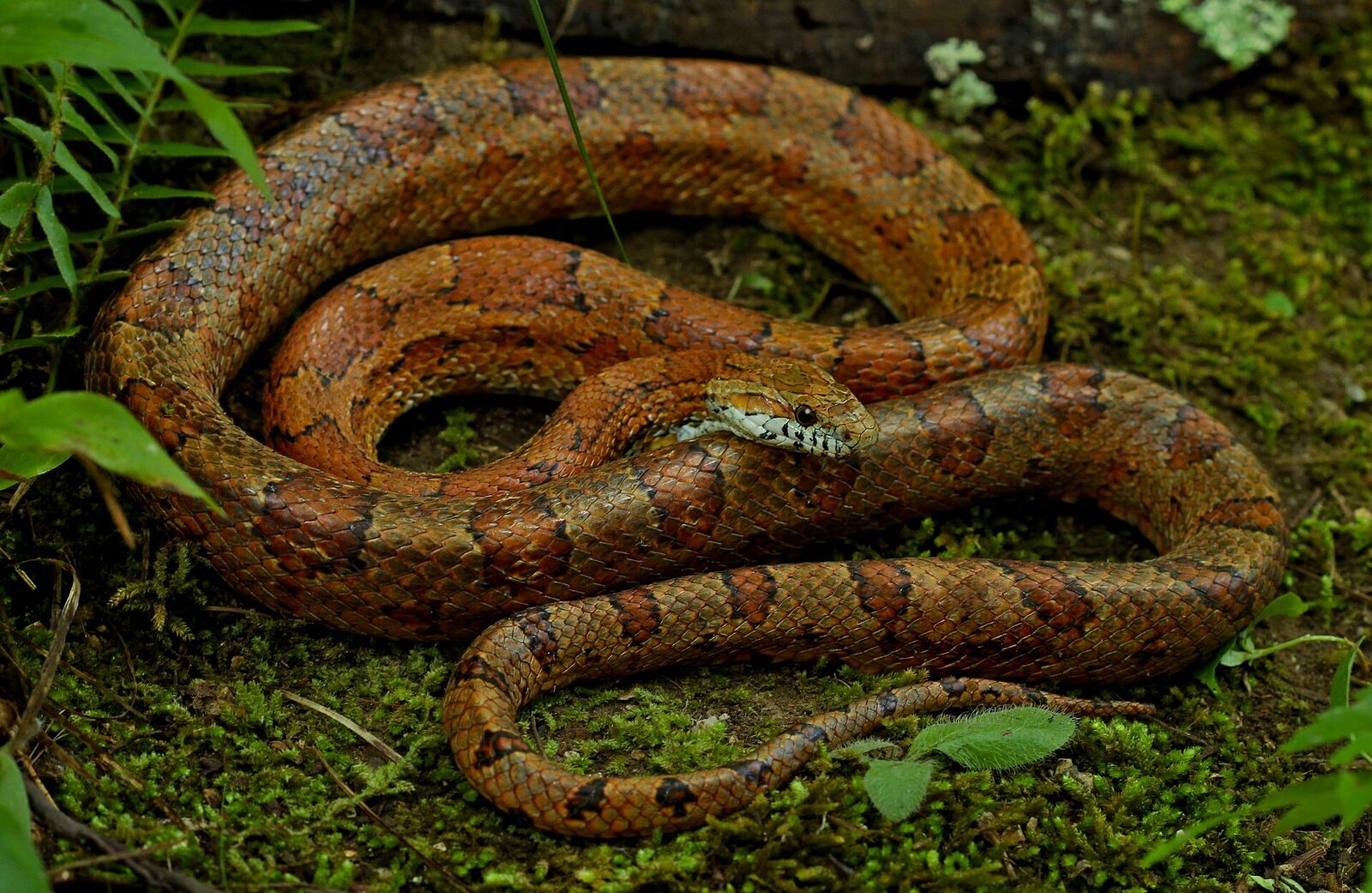
Corn snake
Pantherophis guttatus
Hardy, easy-going and colorful.
Pet trade
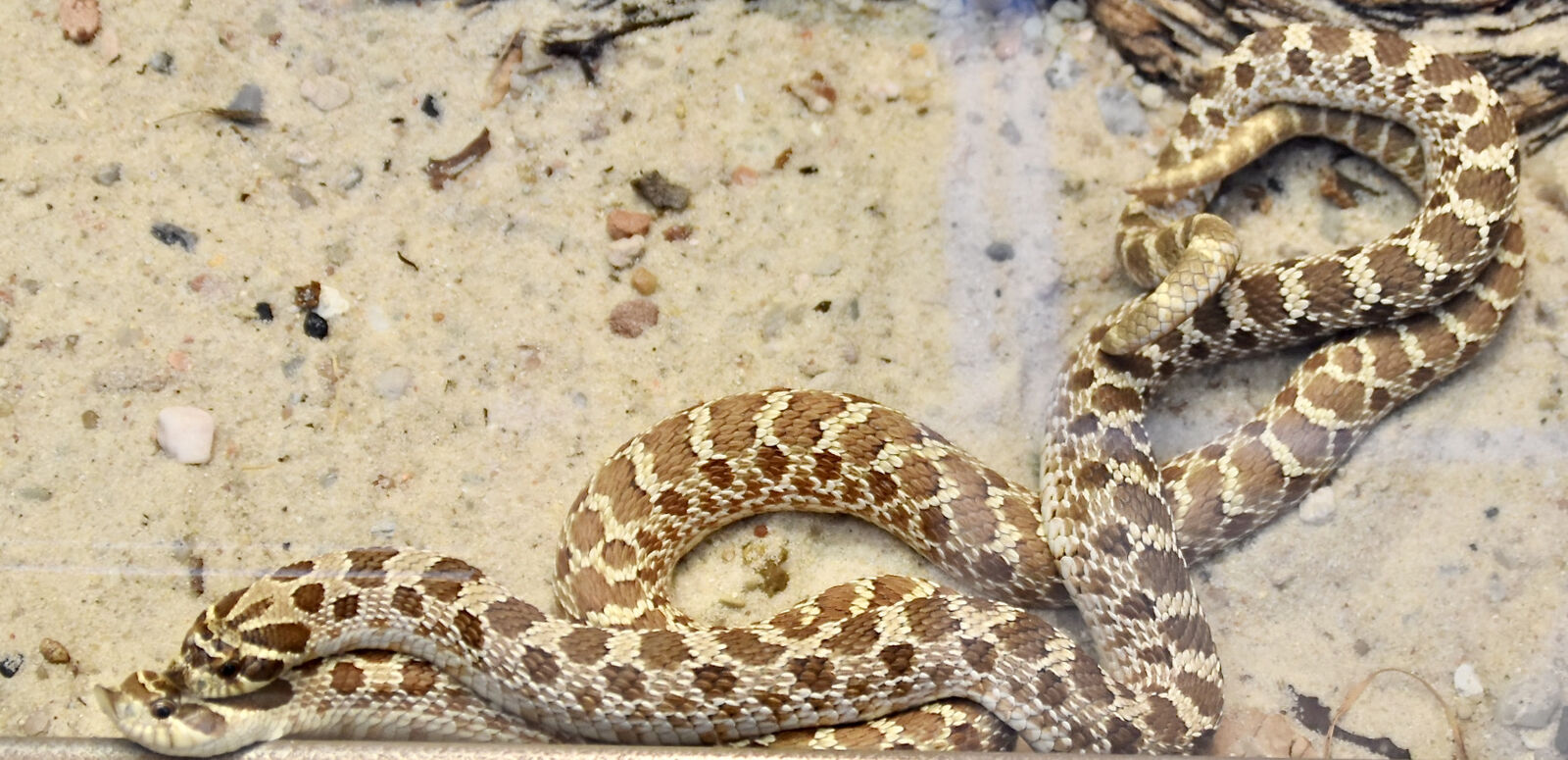
Western hognose snake
Heterodon nasicus
Dramatic bluffs from a tiny, upturned-nose snake.
Pet trade

Amur (Russian) rat snake
Elaphe schrenckii
Pet trade

Andean milk snake
Lampropeltis micropholis
Pet trade

Arizona mountain kingsnake
Lampropeltis pyromelana
Pet trade

Baird's rat snake
Pantherophis bairdi
Pet trade