
Home / Birds / Poultry and gamebirds / King (blue-breasted) quail
No federal permit to keepKing (blue-breasted) quail
Synoicus chinensis
Birds › Poultry and gamebirds (Galliformes) › Phasianidae (Chickens, pheasants and quail)
The king quail (Synoicus chinensis), also known as the Asian blue quail, blue-breasted quail, Chinese painted quail, button quail, or Chung-Chi, is a very small, diminutive galliform of the tribe Coturnicini in the subfamily Phasianinae.

Care at a glance
Species-specific values
Values researched for this exact species. Air, surface and water temperatures are listed separately, and each source is kept as published rather than averaged.
| Minimum enclosure | Provide plenty of usable floor space, clean dry bedding, hiding places, a dust bath, and clean food and water. Source: parksidepoultry.uk | |
| Diet | Use appropriately sized small gamebird or quail feed; small seeds and occasional treats are also suitable. Source: parksidepoultry.uk | |
| Social housing | Often kept as male–female pairs; multiple males need extra care because they may fight. Source: parksidepoultry.uk | |
| Substrate | Use clean, dry bedding; loose bedding can support dust bathing and foraging. Source: parksidepoultry.uk | |
| Drinking water | Keep fresh, clean water available at all times. Source: parksidepoultry.uk |
Understanding the animal
About this animal
About this animal
They are the smallest member in this subfamily and the family Phasianidae, as well as being the smallest and lightest member of the order Galliformes. It is quite common in aviculture worldwide, where it is sometimes referred to as the "button quail", although it is not closely related to the family of birds called buttonquails.
From Wikipedia: King quail, CC BY-SA 4.0 (excerpt)
In the wild
In the wild
Researched for this exact species, not its family. Wild conditions are context, not enclosure settings.12
| Where it lives | Occurs from South and Southeast Asia through Indonesia and New Guinea to Australia. Uses damp grasslands, wetland edges and rice-field margins with dense low vegetation. |
| Ground it lives on | Soil beneath dense grasses and low vegetation. |
| Social life | Socially monogamous; wild territorial and flock structure was not adequately established. |
| Wild diet | Small grass and weed seeds, insects, larvae and other tiny invertebrates. |
| Behavior to plan for | Stays concealed close to the ground and places nests under vegetation. Chicks rely heavily on animal food initially. |
Native climate (measured)
Native climate (measured)
| Warm-season highs | about 84°F (up to 88°F in the hottest sampled areas) |
| Cool-season lows | about 47°F (down to 42°F in the coldest sampled areas) |
| Average temperature | 63–74°F across sampled records |
| Relative humidity | 69–73% on average (driest month about 65%) |
| Rainfall | about 1263 mm a year |
Measured at 48 wild occurrence records sampled against WorldClim 2.1 climate data (1970–2000 averages). Air conditions in the range are ecological context, not enclosure settings: microhabitats such as burrows, leaf litter or basking rocks can be cooler, warmer or more humid.
Sources for this sheet
- GBIF Backbone Taxonomy (Global Biodiversity Information Facility) (CC BY 4.0) Peer-reviewed researchInternational scientific taxonomy used here for classification. GBIF Secretariat (2023). GBIF Backbone Taxonomy. Checklist dataset https://doi.org/10.15468/39omei, accessed via GBIF.org.
- Wikipedia (species article) (CC BY-SA 4.0) Community referenceFree encyclopedia; useful overviews with their own citations. Short excerpts are quoted under CC BY-SA 4.0, each credited with a link to its article.
- iNaturalist (captive observations) Community referenceCommunity observation platform run by the California Academy of Sciences and National Geographic; observations marked captive show animals living in homes, zoos and aquariums.
More chickens, pheasants and quail
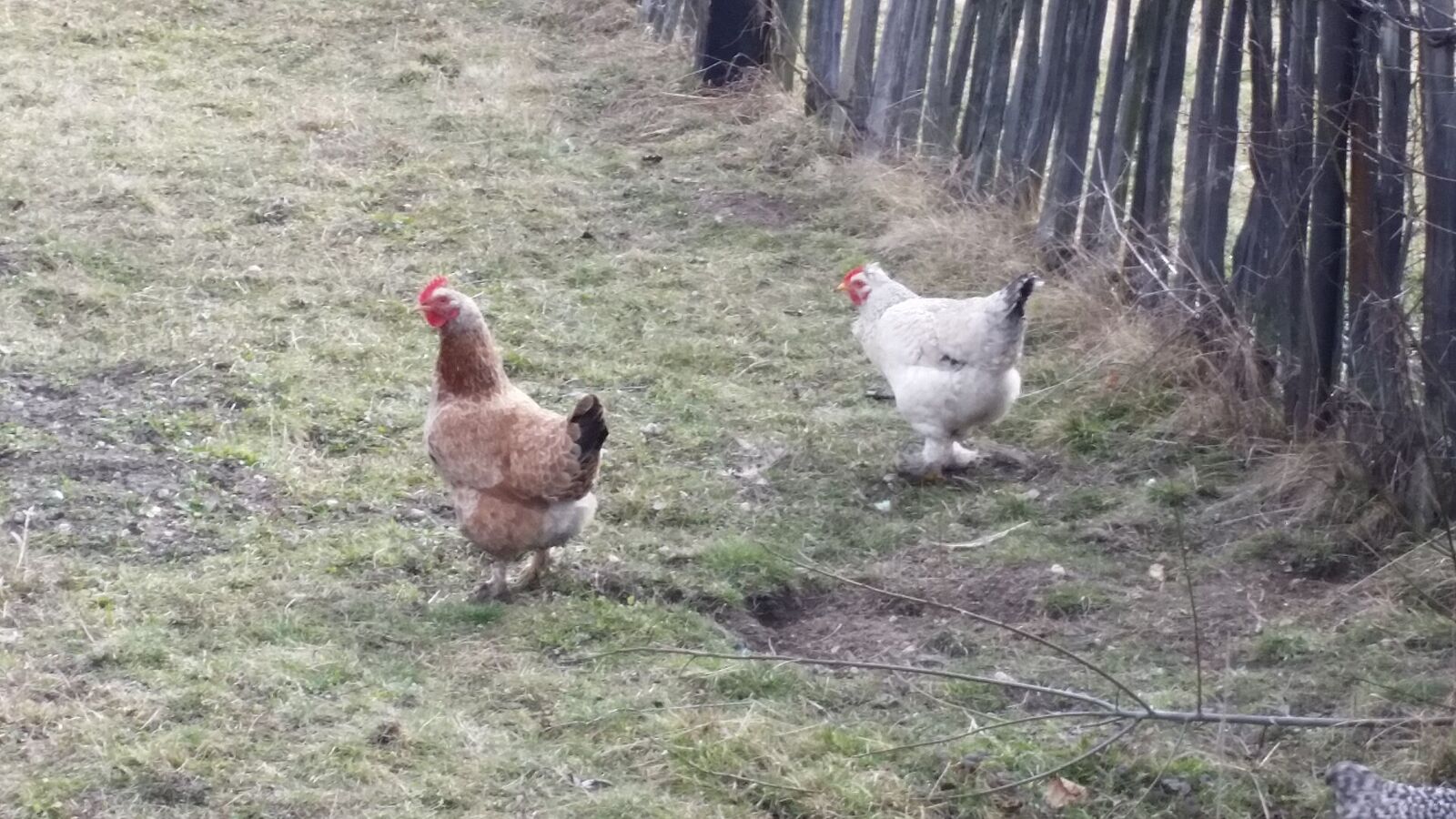
Chicken
Gallus gallus domesticus
Eggs, bug control and big personalities.
Farm & ranch

Cheer pheasant
Catreus wallichii
Aviary

Congo peafowl
Afropavo congensis
Aviary

Coqui francolin
Campocolinus coqui
Aviary

Edwards's pheasant
Lophura edwardsi
Aviary

Japanese quail
Coturnix japonica
Farm & ranch