
Home / Reptiles / Snakes / Pythonidae / Macklot's python
Some federal rules applyMacklot's python
Liasis mackloti
Reptiles › Snakes (Serpentes) › Pythonidae (Pythons)
Liasis mackloti, commonly known as Macklot's python or the freckled python, is a species of python, a non-venomous snake in the family Pythonidae.
From Wikipedia: Liasis mackloti, CC BY-SA 4.0 (excerpt)

Care at a glance
Species-specific values
Values researched for this exact species. Air, surface and water temperatures are listed separately, and each source is kept as published rather than averaged.
| Minimum enclosure | 20gal long for juveniles; adults need at least 40gal, with larger enclosures preferred for females. Source: allreptiles.ca | |
| Basking surface temperature | 88–92 °F Source: allreptiles.ca | |
| Warm side air temperature | 88–92 °F Source: allreptiles.ca | |
| Cool side air temperature | 78–82 °F Source: allreptiles.ca | |
| Humidity | 50–70 % Source: allreptiles.ca | |
| Uvb lighting | UVB is optional and may be beneficial in small amounts. Source: allreptiles.ca | |
| Diet | Hatchlings can eat pinky or fuzzy mice; adults can eat rats or similarly sized prey. Source: allreptiles.ca | |
| Feeding frequency | Feed juveniles every 7-10 days and adults every 10-14 days. Source: allreptiles.ca | |
| Substrate | Recommended options include mulch, coconut husk, or reptile bark; mixes can include coco fibre, repti soil, or jungle mix. Source: allreptiles.ca |
Understanding the animal
About this animal
About this animal
The species is native to Indonesia, Timor-Leste, Papua New Guinea, and coastal northern Australia. Three subspecies are recognized, including the nominate subspecies described here.
From Wikipedia: Liasis mackloti, CC BY-SA 4.0 (excerpt)
In the wild
In the wild
| Overview | Liasis mackloti, commonly known as Macklot's python or the freckled python, is a species of python, a non-venomous snake in the family Pythonidae. The species is native to Indonesia, Timor-Leste, Papua New Guinea, and coastal northern Australia. Three subspecies are recognized, including the nominate subspecies described here. — From Wikipedia: Liasis mackloti, CC BY-SA 4.0 (excerpt) |
| Where it lives | Liasis mackloti is found in Indonesia in the Lesser Sunda Islands of Savu, Roti, Samao, Timor and Wetar, in East Timor, Papua New Guinea, and coastal northern Australia. The type locality given is "les îles de Timor et de Samao ". Brongersma (1968) restricted the type locality to "Timor" by lectotype designation. — From Wikipedia: Liasis mackloti, CC BY-SA 4.0 (excerpt) |
| Reproduction | Liasis mackloti is known to breed easily in captivity. — From Wikipedia: Liasis mackloti, CC BY-SA 4.0 (excerpt) |
| Appearance and size | Attaining 7 ft (2.13 m) or more in total length (tail included), Macklot's python is large and if not treated properly can be a poor-tempered snake. Its coloration consists of a blackish-brown to green base color, with yellow to ochre sides, and a white belly that is patterned with small and dispersed yellow spots or black speckles, while the labial scales are pale in color. — From Wikipedia: Liasis mackloti, CC BY-SA 4.0 (excerpt) |
Read about this species in the wild at The Reptile Database.
Native climate (measured)
Native climate (measured)
| Warm-season highs | about 89°F (up to 91°F in the hottest sampled areas) |
| Cool-season lows | about 67°F (down to 64°F in the coldest sampled areas) |
| Average temperature | 75–81°F across sampled records |
| Relative humidity | 78–83% on average (driest month about 77%) |
| Rainfall | about 1383 mm a year |
Measured at 39 wild occurrence records sampled against WorldClim 2.1 climate data (1970–2000 averages). Air conditions in the range are ecological context, not enclosure settings: microhabitats such as burrows, leaf litter or basking rocks can be cooler, warmer or more humid.
Profile
Profile
Researched for this exact species. Sources are listed under In the wild above.
Data and studies
The numbers
The numbers
Each bar is what one source reports. Where several sources weigh in, the dashed gold band marks their average.
Maximum recorded lifespan
Longest recorded lifespan reported by each database; typical lifespans are usually shorter. The AnAge record comes from an animal in human care.
Incubation
Sources for this sheet
- AnAge: The Animal Ageing and Longevity Database (Human Ageing Genomic Resources) (CC BY 3.0) Peer-reviewed researchCurated, referenced longevity and life-history records for thousands of species; maximum lifespans are often from zoo animals.
- Myhrvold et al. (2015). An amniote life-history database. Ecology 96: 3109 Peer-reviewed researchPeer-reviewed compilation of life-history data for over 21,000 birds, mammals and reptiles.
- Species+ (UNEP-WCMC and the CITES Secretariat) Zoo, university or veterinaryThe official database of species listed under CITES. UNEP (2026). The Species+ Website. Nairobi, Kenya. Compiled by UNEP-WCMC, Cambridge, UK. Available at: www.speciesplus.net. [Accessed 04/10/2026].
- USFWS International Affairs: CITES Zoo, university or veterinaryFederal agency that issues CITES permits.
- The Reptile Database Peer-reviewed researchScientist-curated catalog of every reptile species, with taxonomy and literature.
- GBIF Backbone Taxonomy (Global Biodiversity Information Facility) (CC BY 4.0) Peer-reviewed researchInternational scientific taxonomy used here for classification. GBIF Secretariat (2023). GBIF Backbone Taxonomy. Checklist dataset https://doi.org/10.15468/39omei, accessed via GBIF.org.
- Wikipedia (species article) (CC BY-SA 4.0) Community referenceFree encyclopedia; useful overviews with their own citations. Short excerpts are quoted under CC BY-SA 4.0, each credited with a link to its article.
- iNaturalist (captive observations) Community referenceCommunity observation platform run by the California Academy of Sciences and National Geographic; observations marked captive show animals living in homes, zoos and aquariums.
More pythons
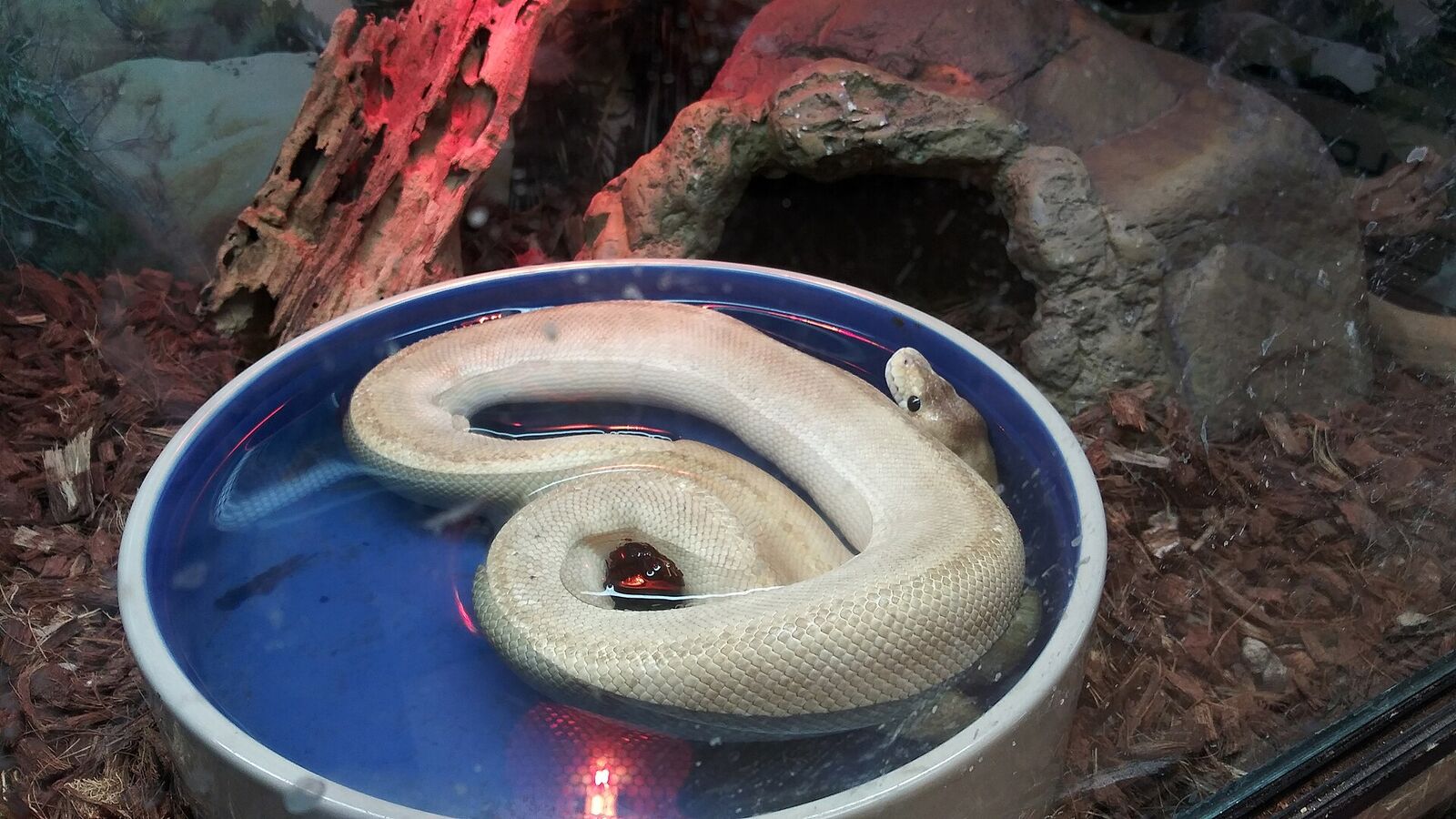
Ball python
Python regius
The calm, curl-up classic of pet snakes.
Pet trade
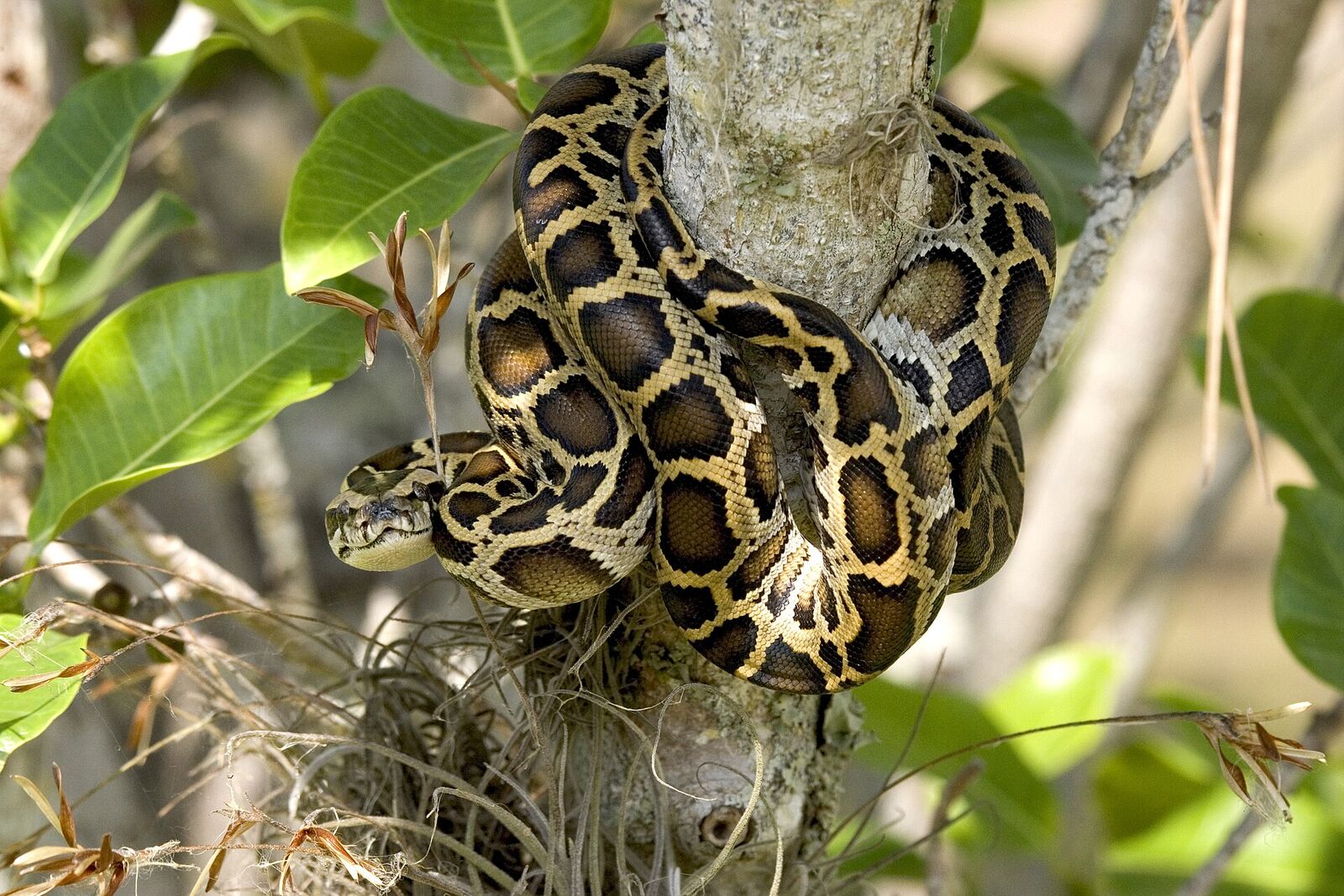
Burmese python
Python bivittatus
A heavy-bodied giant with a famously calm reputation.
Pet trade
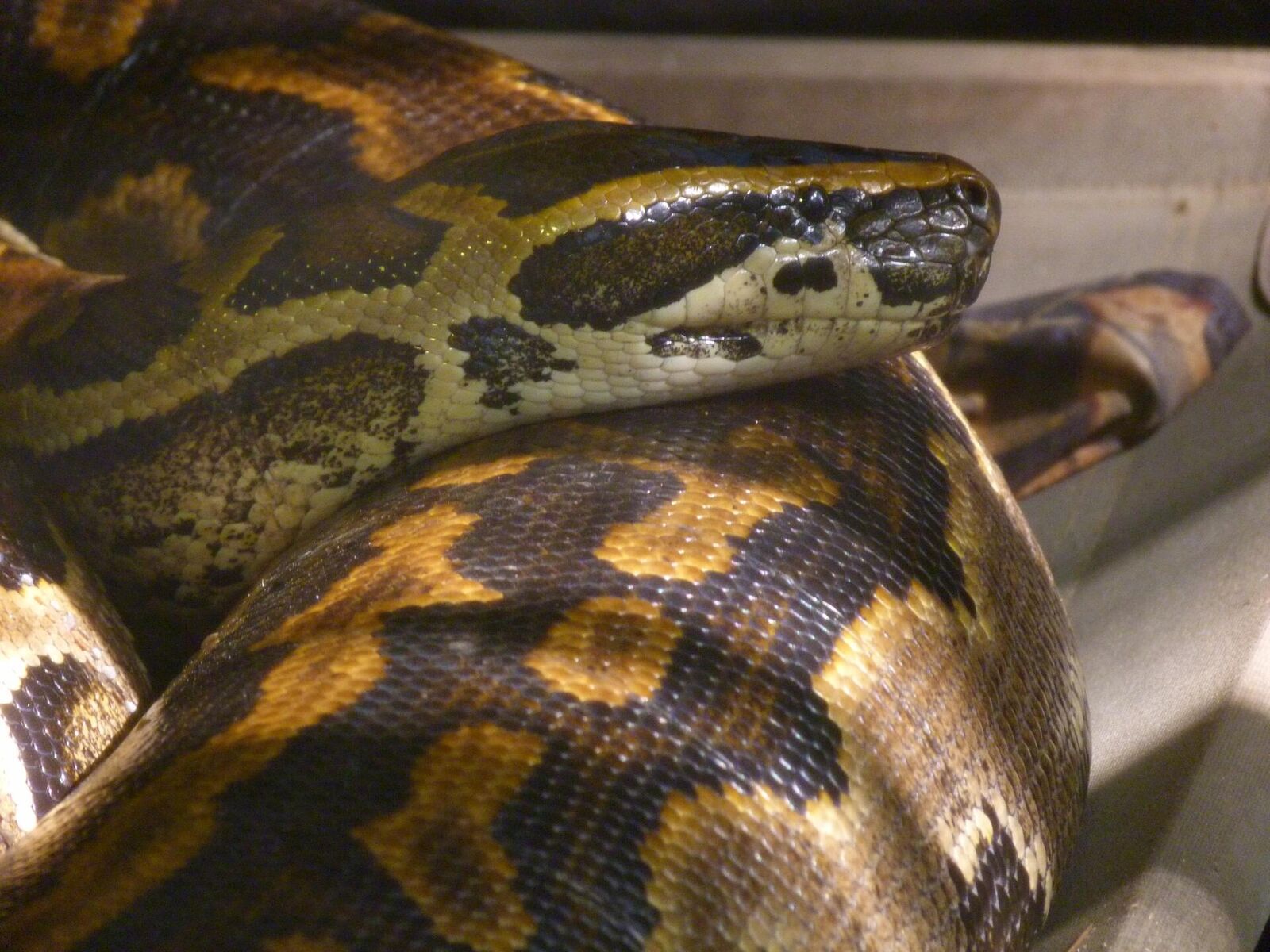
Central African rock python
Python sebae
Africa's largest snake, powerful and spirited.
Pet trade
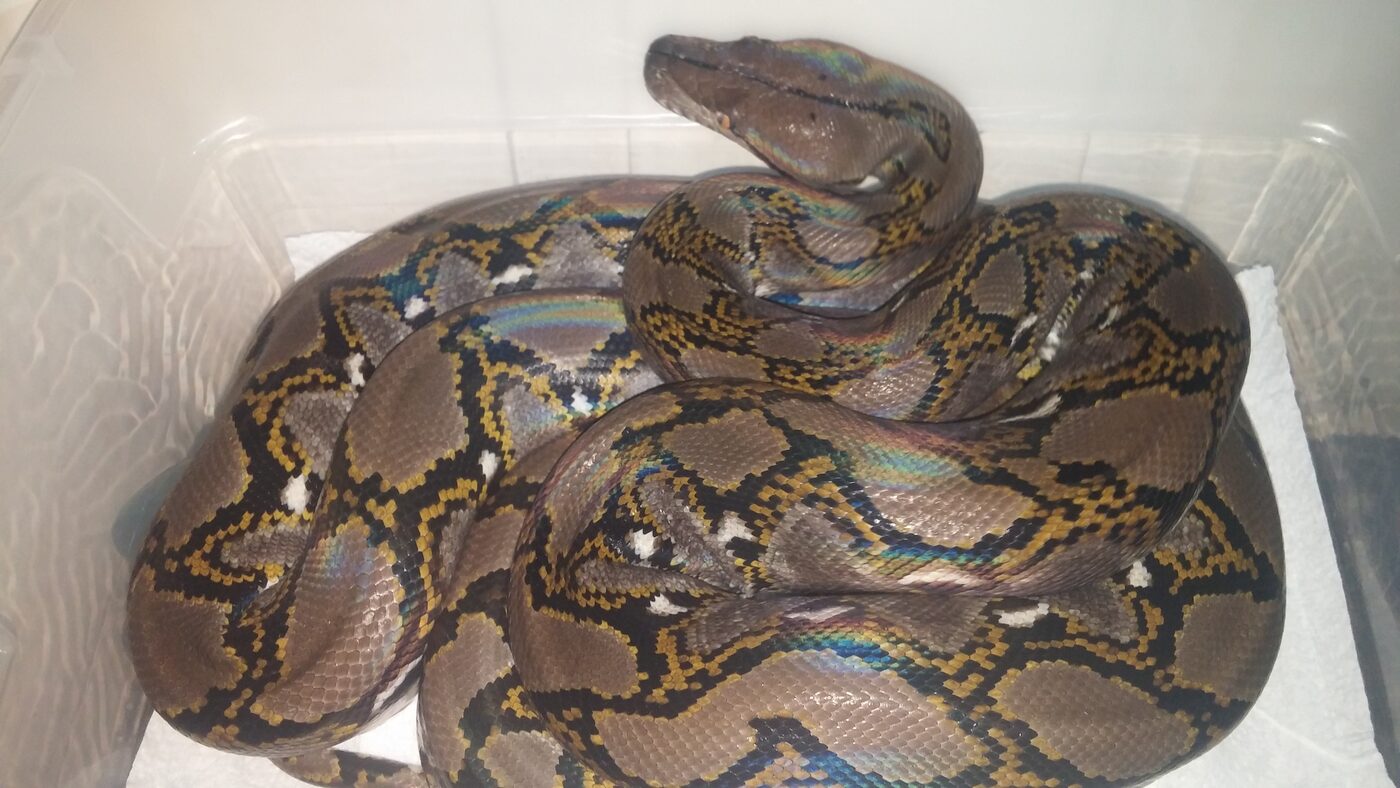
Reticulated python
Malayopython reticulatus
The world's longest snake, and a brilliant, active giant.
Pet trade

Amethystine python
Simalia amethistina
Pet trade

Angolan python
Python anchietae
Pet trade