
Home / Reptiles / Snakes / Boidae / Madagascar tree boa
Some federal rules applyMadagascar tree boa
Sanzinia madagascariensis
Reptiles › Snakes (Serpentes) › Boidae (Boas)
Sanzinia madagascariensis, also known as the Madagascar tree boa or Malagasy tree boa, is a boa species endemic to the island of Madagascar.
Care at a glance
Setup
One answer per setting. Where sources differ, the smaller figure is the minimum and the larger is what we recommend.
| Adult enclosure | At least 1 meter long x 0.7 meters wide x 0.7 meters high Preferably 3.2 x 2.3 x 2.3 feet Spacious enough for an adult female. | reptiletalk.net |
| Hot spot | At least 86°F Preferably 88°F Proper temperature for basking. | reptiletalk.net |
| Warm side | At least 75°F Preferably 77°F General enclosure temperature. | reptiletalk.net |
| Night temperature | At least 70°F Preferably 72°F Nighttime temperature drop. | reptiletalk.net |
| Humidity | At least 60% Preferably 70% Fairly enough for Madagascar tree boas without needing excessively high levels. | reptiletalk.net |
| Lighting | 10 hour cycle Mimics normal daytime natural light pattern. | reptiletalk.net |
| Food | one well-sized rat every three weeks Adults shouldn't be fed too often to prevent overfeeding. | reptiletalk.net |
Understanding the animal
About this animal
About this animal
It was once considered conspecific with the Nosy Komba ground boa. Like all other boas, it is non-venomous.
From Wikipedia: Sanzinia madagascariensis, CC BY-SA 4.0 (excerpt)
Localities
Localities
Keepers buy these by where the bloodline comes from. Care is basically the same; size, color and temperament can differ. “Breeder-reported” details still need a published source.
| S.m.madagascariensis | Greenish color variation | Breeder-reported reptiletalk.net |
| S.m.volontany | Brownish color variation | Breeder-reported reptiletalk.net |
In the wild
In the wild
Researched for this exact species, not its family. Wild conditions are context, not enclosure settings.12
| Active | Madagascar tree boas are arboreal and generally nocturnal, though they also leave trees to actively hunt on the ground. |
| Wild diet | In the wild, they feed on bats, birds, and other small mammals, using their thermoreceptive pits to locate prey. |
| Behavior to plan for | Gravid females experience a temporary skin color darkening that increases heat absorption for developing young. |
Profile
Profile
Researched for this exact species. Sources are listed under In the wild above.
Keeper tips
- Keepers should exercise caution with adults because they are very strong snakes with powerful jaws.
Remarkable facts
- Captive Madagascar tree boas can live for 15 years or more.
- Adults typically average 4 to 5 feet, though 6 to 7 foot specimens are also not uncommon.
Data and studies
Veterinary & husbandry research
Veterinary & husbandry research
- Intracoelomic anaplastic sarcoma in an intersex Madagascar tree boa (Sanzinia madagascariensis). et al., Journal of veterinary diagnostic investigation: official publication of the American Association of Veterinary Laboratory Diagnosticians, Inc 2013
- Characterization of a biphasic neoplasm in a Madagascar tree boa (Sanzinia madagascariensis). et al., Veterinary pathology 2008
- Reptarenaviruses in apparently healthy snakes in an Australian zoological collection. et al., Australian veterinary journal 2019
Peer-reviewed papers that mention this species alongside captivity, zoos, veterinary care or aquaculture. Some cover several species or mention it only in passing, so check the abstract. PubMed
Sources for this sheet
- Species+ (UNEP-WCMC and the CITES Secretariat) Zoo, university or veterinaryThe official database of species listed under CITES. UNEP (2026). The Species+ Website. Nairobi, Kenya. Compiled by UNEP-WCMC, Cambridge, UK. Available at: www.speciesplus.net. [Accessed 04/10/2026].
- USFWS International Affairs: CITES Zoo, university or veterinaryFederal agency that issues CITES permits.
- Madagascar tree boa (reptiletalk.net) Experienced keeper or breederKeeper care guide.
- Wikipedia: Sanzinia madagascariensis (CC BY-SA 4.0) Community referenceEncyclopedia article.
- The Reptile Database: Sanzinia madagascariensis Zoo, university or veterinaryTaxonomy, distribution and literature for every reptile species.
- The Reptile Database Peer-reviewed researchScientist-curated catalog of every reptile species, with taxonomy and literature.
- GBIF Backbone Taxonomy (Global Biodiversity Information Facility) (CC BY 4.0) Peer-reviewed researchInternational scientific taxonomy used here for classification. GBIF Secretariat (2023). GBIF Backbone Taxonomy. Checklist dataset https://doi.org/10.15468/39omei, accessed via GBIF.org.
- Wikipedia (species article) (CC BY-SA 4.0) Community referenceFree encyclopedia; useful overviews with their own citations. Short excerpts are quoted under CC BY-SA 4.0, each credited with a link to its article.
- PubMed (U.S. National Library of Medicine) Peer-reviewed researchIndex of peer-reviewed veterinary, zoo and husbandry research.
More boas
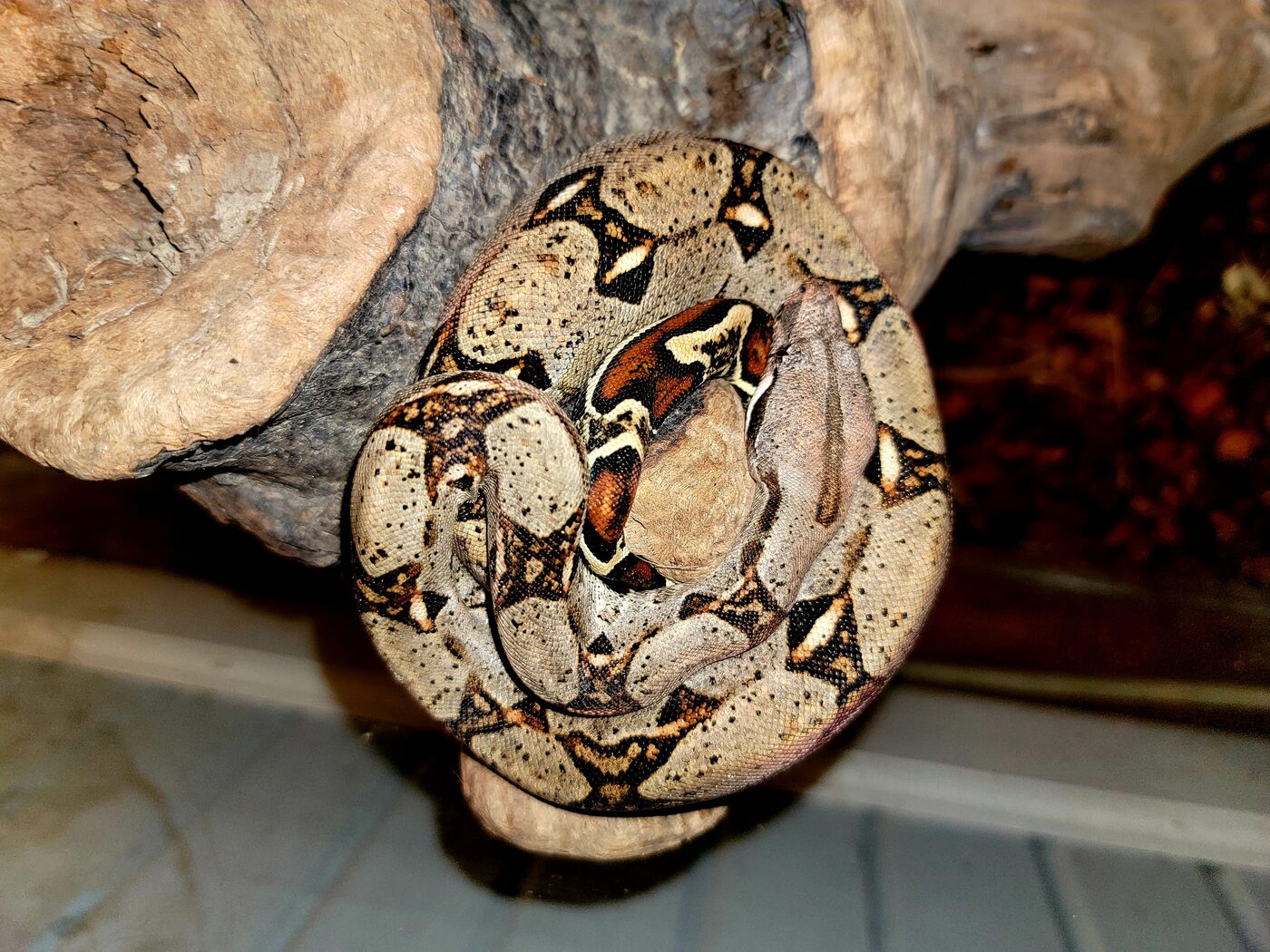
Common boa constrictor (red-tailed boa)
Boa constrictor
A powerful but famously steady big snake.
Pet trade
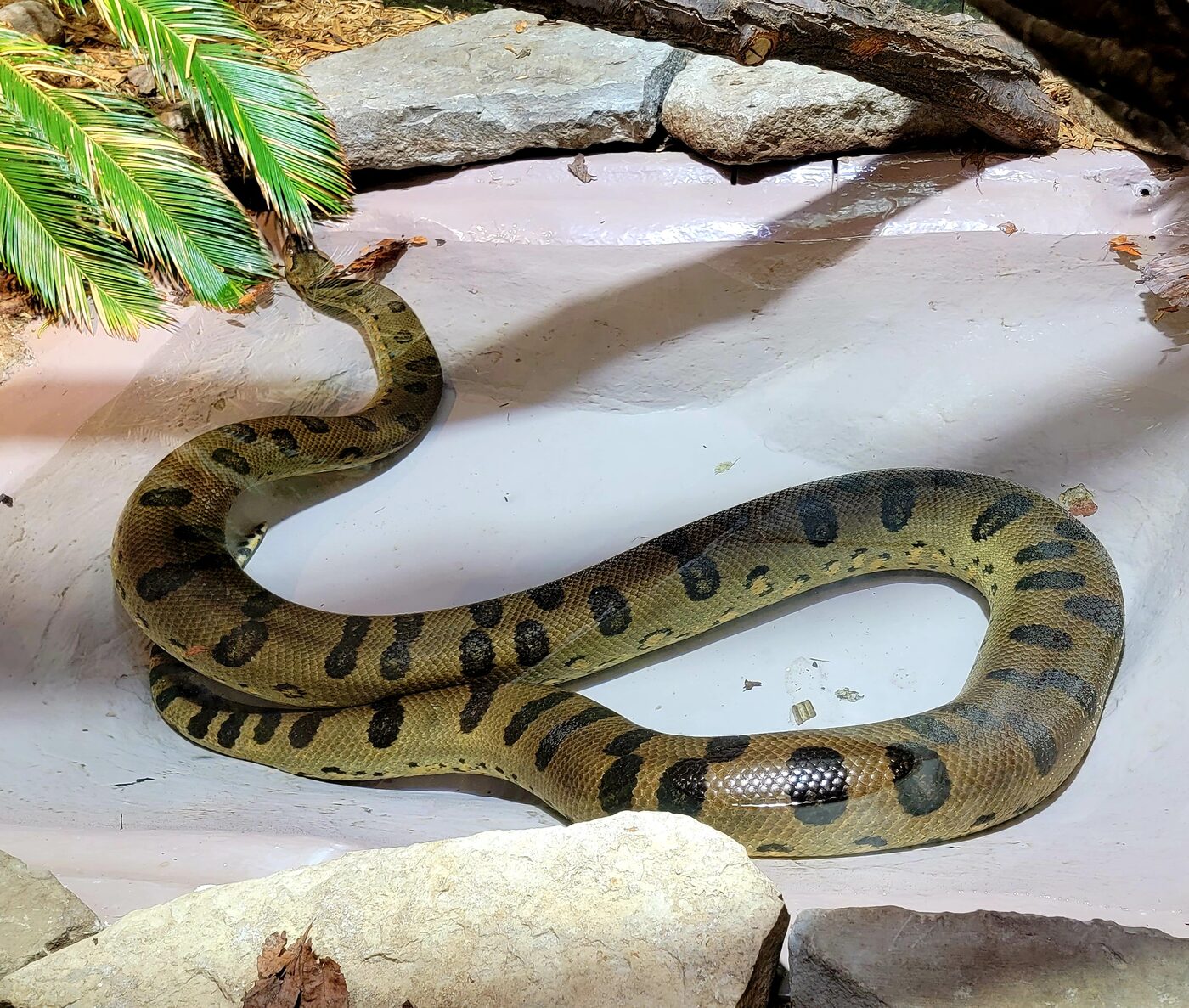
Green anaconda
Eunectes murinus
The heaviest snake on Earth, at home in the water.
Pet trade

Amazon basin emerald tree boa
Corallus batesii
Pet trade
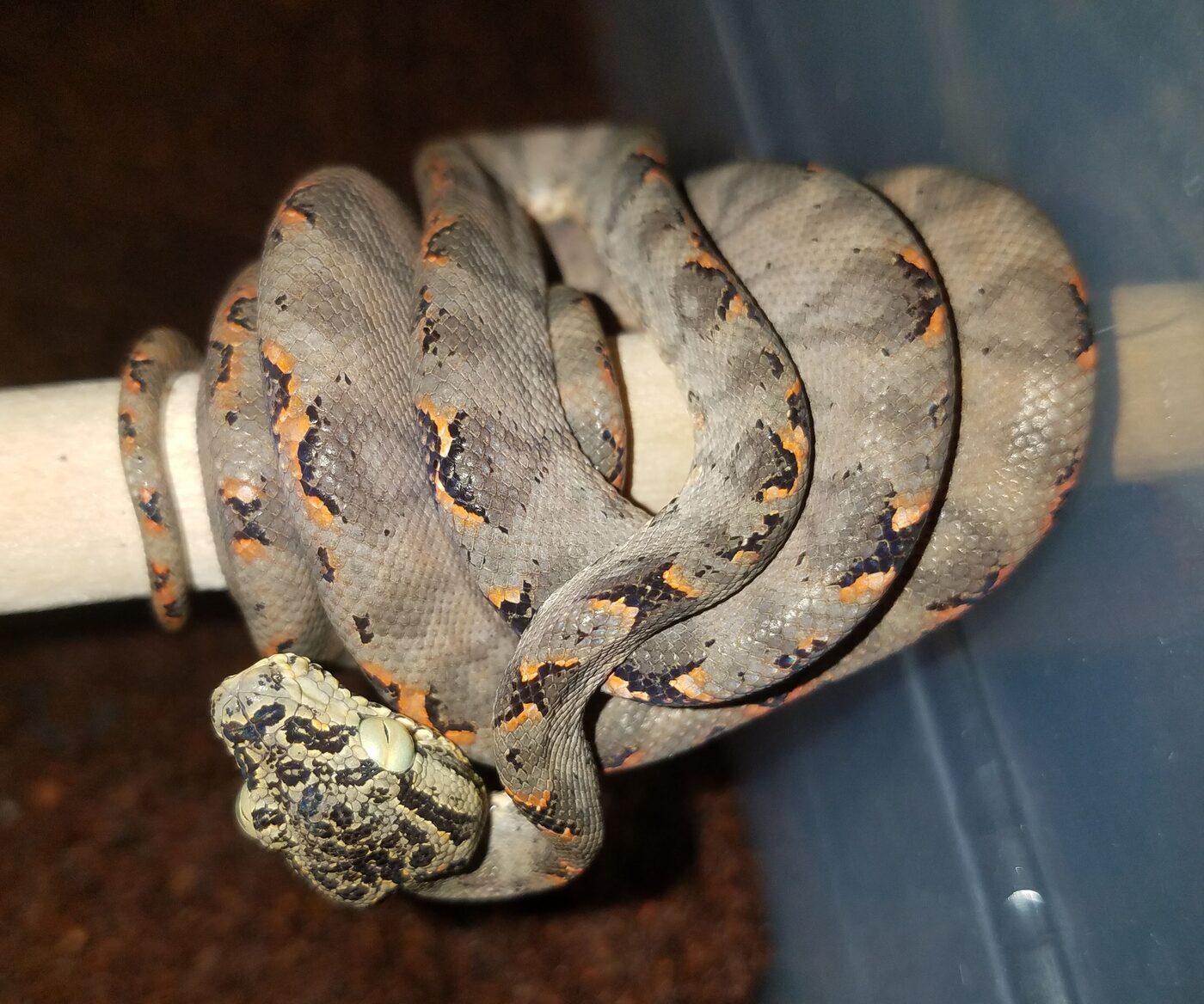
Amazon tree boa
Corallus hortulana
Pet trade

Annulated tree boa
Corallus annulatus
Pet trade

Arabian sand boa
Eryx jayakari
Pet trade