
Home / Reptiles / Lizards / Scincidae / Merauke blue-tongued skink
No federal permit to keepMerauke blue-tongued skink
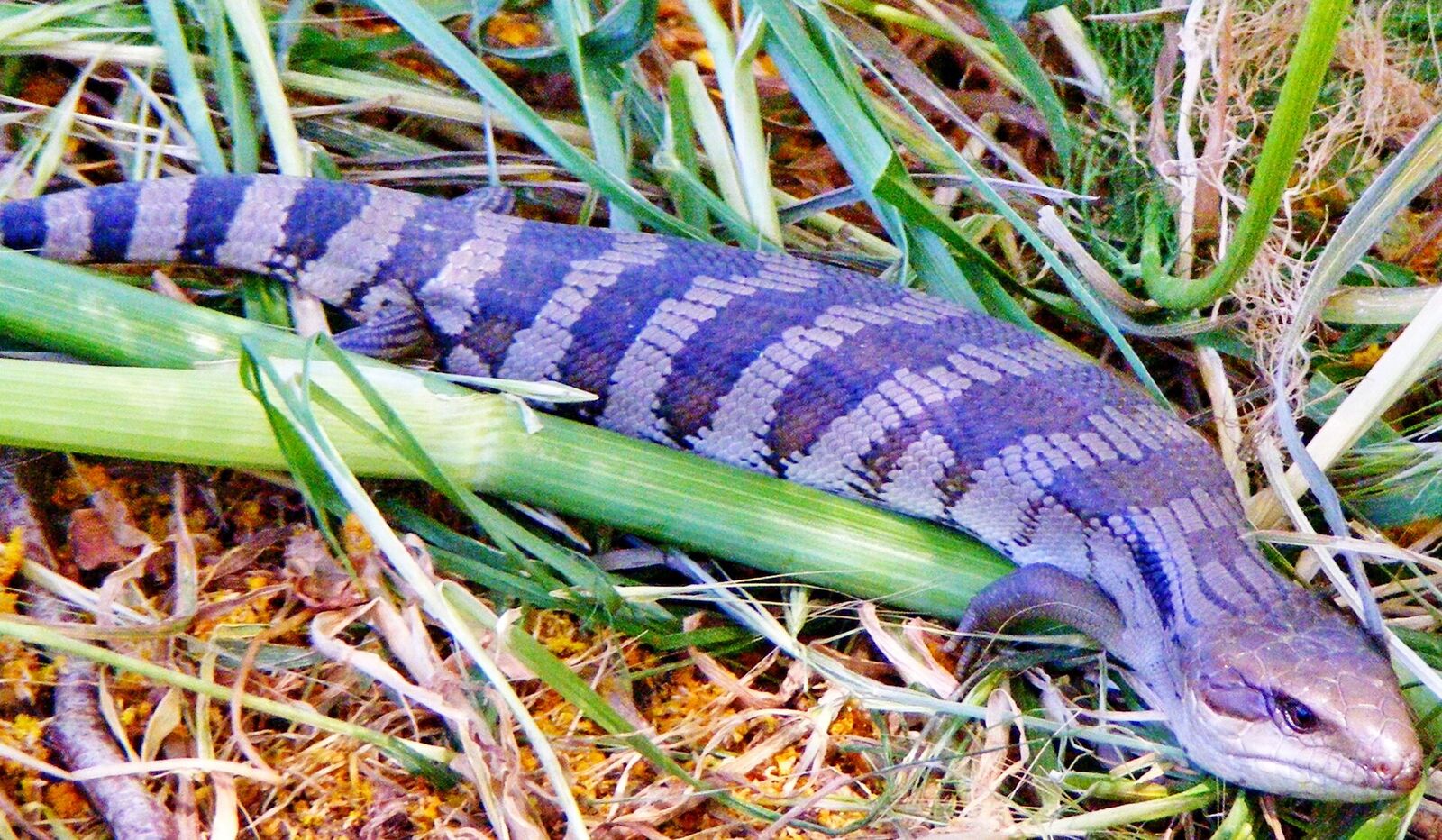
Tiliqua gigas
Reptiles › Lizards (Lacertilia) › Scincidae (Skinks)
The Merauke is a 'faded' blue-tongue subspecies found on transitional coastal plains of Irian Jaya.
From Wikipedia: Merauke blue-tongued skink, CC BY-SA 4.0 (excerpt)
Care at a glance
Setup
One answer per setting. Where sources differ, the smaller figure is the minimum and the larger is what we recommend.
| Humidity | 60–80 % Same as the main Indonesian blue-tongued skink sheet. | reptifiles.com |
| Cool side | 75–85 °F Same as the main Indonesian blue-tongued skink sheet. | reptifiles.com |
| Night temperature | 70–75 °F Same as the main Indonesian blue-tongued skink sheet. | reptifiles.com |
| Basking surface | 100–105 °F Same as the main Indonesian blue-tongued skink sheet. | reptifiles.com |
| What's different | Meraukes generally have a calmer disposition than other Indonesian species. | reptifiles.com |
| What's different | They tend to have the longest abdomen and tail of all Tiliqua species. | reptifiles.com |
| What's different | They are distinguished by freckling on limbs, body banding, and a salmon orange belly. | reptifiles.com |
Understanding the animal
In the wild
In the wild
Researched for this exact species, not its family. Wild conditions are context, not enclosure settings.1
| Where it lives | The Merauke is a 'faded' blue-tongue subspecies found on transitional coastal plains of Irian Jaya. |
Profile
Profile
Researched for this exact species. Sources are listed under In the wild above.
Keeper tips
- They require reasonably low humidity, around 60%, and may benefit from drier substrate elements.
Remarkable facts
- These large lizards can reach up to 70cm in length.
Sources for this sheet
- ReptiFiles: Blue-tongued skink temperatures, lighting and humidity Experienced keeper or breederAdded in the 2026 source-checked care-guide review.
- Blue tongue skink subspecies (reptifiles.com) Experienced keeper or breederKeeper care guide.
- Blue or false (exoticskeeper.com) Experienced keeper or breederKeeper care guide.
- Clint's Reptiles (YouTube): Blue-Tongued Skink, The Best Pet Lizard? Expert educator & keeperClint Laidlaw, PhD in Biology Education and MS in Evolutionary Ecology; owner of Clint's Reptile Room and a longtime keeper. His "Best Pet?" series reviews each species' care in depth.
- The Reptile Database Peer-reviewed researchScientist-curated catalog of every reptile species, with taxonomy and literature.
- GBIF Backbone Taxonomy (Global Biodiversity Information Facility) (CC BY 4.0) Peer-reviewed researchInternational scientific taxonomy used here for classification. GBIF Secretariat (2023). GBIF Backbone Taxonomy. Checklist dataset https://doi.org/10.15468/39omei, accessed via GBIF.org.
- Wikipedia (species article) (CC BY-SA 4.0) Community referenceFree encyclopedia; useful overviews with their own citations. Short excerpts are quoted under CC BY-SA 4.0, each credited with a link to its article.
More skinks
Common blue-tongued skink
Tiliqua scincoides
Docile, chunky and flashes a blue tongue.
Pet trade

Blotched blue-tongued skink
Tiliqua nigrolutea
Pet trade

Centralian blue-tongued skink
Tiliqua multifasciata
Pet trade

Cunningham's skink
Egernia cunninghami
Pet trade

East Indian brown mabuya
Eutropis multifasciata
Pet trade

Eastern Pilbara spiny-tailed skink
Egernia epsisolus
Pet trade