
Home / Reptiles / Lizards / Scincidae / Ocellated skink
No federal permit to keepOcellated skink
Chalcides ocellatus
Reptiles › Lizards (Lacertilia) › Scincidae (Skinks)
Chalcides ocellatus, or the ocellated skink (also known as the eyed skink or gongilo) is a species of skink found in Greece, southern Italy, Malta, Lebanon, UAE, Israel, Palestine, and parts of northern Africa.
Care at a glance
Species-specific values
Values researched for this exact species. Air, surface and water temperatures are listed separately, and each source is kept as published rather than averaged.
| Minimum enclosure | A single skink needs at least a 30”L x 12”W x 12”H enclosure. Source: thebiodude.com | |
| Basking surface temperature | 90–100 °F Source: thebiodude.com | |
| Cool side air temperature | 75–85 °F Source: thebiodude.com | |
| Night temperature | 65–70 °F Source: thebiodude.com | |
| Humidity | 15–35 % Source: thebiodude.com | |
| Humidity | 90–100 % Source: thebiodude.com | |
| Diet | Primarily insects; rotate at least three feeder types. Source: thebiodude.com | |
| Feeding frequency | Juveniles and adults 2–3 times weekly; pregnant/postpartum females and newborns daily. Source: thebiodude.com | |
| Social housing | Groups of similarly sized females are most likely to get along; do not house males together or with females. Source: thebiodude.com | |
| Substrate | Provide at least 3 inches of substrate. Source: thebiodude.com |
Understanding the animal
About this animal
About this animal
It is also found in Pakistan, India and Sri Lanka.
From Wikipedia: Chalcides ocellatus, CC BY-SA 4.0 (excerpt)
In the wild
In the wild
Researched for this exact species, not its family. Wild conditions are context, not enclosure settings.12345678
| Where it lives | Occurs around the Mediterranean and across North African and adjacent dry regions in a broad variety of habitats. Uses sandy and rocky coasts, Mediterranean scrub, cultivated land and gardens, sheltering in loose substrate or beneath ground cover. |
| Ground it lives on | loose sand or soil, often beneath stones or dead vegetation |
| Active | Diurnal in the North Sinai dietary study; crepuscular activity is reported in Egyptian habitat accounts. A single universal daily schedule is not established. |
| Wild diet | Predominantly insects, especially beetles in a Cyprus stomach-content study. Plant material and seeds were frequent in North Sinai specimens, showing geographic dietary variation. |
| Behavior to plan for | A semifossorial skink that moves through loose substrate and uses concealed ground-level retreats. |
- IUCN Italy: Chalcides ocellatus
- Çiçek and Göçmen (2013): Food composition of Ocellated Skink from Cyprus
- Attum, Covell and Eason (2004): The comparative diet of three Saharan sand dune skinks
- Ecology and conservation of the herpetofauna: Egyptian habitat accounts
- Wikipedia: Chalcides ocellatus (CC BY-SA 4.0)
- The Reptile Database: Chalcides ocellatus
- Ocellated Skink Care Guide
- Ocellated Skink Health Guide
Native climate (measured)
Native climate (measured)
| Warm-season highs | about 88°F (up to 96°F in the hottest sampled areas) |
| Cool-season lows | about 45°F (down to 41°F in the coldest sampled areas) |
| Average temperature | 62–68°F across sampled records |
| Relative humidity | 61–71% on average (driest month about 59%) |
| Rainfall | about 529 mm a year, with strong wet and dry seasons |
Measured at 117 wild occurrence records sampled against WorldClim 2.1 climate data (1970–2000 averages). Air conditions in the range are ecological context, not enclosure settings: microhabitats such as burrows, leaf litter or basking rocks can be cooler, warmer or more humid.
Profile
Profile
Researched for this exact species. Sources are listed under In the wild above.
History
Chalcides colosii was formerly treated as a subspecies of Chalcides ocellatus. The Reptile Database also reports that some named subspecies have doubtful validity and that C. o. zavattarii is probably of hybrid origin.
Data and studies
The numbers
The numbers
Each bar is what one source reports. Where several sources weigh in, the dashed gold band marks their average.
Maximum recorded lifespan
Longest recorded lifespan reported by each database; typical lifespans are usually shorter. The AnAge record comes from an animal in human care.
Typical adult weight
Average adult body mass in each database (FishBase gives the maximum recorded weight).
Adult snout-to-vent length
Body length without the tail.
Basking spot
Species-specific values from keeper care sheets. Basking figures are often surface readings taken with an infrared thermometer, which run hotter than air.
Cool side
Species-specific values from keeper care sheets. Basking figures are often surface readings taken with an infrared thermometer, which run hotter than air.
Night temperature
Species-specific values from keeper care sheets. Basking figures are often surface readings taken with an infrared thermometer, which run hotter than air.
Humidity
Species-specific values from keeper care sheets. Basking figures are often surface readings taken with an infrared thermometer, which run hotter than air.
Care articles for this species
Care articles for this species
- Ocellated Skink Care Guide (ReptiFiles)
- Ocellated Skink Health Guide (ReptiFiles)
Written by keepers, breeders and vets Reptiles MagazineReptiFiles
Sources for this sheet
- AnAge: The Animal Ageing and Longevity Database (Human Ageing Genomic Resources) (CC BY 3.0) Peer-reviewed researchCurated, referenced longevity and life-history records for thousands of species; maximum lifespans are often from zoo animals.
- Myhrvold et al. (2015). An amniote life-history database. Ecology 96: 3109 Peer-reviewed researchPeer-reviewed compilation of life-history data for over 21,000 birds, mammals and reptiles.
- ReptiFiles (care guides) Experienced keeper or breederWell-researched reptile care guides that cite herpetological literature and experienced keepers.
- Clint's Reptiles (YouTube): Ocellated Skink, The Best Pet Lizard? Expert educator & keeperClint Laidlaw, PhD in Biology Education and MS in Evolutionary Ecology; owner of Clint's Reptile Room and a longtime keeper. His "Best Pet?" series reviews each species' care in depth.
- The Reptile Database Peer-reviewed researchScientist-curated catalog of every reptile species, with taxonomy and literature.
- GBIF Backbone Taxonomy (Global Biodiversity Information Facility) (CC BY 4.0) Peer-reviewed researchInternational scientific taxonomy used here for classification. GBIF Secretariat (2023). GBIF Backbone Taxonomy. Checklist dataset https://doi.org/10.15468/39omei, accessed via GBIF.org.
- Wikipedia (species article) (CC BY-SA 4.0) Community referenceFree encyclopedia; useful overviews with their own citations. Short excerpts are quoted under CC BY-SA 4.0, each credited with a link to its article.
- iNaturalist (captive observations) Community referenceCommunity observation platform run by the California Academy of Sciences and National Geographic; observations marked captive show animals living in homes, zoos and aquariums.
More skinks
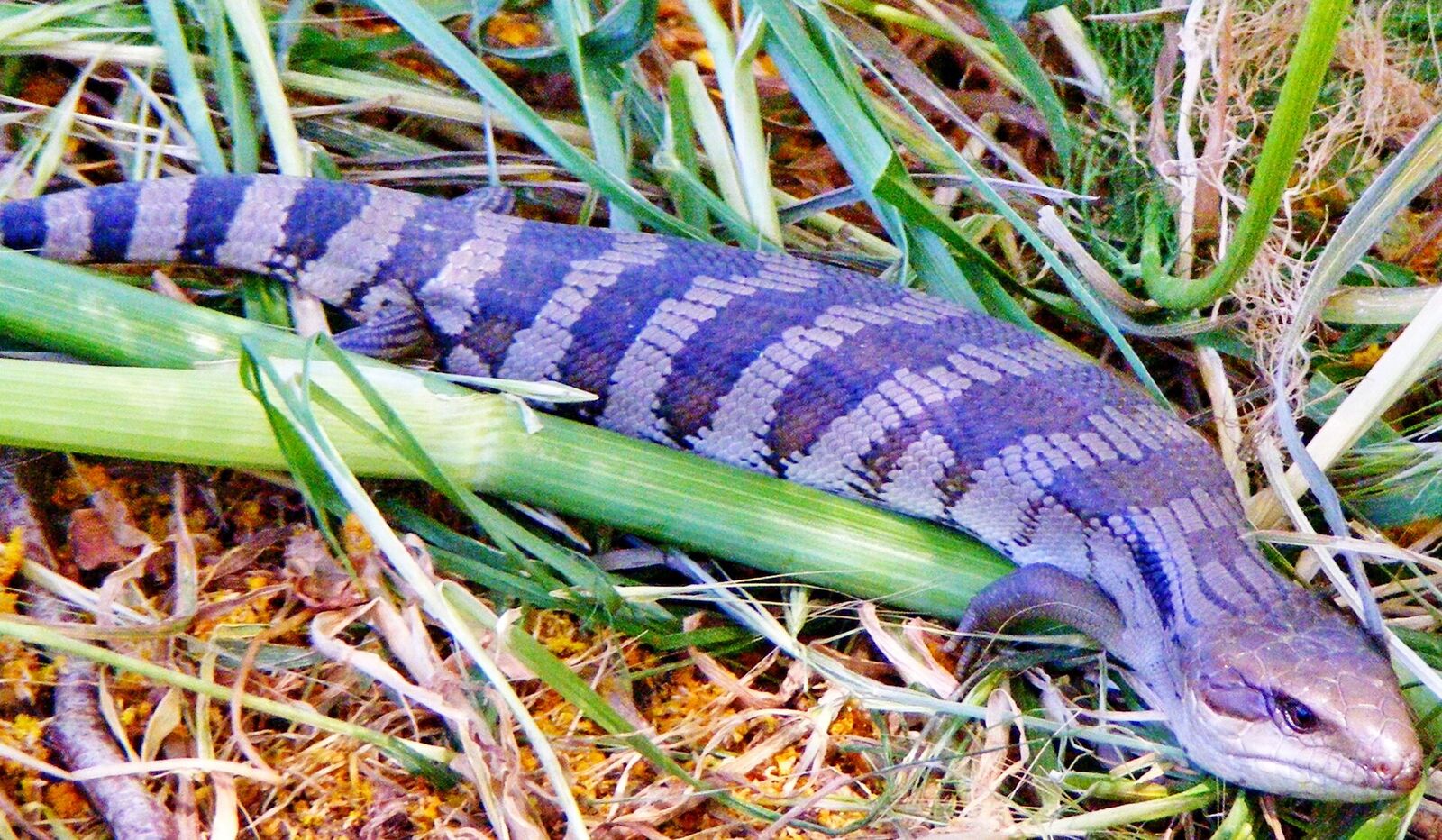
Common blue-tongued skink
Tiliqua scincoides
Docile, chunky and flashes a blue tongue.
Pet trade

Blotched blue-tongued skink
Tiliqua nigrolutea
Pet trade

Centralian blue-tongued skink
Tiliqua multifasciata
Pet trade

Cunningham's skink
Egernia cunninghami
Pet trade

East Indian brown mabuya
Eutropis multifasciata
Pet trade

Eastern Pilbara spiny-tailed skink
Egernia epsisolus
Pet trade