
Home / Reptiles / Snakes / Pythonidae / Olive python
Some federal rules applyOlive python
Liasis olivaceus
Reptiles › Snakes (Serpentes) › Pythonidae (Pythons)
Care at a glance
Setup
One answer per setting. Where sources differ, the smaller figure is the minimum and the larger is what we recommend.
| Adult enclosure | At least 2.4 metres Preferably 8 ft Minimum size requirement for an adult terrarium | Wikipedia |
| Hot spot | 95°F Basking spot temperature during the day | unusualpetvets.com.au |
| Cool side | 77°F Cool end maintenance temperature | unusualpetvets.com.au |
| Night temperature | 68°F Ambient temperature at the warm end should not drop lower at night | unusualpetvets.com.au |
| Lighting | At least 10 hours Preferably 12 hours Daylight hours adjusted seasonally between summer and winter | unusualpetvets.com.au |
| UVB | At least 6 months Preferably 9 months Recommended replacement frequency for UVA and UVB lighting | unusualpetvets.com.au |
Care guide
By age
| Baby | Enclosure: Small lunch box size tubs provided several suitable hides, a clean freshwater source, appropriate heating, and a climbing branch. Feeding: Weekly feedings or up to twice a week for juveniles; start on thawed fuzzies, hoppers, live rat fuzzies, or quail. | unusualpetvets.com.au |
- Mites: External parasite infestation requiring veterinary advice. unusualpetvets.com.au
- Wheezing: Respiratory or health issue requiring professional care. unusualpetvets.com.au
- Dysecdysis: Trouble shedding skin properly. unusualpetvets.com.au
- Prolonged inappetence: Loss of appetite outside of the cooler months of the year. unusualpetvets.com.au
Understanding the animal
Localities
Localities
Keepers buy these by where the bloodline comes from. Care is basically the same; size, color and temperament can differ. “Breeder-reported” details still need a published source.
| L. o. barroni | Lives in the Pilbara region of Western Australia. | Breeder-reported unusualpetvets.com.au |
In the wild
In the wild
Researched for this exact species, not its family. Wild conditions are context, not enclosure settings.123
| Where it lives | The olive python occurs in rocky areas, gorges, and especially rocky areas near sources of water like caves and rock crevices. |
| Active | It prefers to lie in wait next to an animal trail to ambush prey, or hunts in waterholes as a strong swimmer. |
| Social life | Olive pythons are best housed separately, except when breeding together. |
| Behavior to plan for | Mating activity starts in May and continues until mid-July, followed by an 81 to 85 day gestation period. |
Profile
Profile
Researched for this exact species. Sources are listed under In the wild above.
Keeper tips
- If raised properly, they are friendly, curious, calm, and considered the most docile of the Liasis.
- They are an advanced-level species due to size and a strong feeding response requiring snake hooks.
Remarkable facts
- Adult captive specimens are reported to be almost 12 years old.
Sources for this sheet
- Species+ (UNEP-WCMC and the CITES Secretariat) Zoo, university or veterinaryThe official database of species listed under CITES. UNEP (2026). The Species+ Website. Nairobi, Kenya. Compiled by UNEP-WCMC, Cambridge, UK. Available at: www.speciesplus.net. [Accessed 04/10/2026].
- USFWS International Affairs: CITES Zoo, university or veterinaryFederal agency that issues CITES permits.
- Wikipedia: Liasis olivaceus (CC BY-SA 4.0) Community referenceEncyclopedia article.
- Caring for olive python (unusualpetvets.com.au) Community referenceWeb page.
- The Reptile Database: Liasis olivaceus Zoo, university or veterinaryTaxonomy, distribution and literature for every reptile species.
- About THN (herpetoculturenetwork.com) Community referenceWeb page.
- The Reptile Database Peer-reviewed researchScientist-curated catalog of every reptile species, with taxonomy and literature.
- GBIF Backbone Taxonomy (Global Biodiversity Information Facility) (CC BY 4.0) Peer-reviewed researchInternational scientific taxonomy used here for classification. GBIF Secretariat (2023). GBIF Backbone Taxonomy. Checklist dataset https://doi.org/10.15468/39omei, accessed via GBIF.org.
More pythons
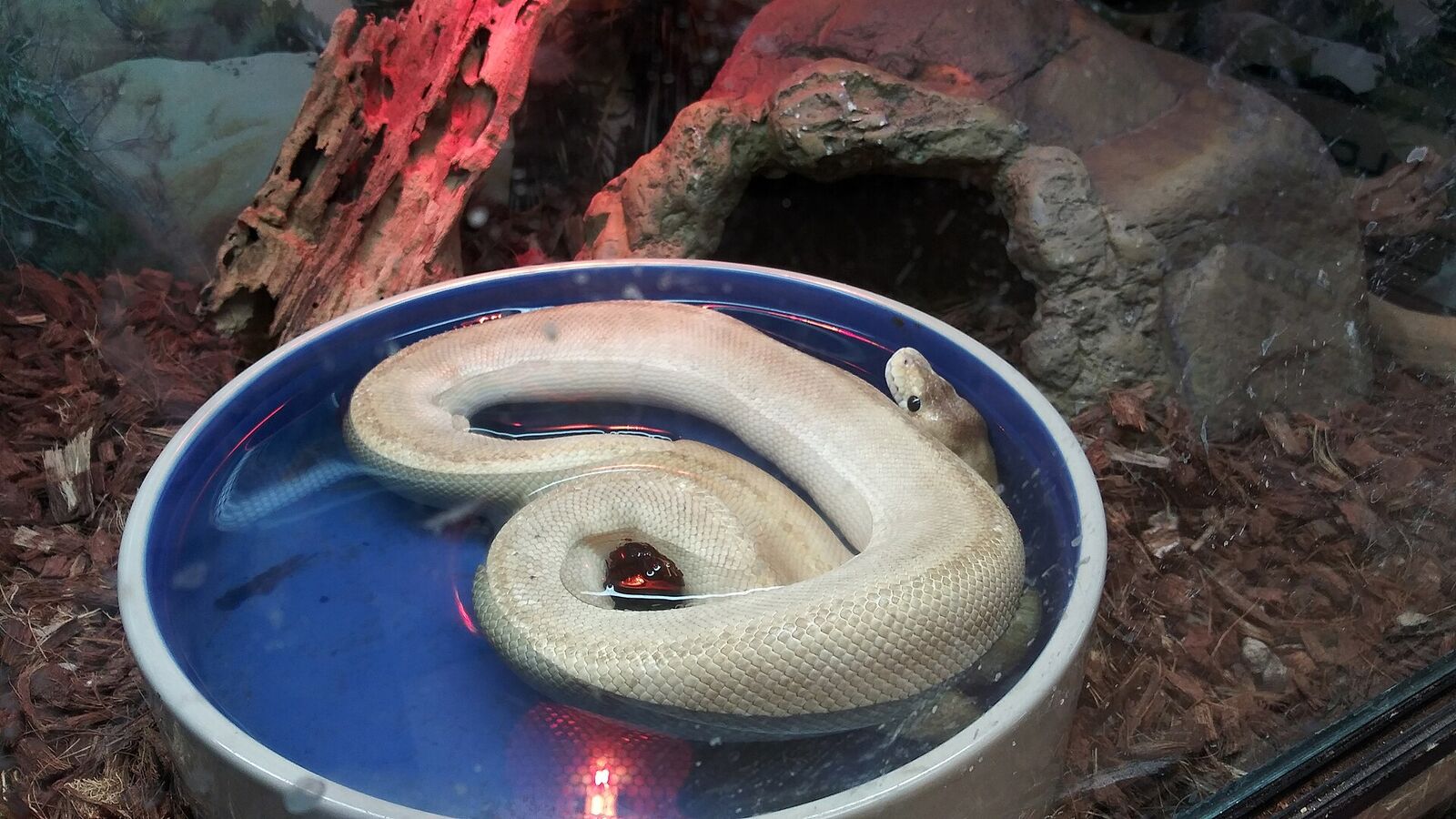
Ball python
Python regius
The calm, curl-up classic of pet snakes.
Pet trade
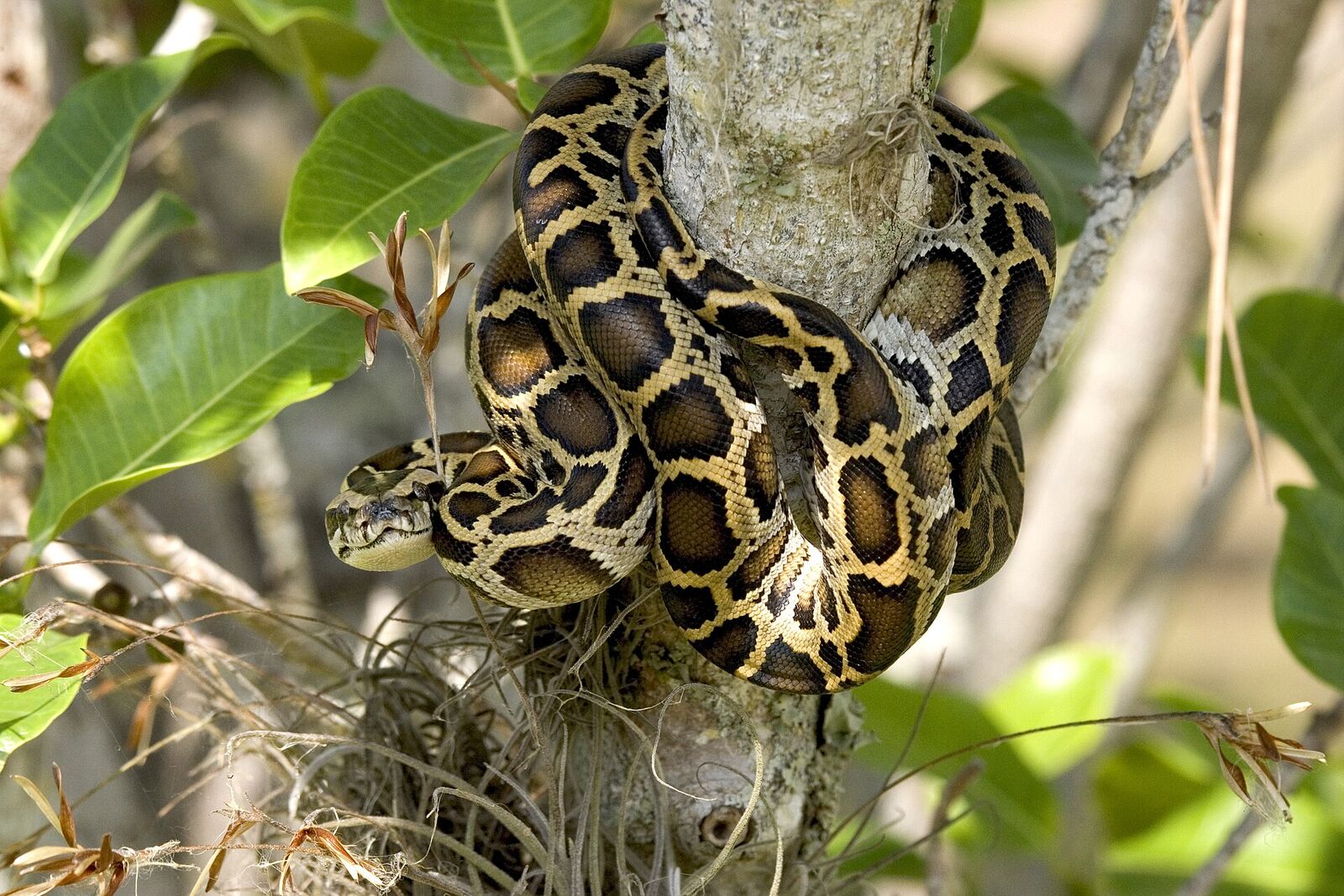
Burmese python
Python bivittatus
A heavy-bodied giant with a famously calm reputation.
Pet trade
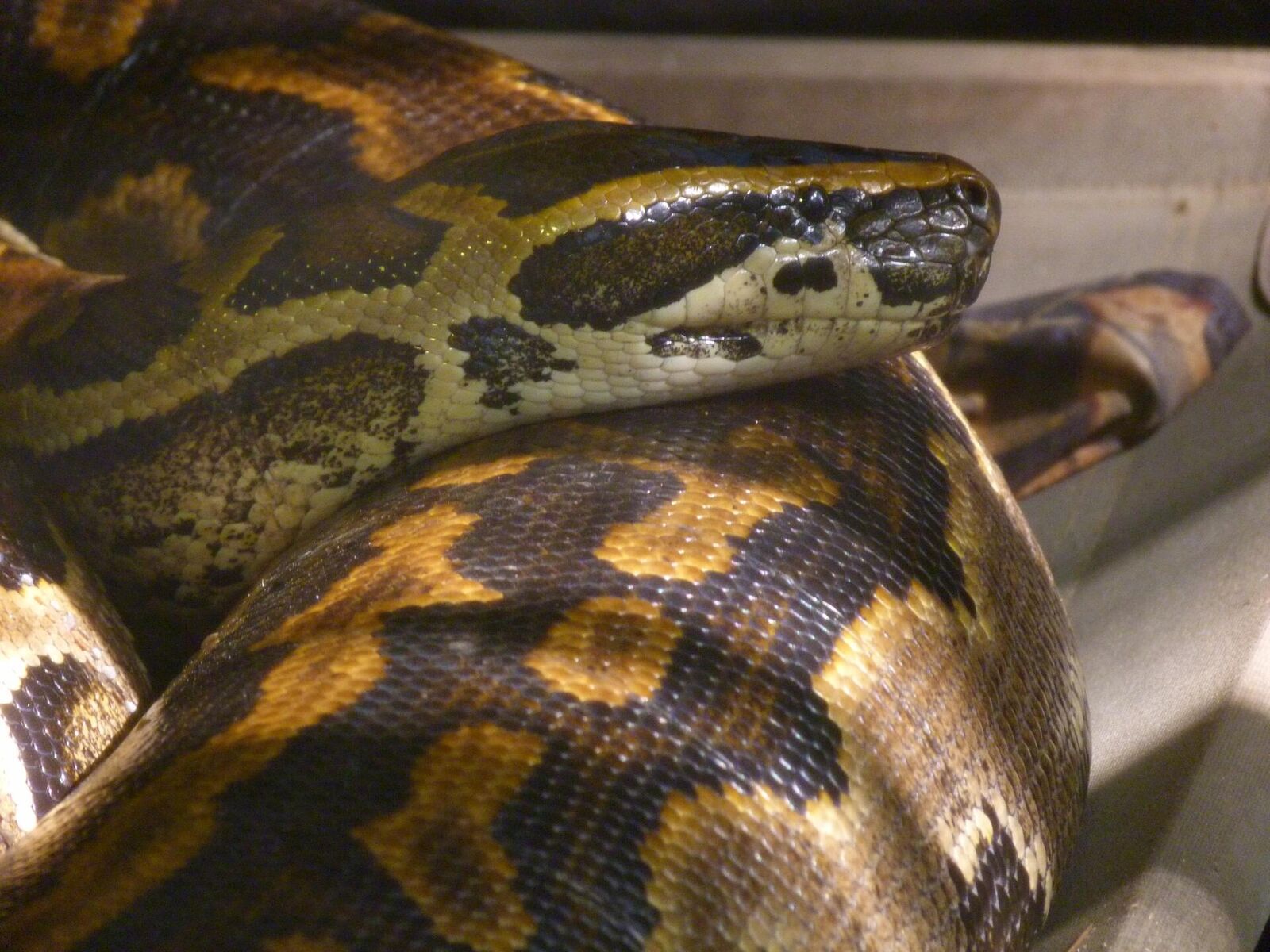
Central African rock python
Python sebae
Africa's largest snake, powerful and spirited.
Pet trade
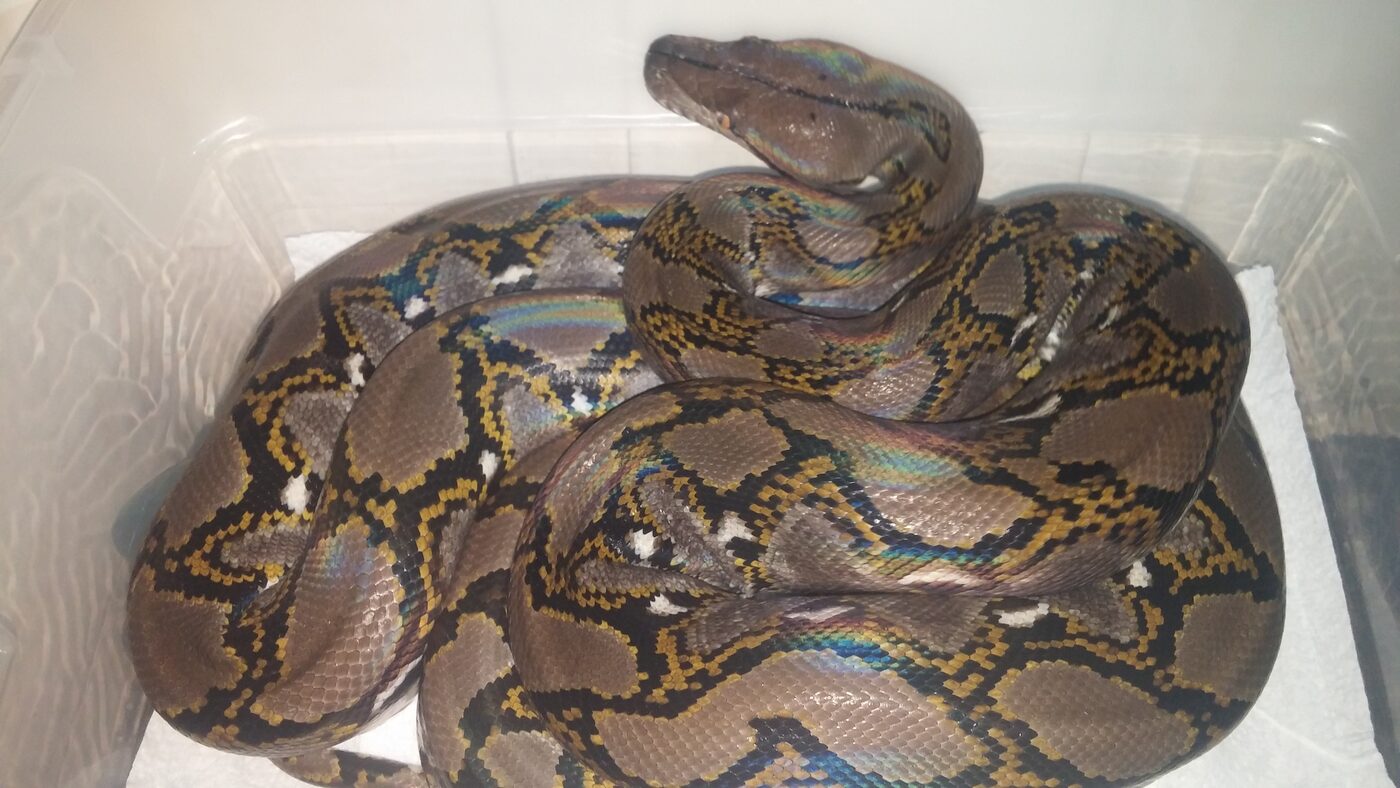
Reticulated python
Malayopython reticulatus
The world's longest snake, and a brilliant, active giant.
Pet trade

Amethystine python
Simalia amethistina
Pet trade

Angolan python
Python anchietae
Pet trade